Humility Through Penitence
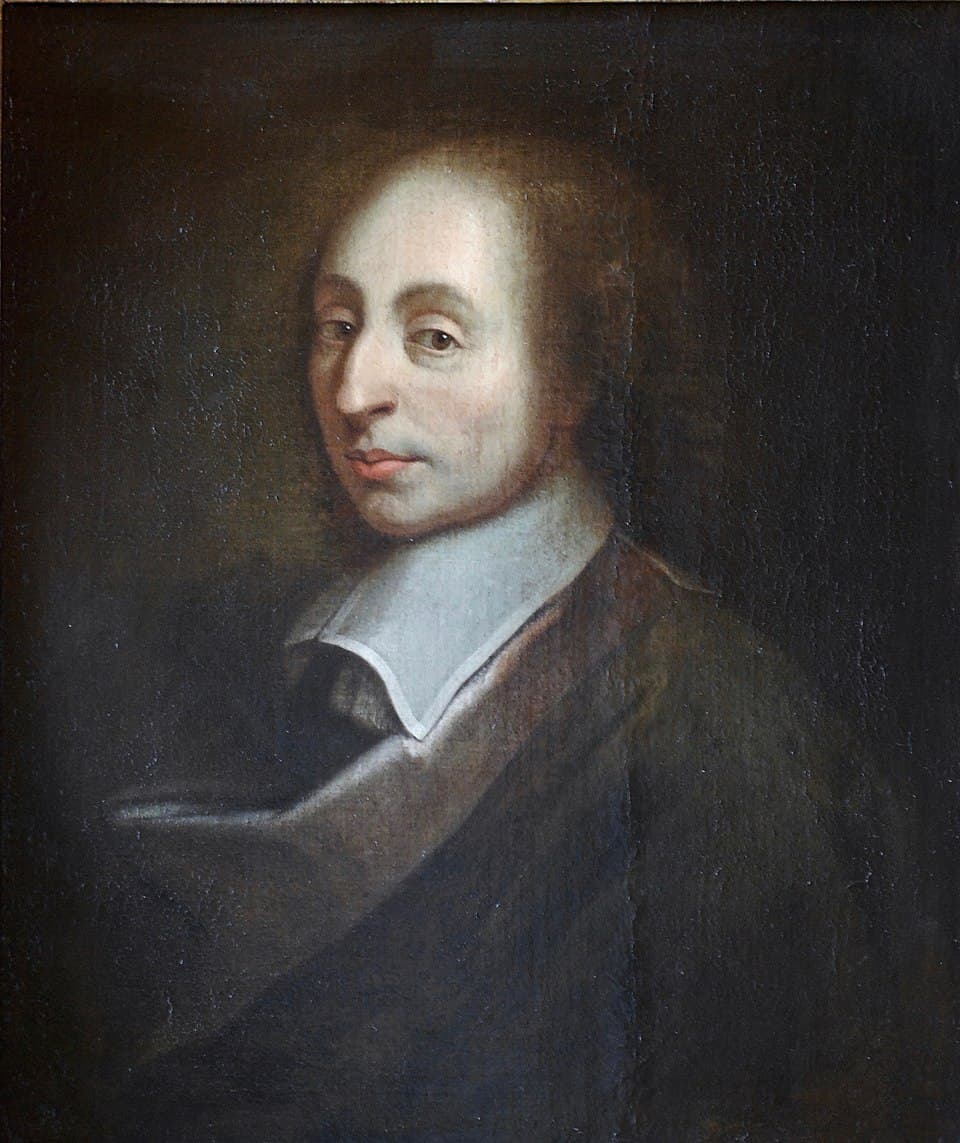
Blaise Pascal
Pensees

Pascal critiques philosophers for failing to address man's dual nature, arguing instead for a balance of humility through penitence and greatness through divine grace.

...Catholics, and always strife; because the first birth makes the one, and the grace of the second birth the other. 521 The law imposed what it did not give. Grace gives what is imposes. 522 All faith consists in Jesus Christ and in Adam, and all morality in lust and in grace. 523 There is no doctrine more appropriate to man than this, which teaches him his double capacity of receiving and of losing grace, because of the double peril to which he is exposed, of despair or of pride. 524
The philosophers did not prescribe feelings suitable to the two states. They inspired feelings of pure greatness, and that is not man's state. They inspired feelings of pure littleness, and that is not man's state. There must be feelings of humility, not from nature, but from penitence, not to rest in them, but to go on to greatness. There must be feelings of greatness, not from merit, but from grace, and after having passed through humiliation.
525 Misery induces despair, pride induces presumption. The Incarnation shows man the greatness of his misery by the greatness of the remedy which he required. 526 The knowledge of God without that of man's misery causes pride. The knowledge of man's misery without that of God causes despair. The knowledge of Jesus Christ constitutes the middle course, because in Him we find both God and our misery. 527 Jesus Christ is a God whom we approach without pride, and before whom we humble ours...
4

Aristotle

Nicomachean Ethics

The Limits of Words

Aristotle provides a concrete, practical method relevant to enacting any prescription about human character. He states that mere discourse (talking/writing) is insufficient to make most men good, as they are guided more by passion, pleasure, and fear of punishment than by a noble sense of shame. This offers a 'how-to' insight: any effective prescription must account for these baser human motivations and employ means beyond rational argument to shape character and action, aligning with the practical challenge Pascal identifies.

...nough in our sketchy kind of way on these subjects; I mean, on the Virtues, and also on Friendship and Pleasure; are we to suppose that our original purpose is completed? Must we not rather acknowledge, what is commonly said, that in matters of moral action mere Speculation and Knowledge is not the real End but rather Practice: and if so, then neither in respect of Virtue is Knowledge enough; we must further strive to have and exert it, and take whatever other means there are of becoming good.
Now if talking and writing were of themselves sufficient to make men good, they would justly, as Theognis observes have reaped numerous and great rewards, and the thing to do would be to provide them: but in point of fact, while they plainly have the power to guide and stimulate the generous among the young and to base upon true virtuous principle any noble and truly high-minded disposition, they as plainly are powerless to guide the mass of men to Virtue and goodness; because it is not their nature to be amenable to a sense of shame but only to fear; nor to abstain from what is low and mean b...
but as for what is noble and truly pleasurable they have not an idea of it, inasmuch as they have never tasted of it. Men such as these then what mere words can transform? No, indeed! it is either actually impossible, or a task of no mean difficulty, to alter by words what has been of old taken into men’s very dispositions: and, it may be, it is a ground for contentment if with all the means and appliances for goodness in our hands we can attain to Virtue. The formation of a virtuous characte...

Aristotle

Nicomachean Ethics

The Great-Minded Summit

Aristotle offers a fundamentally different, opposing method from a virtue ethics perspective. He describes the 'Great-minded man' (the Magnanimous man) who estimates himself at his true, high value based on his honorable actions and the external good of honor. This stands in stark contrast to Pascal's Christian prescription, where greatness comes 'not from merit, but from grace' after penitence. Aristotle's rule is one of earned, self-aware excellence rooted in nature and social recognition, not divine grace following humiliation.

...ion while small people are neat and well made but not beautiful. Again, he who values himself highly without just grounds is a Vain man: though the name must not be applied to every case of unduly high self-estimation. He that values himself below his real worth is Small-minded, and whether that worth is great, moderate, or small, his own estimate falls below it. And he is the strongest case of this error who is really a man of great worth, for what would he have done had his worth been less?
The Great-minded man is then, as far as greatness is concerned, at the summit, but in respect of propriety he is in the mean, because he estimates himself at his real value (the other characters respectively are in excess and defect). Since then he justly estimates himself at a high, or rather at the highest possible rate, his character will have respect specially to one thing: this term “rate” has reference of course to external goods: and of these we should assume that to be the greatest which we attribute to the gods, and which is the special object of desire to those who are in power, and...
So the Great-minded man bears himself as he ought in respect of honour and dishonour. In fact, without need of words, the Great-minded plainly have honour for their object-matter: since honour is what the great consider themselves specially worthy of, and according to a certain rate. The Small-minded man is deficient, both as regards himself, and also as regards the estimation of the Great-minded: while the Vain man is in excess as regards himself, but does not get beyond the Great-minded man....

David Hume

An Enquiry Concerning Human Understanding

Gods from Imagination

This excerpt from Hume provides the grounding principle for why a prescription like Pascal's (balancing humility and greatness through grace) is necessary. Hume critiques philosophers who treat present life merely as a passage to a greater afterlife, arguing we cannot infer divine principles beyond what we observe. This reinforces Pascal's claim that philosophers err by not understanding man's true, dual state; they create speculative systems ('mere possibility and hypothesis') that fail to address the actual human condition, justifying the need for a prescription grounded in a revealed truth about our nature.

...onsequences from it, and add something to the experienced order of nature, by arguing from the attributes which you ascribe to your gods. You seem not to remember, that all your reasonings on this subject can only be drawn from effects to causes; and that every argument, deducted from causes to effects, must of necessity be a gross sophism; since it is impossible for you to know anything of the cause, but what you have antecedently, not inferred, but discovered to the full, in the effect. 109.
But what must a philosopher think of those vain reasoners, who, instead of regarding the present scene of things as the sole object of their contemplation, so far reverse the whole course of nature, as to render this life merely a passage to something farther; a porch, which leads to a greater, and vastly different building; a prologue, which serves only to introduce the piece, and give it more grace and propriety? Whence, do you think, can such philosophers derive their idea of the gods? From their own conceit and imagination surely. For if they derived it from the present phenomena, it would...
Are there any marks of a distributive justice in the world? If you answer in the affirmative, I conclude, that, since justice here exerts itself, it is satisfied. If you reply in the negative, I conclude, that you have then no reason to ascribe justice, in our sense of it, to the gods. If you hold a medium between affirmation and negation, by saying, that the justice of the gods, at present, exerts itself in part, but not in its full extent; I answer, that you have no reason to give it any p...

David Hume

An Enquiry Concerning Human Understanding

Philosophy's Selfish Refinement

Hume points out a critical danger inherent in the very project of philosophical prescriptions for greatness and humility. He argues that the passion for philosophy can, through 'imprudent management,' foster a person's predominant inclination (like pride or indolence) and lead to a 'refined system of selfishness.' This directly challenges Pascal's rule by suggesting that the attempt to cultivate feelings of greatness and humility through reason and grace could backfire, becoming a sophisticated excuse for vice or anti-social behavior.

...he future, and to expect similar effects from causes which are, to appearance, similar. This is the proposition which I intended to enforce in the present section. If I be right, I pretend not to have made any mighty discovery. And if I be wrong, I must acknowledge myself to be indeed a very backward scholar; since I cannot now discover an argument which, it seems, was perfectly familiar to me long before I was out of my cradle. SECTION V. SCEPTICAL SOLUTION OF THESE DOUBTS. PART I. 34.
The passion for philosophy, like that for religion, seems liable to this inconvenience, that, though it aims at the correction of our manners, and extirpation of our vices, it may only serve, by imprudent management, to foster a predominant inclination, and push the mind, with more determined resolution, towards that side which already draws too much, by the bias and propensity of the natural temper. It is certain that, while we aspire to the magnanimous firmness of the philosophic sage, and endeavour to confine our pleasures altogether within our own minds, we may, at last, render our philo...
There is, however, one species of philosophy which seems little liable to this inconvenience, and that because it strikes in with no disorderly passion of the human mind, nor can mingle itself with any natural affection or propensity; and that is the Academic or Sceptical philosophy. The academics always talk of doubt and suspense of judgement, of danger in hasty determinations, of confining to very narrow bounds the enquiries of the understanding, and of renouncing all speculations which lie n...