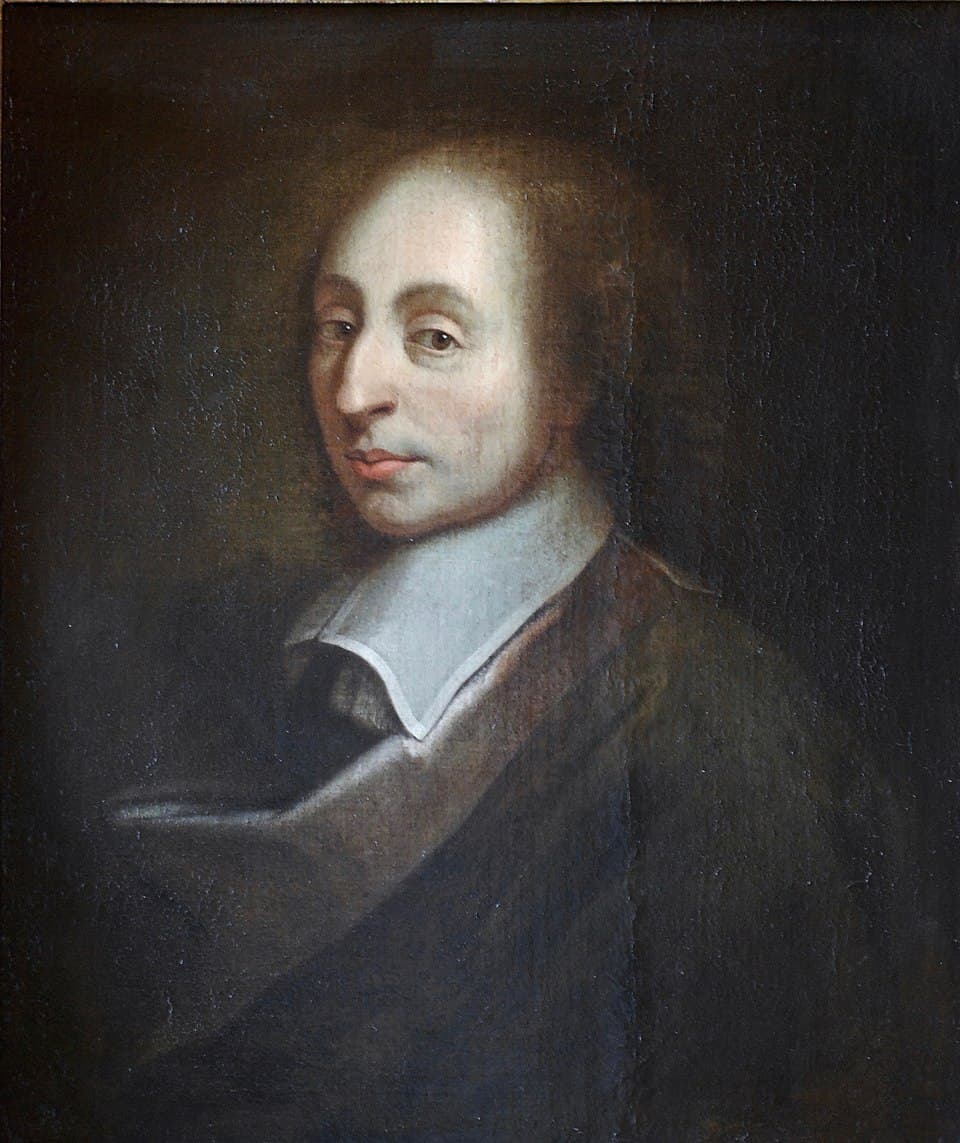
Justice and Might
Blaise Pascal
Pensees

Pascal argues for the necessary union of justice and might, claiming that justice without power is ineffective while power without justice is tyrannical.

...ing and the image of the usurpation of all the earth. 296 When the question for consideration is whether we ought to make war, and kill so many men--condemn so many Spaniards to death--only one man is judge, and he is an interested party. There should be a third, who is disinterested. 297 Veri juris.[118]--We have it no more; if we had it, we should take conformity to the customs of a country as the rule of justice. It is here that, not finding justice, we have found force, etc. 298
Justice, might.--It is right that what is just should be obeyed; it is necessary that what is strongest should be obeyed. Justice without might is helpless; might without justice is tyrannical. Justice without might is gainsaid, because there are always offenders; might without justice is condemned. We must then combine justice and might, and for this end make what is just strong, or what is strong just.
Justice is subject to dispute; might is easily recognised and is not disputed. So we cannot give might to justice, because might has gainsaid justice, and has declared that it is she herself who is just. And thus being unable to make what is just strong, we have made what is strong just. 299 The only universal rules are the laws of the country in ordinary affairs, and of the majority in others. Whence comes this? From the might which is in them. Hence it comes that kings, who have power of...
6

Blaise Pascal

Pensees

Might's Justification

This excerpt directly elaborates on the necessity to unite justice and might, stating that since we cannot make might obey justice, we justify might to achieve peace. This extends Pascal's argument in the same direction.

...hout might is gainsaid, because there are always offenders; might without justice is condemned. We must then combine justice and might, and for this end make what is just strong, or what is strong just. Justice is subject to dispute; might is easily recognised and is not disputed. So we cannot give might to justice, because might has gainsaid justice, and has declared that it is she herself who is just. And thus being unable to make what is just strong, we have made what is strong just. 299
The only universal rules are the laws of the country in ordinary affairs, and of the majority in others. Whence comes this? From the might which is in them. Hence it comes that kings, who have power of a different kind, do not follow the majority of their ministers. No doubt equality of goods is just; but, being unable to cause might to obey justice, men have made it just to obey might. Unable to strengthen justice, they have justified might; so that the just and the strong should unite, and there should be peace, which is the sovereign good.
300 "When a strong man armed keepeth his goods, his goods are in peace."[119] 301 Why do we follow the majority? It is because they have more reason? No, because they have more power. Why do we follow the ancient laws and opinions? Is it because they are more sound? No, but because they are unique, and remove from us the root of difference. 302 ... It is the effect of might, not of custom. For those who are capable of originality are few; the greater number will only follow, and refus...

Arthur Schopenhauer

The Wisdom of Life

Motive Over Method

This excerpt argues that moral right does not derive from strength or skill, challenging the parent's acceptance that might must be obeyed and that combining justice with might confers legitimacy.

...f which I have spoken, recognizes no other right than might, that is, the right of the stronger, and appeals to a Judgment of God as the basis of the whole code. For to kill a man in a fair fight, is to prove that you are superior to him in strength or skill; and to justify the deed, you must assume that the right of the stronger is really a right. But the truth is that, if my opponent is unable to defend himself, it gives me the possibility, but not by any means the right, of killing him.
The right, the moral justification, must depend entirely upon the motives which I have for taking his life. Even supposing that I have sufficient motive for taking a man's life, there is no reason why I should make his death depend upon whether I can shoot or fence better than he. In such a case, it is immaterial in what way I kill him, whether I attack him from the front or the rear. From a moral point of view, the right of the stronger is no more convincing than the right of the more skillful; and it is skill which is employed if you murder a a man treacherously.
Might and skill are in this case equally right; in a duel, for instance, both the one and the other come into play; for a feint is only another name for treachery. If I consider myself morally justified in taking a man's life, it is stupid of me to try first of all whether he can shoot or fence better than I; as, if he can, he will not only have wronged me, but have taken my life into the bargain. It is Rousseau's opinion that the proper way to avenge an insult is, not to fight a duel with you...

Blaise Pascal

Pensees

Might Over Justice

This excerpt explains that because might is a palpable quality not easily controlled, while justice is spiritual and malleable, humans end up placing justice in the hands of might, thus describing the causal process behind the parent's observation.

...acles in the ordinary conduct of His Church. It would be a strange miracle if infallibility existed in one man. But it appears so natural for it to reside in a multitude, since the conduct of God is hidden under nature, as in all His other works. 876 Kings dispose of their own power; but the Popes cannot dispose of theirs. 877 Summum jus, summa injuria. The majority is the best way, because it is visible, and has strength to make itself obeyed. Yet it is the opinion of the least able.
If men could have done it, they would have placed might in the hands of justice. But as might does not allow itself to be managed as men want, because it is a palpable quality, whereas justice is a spiritual quality of which men dispose as they please, they have placed justice in the hands of might. And thus that is called just which men are forced to obey. Hence comes the right of the sword, for the sword gives a true right.
Otherwise we should see violence on one side and justice on the other (end of the twelfth Provincial). Hence comes the injustice of the Fronde,[365] which raises its alleged justice against power. It is not the same in the Church, for there is a true justice and no violence. 878 Injustice.--Jurisdiction is not given for the sake of the judge, but for that of the litigant. It is dangerous to tell this to the people. But the people have too much faith in you; it will not harm them, and may...

Aristotle

Nicomachean Ethics

Friendship Over Justice

This excerpt shifts the focus from justice and might to friendship, arguing that friendship is the true bond of communities and that where friendship exists, justice is not even necessary, thus reframing the issue in terms of social harmony rather than power.

...le to devise plans and carry them out. Again, it seems to be implanted in us by Nature: as, for instance, in the parent towards the offspring and the offspring towards the parent (not merely in the human species, but likewise in birds and most animals), and in those of the same tribe towards one another, and specially in men of the same nation; for which reason we commend those men who love their fellows: and one may see in the course of travel how close of kin and how friendly man is to man.
Furthermore, Friendship seems to be the bond of Social Communities, and legislators seem to be more anxious to secure it than Justice even. I mean, Unanimity is somewhat like to Friendship, and this they certainly aim at and specially drive out faction as being inimical. Again, where people are in Friendship Justice is not required; but, on the other hand, though they are just they need Friendship in addition, and that principle which is most truly just is thought to partake of the nature of Friendship.
Lastly, not only is it a thing necessary but honourable likewise: since we praise those who are fond of friends, and the having numerous friends is thought a matter of credit to a man; some go so far as to hold, that “good man” and “friend” are terms synonymous. Chapter II. Yet the disputed points respecting it are not few: some men lay down that it is a kind of resemblance, and that men who are like one another are friends: whence come the common sayings, “Like will to like,” “Birds of a fe...

Augustine of Hippo

Confessions

Justice vs Perception

This excerpt reflects on the limitations of human understanding across different times and contexts, questioning our ability to ascertain a universal standard of justice, which meta-questions the feasibility of the parent's project to combine justice and might.

...ll. Even such are they who are fretted to hear something to have been lawful for righteous men formerly, which now is not; or that God, for certain temporal respects, commanded them one thing, and these another, obeying both the same righteousness: whereas they see, in one man, and one day, and one house, different things to be fit for different members, and a thing formerly lawful, after a certain time not so; in one corner permitted or commanded, but in another rightly forbidden and punished.
Is justice therefore various or mutable? No, but the times, over which it presides, flow not evenly, because they are times. But men whose days are few upon the earth, for that by their senses they cannot harmonise the causes of things in former ages and other nations, which they had not experience of, with these which they have experience of, whereas in one and the same body, day, or family, they easily see what is fitting for each member, and season, part, and person; to the one they take exceptions, to the other they submit.
These things I then knew not, nor observed; they struck my sight on all sides, and I saw them not. I indited verses, in which I might not place every foot every where, but differently in different metres; nor even in any one metre the self-same foot in all places. Yet the art itself, by which I indited, had not different principles for these different cases, but comprised all in one. Still I saw not how that righteousness, which good and holy men obeyed, did far more excellently and sublimely...

Marcus Aurelius

Meditations

Nature's Superior Art

This excerpt offers practical guidance on preserving justice by warning against deception, rashness, inconstancy, and attachment to worldly things, providing actionable advice for cultivating virtue.

...y care to keep thyself constant in both; both in a right judgment and action, and in true meekness towards them, that either shall do their endeavour to hinder thee, or at least will be displeased with thee for what thou hast done. For to fail in either (either in the one to give over for fear, or in the other to forsake thy natural affection towards him, who by nature is both thy friend and thy kinsman) is equally base, and much savouring of the disposition of a cowardly fugitive soldier. IX.
It is not possible that any nature should be inferior unto art, since that all arts imitate nature. If this be so; that the most perfect and general nature of all natures should in her operation come short of the skill of arts, is most improbable. Now common is it to all arts, to make that which is worse for the better's sake. Much more then doth the common nature do the same. Hence is the first ground of justice. From justice all other virtues have their existence. For justice cannot be preserved, if either we settle our minds and affections upon worldly things; or be apt to be deceived, or r...
X. The things themselves (which either to get or to avoid thou art put to so much trouble) come not unto thee themselves; but thou in a manner goest unto them. Let then thine own judgment and opinion concerning those things be at rest; and as for the things themselves, they stand still and quiet, without any noise or stir at all; and so shall all pursuing and flying cease. XI. Then is the soul as Empedocles doth liken it, like unto a sphere or globe, when she is all of one form and figure: wh...