Sudden Fear's True Test
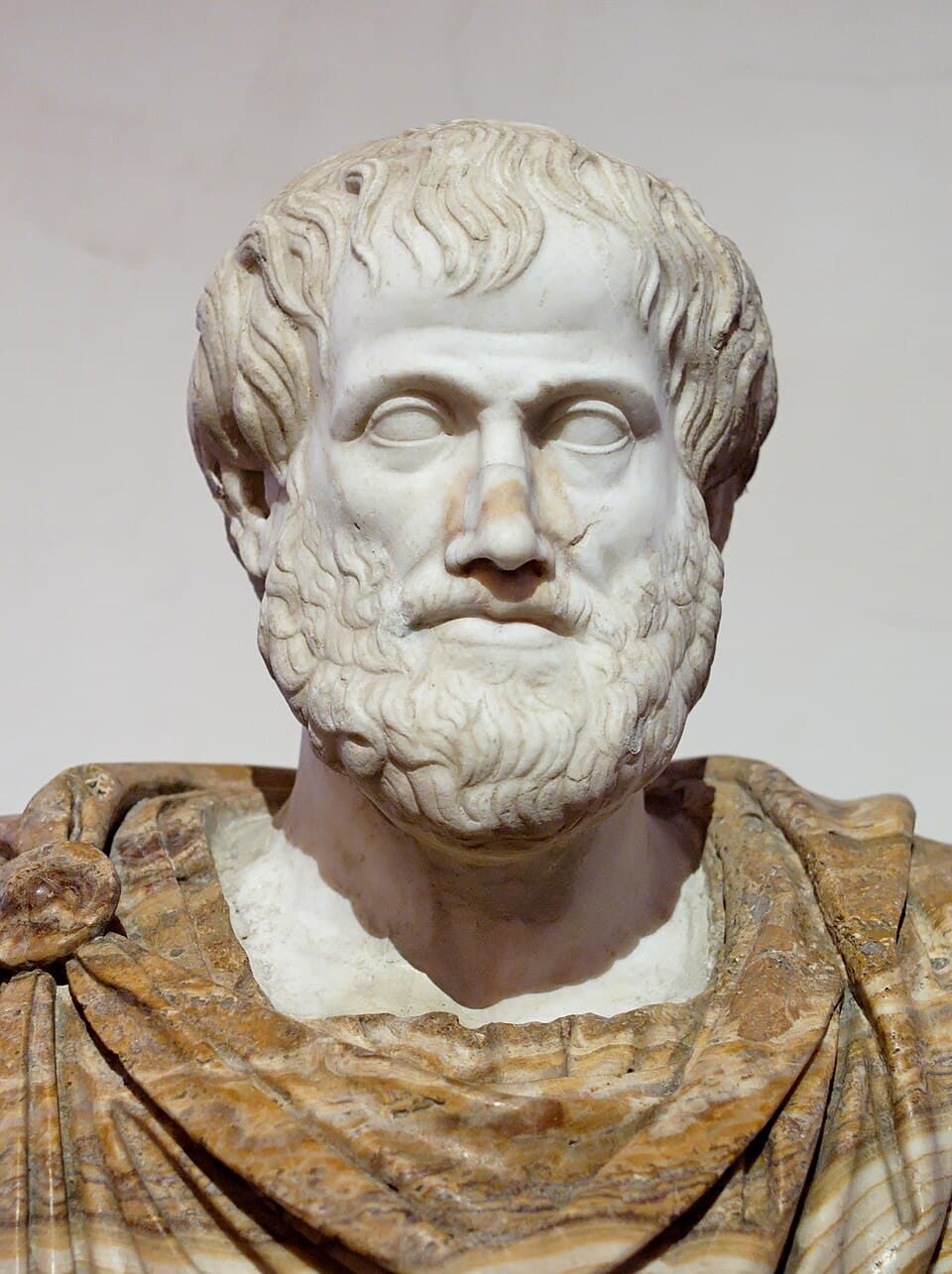
Aristotle
Nicomachean Ethics

The author argues that true courage is best demonstrated in sudden dangers where action springs from fixed habit rather than calculated preparation.

...so from the afore-mentioned causes, whereas these are so from a settled conviction of their being superior and not likely to suffer anything in return (they who are intoxicated do much the same, for they become hopeful when in that state); but when the event disappoints their expectations they run away: now it was said to be the character of a Brave man to withstand things which are fearful to man or produce that impression, because it is honourable so to do and the contrary is dishonourable.
For this reason it is thought to be a greater proof of Courage to be fearless and undisturbed under the pressure of sudden fear than under that which may be anticipated, because Courage then comes rather from a fixed habit, or less from preparation: since as to foreseen dangers a man might take his line even from calculation and reasoning, but in those which are sudden he will do so according to his fixed habit of mind.
Fifthly and lastly, those who are acting under Ignorance have a show of Courage and are not very far from the Hopeful; but still they are inferior inasmuch as they have no opinion of themselves; which the others have, and therefore stay and contest a field for some little time; but they who have been deceived fly the moment they know things to be otherwise than they supposed, which the Argives experienced when they fell on the Lacedæmonians, taking them for the men of Sicyon. Chapter XII. We...
6

Francois de La Rochefoucauld

Maxims

Heroic Calm

This excerpt directly supports Aristotle's claim by describing intrepidity as the strength to remain calm and rational in the face of sudden, great perils. It extends the idea by naming this quality and emphasizing the preservation of reason and liberty during surprising accidents, which aligns with the notion that courage under sudden fear is a greater proof of one's fixed habit of mind.

Intrepidity is an extraordinary strength of soul which raises it above the troubles, disorders, and emotions which the sight of great perils can arouse in it: by this strength heroes maintain a calm aspect and preserve their reason and liberty in the most surprising and terrible accidents.

Francois de La Rochefoucauld

Maxims

Bravery's Hidden Motives

This excerpt challenges Aristotle's emphasis on fixed habit by proposing that what is often called bravery stems from various external motives like love of glory, fear of shame, or greed, rather than an internal habit of mind. It implies that courage in sudden situations may also be driven by these factors, not just habit.

Love of glory, fear of shame, greed of fortune, the desire to make life agreeable and comfortable, and the wish to depreciate others are often causes of that bravery so vaunted among men.

Aristotle

Nicomachean Ethics

Virtue Through Practice

This excerpt explains how courage as a fixed habit is formed: through repeated exposure to dangerous situations and habituation to feeling fear or confidence. It provides the underlying process by which one develops the disposition that Aristotle claims is tested in sudden fear.

...ing just actions we come to be just; by doing the actions of self-mastery we come to be perfected in self-mastery; and by doing brave actions brave. And to the truth of this testimony is borne by what takes place in communities: because the law-givers make the individual members good men by habituation, and this is the intention certainly of every law-giver, and all who do not effect it well fail of their intent; and herein consists the difference between a good Constitution and a bad. Again,
Every Virtue is either produced or destroyed from and by the very same circumstances: art too in like manner; I mean it is by playing the harp that both the good and the bad harp-players are formed: and similarly builders and all the rest; by building well men will become good builders; by doing it badly bad ones: in fact, if this had not been so, there would have been no need of instructors, but all men would have been at once good or bad in their several arts without them. So too then is it with the Virtues: for by acting in the various relations in which we are thrown with our fellow men, w...
Similarly is it also with respect to the occasions of lust and anger: for some men come to be perfected in self-mastery and mild, others destitute of all self-control and passionate; the one class by behaving in one way under them, the other by behaving in another. Or, in one word, the habits are produced from the acts of working like to them: and so what we have to do is to give a certain character to these particular acts, because the habits formed correspond to the differences of these. So...

Arthur Schopenhauer

The Wisdom of Life

Courage's Subordinate Role

This excerpt reframes the discussion by arguing that personal courage is a subordinate virtue, surpassed even by animals, and that knightly honor often shelters dishonesty. It shifts the focus from comparing proofs of courage to questioning the value and social role of courage itself.

...order, without any support from the bogey of knightly honor. It is true that women did not occupy that prominent place in ancient society which they hold now, when conversation has taken on a frivolous and trifling character, to the exclusion of that weighty discourse which distinguished the ancients. This change has certainly contributed a great deal to bring about the tendency, which is observable in good society now-a-days, to prefer personal courage to the possession of any other quality.
The fact is that personal courage is really a very subordinate virtue,--merely the distinguishing mark of a subaltern,--a virtue, indeed, in which we are surpassed by the lower animals; or else you would not hear people say, as brave as a lion. Far from being the pillar of society, knightly honor affords a sure asylum, in general for dishonesty and wickedness, and also for small incivilities, want of consideration and unmannerliness. Rude behavior is often passed over in silence because no one cares to risk his neck in correcting it.
After what I have said, it will not appear strange that the dueling system is carried to the highest pitch of sanguinary zeal precisely in that nation whose political and financial records show that they are not too honorable. What that nation is like in its private and domestic life, is a question which may be best put to those who are experienced in the matter. Their urbanity and social culture have long been conspicuous by their absence. There is no truth, then, in such pretexts. It can be...

Blaise Pascal

Pensees

Trifles vs Death

This excerpt questions human ability to understand fear and courage by highlighting the paradox of fearing trifles while being insensitive to greater dangers like death. It suggests that such inconsistencies indicate limits to our self-knowledge and rational assessment, casting doubt on our capacity to definitively settle questions about courage.

...w I contend that if these men do not serve to prove the truth of the redemption by the holiness of their behaviour, they at least serve admirably to show the corruption of nature by sentiments so unnatural. Nothing is so important to man as his own state, nothing is so formidable to him as eternity; and thus it is not natural that there should be men indifferent to the loss of their existence, and to the perils of everlasting suffering. They are quite different with regard to all other things.
They are afraid of mere trifles; they foresee them; they feel them. And this same man who spends so many days and nights in rage and despair for the loss of office, or for some imaginary insult to his honour, is the very one who knows without anxiety and without emotion that he will lose all by death. It is a monstrous thing to see in the same heart and at the same time this sensibility to trifles and this strange insensibility to the greatest objects. It is an incomprehensible enchantment, and a supernatural slumber, which indicates as its cause an all-powerful force.
There must be a strange confusion in the nature of man, that he should boast of being in that state in which it seems incredible that a single individual should be. However, experience has shown me so great a number of such persons that the fact would be surprising, if we did not know that the greater part of those who trouble themselves about the matter are disingenuous, and not in fact what they say. They are people who have heard it said that it is the fashion to be thus daring. It is what...

Marcus Aurelius

Meditations

The Unconquerable Mind

This excerpt offers practical guidance on cultivating an unconquerable mind by recollecting itself and seeking contentment in its own force. It advises how to achieve the inner fortitude that aligns with the fixed habit of mind Aristotle describes, providing a method to develop courage.

...doth hinder thee. Let it not grieve thee then, if it be not thy fault that the thing is not performed. 'Yea but it is a thing of that nature, as that thy life is not worth the while, except it may be performed.' If it be so, upon condition that thou be kindly and lovingly disposed towards all men, thou mayest be gone. For even then, as much as at any time, art thou in a very good estate of performance, when thou doest die in charity with those, that are an obstacle unto thy performance. XLVI.
Remember that thy mind is of that nature as that it becometh altogether unconquerable, when once recollected in herself, she seeks no other content than this, that she cannot be forced: yea though it so fall out, that it be even against reason itself, that it cloth bandy. How much less when by the help of reason she is able to judge of things with discretion? And therefore let thy chief fort and place of defence be, a mind free from passions. A stronger place, (whereunto to make his refuge, and so to become impregnable) and better fortified than this, hath no man.
He that seeth not this is unlearned. He that seeth it, and betaketh not himself to this place of refuge, is unhappy. XLVII. Keep thyself to the first bare and naked apprehensions of things, as they present themselves unto thee, and add not unto them. It is reported unto thee, that such a one speaketh ill of thee. Well; that he speaketh ill of thee, so much is reported. But that thou art hurt thereby, is not reported: that is the addition of opinion, which thou must exclude. I see that my child...