Gratitude for Enemies
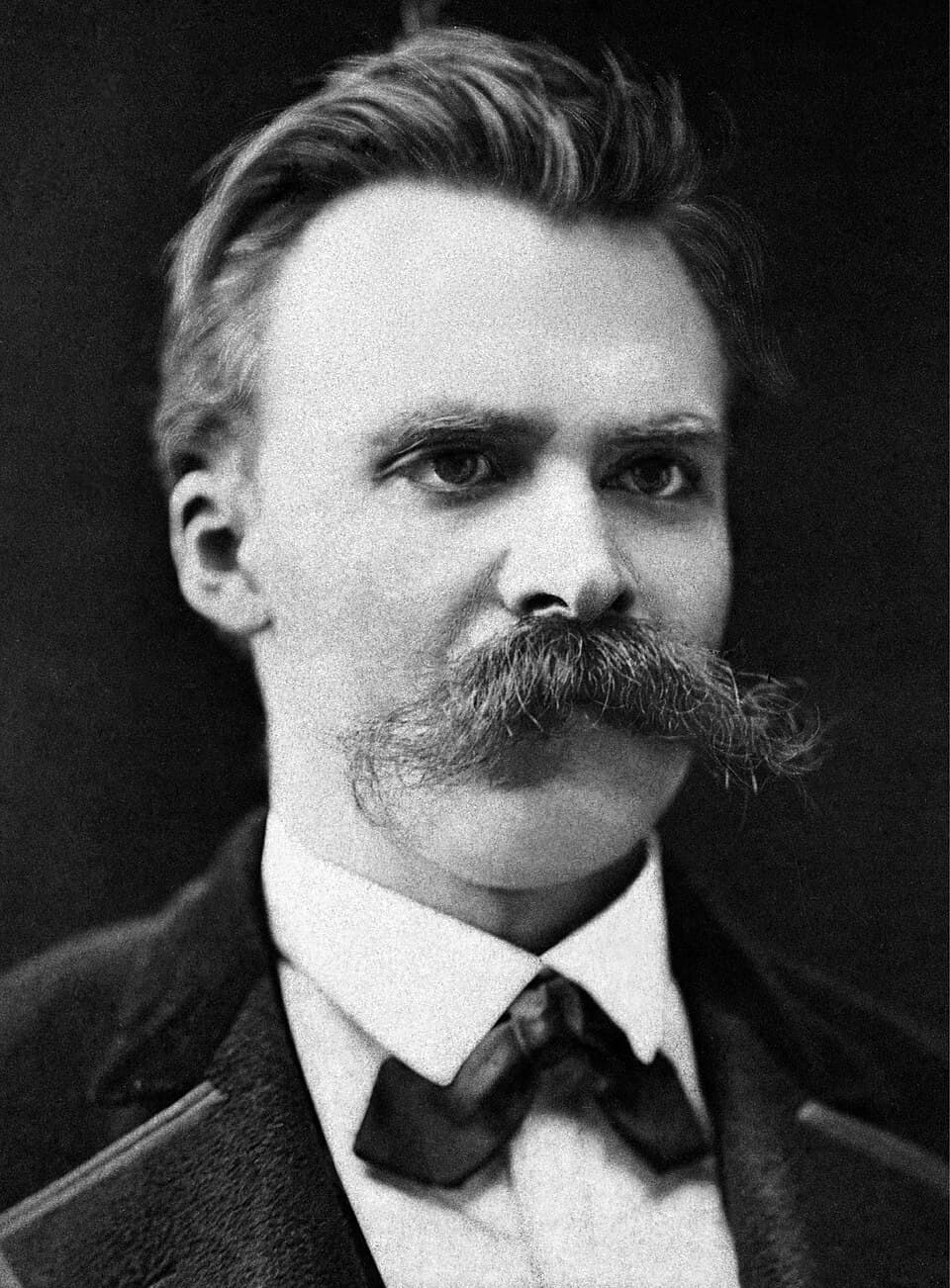
Friedrich Nietzsche
Thus Spake Zarathustra

The author posits that true redemption is found when a person can be grateful for their enemies and calamities, using them as tension to propel their life's ambition further.

...often noticeable in the case of so many of the world’s giants in art, science, or religion. In verse 19 we are told what Nietzsche called Redemption—that is to say, the ability to say of all that is past: “Thus would I have it.” The in ability to say this, and the resentment which results therefrom, he regards as the source of all our feelings of revenge, and all our desires to punish—punishment meaning to him merely a euphemism for the word revenge, invented in order to still our consciences.
He who can be proud of his enemies, who can be grateful to them for the obstacles they have put in his way; he who can regard his worst calamity as but the extra strain on the bow of his life, which is to send the arrow of his longing even further than he could have hoped;—this man knows no revenge, neither does he know despair, he truly has found redemption and can turn on the worst in his life and even in himself, and call it his best (see Notes on Chapter LVII.).
Chapter XLIII. Manly Prudence. This discourse is very important. In “Beyond Good and Evil” we hear often enough that the select and superior man must wear a mask, and here we find this injunction explained. “And he who would not languish amongst men, must learn to drink out of all glasses: and he who would keep clean amongst men, must know how to wash himself even with dirty water.” This, I venture to suggest, requires some explanation. At a time when individuality is supposed to be shown m...
5

Søren Kierkegaard

Fear and Trembling

Greatness Through Suffering

This excerpt agrees that true greatness arises not in spite of distress and paradox but through them, extending the parent's idea by suggesting that such individuals transcend conventional heroism and do not require external admiration.

...nce also that one whom God blesses He curses in the same breath? This is the spirit's interpretation of Mary, and she is not (as it shocks me to say, but shocks me still more to think that they have thoughtlessly and coquettishly interpreted her thus)–she is not a fine lady who sits in state and plays with an infant god. Nevertheless, when she says, "Behold the handmaid of the Lord"–then she is great, and I think it will not be found difficult to explain why she became the Mother of God.
She has no need of worldly admiration, any more than Abraham has need of tears, for she was not a heroine, and he was not a hero, but both of them became greater than such, not at all because they were exempted from distress and torment and paradox, but they became great through these. It is great when the poet, presenting his tragic hero before the admiration of men, dares to say, "Weep for him, for he deserves it." For it is great to deserve the tears of those who are worthy to shed tears. It is great that the poet dares to hold the crowd in check, dares to castigate men, requiring that ever...
For the waste-water of blubberers is a degradation of the holy.–But greater than all this it is that the knight of faith dares to say even to the noble man who would weep for him, "Weep not for me, but weep for thyself." One is deeply moved, one longs to be back in those beautiful times, a sweet yearning conducts one to the desired goal, to see Christ wandering in the promised land. One forgets the dread, the distress, the paradox. Was it so easy a matter not to be mistaken? Was it not d...

Blaise Pascal

Pensees

Pride's Strange Monster

This excerpt disputes the value of pride in overcoming miseries, calling it an aberration, thereby challenging the parent's endorsement of pride as a redeeming attitude toward enemies and calamity.

...e most indelible quality of man's heart. And those who most despise men, and put them on a level with the brutes, yet wish to be admired and believed by men, and contradict themselves by their own feelings; their nature, which is stronger than all, convincing them of the greatness of man more forcibly than reason convinces them of their baseness. 405 Contradiction.--Pride counterbalancing all miseries. Man either hides his miseries, or, if he disclose them, glories in knowing them. 406
Pride counterbalances and takes away all miseries. Here is a strange monster, and a very plain aberration. He is fallen from his place, and is anxiously seeking it. This is what all men do. Let us see who will have found it.
407 When malice has reason on its side, it becomes proud, and parades reason in all its splendour. When austerity or stern choice has not arrived at the true good, and must needs return to follow nature, it becomes proud by reason of this return. 408 Evil is easy, and has infinite forms; good is almost unique.[155] But a certain kind of evil is as difficult to find as what we call good; and often on this account such particular evil gets passed off as good. An extraordinary greatness of s...

Friedrich Nietzsche

Beyond Good and Evil

Suffering's Creative Fire

This excerpt explains that the discipline of great suffering is the driving force behind human elevation, providing the causal mechanism for why one can transform worst calamities into sources of strength and creativity.

...describable anguish, when we resist it,--when we regard your seriousness as more dangerous than any kind of levity. You want, if possible--and there is not a more foolish "if possible"--TO DO AWAY WITH SUFFERING; and we?--it really seems that WE would rather have it increased and made worse than it has ever been! Well-being, as you understand it--is certainly not a goal; it seems to us an END; a condition which at once renders man ludicrous and contemptible--and makes his destruction DESIRABLE!
The discipline of suffering, of GREAT suffering--know ye not that it is only THIS discipline that has produced all the elevations of humanity hitherto? The tension of soul in misfortune which communicates to it its energy, its shuddering in view of rack and ruin, its inventiveness and bravery in undergoing, enduring, interpreting, and exploiting misfortune, and whatever depth, mystery, disguise, spirit, artifice, or greatness has been bestowed upon the soul--has it not been bestowed through suffering, through the discipline of great suffering? In man CREATURE and CREATOR are united: in man the...
And that YOUR sympathy for the "creature in man" applies to that which has to be fashioned, bruised, forged, stretched, roasted, annealed, refined--to that which must necessarily SUFFER, and IS MEANT to suffer? And our sympathy--do ye not understand what our REVERSE sympathy applies to, when it resists your sympathy as the worst of all pampering and enervation?--So it is sympathy AGAINST sympathy!--But to repeat it once more, there are higher problems than the problems of pleasure and pain and...

Blaise Pascal

Pensees

The Lustful Enemy

This excerpt redirects the discussion from external adversaries to internal spiritual conflict, asserting that the real enemy is lust (which turns one from God) and the only true good is God, thus changing the lens from self-overcoming to divine orientation.

...the secret, who hears them both talk in this manner, will pass upon them the same judgment. But if afterwards, in the rest of their conversation one says angelic things, and the other always dull commonplaces, he will judge that the one spoke in mysteries, and not the other; the one having sufficiently shown that he is incapable of such foolishness, and capable of being mysterious; and the other that he is incapable of mystery, and capable of foolishness. The Old Testament is a cipher. 691
There are some that see clearly that man has no other enemy than lust, which turns him from God, and not God; and that he has no other good than God, and not a rich land. Let those who believe that the good of man is in the flesh, and evil in what turns him away from sensual pleasures, [satiate] themselves with them, and [die] in them. But let those who seek God with all their heart, who are only troubled at not seeing Him, who desire only to possess Him, and have as enemies only those who turn them away from Him, who are grieved at seeing themselves surrounded and overwhelmed with such en...
I shall show Him to them. I shall show that there is a God for them. I shall not show Him to others. I shall make them see that a Messiah has been promised, who should deliver them from their enemies, and that One has come to free them from their iniquities, but not from their enemies. When David foretold that the Messiah would deliver His people from their enemies, one can believe that in the flesh these would be the Egyptians; and then I cannot show that the prophecy was fulfilled. But one c...

Marcus Aurelius

Meditations

The Kinsman's Nature

This excerpt offers a daily practice of mentally preparing to encounter difficult people by reflecting on their ignorance and one's own shared rationality, thereby cultivating the resilience and understanding needed to turn obstacles into opportunities for virtue.

...that happened to thee in Cajeta, as unto Chryses when he prayed by the seashore. And when I did first apply myself to philosophy, that I did not fall into the hands of some sophists, or spent my time either in reading the manifold volumes of ordinary philosophers, nor in practising myself in the solution of arguments and fallacies, nor dwelt upon the studies of the meteors, and other natural curiosities. All these things without the assistance of the gods, and fortune, could not have been. XV.
In the country of the Quadi at Granua, these. Betimes in the morning say to thyself, This day I shalt have to do with an idle curious man, with an unthankful man, a railer, a crafty, false, or an envious man; an unsociable uncharitable man. All these ill qualities have happened unto them, through ignorance of that which is truly good and truly bad. But I that understand the nature of that which is good, that it only is to be desired, and of that which is bad, that it only is truly odious and shameful: who know moreover, that this transgressor, whosoever he be, is my kinsman, not by the same bl...
XVI. Whatsoever I am, is either flesh, or life, or that which we commonly call the mistress and overruling part of man; reason. Away with thy books, suffer not thy mind any more to be distracted, and carried to and fro; for it will not be; but as even now ready to die, think little of thy flesh: blood, bones, and a skin; a pretty piece of knit and twisted work, consisting of nerves, veins and arteries; think no more of it, than so. And as for thy life, consider what it is; a wind; not one cons...