Custom's Mystical Authority
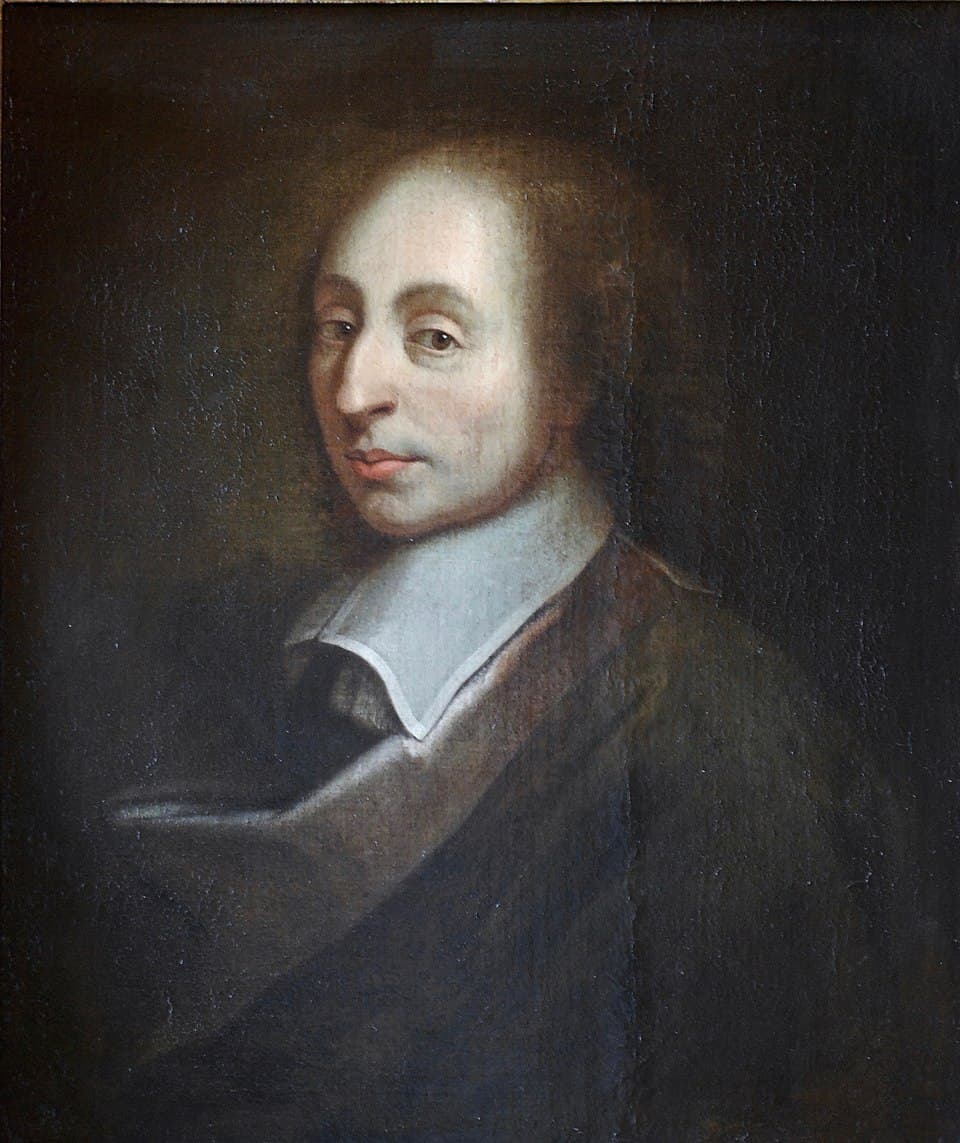
Blaise Pascal
Pensees

The author argues that the authority of law rests on custom and acceptance rather than inherent justice; attempting to trace equity back to first principles only serves to undermine it.

...corrupted has corrupted all. Nihil amplius nostrum est;[110] quod nostrum dicimus, artis est. Ex senatus--consultis et plebiscitis crimina exercentur.[111] Ut olim vitiis, sic nunc legibus laboramus.[112] The result of this confusion is that one affirms the essence of justice to be the authority of the legislator; another, the interest of the sovereign;[113] another, present custom,[114] and this is the most sure. Nothing, according to reason alone, is just in itself; all changes with time.
Custom creates the whole of equity, for the simple reason that it is accepted. It is the mystical foundation of its authority; whoever carries it back to first principles destroys it. Nothing is so faulty as those laws which correct faults. He who obeys them because they are just, obeys a justice which is imaginary, and not the essence of law; it is quite self-contained, it is law and nothing more.
He who will examine its motive will find it so feeble and so trifling that if he be not accustomed to contemplate the wonders of human imagination, he will marvel that one century has gained for it so much pomp and reverence. The art of opposition and of revolution is to unsettle established customs, sounding them even to their source, to point out their want of authority and justice. We must, it is said, get back to the natural and fundamental laws of the State, which an unjust custom has abol...
6

Blaise Pascal

Pensees

Custom vs Justice

This excerpt agrees with the parent by asserting that custom should be followed because it is custom, not because it is reasonable or just, echoing the idea that the authority of custom is self-contained and not based on an imaginary justice.

...h or wealth. The world again exults in showing how unreasonable this is; but it is very reasonable. Savages laugh at an infant king.[123] 3. In being offended at a blow, on in desiring glory so much. But it is very desirable on account of the other essential goods which are joined to it; and a man who has received a blow, without resenting it, is overwhelmed with taunts and indignities. 4. In working for the uncertain; in sailing on the sea; in walking over a plank. 325 Montaigne is wrong.
Custom should be followed only because it is custom, and not because it is reasonable or just. But people follow it for this sole reason, that they think it just. Otherwise they would follow it no longer, although it were the custom; for they will only submit to reason or justice. Custom without this would pass for tyranny; but the sovereignty of reason and justice is no more tyrannical than that of desire. They are principles natural to man.
It would therefore be right to obey laws and customs, because they are laws; but we should know that there is neither truth nor justice to introduce into them, that we know nothing of these, and so must follow what is accepted. By this means we would never depart from them. But people cannot accept this doctrine; and, as they believe that truth can be found, and that it exists in law and custom, they believe them, and take their antiquity as a proof of their truth, and not simply of their auth...

Aristotle

Nicomachean Ethics

Law's Universal Defect

This excerpt challenges the parent by presenting equity as a correction of law based on justice, implying that justice is real and that law can be improved by appealing to principles beyond mere custom.

...ramer of the law, but is inherent in the nature of the thing, because the matter of all action is necessarily such. When then the law has spoken in general terms, and there arises a case of exception to the general rule, it is proper, in so far as the lawgiver omits the case and by reason of his universality of statement is wrong, to set right the omission by ruling it as the lawgiver himself would rule were he there present, and would have provided by law had he foreseen the case would arise.
And so the Equitable is Just but better than one form of Just; I do not mean the abstract Just but the error which arises out of the universality of statement: and this is the nature of the Equitable, “a correction of Law, where Law is defective by reason of its universality.” This is the reason why not all things are according to law, because there are things about which it is simply impossible to lay down a law, and so we want special enactments for particular cases. For to speak generally, the rule of the undefined must be itself undefined also, just as the rule to measure Lesbian building...
It is clear then what the Equitable is; namely that it is Just but better than one form of Just: and hence it appears too who the Equitable man is: he is one who has a tendency to choose and carry out these principles, and who is not apt to press the letter of the law on the worse side but content to waive his strict claims though backed by the law: and this moral state is Equity, being a species of Justice, not a different moral state from Justice. Chapter XVI. The answer to the second of t...

Blaise Pascal

Pensees

The Heredity Compromise

This excerpt explains why unreasonable customs become accepted: due to the unruliness of men, which makes clear, arbitrary rules necessary to avoid conflict. This provides a causal explanation for the parent's claim that custom creates equity through acceptance.

...318 He has four lackeys. 319 How rightly do we distinguish men by external appearances rather than by internal qualities! Which of us two shall have precedence? Who will give place to the other? The least clever. But I am as clever as he. We should have to fight over this. He has four lackeys, and I have only one. This can be seen; we have only to count. It falls to me to yield, and I am a fool if I contest the matter. By this means we are at peace, which is the greatest of boons. 320
The most unreasonable things in the world become most reasonable, because of the unruliness of men. What is less reasonable than to choose the eldest son of a queen to rule a State? We do not choose as captain of a ship the passenger who is of the best family. This law would be absurd and unjust; but because men are so themselves, and always will be so, it becomes reasonable and just. For whom will men choose, as the most virtuous and able? We at once come to blows, as each claims to be the most virtuous and able. Let us then attach this quality to something indisputable. This is the king's el...
321 Children are astonished to see their comrades respected. 322 To be of noble birth is a great advantage. In eighteen years it places a man within the select circle, known and respected, as another would have merited in fifty years. It is a gain of thirty years without trouble. 323 What is the Ego? Suppose a man puts himself at a window to see those who pass by. If I pass by, can I say that he placed himself there to see me? No; for he does not think of me in particular. But does he...

Julius Evola

Revolt Against the Modern World

The Pontifical Function

This excerpt reframes the discussion from the authority of custom to a spiritual hierarchy, where obedience to tradition allows participation in a higher power, thus viewing custom not merely as accepted but as a mediator of transcendent principles.

...itself, through race and instinct, the echo and the trace of the departed higher element that has been lost; it is only in this way that the "racist" thesis in defense of the purity of blood can be validly upheld—if not to prevent, at least to delay the fatal outcome of the process of dissolution. It is impossible, however, to really prevent this outcome without an inner awakening. Analogous observations can be made concerning the value and the power of traditional forms, principles, and laws.
In a traditional social order there must be somebody in whom the principle upon which various institutions, legislations, and ethical and ritual regulations are based is truly active; this principle, though, must be an objective spiritual realization and not a simulacrum. In other words, what is required is an individual or an elite to assume the "pontifical" function of lords and mediators of power from above. Then even those who can only obey but who cannot adopt the law other than by complying with the external authority and tradition are able intuitively to know why they must obey; their o...
Just as when a magnetic current is present in a main circuit and induced currents are produced in other distinct circuits, provided they are syntonically arranged—likewise, some of the greatness, stability, and "fortune" that are found in the hierarchical apex pass invisibly into those who follow the mere form and the ritual with a pure heart. In that case, the tradition is firmly rooted, the social organism is unified and connected in all of its parts by an occult bond that is generally strong...

John Stewart Mill

Utilitarianism

Morality's Missing Root

This excerpt questions the possibility of settling on a single foundational principle for morality, highlighting the difficulty of gaining acceptance for any such principle, which aligns with the parent's skepticism about tracing custom to first principles.

...as well as truth and falsehood, are questions of observation and experience. But both hold equally that morality must be deduced from principles; and the intuitive school affirm as strongly as the inductive, that there is a science of morals. Yet they seldom attempt to make out a list of the à priori principles which are to serve as the premises of the science; still more rarely do they make any effort to reduce those various principles to one first principle, or common ground of obligation.
They either assume the ordinary precepts of morals as of à priori authority, or they lay down as the common groundwork of those maxims, some generality much less obviously authoritative than the maxims themselves, and which has never succeeded in gaining popular acceptance. Yet to support their pretensions there ought either to be some one fundamental principle or law, at the root of all morality, or if there be several, there should be a determinate order of precedence among them; and the one principle, or the rule for deciding between the various principles when they conflict, ought to be...
To inquire how far the bad effects of this deficiency have been mitigated in practice, or to what extent the moral beliefs of mankind have been vitiated or made uncertain by the absence of any distinct recognition of an ultimate standard, would imply a complete survey and criticism of past and present ethical doctrine. It would, however, be easy to show that whatever steadiness or consistency these moral beliefs have attained, has been mainly due to the tacit influence of a standard not recogn...

Aristotle

Nicomachean Ethics

The Equitable Man

This excerpt provides practical guidance on how to be an equitable person: by not insisting on the letter of the law but waiving strict claims when appropriate, offering a behavioral model in response to the discussion of law and equity.

...eason of its universality.” This is the reason why not all things are according to law, because there are things about which it is simply impossible to lay down a law, and so we want special enactments for particular cases. For to speak generally, the rule of the undefined must be itself undefined also, just as the rule to measure Lesbian building is made of lead: for this rule shifts according to the form of each stone and the special enactment according to the facts of the case in question.
It is clear then what the Equitable is; namely that it is Just but better than one form of Just: and hence it appears too who the Equitable man is: he is one who has a tendency to choose and carry out these principles, and who is not apt to press the letter of the law on the worse side but content to waive his strict claims though backed by the law: and this moral state is Equity, being a species of Justice, not a different moral state from Justice.
Chapter XVI. The answer to the second of the two questions indicated above, “whether it is possible for a man to deal unjustly by himself,” is obvious from what has been already stated. In the first place, one class of Justs is those which are enforced by law in accordance with Virtue in the most extensive sense of the term: for instance, the law does not bid a man kill himself; and whatever it does not bid it forbids: well, whenever a man does hurt contrary to the law (unless by way of requ...