Love's Methodical Madness
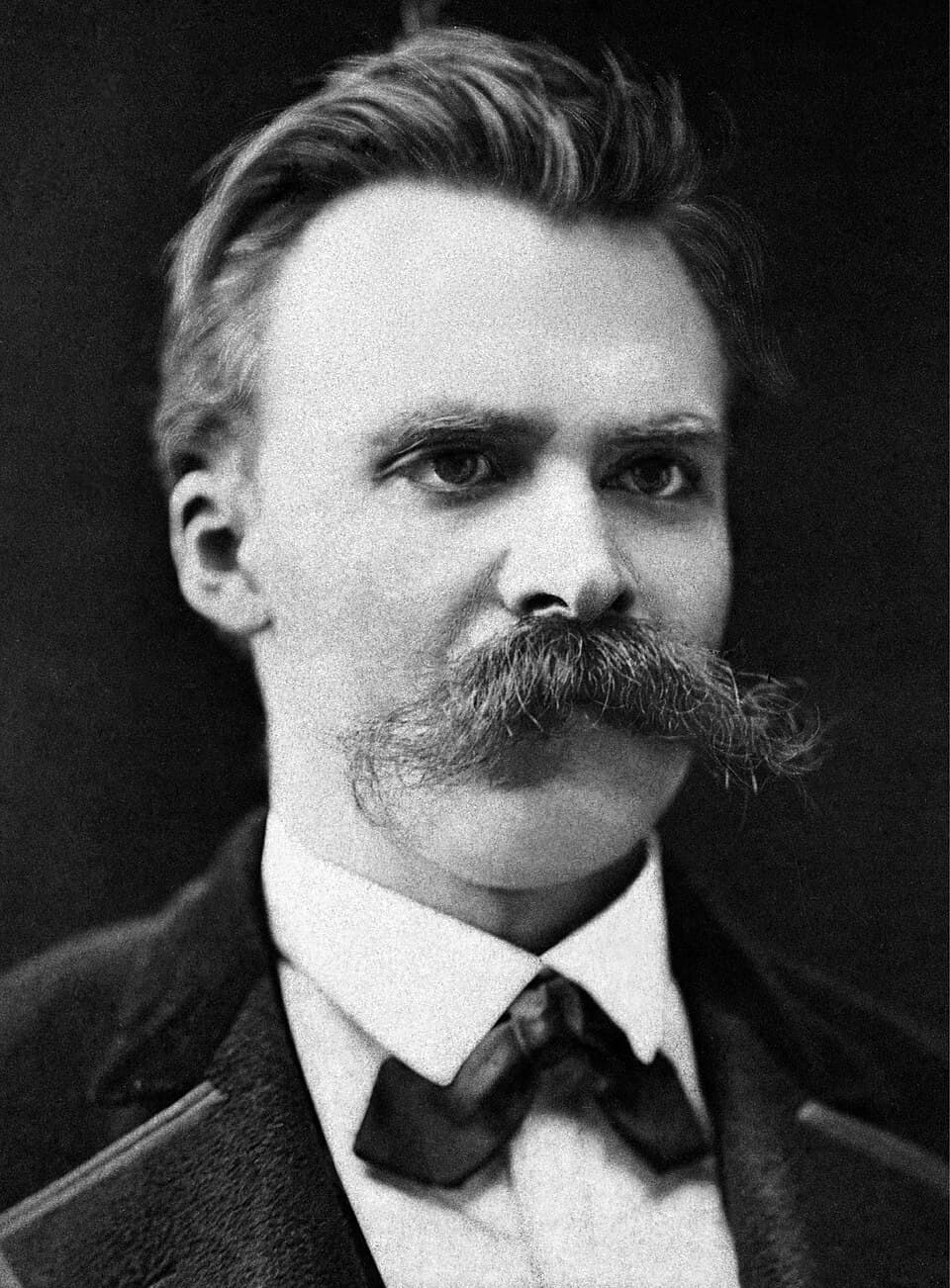
Friedrich Nietzsche
Thus Spake Zarathustra

A thesis asserting that the love of life is rooted in the 'madness' of love itself, favoring the light and 'butterfly-like' spirits over heavy, moralistic deities.

...tragic plays and tragic realities. Courageous, unconcerned, scornful, coercive—so wisdom wisheth us; she is a woman, and ever loveth only a warrior. Ye tell me, “Life is hard to bear.” But for what purpose should ye have your pride in the morning and your resignation in the evening? Life is hard to bear: but do not affect to be so delicate! We are all of us fine sumpter asses and assesses. What have we in common with the rose-bud, which trembleth because a drop of dew hath formed upon it?
It is true we love life; not because we are wont to live, but because we are wont to love. There is always some madness in love. But there is always, also, some method in madness. And to me also, who appreciate life, the butterflies, and soap-bubbles, and whatever is like them amongst us, seem most to enjoy happiness. To see these light, foolish, pretty, lively little sprites flit about—that moveth Zarathustra to tears and songs. I should only believe in a God that would know how to dance.
And when I saw my devil, I found him serious, thorough, profound, solemn: he was the spirit of gravity—through him all things fall. Not by wrath, but by laughter, do we slay. Come, let us slay the spirit of gravity! I learned to walk; since then have I let myself run. I learned to fly; since then I do not need pushing in order to move from a spot. Now am I light, now do I fly; now do I see myself under myself. Now there danceth a God in me.— Thus spake Zarathustra. VIII. THE TREE ON TH...
4

Friedrich Nietzsche

Thus Spake Zarathustra

Little Makes Happiness

Extends the parent's theme of finding happiness in light, fleeting things like butterflies and soap-bubbles by asserting that the smallest, gentlest things constitute the best happiness.

...y soul? Thou liest in the grass. But this is the secret, solemn hour, when no shepherd playeth his pipe. Take care! Hot noontide sleepeth on the fields. Do not sing! Hush! The world is perfect. Do not sing, thou prairie-bird, my soul! Do not even whisper! Lo—hush! The old noontide sleepeth, it moveth its mouth: doth it not just now drink a drop of happiness— —An old brown drop of golden happiness, golden wine? Something whisketh over it, its happiness laugheth. Thus—laugheth a God. Hush!— —
‘For happiness, how little sufficeth for happiness!’ Thus spake I once and thought myself wise. But it was a blasphemy: THAT have I now learned. Wise fools speak better. The least thing precisely, the gentlest thing, the lightest thing, a lizard’s rustling, a breath, a whisk, an eye-glance—LITTLE maketh up the BEST happiness.
Hush! —What hath befallen me: Hark! Hath time flown away? Do I not fall? Have I not fallen—hark! into the well of eternity? —What happeneth to me? Hush! It stingeth me—alas—to the heart? To the heart! Oh, break up, break up, my heart, after such happiness, after such a sting! —What? Hath not the world just now become perfect? Round and ripe? Oh, for the golden round ring—whither doth it fly? Let me run after it! Quick! Hush—” (and here Zarathustra stretched himself, and felt that he was asl...

Søren Kierkegaard

Fear and Trembling

The Absurd's New Creation

Presents a religious existential stance where one gains life through infinite resignation and absurd faith, challenging Nietzsche's direct affirmation of life and a dancing God.

...needed, I dare say I could get it." He lounges at an open window and looks out on the square on which he lives; he is interested in everything that goes on, in a rat which slips under the curb, in the children's play, and this with the nonchalance of a girl of sixteen. And yet he is no genius, for in vain I have sought in him the incommensurability of genius. In the evening he smokes his pipe; to look at him one would swear that it was the grocer over the way vegetating in the twilight.
He lives as carefree as a ne'er-do-well, and yet he buys up the acceptable time at the dearest price, for he does not do the least thing except by virtue of the absurd. And yet, and yet–actually I could become furious over it, for envy if for no other reason–this man has made and every instant is making the movements of infinity. With infinite resignation he has drained the cup of life's profound sadness, he knows the bliss of the infinite, he senses the pain of renouncing everything, the dearest things he possesses in the world, and yet finiteness tastes to him just as good as to one who neve...
He constantly makes the movements of infinity, but he does this with such correctness and assurance that he constantly gets the finite out of it, and there is not a second when one has a notion of anything else. It is supposed to be the most difficult task for a dancer to leap into a definite posture in such a way that there is not a second when he is grasping after the posture, but by the leap itself he stands fixed in that posture. Perhaps no dancer can do it–that is what this knight d...

Friedrich Nietzsche

Thus Spake Zarathustra

Wisdom's Angry Mirror

Explains the driving force behind loving life: we praise life because we will, crave, and love, thus detailing the psychological mechanism hinted at in the parent text.

...fathomable. “Such is the language of all fish,” saidst thou; “what THEY do not fathom is unfathomable. But changeable am I only, and wild, and altogether a woman, and no virtuous one: Though I be called by you men the ‘profound one,’ or the ‘faithful one,’ ‘the eternal one,’ ‘the mysterious one.’ But ye men endow us always with your own virtues—alas, ye virtuous ones!” Thus did she laugh, the unbelievable one; but never do I believe her and her laughter, when she speaketh evil of herself.
And when I talked face to face with my wild Wisdom, she said to me angrily: “Thou willest, thou cravest, thou lovest; on that account alone dost thou PRAISE Life!” Then had I almost answered indignantly and told the truth to the angry one; and one cannot answer more indignantly than when one “telleth the truth” to one’s Wisdom. For thus do things stand with us three. In my heart do I love only Life—and verily, most when I hate her! But that I am fond of Wisdom, and often too fond, is because she remindeth me very strongly of Life! She hath her eye, her laugh, and even her golden angle-rod: am...
And when once Life asked me: “Who is she then, this Wisdom?”—then said I eagerly: “Ah, yes! Wisdom! One thirsteth for her and is not satisfied, one looketh through veils, one graspeth through nets. Is she beautiful? What do I know! But the oldest carps are still lured by her. Changeable is she, and wayward; often have I seen her bite her lip, and pass the comb against the grain of her hair. Perhaps she is wicked and false, and altogether a woman; but when she speaketh ill of herself, just...

Augustine of Hippo

Confessions

Beauty as Attraction

Reframes the discussion from love's madness to an inquiry into beauty as harmony and proportion, shifting the value axis from chaotic passion to orderly correspondence.

...d ye, when ye are on high, and set your mouth against the heavens? Descend, that ye may ascend, and ascend to God. For ye have fallen, by ascending against Him." Tell them this, that they may weep in the valley of tears, and so carry them up with thee unto God; because out of His spirit thou speakest thus unto them, if thou speakest, burning with the fire of charity. These things I then knew not, and I loved these lower beauties, and I was sinking to the very depths, and to my friends I said,
"Do we love any thing but the beautiful? What then is the beautiful? and what is beauty? What is it that attracts and wins us to the things we love? for unless there were in them a grace and beauty, they could by no means draw us unto them." And I marked and perceived that in bodies themselves, there was a beauty, from their forming a sort of whole, and again, another from apt and mutual correspondence, as of a part of the body with its whole, or a shoe with a foot, and the like.
And this consideration sprang up in my mind, out of my inmost heart, and I wrote "on the fair and fit," I think, two or three books. Thou knowest, O Lord, for it is gone from me; for I have them not, but they are strayed from me, I know not how. But what moved me, O Lord my God, to dedicate these books unto Hierius, an orator of Rome, whom I knew not by face, but loved for the fame of his learning which was eminent in him, and some words of his I had heard, which pleased me? But more did he pl...