Virtue's Foundational Role
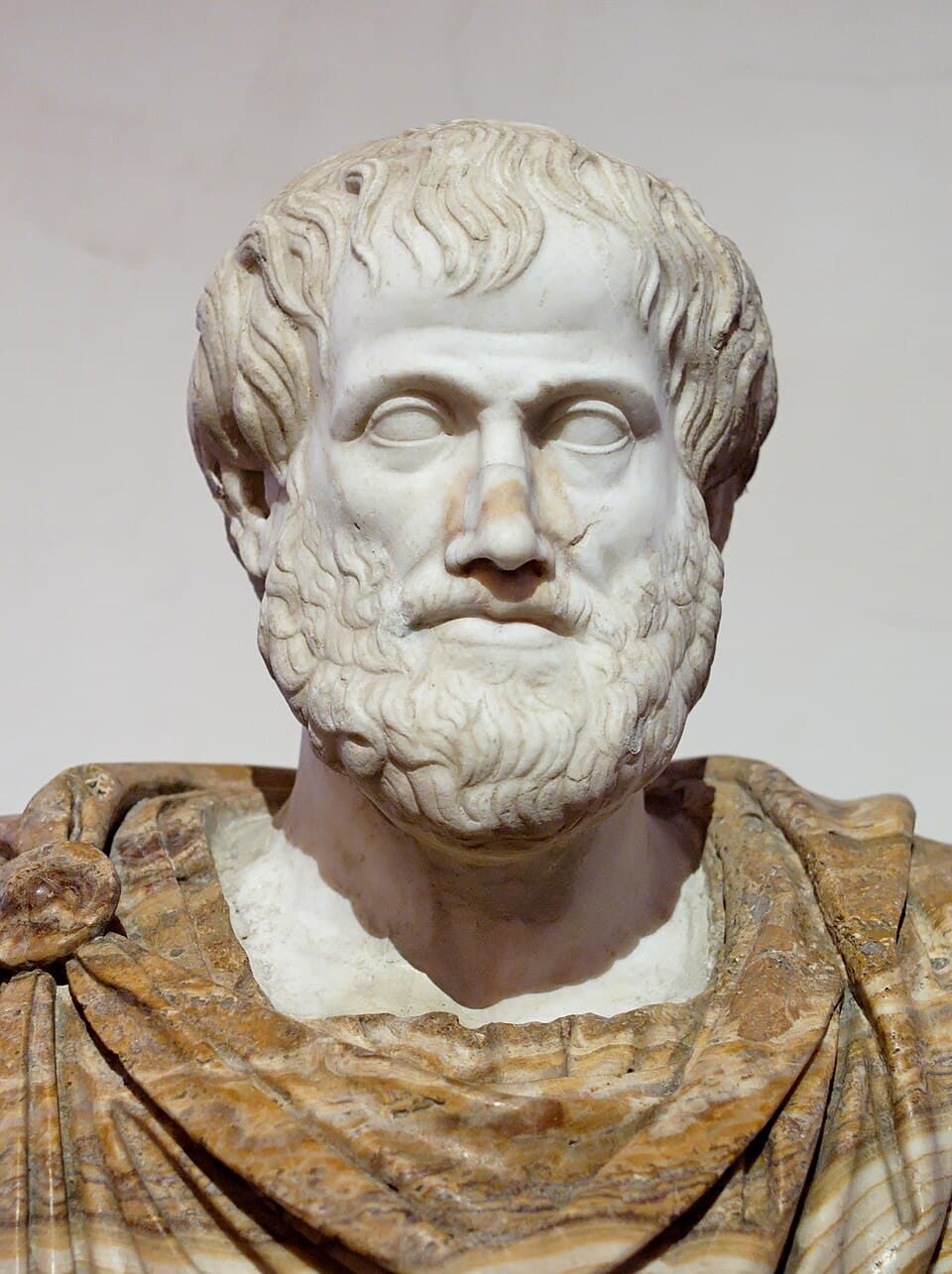
Aristotle
Nicomachean Ethics

The author claims that moral principles are not taught by reason but are grasped through excellence and habits of character.

...so they of Imperfect Self-Control are not unjust, but they do unjust acts. But to resume. Since the man of Imperfect Self-Control is of such a character as to follow bodily pleasures in excess and in defiance of Right Reason, without acting on any deliberate conviction, whereas the man utterly destitute of Self-Control does act upon a conviction which rests on his natural inclination to follow after these pleasures; the former may be easily persuaded to a different course, but the latter not:
For Virtue and Vice respectively preserve and corrupt the moral principle; now the motive is the principle or starting point in moral actions, just as axioms and postulates are in mathematics: and neither in morals nor mathematics is it Reason which is apt to teach the principle; but Excellence, either natural or acquired by custom, in holding right notions with respect to the principle.
He who does this in morals is the man of Perfected Self-Mastery, and the contrary character is the man utterly destitute of Self-Control. Again, there is a character liable to be taken off his feet in defiance of Right Reason because of passion; whom passion so far masters as to prevent his acting in accordance with Right Reason, but not so far as to make him be convinced that it is his proper line to follow after such pleasures without limit: this character is the man of Imperfect Self- Contr...
6

Aristotle

Nicomachean Ethics

Virtue Beyond Nature

This excerpt extends the parent's claim that excellence is either natural or acquired by custom by explaining how virtues are not innate but developed through habituation, directly reinforcing the idea that moral principles are preserved by virtue cultivated through practice.

...science in right of his mental state;[45] and of these such as are praiseworthy we call Excellences. BOOK II Chapter I. Well: human Excellence is of two kinds, Intellectual and Moral:[1] now the Intellectual springs originally, and is increased subsequently, from teaching (for the most part that is[2]), and needs therefore experience and time; whereas the Moral comes from custom, and so the Greek term denoting it is but a slight deflection from the term denoting custom in that language.
From this fact it is plain that not one of the Moral Virtues comes to be in us merely by nature: because of such things as exist by nature, none can be changed by custom: a stone, for instance, by nature gravitating downwards, could never by custom be brought to ascend, not even if one were to try and accustom it by throwing it up ten thousand times; nor could file again be brought to descend, nor in fact could anything whose nature is in one way be brought by custom to be in another. The Virtues then come to be in us neither by nature, nor in despite of nature, but we are furnished by nature...
Again, in whatever cases we get things by nature, we get the faculties first and perform the acts of working afterwards; an illustration of which is afforded by the case of our bodily senses, for it was not from having often seen or heard that we got these senses, but just the reverse: we had them and so exercised them, but did not have them because we had exercised them. But the Virtues we get by first performing single acts of working, which, again, is the case of other things, as the arts f...

Francois de La Rochefoucauld

Maxims

Nature's Flawed Virtues

La Rochefoucauld challenges the parent's dismissal of reason's role by asserting that reason must teach us to manage practical affairs like estate and confidence, implying that reason does have a pedagogical function in some domains, which contrasts with Aristotle's claim that reason does not teach moral principles.

There are virtues which degenerate into vices when they arise from Nature, and others which when acquired are never perfect. For example, reason must teach us to manage our estate and our confidence, while Nature should have given us goodness and valour.

Aristotle

Nicomachean Ethics

Virtue's Pleasure-Pain Axis

This text provides a psychological mechanism for how virtue preserves and vice corrupts: by aligning or misaligning our pleasures and pains, virtue educates our desires to follow the right principles, while vice does the opposite.

...e so we shall be best able to stand up against such objects. And for a test of the formation of the habits we must take the pleasure or pain which succeeds the acts; for he is perfected in Self-Mastery who not only abstains from the bodily pleasures but is glad to do so; whereas he who abstains but is sorry to do it has not Self-Mastery: he again is brave who stands up against danger, either with positive pleasure or at least without any pain; whereas he who does it with pain is not brave.[6]
For Moral Virtue has for its object-matter pleasures and pains, because by reason of pleasure we do what is bad, and by reason of pain decline doing what is right (for which cause, as Plato observes, men should have been trained straight from their childhood to receive pleasure and pain from proper objects, for this is the right education). Again: since Virtues have to do with actions and feelings, and on every feeling and every action pleasure and pain follow, here again is another proof that Virtue has for its object-matter pleasure and pain. The same is shown also by the fact that punishmen...
Again, to quote what we said before: every habit of the Soul by its very nature has relation to, and exerts itself upon, things of the same kind as those by which it is naturally deteriorated or improved: now such habits do come to be vicious by reason of pleasures and pains, that is, by men pursuing or avoiding respectively, either such as they ought not, or at wrong times, or in wrong manner, and so forth (for which reason, by the way, some people define the Virtues as certain states of impas...

John Stewart Mill

Utilitarianism

Virtue as End

Mill reframes virtue from being about inherent excellence to being a good that is originally valued for its utility but can become desired for itself, shifting the lens from natural/customary excellence to consequentialist and associative psychology.

...no less really than pleasure and the absence of pain. The desire of virtue is not as universal, but it is as authentic a fact, as the desire of happiness. And hence the opponents of the utilitarian standard deem that they have a right to infer that there are other ends of human action besides happiness, and that happiness is not the standard of approbation and disapprobation. But does the utilitarian doctrine deny that people desire virtue, or maintain that virtue is not a thing to be desired?
The very reverse. It maintains not only that virtue is to be desired, but that it is to be desired disinterestedly, for itself. Whatever may be the opinion of utilitarian moralists as to the original conditions by which virtue is made virtue; however they may believe (as they do) that actions and dispositions are only virtuous because they promote another end than virtue; yet this being granted, and it having been decided, from considerations of this description, what is virtuous, they not only place virtue at the very head of the things which are good as means to the ultimate end, but they...
This opinion is not, in the smallest degree, a departure from the Happiness principle. The ingredients of happiness are very various, and each of them is desirable in itself, and not merely when considered as swelling an aggregate. The principle of utility does not mean that any given pleasure, as music, for instance, or any given exemption from pain, as for example health, are to be looked upon as means to a collective something termed happiness, and to be desired on that account. They are des...

John Stewart Mill

Utilitarianism

Roots of Science

Mill reflects on the epistemology of first principles, arguing that in practical arts like morals, principles derive from ends, which questions whether moral principles are akin to mathematical axioms or are constructed from goals, thus meta-engaging with the parent's analogy.

...t the detailed doctrines of a science are not usually deduced from, nor depend for their evidence upon, what are called its first principles. Were it not so, there would be no science more precarious, or whose conclusions were more insufficiently made out, than algebra; which derives none of its certainty from what are commonly taught to learners as its elements, since these, as laid down by some of its most eminent teachers, are as full of fictions as English law, and of mysteries as theology.
The truths which are ultimately accepted as the first principles of a science, are really the last results of metaphysical analysis, practised on the elementary notions with which the science is conversant; and their relation to the science is not that of foundations to an edifice, but of roots to a tree, which may perform their office equally well though they be never dug down to and exposed to light. But though in science the particular truths precede the general theory, the contrary might be expected to be the case with a practical art, such as morals or legislation. All action is for the s...
When we engage in a pursuit, a clear and precise conception of what we are pursuing would seem to be the first thing we need, instead of the last we are to look forward to. A test of right and wrong must be the means, one would think, of ascertaining what is right or wrong, and not a consequence of having already ascertained it. The difficulty is not avoided by having recourse to the popular theory of a natural faculty, a sense or instinct, informing us of right and wrong. For--besides that th...

Marcus Aurelius

Meditations

Nature's Superior Art

Marcus Aurelius offers practical guidance on preserving justice (and thus virtue) by avoiding attachment to worldly things, deception, rashness, and inconstancy, answering 'what should I do?' to cultivate virtue.

...y care to keep thyself constant in both; both in a right judgment and action, and in true meekness towards them, that either shall do their endeavour to hinder thee, or at least will be displeased with thee for what thou hast done. For to fail in either (either in the one to give over for fear, or in the other to forsake thy natural affection towards him, who by nature is both thy friend and thy kinsman) is equally base, and much savouring of the disposition of a cowardly fugitive soldier. IX.
It is not possible that any nature should be inferior unto art, since that all arts imitate nature. If this be so; that the most perfect and general nature of all natures should in her operation come short of the skill of arts, is most improbable. Now common is it to all arts, to make that which is worse for the better's sake. Much more then doth the common nature do the same. Hence is the first ground of justice. From justice all other virtues have their existence. For justice cannot be preserved, if either we settle our minds and affections upon worldly things; or be apt to be deceived, or r...
X. The things themselves (which either to get or to avoid thou art put to so much trouble) come not unto thee themselves; but thou in a manner goest unto them. Let then thine own judgment and opinion concerning those things be at rest; and as for the things themselves, they stand still and quiet, without any noise or stir at all; and so shall all pursuing and flying cease. XI. Then is the soul as Empedocles doth liken it, like unto a sphere or globe, when she is all of one form and figure: wh...