The author posits that arming one's subjects is a strategic necessity for new princes, as it transforms distrusted individuals into loyal adherents and defenders.
Arming Your Subjects
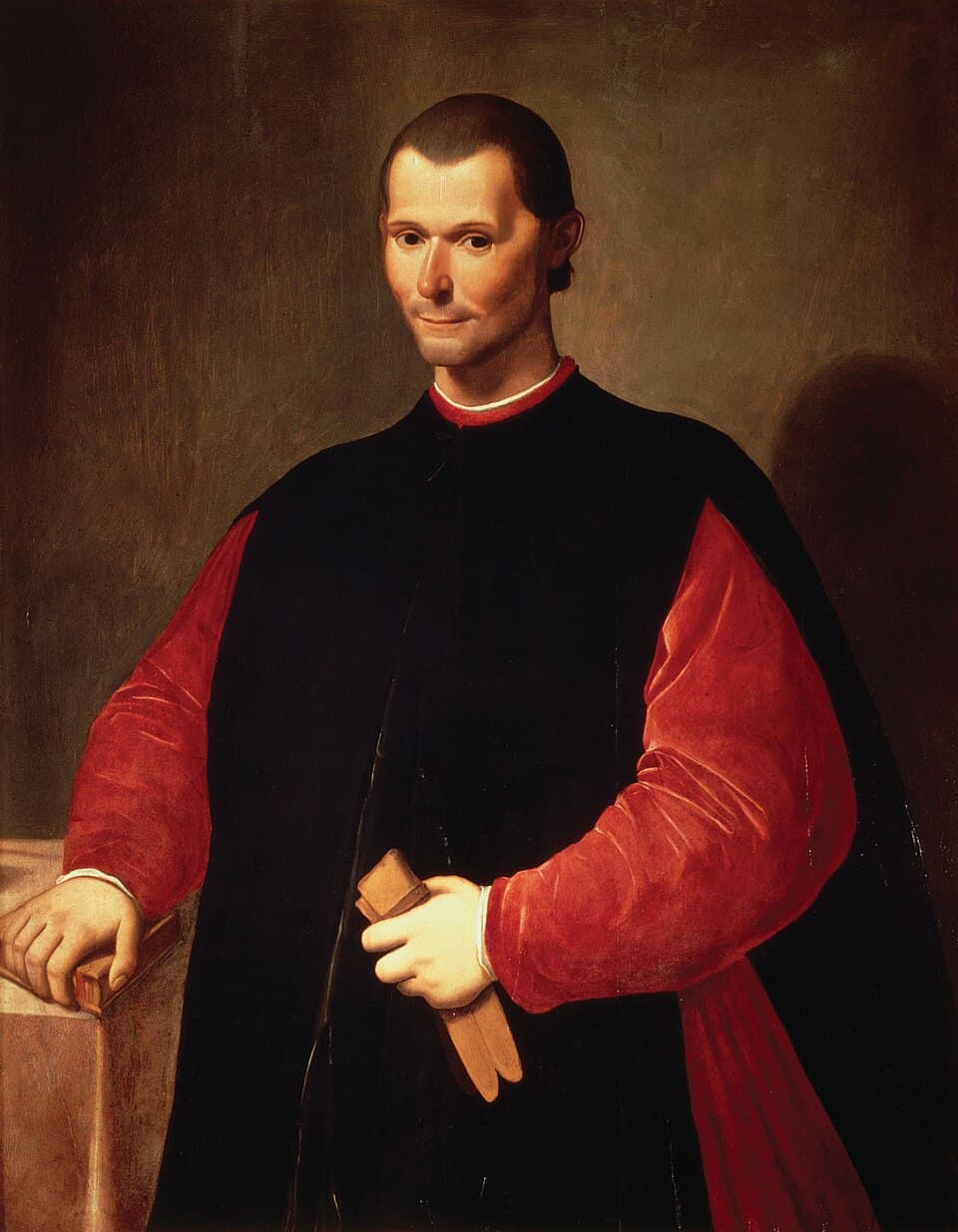
Niccolo Machiavelli
The Prince...ns distracted by factions; others have fostered enmities against themselves; others have laid themselves out to gain over those whom they distrusted in the beginning of their governments; some have built fortresses; some have overthrown and destroyed them. And although one cannot give a final judgment on all of these things unless one possesses the particulars of those states in which a decision has to be made, nevertheless I will speak as comprehensively as the matter of itself will admit. 2.
There never was a new prince who has disarmed his subjects; rather when he has found them disarmed he has always armed them, because, by arming them, those arms become yours, those men who were distrusted become faithful, and those who were faithful are kept so, and your subjects become your adherents. And whereas all subjects cannot be armed, yet when those whom you do arm are benefited, the others can be handled more freely, and this difference in their treatment, which they quite understand, makes the former your dependents, and the latter, considering it to be necessary that those who have the most danger and service should have the most reward, excuse you.
But when you disarm them, you at once offend them by showing that you distrust them, either for cowardice or for want of loyalty, and either of these opinions breeds hatred against you. And because you cannot remain unarmed, it follows that you turn to mercenaries, which are of the character already shown; even if they should be good they would not be sufficient to defend you against powerful enemies and distrusted subjects. Therefore, as I have said, a new prince in a new principality has alwa...
3
⚖The Conspiracy Calculus

Niccolo Machiavelli
The PrinceMachiavelli argues that the best defense against conspiracies is for a prince to avoid the hatred of his people, as conspirators are deterred when they cannot count on popular support. He notes that the inherent risks and the likelihood of betrayal make successful conspiracies extremely rare.
...disturbed, if he has carried out his preparations and has lived as I have said, as long as he does not despair, he will resist every attack, as I said Nabis the Spartan did. But concerning his subjects, when affairs outside are disturbed he has only to fear that they will conspire secretly, from which a prince can easily secure himself by avoiding being hated and despised, and by keeping the people satisfied with him, which it is most necessary for him to accomplish, as I said above at length.
And one of the most efficacious remedies that a prince can have against conspiracies is not to be hated and despised by the people, for he who conspires against a prince always expects to please them by his removal; but when the conspirator can only look forward to offending them, he will not have the courage to take such a course, for the difficulties that confront a conspirator are infinite. And as experience shows, many have been the conspiracies, but few have been successful; because he who conspires cannot act alone, nor can he take a companion except from those whom he believes to be malcontents, and as soon as you have opened your mind…
And, to reduce the matter into a small compass, I say that, on the side of the conspirator, there is nothing but fear, jealousy, prospect of punishment to terrify him; but on the side of the prince there is the majesty of the principality, the laws, the protection of friends and the state to defend him; so that, adding to all these things the popular goodwill, it is impossible that any one should be so rash as to conspire. For whereas in general the conspirator has to fear before the execution...
Continue reading →
2
⚖Mercenary Captain's Risk

Niccolo Machiavelli
The PrinceThe author criticizes the use of mercenary captains, arguing they are either dangerously ambitious or incompetently ruinous, and insists that a prince must lead his own army in person.
...y for him to send his quartermasters to chalk up the billets for his soldiers to conquer the country. Cf. “The History of Henry VII,” by Lord Bacon: “King Charles had conquered the realm of Naples, and lost it again, in a kind of a felicity of a dream. He passed the whole length of Italy without resistance: so that it was true what Pope Alexander was wont to say: That the Frenchmen came into Italy with chalk in their hands, to mark up their lodgings, rather than with swords to fight.”
I wish to demonstrate further the infelicity of these arms. The mercenary captains are either capable men or they are not; if they are, you cannot trust them, because they always aspire to their own greatness, either by oppressing you, who are their master, or others contrary to your intentions; but if the captain is not skilful, you are ruined in the usual way. And if it be urged that whoever is armed will act in the same way, whether mercenary or not, I reply that when arms have to be resorted to, either by a prince or a republic, then the prince ought to go in person and perform the duty of a captain; the republic has to send its citizens,…
And experience has shown princes and republics, single-handed, making the greatest progress, and mercenaries doing nothing except damage; and it is more difficult to bring a republic, armed with its own arms, under the sway of one of its citizens than it is to bring one armed with foreign arms. Rome and Sparta stood for many ages armed and free. The Switzers are completely armed and quite free. Of ancient mercenaries, for example, there are the Carthaginians, who were oppressed by their mercen...
Continue reading →
2
⚖The Balanced Servant

Niccolo Machiavelli
The PrinceMachiavelli advises that a prince must maintain the loyalty of his servants by enriching and honoring them so they feel dependent on him, ensuring a stable and mutually beneficial relationship.
...e a prince to form an opinion of his servant there is one test which never fails; when you see the servant thinking more of his own interests than of yours, and seeking inwardly his own profit in everything, such a man will never make a good servant, nor will you ever be able to trust him; because he who has the state of another in his hands ought never to think of himself, but always of his prince, and never pay any attention to matters in which the prince is not concerned. On the other hand,
To keep his servant honest the prince ought to study him, honouring him, enriching him, doing him kindnesses, sharing with him the honours and cares; and at the same time let him see that he cannot stand alone, so that many honours may not make him desire more, many riches make him wish for more, and that many cares may make him dread chances. When, therefore, servants, and princes towards servants, are thus disposed, they can trust each other, but when it is otherwise, the end will always be disastrous for either one or the other.
CHAPTER XXIII. HOW FLATTERERS SHOULD BE AVOIDED I do not wish to leave out an important branch of this subject, for it is a danger from which princes are with difficulty preserved, unless they are very careful and discriminating. It is that of flatterers, of whom courts are full, because men are so self-complacent in their own affairs, and in a way so deceived in them, that they are preserved with difficulty from this pest, and if they wish to defend themselves they run the danger of fall...
3