Mercenaries' Uselessness
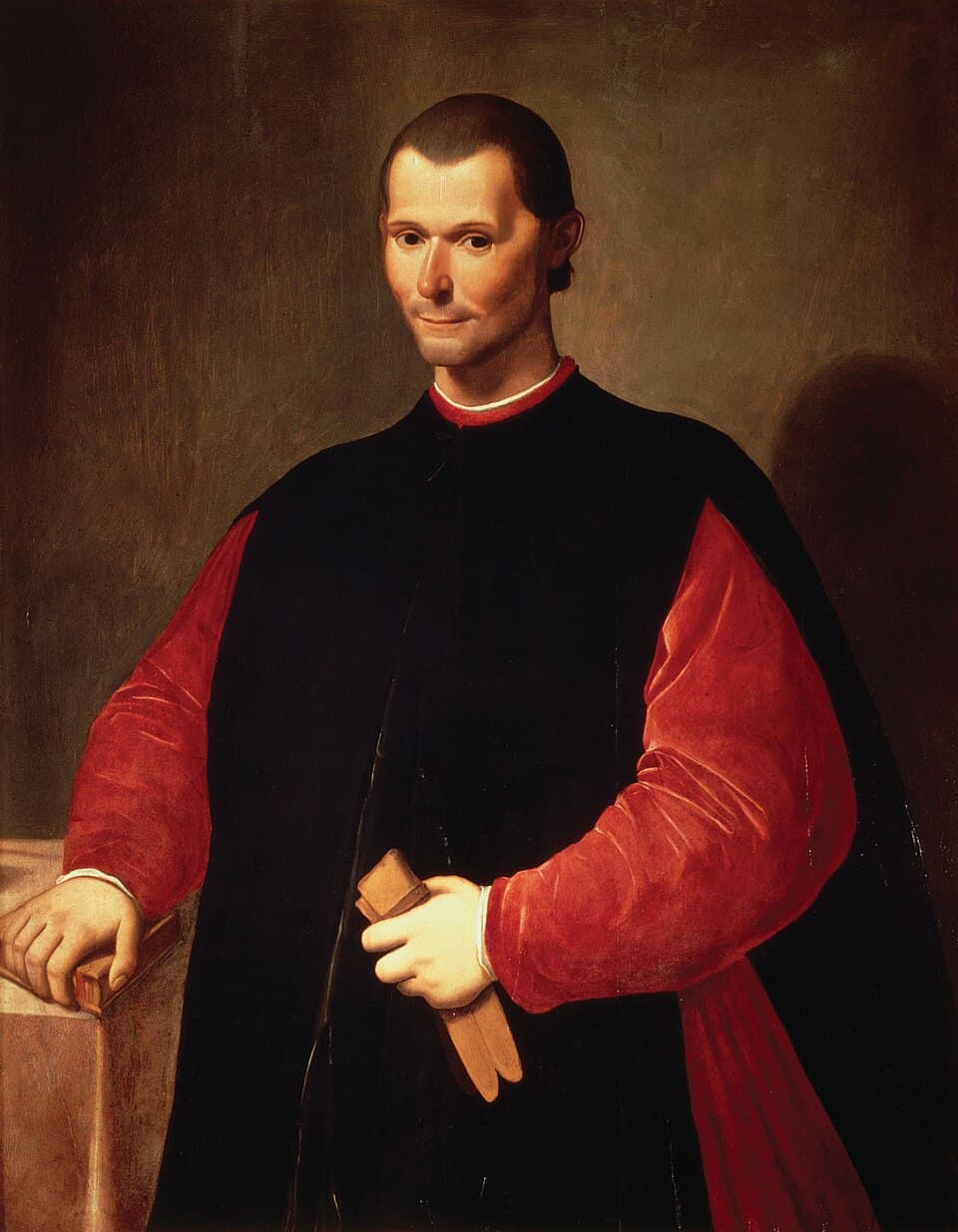
Niccolo Machiavelli
The Prince

The author asserts that the primary foundations of a stable state are good laws and a strong military, specifically one composed of the prince's own subjects. He dismisses mercenaries and auxiliaries as useless and dangerous, arguing they lack the genuine motivation required to face death in battle.

...the characteristics of such principalities as in the beginning I proposed to discuss, and having considered in some degree the causes of there being good or bad, and having shown the methods by which many have sought to acquire them and to hold them, it now remains for me to discuss generally the means of offence and defence which belong to each of them. We have seen above how necessary it is for a prince to have his foundations well laid, otherwise it follows of necessity he will go to ruin.
The chief foundations of all states, new as well as old or composite, are good laws and good arms; and as there cannot be good laws where the state is not well armed, it follows that where they are well armed they have good laws. I shall leave the laws out of the discussion and shall speak of the arms. I say, therefore, that the arms with which a prince defends his state are either his own, or they are mercenaries, auxiliaries, or mixed. Mercenaries and auxiliaries are useless and dangerous; and if one holds his state based on these arms, he will stand neither firm nor safe; for they are disunited, ambitious, and without discipline,…
They are ready enough to be your soldiers whilst you do not make war, but if war comes they take themselves off or run from the foe; which I should have little trouble to prove, for the ruin of Italy has been caused by nothing else than by resting all her hopes for many years on mercenaries, and although they formerly made some display and appeared valiant amongst themselves, yet when the foreigners came they showed what they were. Thus it was that Charles, King of France, was allowed to seize...
Continue reading →
2
Swift Cruelty, Gradual Kindness
Niccolo Machiavelli
The Prince

The author advises that a usurper should commit all necessary cruelties at once to allow subjects to forget them, while dispensing benefits slowly to ensure they are savored.

...The badly employed are those which, notwithstanding they may be few in the commencement, multiply with time rather than decrease. Those who practise the first system are able, by aid of God or man, to mitigate in some degree their rule, as Agathocles did. It is impossible for those who follow the other to maintain themselves. [2] Mr Burd suggests that this word probably comes near the modern equivalent of Machiavelli’s thought when he speaks of “crudelta” than the more obvious “cruelties.”
Hence it is to be remarked that, in seizing a state, the usurper ought to examine closely into all those injuries which it is necessary for him to inflict, and to do them all at one stroke so as not to have to repeat them daily; and thus by not unsettling men he will be able to reassure them, and win them to himself by benefits. He who does otherwise, either from timidity or evil advice, is always compelled to keep the knife in his hand; neither can he rely on his subjects, nor can they attach themselves to him, owing to their continued and repeated wrongs. For injuries ought to be done all at one time, so that, being tasted less, they offend…
And above all things, a prince ought to live amongst his people in such a way that no unexpected circumstances, whether of good or evil, shall make him change; because if the necessity for this comes in troubled times, you are too late for harsh measures; and mild ones will not help you, for they will be considered as forced from you, and no one will be under any obligation to you for them. CHAPTER IX. CONCERNING A CIVIL PRINCIPALITY But coming to the other point—where a leading citizen...
Continue reading →
2
States' Two Forms
Niccolo Machiavelli
The Prince

A foundational classification of political structures, defining all states as either republics or principalities, with the latter being either hereditary or newly acquired.

...hich I send it; wherein, if it be diligently read and considered by you, you will learn my extreme desire that you should attain that greatness which fortune and your other attributes promise. And if your Magnificence from the summit of your greatness will sometimes turn your eyes to these lower regions, you will see how unmeritedly I suffer a great and continued malignity of fortune. THE PRINCE CHAPTER I. HOW MANY KINDS OF PRINCIPALITIES THERE ARE, AND BY WHAT MEANS THEY ARE ACQUIRED
All states, all powers, that have held and hold rule over men have been and are either republics or principalities. Principalities are either hereditary, in which the family has been long established; or they are new. The new are either entirely new, as was Milan to Francesco Sforza, or they are, as it were, members annexed to the hereditary state of the prince who has acquired them, as was the kingdom of Naples to that of the King of Spain.
Such dominions thus acquired are either accustomed to live under a prince, or to live in freedom; and are acquired either by the arms of the prince himself, or of others, or else by fortune or by ability. CHAPTER II. CONCERNING HEREDITARY PRINCIPALITIES I will leave out all discussion on republics, inasmuch as in another place I have written of them at length, and will address myself only to principalities. In doing so I will keep to the order indicated above, and discuss how such princi...
3
End of shuffled session