The Inheritor's Failure
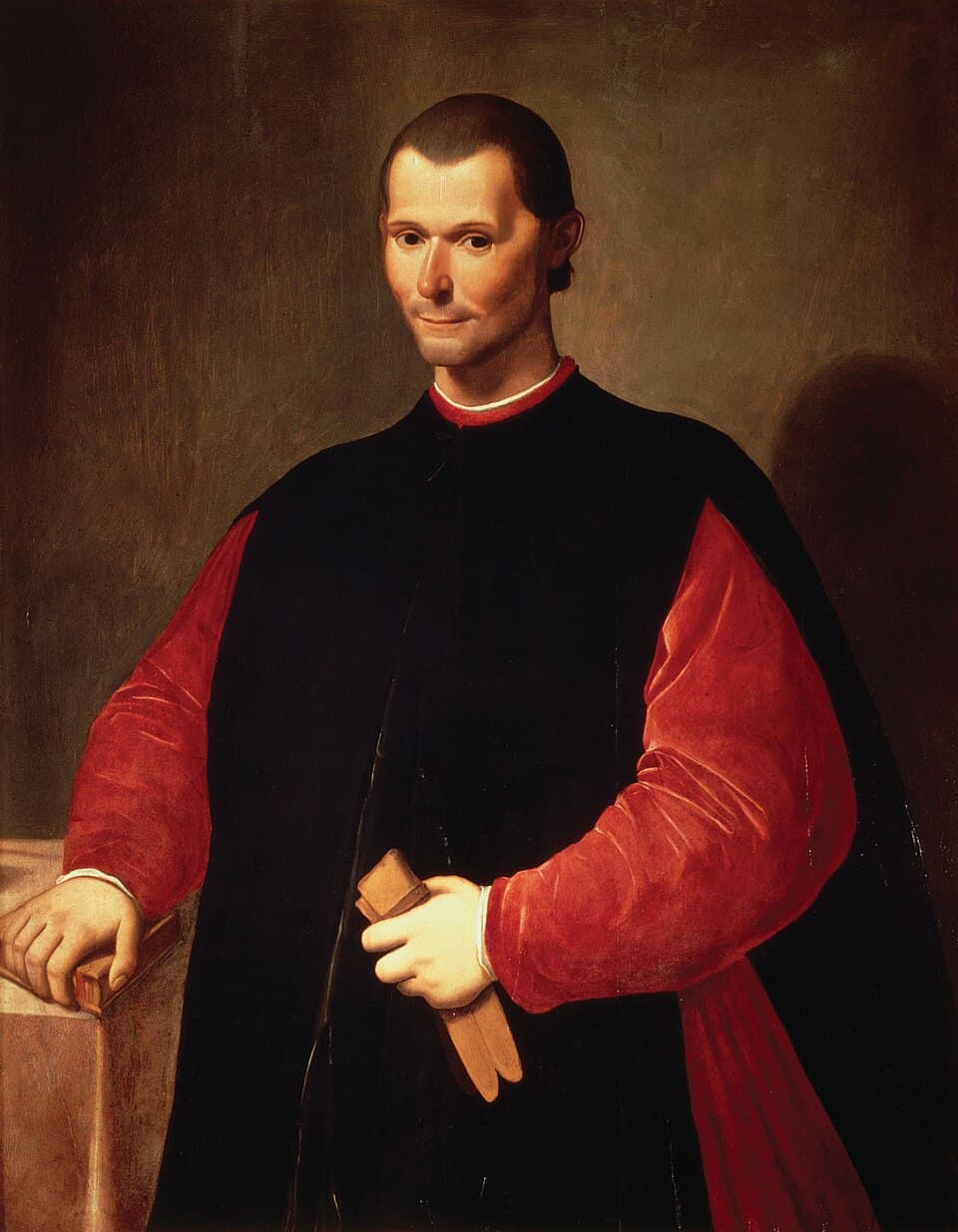
Niccolo Machiavelli
The Prince

The author uses the example of Commodus to show how a prince's cruelty, lack of dignity, and failure to manage the military lead to contempt and eventual assassination.

...ed by princes, because any one who does not fear to die can inflict them; but a prince may fear them the less because they are very rare; he has only to be careful not to do any grave injury to those whom he employs or has around him in the service of the state. Antoninus had not taken this care, but had contumeliously killed a brother of that centurion, whom also he daily threatened, yet retained in his bodyguard; which, as it turned out, was a rash thing to do, and proved the emperor’s ruin.
But let us come to Commodus, to whom it should have been very easy to hold the empire, for, being the son of Marcus, he had inherited it, and he had only to follow in the footsteps of his father to please his people and soldiers; but, being by nature cruel and brutal, he gave himself up to amusing the soldiers and corrupting them, so that he might indulge his rapacity upon the people; on the other hand, not maintaining his dignity, often descending to the theatre to compete with gladiators, and doing other vile things, little worthy of the imperial majesty, he fell into contempt with the soldiers, and being hated by one party and despised by…
It remains to discuss the character of Maximinus. He was a very warlike man, and the armies, being disgusted with the effeminacy of Alexander, of whom I have already spoken, killed him and elected Maximinus to the throne. This he did not possess for long, for two things made him hated and despised; the one, his having kept sheep in Thrace, which brought him into contempt (it being well known to all, and considered a great indignity by every one), and the other, his having at the accession to h...
Continue reading →
5
The Scapegoat's Execution
Niccolo Machiavelli
The Prince

Through the example of Duke Valentino and Ramiro d’Orco, the author illustrates how a ruler can use a cruel agent to establish order and then publicly execute that agent to deflect popular hatred. This strategy allows the prince to satisfy the people's desire for justice while simultaneously leaving them awed and intimidated.

...nciled, so that their simplicity brought them into his power at Sinigalia.[3] Having exterminated the leaders, and turned their partisans into his friends, the duke laid sufficiently good foundations to his power, having all the Romagna and the Duchy of Urbino; and the people now beginning to appreciate their prosperity, he gained them all over to himself. And as this point is worthy of notice, and to be imitated by others, I am not willing to leave it out. [3] Sinigalia, 31st December 1502.
When the duke occupied the Romagna he found it under the rule of weak masters, who rather plundered their subjects than ruled them, and gave them more cause for disunion than for union, so that the country was full of robbery, quarrels, and every kind of violence; and so, wishing to bring back peace and obedience to authority, he considered it necessary to give it a good governor. Thereupon he promoted Messer Ramiro d’Orco, a swift and cruel man, to whom he gave the fullest power. This man in a short time restored peace and unity with the greatest success. Afterwards the duke considered that it was not advisable to confer such excessive…
[4] Ramiro d’Orco. Ramiro de Lorqua. But let us return whence we started. I say that the duke, finding himself now sufficiently powerful and partly secured from immediate dangers by having armed himself in his own way, and having in a great measure crushed those forces in his vicinity that could injure him if he wished to proceed with his conquest, had next to consider France, for he knew that the king, who too late was aware of his mistake, would not support him. And from this time he began...
Continue reading →
2
Reputation's Careful Calculus
Niccolo Machiavelli
The Prince

The author advises princes to prioritize a reputation for frugality over liberality, as excessive generosity eventually requires heavy taxation that breeds hatred.

...ot be followed by soldiers. And of that which is neither yours nor your subjects’ you can be a ready giver, as were Cyrus, Caesar, and Alexander; because it does not take away your reputation if you squander that of others, but adds to it; it is only squandering your own that injures you. And there is nothing wastes so rapidly as liberality, for even whilst you exercise it you lose the power to do so, and so become either poor or despised, or else, in avoiding poverty, rapacious and hated. And
A prince should guard himself, above all things, against being despised and hated; and liberality leads you to both. Therefore it is wiser to have a reputation for meanness which brings reproach without hatred, than to be compelled through seeking a reputation for liberality to incur a name for rapacity which begets reproach with hatred.
CHAPTER XVII. CONCERNING CRUELTY AND CLEMENCY, AND WHETHER IT IS BETTER TO BE LOVED THAN FEARED Coming now to the other qualities mentioned above, I say that every prince ought to desire to be considered clement and not cruel. Nevertheless he ought to take care not to misuse this clemency. Cesare Borgia was considered cruel; notwithstanding, his cruelty reconciled the Romagna, unified it, and restored it to peace and loyalty. And if this be rightly considered, he will be seen to have been...
2
End of shuffled session