The Foundation of Power
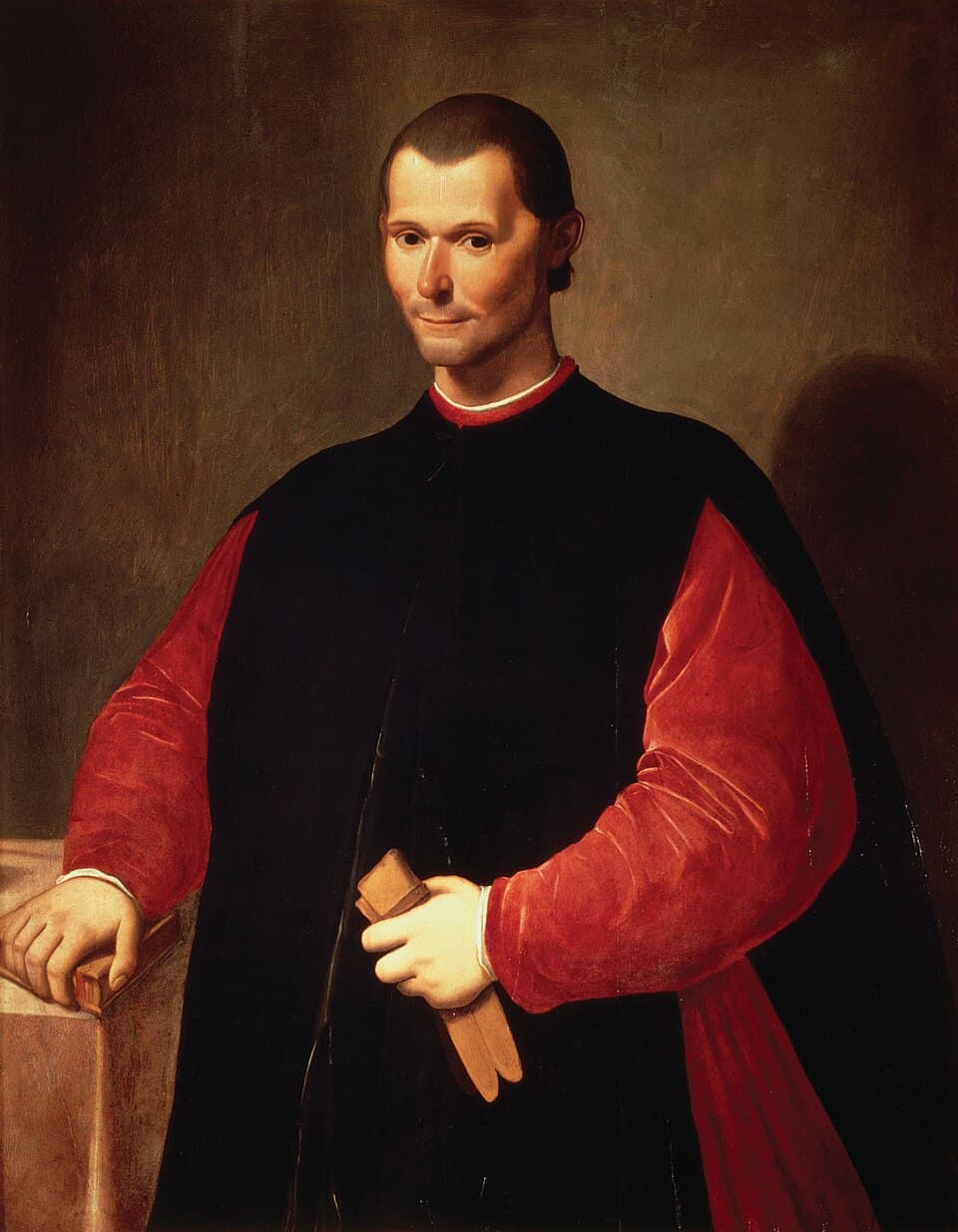
Niccolo Machiavelli
The Prince

The author asserts that true political stability is impossible without a military force comprised of one's own citizens, as reliance on mercenaries is inherently fragile.

...at this was ‘wholly unhistorical.’ He might well have added that the Roman power was at its zenith when every citizen acknowledged his liability to fight for the State, but that it began to decline as soon as this obligation was no longer recognised.”—Pall Mall Gazette, 15th May 1906. I conclude, therefore, that no principality is secure without having its own forces; on the contrary, it is entirely dependent on good fortune, not having the valour which in adversity would defend it. And
It has always been the opinion and judgment of wise men that nothing can be so uncertain or unstable as fame or power not founded on its own strength. And one’s own forces are those which are composed either of subjects, citizens, or dependents; all others are mercenaries or auxiliaries.
And the way to make ready one’s own forces will be easily found if the rules suggested by me shall be reflected upon, and if one will consider how Philip, the father of Alexander the Great, and many republics and princes have armed and organized themselves, to which rules I entirely commit myself. CHAPTER XIV. THAT WHICH CONCERNS A PRINCE ON THE SUBJECT OF THE ART OF WAR A prince ought to have no other aim or thought, nor select anything else for his study, than war and its rules and disc...
6
Fear Over Love
Niccolo Machiavelli
The Prince

The author argues that while it is ideal to be both loved and feared, it is much safer to be feared because love is a fickle bond of obligation that men break for their own advantage. Fear, conversely, is maintained by a dread of punishment that remains constant even when personal interests shift.

...tas me talia cogunt Moliri, et late fines custode tueri.”[2] Nevertheless he ought to be slow to believe and to act, nor should he himself show fear, but proceed in a temperate manner with prudence and humanity, so that too much confidence may not make him incautious and too much distrust render him intolerable. [2] . . . against my will, my fate A throne unsettled, and an infant state, Bid me defend my realms with all my pow’rs, And guard with these severities my shores. Christopher Pitt.
Upon this a question arises: whether it be better to be loved than feared or feared than loved? It may be answered that one should wish to be both, but, because it is difficult to unite them in one person, it is much safer to be feared than loved, when, of the two, either must be dispensed with. Because this is to be asserted in general of men, that they are ungrateful, fickle, false, cowardly, covetous, and as long as you succeed they are yours entirely; they will offer you their blood, property, life, and children, as is said above, when the need is far distant; but when it approaches they turn against you. And that prince who, relying…
Nevertheless a prince ought to inspire fear in such a way that, if he does not win love, he avoids hatred; because he can endure very well being feared whilst he is not hated, which will always be as long as he abstains from the property of his citizens and subjects and from their women. But when it is necessary for him to proceed against the life of someone, he must do it on proper justification and for manifest cause, but above all things he must keep his hands off the property of others, be...
Continue reading →
2
Empire Without Glory
Niccolo Machiavelli
The Prince

The author distinguishes between the acquisition of power and the attainment of glory, noting that while ruthless cruelty can secure an empire, it prevents a leader from being celebrated as truly excellent.

...to be content with the possession of Africa. [1] Agathocles the Sicilian, born 361 B.C., died 289 B.C. Therefore, he who considers the actions and the genius of this man will see nothing, or little, which can be attributed to fortune, inasmuch as he attained pre-eminence, as is shown above, not by the favour of any one, but step by step in the military profession, which steps were gained with a thousand troubles and perils, and were afterwards boldly held by him with many hazardous dangers.
Yet it cannot be called talent to slay fellow-citizens, to deceive friends, to be without faith, without mercy, without religion; such methods may gain empire, but not glory. Still, if the courage of Agathocles in entering into and extricating himself from dangers be considered, together with his greatness of mind in enduring and overcoming hardships, it cannot be seen why he should be esteemed less than the most notable captain. Nevertheless, his barbarous cruelty and inhumanity with infinite wickedness do not permit him to be celebrated among the most excellent men.
What he achieved cannot be attributed either to fortune or genius. In our times, during the rule of Alexander the Sixth, Oliverotto da Fermo, having been left an orphan many years before, was brought up by his maternal uncle, Giovanni Fogliani, and in the early days of his youth sent to fight under Pagolo Vitelli, that, being trained under his discipline, he might attain some high position in the military profession. After Pagolo died, he fought under his brother Vitellozzo, and in a very shor...
6
Avoiding Hatred
Niccolo Machiavelli
The Prince

A prescription for rulers to avoid being hated by respecting the property and women of their subjects, famously noting that men forget the death of a relative sooner than the loss of their inheritance.

...ther precautions, is ruined; because friendships that are obtained by payments, and not by greatness or nobility of mind, may indeed be earned, but they are not secured, and in time of need cannot be relied upon; and men have less scruple in offending one who is beloved than one who is feared, for love is preserved by the link of obligation which, owing to the baseness of men, is broken at every opportunity for their advantage; but fear preserves you by a dread of punishment which never fails.
Nevertheless a prince ought to inspire fear in such a way that, if he does not win love, he avoids hatred; because he can endure very well being feared whilst he is not hated, which will always be as long as he abstains from the property of his citizens and subjects and from their women. But when it is necessary for him to proceed against the life of someone, he must do it on proper justification and for manifest cause, but above all things he must keep his hands off the property of others, because men more quickly forget the death of their father than the loss of their patrimony. Besides, pretexts for taking away the property are never…
But when a prince is with his army, and has under control a multitude of soldiers, then it is quite necessary for him to disregard the reputation of cruelty, for without it he would never hold his army united or disposed to its duties. Among the wonderful deeds of Hannibal this one is enumerated: that having led an enormous army, composed of many various races of men, to fight in foreign lands, no dissensions arose either among them or against the prince, whether in his bad or in his good fort...
Continue reading →
2
The Lion-Fox Strategy
Niccolo Machiavelli
The Prince

The author analyzes a successful ruler as a combination of the 'lion' and the 'fox,' whose immense reputation and skill allowed him to use violence without incurring fatal hatred.

...sar; and, moreover, that the Senate had made Albinus his colleague; which things were accepted by Albinus as true. But after Severus had conquered and killed Niger, and settled oriental affairs, he returned to Rome and complained to the Senate that Albinus, little recognizing the benefits that he had received from him, had by treachery sought to murder him, and for this ingratitude he was compelled to punish him. Afterwards he sought him out in France, and took from him his government and life.
He who will, therefore, carefully examine the actions of this man will find him a most valiant lion and a most cunning fox; he will find him feared and respected by every one, and not hated by the army; and it need not be wondered at that he, a new man, was able to hold the empire so well, because his supreme renown always protected him from that hatred which the people might have conceived against him for his violence.
But his son Antoninus was a most eminent man, and had very excellent qualities, which made him admirable in the sight of the people and acceptable to the soldiers, for he was a warlike man, most enduring of fatigue, a despiser of all delicate food and other luxuries, which caused him to be beloved by the armies. Nevertheless, his ferocity and cruelties were so great and so unheard of that, after endless single murders, he killed a large number of the people of Rome and all those of Alexandria....
2