Self-Made Preeminence
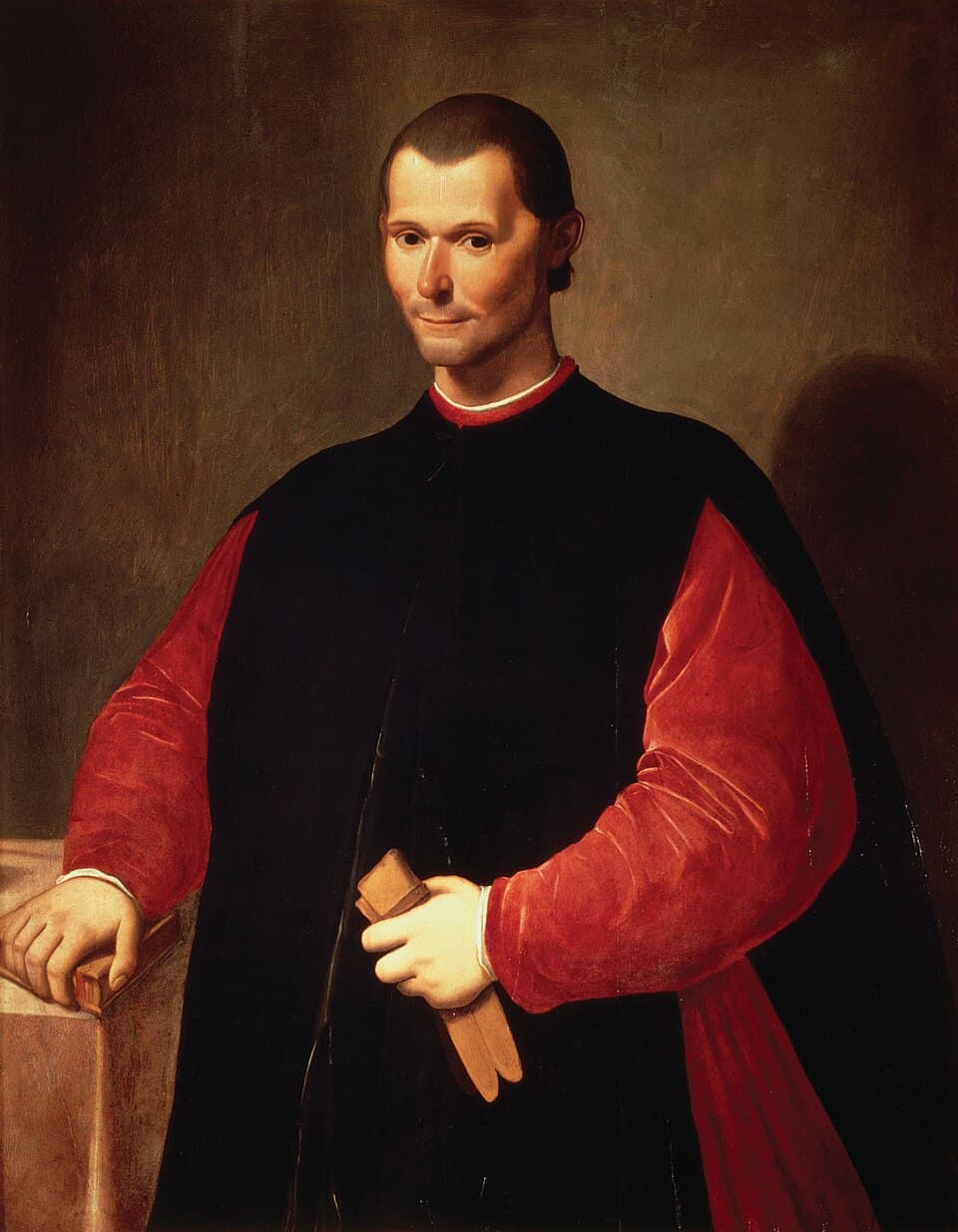
Niccolo Machiavelli
The Prince

The text highlights that while a leader may rise to power through sheer merit and military struggle rather than luck, the use of immoral methods like betrayal and murder precludes the achievement of true glory.

...motion. And although he was twice routed by the Carthaginians, and ultimately besieged, yet not only was he able to defend his city, but leaving part of his men for its defence, with the others he attacked Africa, and in a short time raised the siege of Syracuse. The Carthaginians, reduced to extreme necessity, were compelled to come to terms with Agathocles, and, leaving Sicily to him, had to be content with the possession of Africa. [1] Agathocles the Sicilian, born 361 B.C., died 289 B.C.
Therefore, he who considers the actions and the genius of this man will see nothing, or little, which can be attributed to fortune, inasmuch as he attained pre-eminence, as is shown above, not by the favour of any one, but step by step in the military profession, which steps were gained with a thousand troubles and perils, and were afterwards boldly held by him with many hazardous dangers. Yet it cannot be called talent to slay fellow-citizens, to deceive friends, to be without faith, without mercy, without religion; such methods may gain empire, but not glory.
Still, if the courage of Agathocles in entering into and extricating himself from dangers be considered, together with his greatness of mind in enduring and overcoming hardships, it cannot be seen why he should be esteemed less than the most notable captain. Nevertheless, his barbarous cruelty and inhumanity with infinite wickedness do not permit him to be celebrated among the most excellent men. What he achieved cannot be attributed either to fortune or genius. In our times, during the rule o...
3
The Art of War
Niccolo Machiavelli
The Prince

A prescription stating that a ruler's primary and sole focus should be the art of war, as military proficiency is the foundation of both acquiring and retaining political power.

...es are those which are composed either of subjects, citizens, or dependents; all others are mercenaries or auxiliaries. And the way to make ready one’s own forces will be easily found if the rules suggested by me shall be reflected upon, and if one will consider how Philip, the father of Alexander the Great, and many republics and princes have armed and organized themselves, to which rules I entirely commit myself. CHAPTER XIV. THAT WHICH CONCERNS A PRINCE ON THE SUBJECT OF THE ART OF WAR
A prince ought to have no other aim or thought, nor select anything else for his study, than war and its rules and discipline; for this is the sole art that belongs to him who rules, and it is of such force that it not only upholds those who are born princes, but it often enables men to rise from a private station to that rank. And, on the contrary, it is seen that when princes have thought more of ease than of arms they have lost their states. And the first cause of your losing it is to neglect this art; and what enables you to acquire a state is to be master of the art. Francesco Sforza, through being martial, from a private person became…
Because there is nothing proportionate between the armed and the unarmed; and it is not reasonable that he who is armed should yield obedience willingly to him who is unarmed, or that the unarmed man should be secure among armed servants. Because, there being in the one disdain and in the other suspicion, it is not possible for them to work well together. And therefore a prince who does not understand the art of war, over and above the other misfortunes already mentioned, cannot be respected by...
Continue reading →
2
Divide and Conquer
Niccolo Machiavelli
The Prince

Using the Romans as a model, the author illustrates how a power should manage annexed territories by protecting weak neighbors and humbling strong ones.

...to himself, for the whole of them quickly rally to the state which he has acquired there. He has only to take care that they do not get hold of too much power and too much authority, and then with his own forces, and with their goodwill, he can easily keep down the more powerful of them, so as to remain entirely master in the country. And he who does not properly manage this business will soon lose what he has acquired, and whilst he does hold it he will have endless difficulties and troubles.
The Romans, in the countries which they annexed, observed closely these measures; they sent colonies and maintained friendly relations with the minor powers, without increasing their strength; they kept down the greater, and did not allow any strong foreign powers to gain authority. Greece appears to me sufficient for an example. The Achaeans and Ætolians were kept friendly by them, the kingdom of Macedonia was humbled, Antiochus was driven out; yet the merits of the Achaeans and Ætolians never secured for them permission to increase their power, nor did the persuasions of Philip ever induce the Romans to be his friends without first humbling…
Because the Romans did in these instances what all prudent princes ought to do, who have to regard not only present troubles, but also future ones, for which they must prepare with every energy, because, when foreseen, it is easy to remedy them; but if you wait until they approach, the medicine is no longer in time because the malady has become incurable; for it happens in this, as the physicians say it happens in hectic fever, that in the beginning of the malady it is easy to cure but difficul...
Continue reading →
5
The People's Righteous Object
Niccolo Machiavelli
The Prince

The author argues that it is more important to satisfy the people than the nobles, as the people's desire for non-oppression is more righteous and their sheer numbers make them a more dangerous enemy if hostile.

...him a prince so as to be defended by his authority. He who obtains sovereignty by the assistance of the nobles maintains himself with more difficulty than he who comes to it by the aid of the people, because the former finds himself with many around him who consider themselves his equals, and because of this he can neither rule nor manage them to his liking. But he who reaches sovereignty by popular favour finds himself alone, and has none around him, or few, who are not prepared to obey him.
Besides this, one cannot by fair dealing, and without injury to others, satisfy the nobles, but you can satisfy the people, for their object is more righteous than that of the nobles, the latter wishing to oppress, while the former only desire not to be oppressed. It is to be added also that a prince can never secure himself against a hostile people, because of there being too many, whilst from the nobles he can secure himself, as they are few in number. The worst that a prince may expect from a hostile people is to be abandoned by them; but from hostile nobles he has not only to fear abandonment, but also that they will rise against him; for…
Further, the prince is compelled to live always with the same people, but he can do well without the same nobles, being able to make and unmake them daily, and to give or take away authority when it pleases him. Therefore, to make this point clearer, I say that the nobles ought to be looked at mainly in two ways: that is to say, they either shape their course in such a way as binds them entirely to your fortune, or they do not. Those who so bind themselves, and are not rapacious, ought to be h...
Continue reading →
5
The People-Nobles Tension
Niccolo Machiavelli
The Prince

This text defines the 'civil principality' as a state achieved through the favor of fellow citizens, arising from the inherent tension between the people and the nobility.

...y little, so that the flavour of them may last longer. And above all things, a prince ought to live amongst his people in such a way that no unexpected circumstances, whether of good or evil, shall make him change; because if the necessity for this comes in troubled times, you are too late for harsh measures; and mild ones will not help you, for they will be considered as forced from you, and no one will be under any obligation to you for them. CHAPTER IX. CONCERNING A CIVIL PRINCIPALITY
But coming to the other point—where a leading citizen becomes the prince of his country, not by wickedness or any intolerable violence, but by the favour of his fellow citizens—this may be called a civil principality: nor is genius or fortune altogether necessary to attain to it, but rather a happy shrewdness. I say then that such a principality is obtained either by the favour of the people or by the favour of the nobles. Because in all cities these two distinct parties are found, and from this it arises that the people do not wish to be ruled nor oppressed by the nobles, and the nobles wish to rule and oppress the people; and from these two…
A principality is created either by the people or by the nobles, accordingly as one or other of them has the opportunity; for the nobles, seeing they cannot withstand the people, begin to cry up the reputation of one of themselves, and they make him a prince, so that under his shadow they can give vent to their ambitions. The people, finding they cannot resist the nobles, also cry up the reputation of one of themselves, and make him a prince so as to be defended by his authority. He who obtain...
Continue reading →
2