The Prince's Paradox
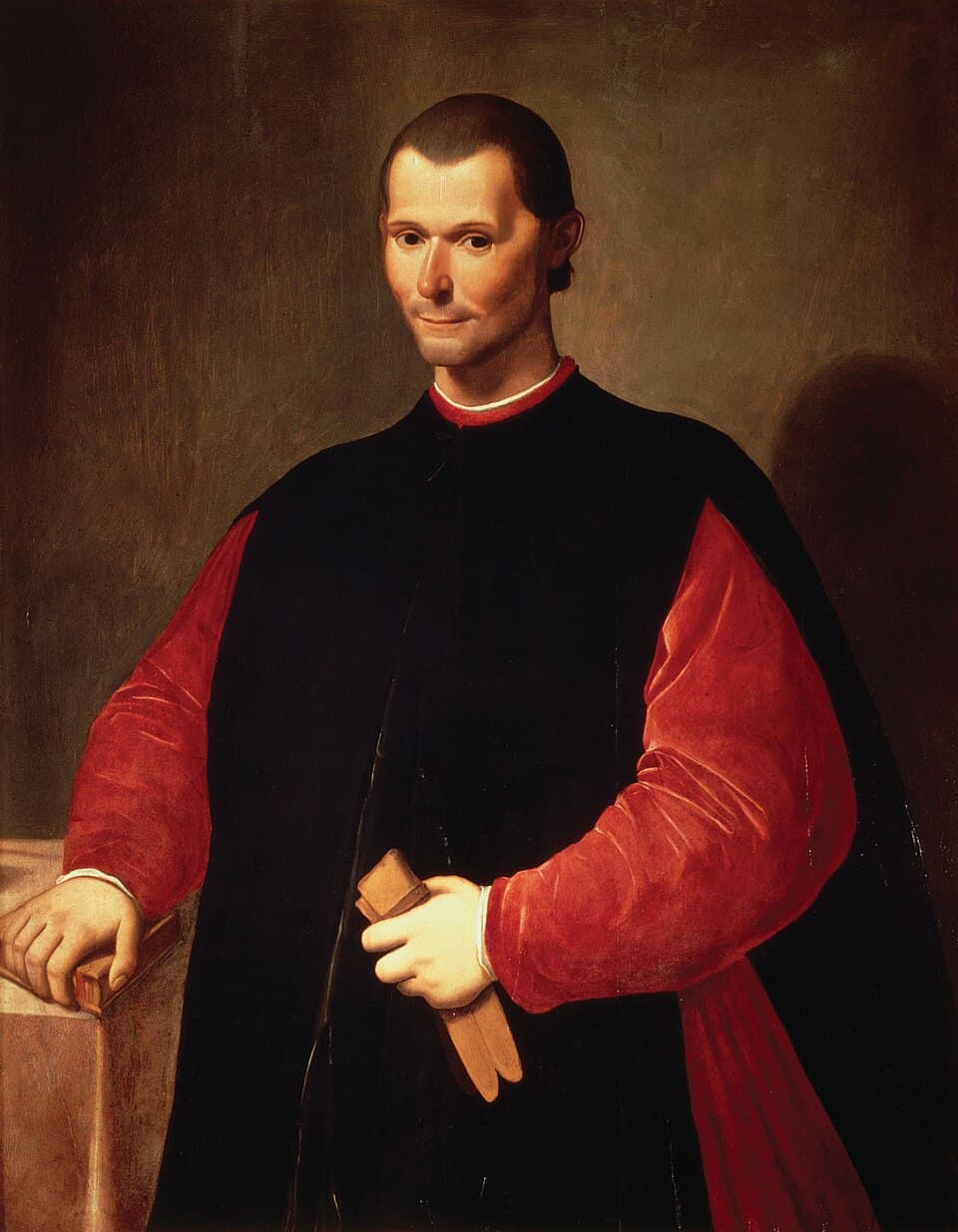
Niccolo Machiavelli
The Prince

The author argues that while integrity is admirable, successful princes must often use craft and force—the methods of both men and beasts—to prevail.

...feared or loved, I come to the conclusion that, men loving according to their own will and fearing according to that of the prince, a wise prince should establish himself on that which is in his own control and not in that of others; he must endeavour only to avoid hatred, as is noted. CHAPTER XVIII.[1] CONCERNING THE WAY IN WHICH PRINCES SHOULD KEEP FAITH [1] “The present chapter has given greater offence than any other portion of Machiavelli’s writings.” Burd, “Il Principe,” p. 297.
Every one admits how praiseworthy it is in a prince to keep faith, and to live with integrity and not with craft. Nevertheless our experience has been that those princes who have done great things have held good faith of little account, and have known how to circumvent the intellect of men by craft, and in the end have overcome those who have relied on their word. You must know there are two ways of contesting, the one by the law, the other by force; the first method is proper to men, the second to beasts; but because the first is frequently not sufficient, it is necessary to have recourse to the second.
Therefore it is necessary for a prince to understand how to avail himself of the beast and the man. This has been figuratively taught to princes by ancient writers, who describe how Achilles and many other princes of old were given to the Centaur Chiron to nurse, who brought them up in his discipline; which means solely that, as they had for a teacher one who was half beast and half man, so it is necessary for a prince to know how to make use of both natures, and that one without the other is n...
3
Winning the People
Niccolo Machiavelli
The Prince

The author advises that a prince must secure the friendship of the people to ensure stability, noting that winning over a populace that expected oppression creates a particularly strong bond of loyalty.

...ity and a natural want of courage, in which case you ought to make use of them, especially of those who are of good counsel; and thus, whilst in prosperity you honour them, in adversity you do not have to fear them. But when for their own ambitious ends they shun binding themselves, it is a token that they are giving more thought to themselves than to you, and a prince ought to guard against such, and to fear them as if they were open enemies, because in adversity they always help to ruin him.
Therefore, one who becomes a prince through the favour of the people ought to keep them friendly, and this he can easily do seeing they only ask not to be oppressed by him. But one who, in opposition to the people, becomes a prince by the favour of the nobles, ought, above everything, to seek to win the people over to himself, and this he may easily do if he takes them under his protection. Because men, when they receive good from him of whom they were expecting evil, are bound more closely to their benefactor; thus the people quickly become more devoted to him than if he had been raised to the principality by their favours; and the prince…
Nabis,[1] Prince of the Spartans, sustained the attack of all Greece, and of a victorious Roman army, and against them he defended his country and his government; and for the overcoming of this peril it was only necessary for him to make himself secure against a few, but this would not have been sufficient had the people been hostile. And do not let any one impugn this statement with the trite proverb that “He who builds on the people, builds on the mud,” for this is true when a private citize...
Continue reading →
2
The Two Governments
Niccolo Machiavelli
The Prince

A thesis explaining that states are governed either through a centralized bureaucracy of ministers or a decentralized system of hereditary barons, which dictates how easily a territory can be held after conquest.

...h and of Spain in Italy has been caused by France, and her ruin may be attributed to them. From this a general rule is drawn which never or rarely fails: that he who is the cause of another becoming powerful is ruined; because that predominancy has been brought about either by astuteness or else by force, and both are distrusted by him who has been raised to power. CHAPTER IV. WHY THE KINGDOM OF DARIUS, CONQUERED BY ALEXANDER, DID NOT REBEL AGAINST THE SUCCESSORS OF ALEXANDER AT HIS DEATH
Considering the difficulties which men have had to hold to a newly acquired state, some might wonder how, seeing that Alexander the Great became the master of Asia in a few years, and died whilst it was scarcely settled (whence it might appear reasonable that the whole empire would have rebelled), nevertheless his successors maintained themselves, and had to meet no other difficulty than that which arose among themselves from their own ambitions. I answer that the principalities of which one has record are found to be governed in two different ways; either by a prince, with a body of servants, who assist him to govern the kingdom as ministers…
Those states that are governed by a prince and his servants hold their prince in more consideration, because in all the country there is no one who is recognized as superior to him, and if they yield obedience to another they do it as to a minister and official, and they do not bear him any particular affection. The examples of these two governments in our time are the Turk and the King of France. The entire monarchy of the Turk is governed by one lord, the others are his servants; and, dividi...
Continue reading →
5
The Necessary Evil
Niccolo Machiavelli
The Prince

In a departure from traditional political idealism, the author argues that a prince must learn how to be 'not good' and use vice when necessary for the preservation of the state. He contends that a man who tries to be virtuous in all circumstances will inevitably be ruined by the many who are not virtuous.

..., and how in chastity, affability, humanity, and liberality Scipio conformed to those things which have been written of Cyrus by Xenophon. A wise prince ought to observe some such rules, and never in peaceful times stand idle, but increase his resources with industry in such a way that they may be available to him in adversity, so that if fortune chances it may find him prepared to resist her blows. CHAPTER XV. CONCERNING THINGS FOR WHICH MEN, AND ESPECIALLY PRINCES, ARE PRAISED OR BLAMED
It remains now to see what ought to be the rules of conduct for a prince towards subject and friends. And as I know that many have written on this point, I expect I shall be considered presumptuous in mentioning it again, especially as in discussing it I shall depart from the methods of other people. But, it being my intention to write a thing which shall be useful to him who apprehends it, it appears to me more appropriate to follow up the real truth of the matter than the imagination of it; for many have pictured republics and principalities which in fact have never been known or seen, because how one lives is so far distant from how one…
Therefore, putting on one side imaginary things concerning a prince, and discussing those which are real, I say that all men when they are spoken of, and chiefly princes for being more highly placed, are remarkable for some of those qualities which bring them either blame or praise; and thus it is that one is reputed liberal, another miserly, using a Tuscan term (because an avaricious person in our language is still he who desires to possess by robbery, whilst we call one miserly who deprives h...
Continue reading →
2
The State's Constant Need
Niccolo Machiavelli
The Prince

A thesis stating that a wise prince must ensure his citizens always need the state, thereby securing their loyalty during times of crisis when it matters most.

...it rests entirely on the goodwill of those citizens who are raised to the magistracy, and who, especially in troubled times, can destroy the government with great ease, either by intrigue or open defiance; and the prince has not the chance amid tumults to exercise absolute authority, because the citizens and subjects, accustomed to receive orders from magistrates, are not of a mind to obey him amid these confusions, and there will always be in doubtful times a scarcity of men whom he can trust.
For such a prince cannot rely upon what he observes in quiet times, when citizens have need of the state, because then every one agrees with him; they all promise, and when death is far distant they all wish to die for him; but in troubled times, when the state has need of its citizens, then he finds but few. And so much the more is this experiment dangerous, inasmuch as it can only be tried once. Therefore a wise prince ought to adopt such a course that his citizens will always in every sort and kind of circumstance have need of the state and of him, and then he will always find them faithful.
CHAPTER X. CONCERNING THE WAY IN WHICH THE STRENGTH OF ALL PRINCIPALITIES OUGHT TO BE MEASURED It is necessary to consider another point in examining the character of these principalities: that is, whether a prince has such power that, in case of need, he can support himself with his own resources, or whether he has always need of the assistance of others. And to make this quite clear I say that I consider those who are able to support themselves by their own resources who can, either by...
2