Fortune's Unstoppable Flood
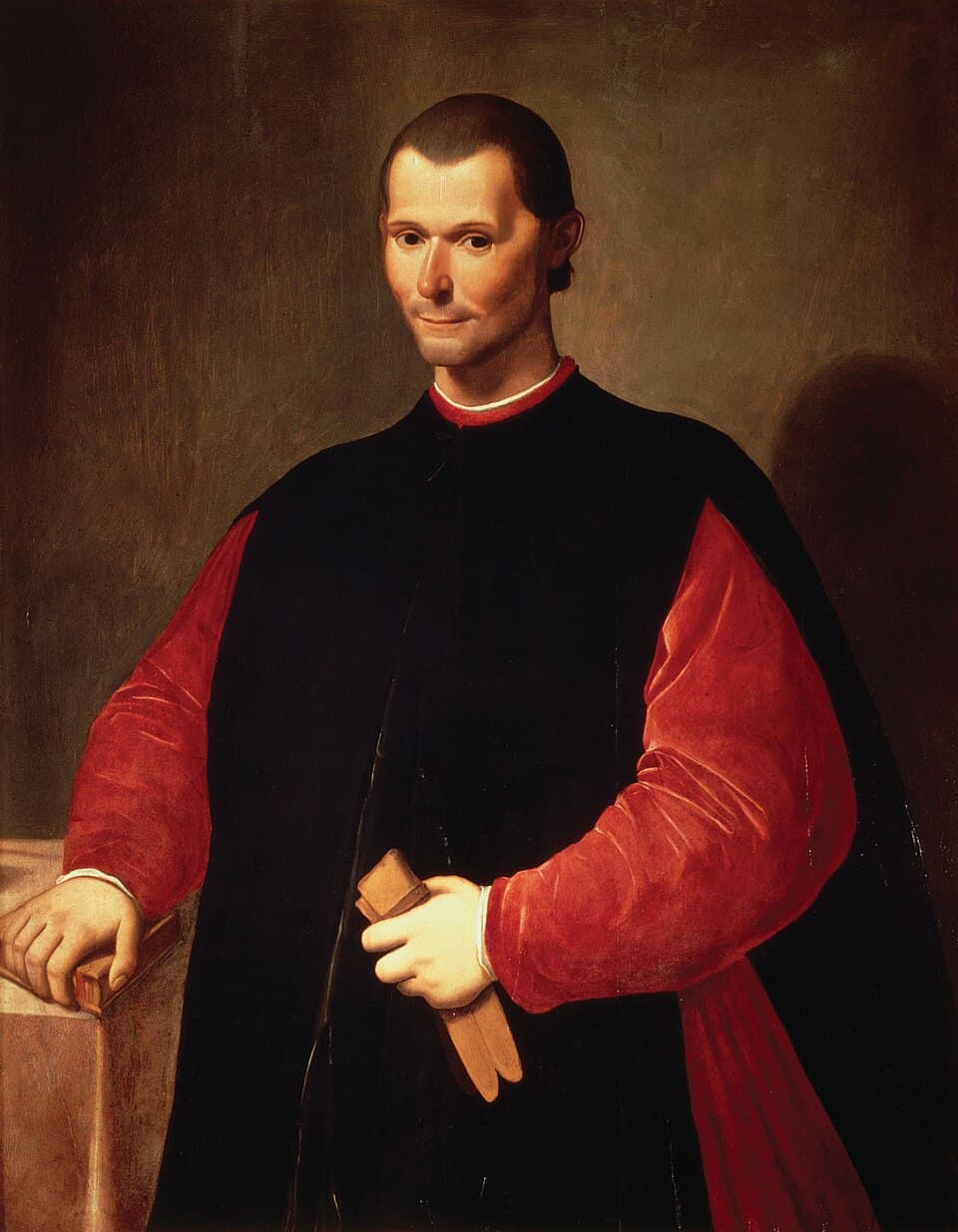
Niccolo Machiavelli
The Prince

The author compares fortune to a destructive river that can only be resisted if men build 'dikes and dams' through virtue and preparation before the flood arrives.

...ndering over this, I am in some degree inclined to their opinion. Nevertheless, not to extinguish our free will, I hold it to be true that Fortune is the arbiter of one-half of our actions,[1] but that she still leaves us to direct the other half, or perhaps a little less. [1] Frederick the Great was accustomed to say: “The older one gets the more convinced one becomes that his Majesty King Chance does three-quarters of the business of this miserable universe.” Sorel’s “Eastern Question.”
I compare her to one of those raging rivers, which when in flood overflows the plains, sweeping away trees and buildings, bearing away the soil from place to place; everything flies before it, all yield to its violence, without being able in any way to withstand it; and yet, though its nature be such, it does not follow therefore that men, when the weather becomes fair, shall not make provision, both with defences and barriers, in such a manner that, rising again, the waters may pass away by canal, and their force be neither so unrestrained nor so dangerous. So it happens with fortune, who shows her power where valour has not prepared to…
And if you will consider Italy, which is the seat of these changes, and which has given to them their impulse, you will see it to be an open country without barriers and without any defence. For if it had been defended by proper valour, as are Germany, Spain, and France, either this invasion would not have made the great changes it has made or it would not have come at all. And this I consider enough to say concerning resistance to fortune in general. But confining myself more to the particul...
Continue reading →
2
Ambition's Regret
Niccolo Machiavelli
The Prince

A reflective confession where the author admits that a less ambitious path might have resulted in a smaller but more secure and peaceful state.

...saddle and the last out of it. Here Castruccio stood exposed to a wind which often rises at midday on the banks of the Arno, and which is often very unhealthy; from this he took a chill, of which he thought nothing, as he was accustomed to such troubles; but it was the cause of his death. On the following night he was attacked with high fever, which increased so rapidly that the doctors saw it must prove fatal. Castruccio, therefore, called Pagolo Guinigi to him, and addressed him as follows:
“If I could have believed that Fortune would have cut me off in the midst of the career which was leading to that glory which all my successes promised, I should have laboured less, and I should have left thee, if a smaller state, at least with fewer enemies and perils, because I should have been content with the governorships of Lucca and Pisa. I should neither have subjugated the Pistoians, nor outraged the Florentines with so many injuries. But I would have made both these peoples my friends, and I should have lived, if no longer, at least more peacefully, and have left you a state without a doubt smaller, but one more secure and…
But Fortune, who insists upon having the arbitrament of human affairs, did not endow me with sufficient judgment to recognize this from the first, nor the time to surmount it. Thou hast heard, for many have told thee, and I have never concealed it, how I entered the house of thy father whilst yet a boy—a stranger to all those ambitions which every generous soul should feel—and how I was brought up by him, and loved as though I had been born of his blood; how under his governance I learned to be...
Continue reading →
2
Fortune's Fickle Nature
Niccolo Machiavelli
The Prince

The author argues that political success depends on a leader's ability to adapt their actions to the 'spirit of the times' rather than relying on fixed traits.

...t her, and thither she turns her forces where she knows that barriers and defences have not been raised to constrain her. And if you will consider Italy, which is the seat of these changes, and which has given to them their impulse, you will see it to be an open country without barriers and without any defence. For if it had been defended by proper valour, as are Germany, Spain, and France, either this invasion would not have made the great changes it has made or it would not have come at all.
And this I consider enough to say concerning resistance to fortune in general. But confining myself more to the particular, I say that a prince may be seen happy to-day and ruined to-morrow without having shown any change of disposition or character. This, I believe, arises firstly from causes that have already been discussed at length, namely, that the prince who relies entirely on fortune is lost when it changes. I believe also that he will be successful who directs his actions according to the spirit of the times, and that he whose actions do not accord with the times will not be successful.
Because men are seen, in affairs that lead to the end which every man has before him, namely, glory and riches, to get there by various methods; one with caution, another with haste; one by force, another by skill; one by patience, another by its opposite; and each one succeeds in reaching the goal by a different method. One can also see of two cautious men the one attain his end, the other fail; and similarly, two men by different observances are equally successful, the one being cautious, the...
5
Fortune's Favor
Niccolo Machiavelli
The Prince

A bold vision of Fortune as a volatile force that favors the young and adventurous over the cautious, requiring aggressive action to be mastered.

...ld have done, he would never have succeeded. Because the King of France would have made a thousand excuses, and the others would have raised a thousand fears. I will leave his other actions alone, as they were all alike, and they all succeeded, for the shortness of his life did not let him experience the contrary; but if circumstances had arisen which required him to go cautiously, his ruin would have followed, because he would never have deviated from those ways to which nature inclined him.
I conclude, therefore that, fortune being changeful and mankind steadfast in their ways, so long as the two are in agreement men are successful, but unsuccessful when they fall out. For my part I consider that it is better to be adventurous than cautious, because fortune is a woman, and if you wish to keep her under it is necessary to beat and ill-use her; and it is seen that she allows herself to be mastered by the adventurous rather than by those who go to work more coldly. She is, therefore, always, woman-like, a lover of young men, because they are less cautious, more violent, and with more audacity command her.
CHAPTER XXVI. AN EXHORTATION TO LIBERATE ITALY FROM THE BARBARIANS Having carefully considered the subject of the above discourses, and wondering within myself whether the present times were propitious to a new prince, and whether there were elements that would give an opportunity to a wise and virtuous one to introduce a new order of things which would do honour to him and good to the people of this country, it appears to me that so many things concur to favour a new prince that I never...
2
Fortune vs Free Will
Niccolo Machiavelli
The Prince

A reflection on the tension between fate and agency, suggesting that while Fortune may control half of human affairs, the other half remains subject to human will and preparation.

...very bad to have neglected all other expedients for that, since you would never wish to fall because you trusted to be able to find someone later on to restore you. This again either does not happen, or, if it does, it will not be for your security, because that deliverance is of no avail which does not depend upon yourself; those only are reliable, certain, and durable that depend on yourself and your valour. CHAPTER XXV. WHAT FORTUNE CAN EFFECT IN HUMAN AFFAIRS AND HOW TO WITHSTAND HER
It is not unknown to me how many men have had, and still have, the opinion that the affairs of the world are in such wise governed by fortune and by God that men with their wisdom cannot direct them and that no one can even help them; and because of this they would have us believe that it is not necessary to labour much in affairs, but to let chance govern them. This opinion has been more credited in our times because of the great changes in affairs which have been seen, and may still be seen, every day, beyond all human conjecture. Sometimes pondering over this, I am in some degree inclined to their opinion. Nevertheless, not to extinguish…
[1] Frederick the Great was accustomed to say: “The older one gets the more convinced one becomes that his Majesty King Chance does three-quarters of the business of this miserable universe.” Sorel’s “Eastern Question.” I compare her to one of those raging rivers, which when in flood overflows the plains, sweeping away trees and buildings, bearing away the soil from place to place; everything flies before it, all yield to its violence, without being able in any way to withstand it; and ye...
Continue reading →
6