The Prince's Paradox
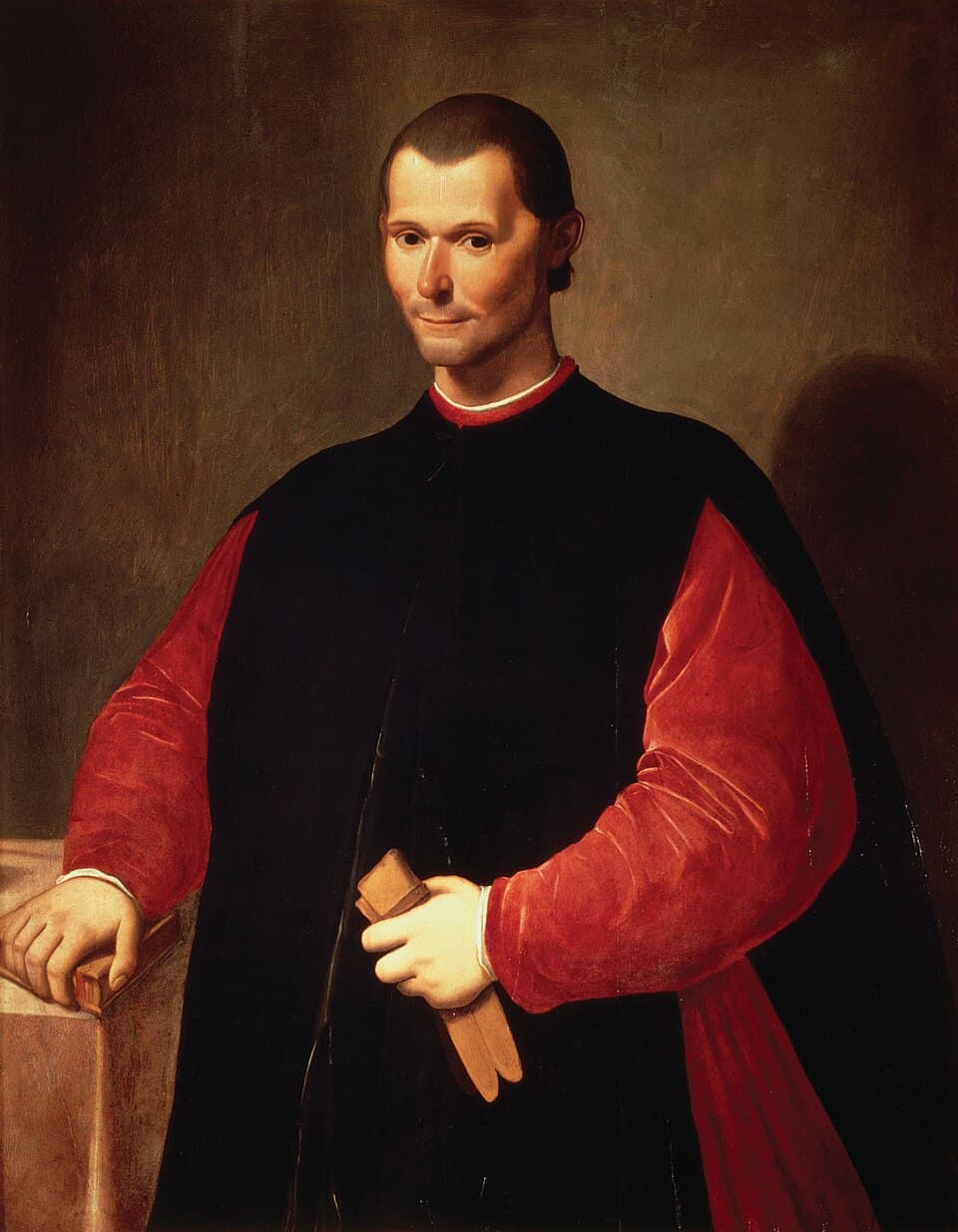
Niccolo Machiavelli
The Prince

The author argues that while integrity is admirable, successful princes must often use craft and force—the methods of both men and beasts—to prevail.

...feared or loved, I come to the conclusion that, men loving according to their own will and fearing according to that of the prince, a wise prince should establish himself on that which is in his own control and not in that of others; he must endeavour only to avoid hatred, as is noted. CHAPTER XVIII.[1] CONCERNING THE WAY IN WHICH PRINCES SHOULD KEEP FAITH [1] “The present chapter has given greater offence than any other portion of Machiavelli’s writings.” Burd, “Il Principe,” p. 297.
Every one admits how praiseworthy it is in a prince to keep faith, and to live with integrity and not with craft. Nevertheless our experience has been that those princes who have done great things have held good faith of little account, and have known how to circumvent the intellect of men by craft, and in the end have overcome those who have relied on their word. You must know there are two ways of contesting, the one by the law, the other by force; the first method is proper to men, the second to beasts; but because the first is frequently not sufficient, it is necessary to have recourse to the second.
Therefore it is necessary for a prince to understand how to avail himself of the beast and the man. This has been figuratively taught to princes by ancient writers, who describe how Achilles and many other princes of old were given to the Centaur Chiron to nurse, who brought them up in his discipline; which means solely that, as they had for a teacher one who was half beast and half man, so it is necessary for a prince to know how to make use of both natures, and that one without the other is n...
3
Avoiding Hatred
Niccolo Machiavelli
The Prince

A prescription for rulers to avoid being hated by respecting the property and women of their subjects, famously noting that men forget the death of a relative sooner than the loss of their inheritance.

...ther precautions, is ruined; because friendships that are obtained by payments, and not by greatness or nobility of mind, may indeed be earned, but they are not secured, and in time of need cannot be relied upon; and men have less scruple in offending one who is beloved than one who is feared, for love is preserved by the link of obligation which, owing to the baseness of men, is broken at every opportunity for their advantage; but fear preserves you by a dread of punishment which never fails.
Nevertheless a prince ought to inspire fear in such a way that, if he does not win love, he avoids hatred; because he can endure very well being feared whilst he is not hated, which will always be as long as he abstains from the property of his citizens and subjects and from their women. But when it is necessary for him to proceed against the life of someone, he must do it on proper justification and for manifest cause, but above all things he must keep his hands off the property of others, because men more quickly forget the death of their father than the loss of their patrimony. Besides, pretexts for taking away the property are never…
But when a prince is with his army, and has under control a multitude of soldiers, then it is quite necessary for him to disregard the reputation of cruelty, for without it he would never hold his army united or disposed to its duties. Among the wonderful deeds of Hannibal this one is enumerated: that having led an enormous army, composed of many various races of men, to fight in foreign lands, no dissensions arose either among them or against the prince, whether in his bad or in his good fort...
Continue reading →
2
Cruelty's Calculated Use
Niccolo Machiavelli
The Prince

The author argues that cruelty can be 'well-used' if it is applied once for security and then converted into benefits for the subjects, rather than persisted in over time.

...uring which he held the principality, not only was he secure in the city of Fermo, but he had become formidable to all his neighbours. And his destruction would have been as difficult as that of Agathocles if he had not allowed himself to be overreached by Cesare Borgia, who took him with the Orsini and Vitelli at Sinigalia, as was stated above. Thus one year after he had committed this parricide, he was strangled, together with Vitellozzo, whom he had made his leader in valour and wickedness.
Some may wonder how it can happen that Agathocles, and his like, after infinite treacheries and cruelties, should live for long secure in his country, and defend himself from external enemies, and never be conspired against by his own citizens; seeing that many others, by means of cruelty, have never been able even in peaceful times to hold the state, still less in the doubtful times of war. I believe that this follows from severities being badly or properly used. Those may be called properly used, if of evil it is possible to speak well, that are applied at one blow and are necessary to one’s security, and that are not persisted in…
The badly employed are those which, notwithstanding they may be few in the commencement, multiply with time rather than decrease. Those who practise the first system are able, by aid of God or man, to mitigate in some degree their rule, as Agathocles did. It is impossible for those who follow the other to maintain themselves. [2] Mr Burd suggests that this word probably comes near the modern equivalent of Machiavelli’s thought when he speaks of “crudelta” than the more obvious “cruelties.”...
Continue reading →
2
The Prince's Necessary Evil
Niccolo Machiavelli
The Prince

A prescription for rulers to prioritize political reality over idealism, emphasizing that a prince must learn how to be immoral when necessity demands it.

...s to me more appropriate to follow up the real truth of the matter than the imagination of it; for many have pictured republics and principalities which in fact have never been known or seen, because how one lives is so far distant from how one ought to live, that he who neglects what is done for what ought to be done, sooner effects his ruin than his preservation; for a man who wishes to act entirely up to his professions of virtue soon meets with what destroys him among so much that is evil.
Hence it is necessary for a prince wishing to hold his own to know how to do wrong, and to make use of it or not according to necessity. Therefore, putting on one side imaginary things concerning a prince, and discussing those which are real, I say that all men when they are spoken of, and chiefly princes for being more highly placed, are remarkable for some of those qualities which bring them either blame or praise; and thus it is that one is reputed liberal, another miserly, using a Tuscan term (because an avaricious person in our language is still he who desires to possess by robbery, whilst we call one miserly who deprives himself too…
one is reputed generous, one rapacious; one cruel, one compassionate; one faithless, another faithful; one effeminate and cowardly, another bold and brave; one affable, another haughty; one lascivious, another chaste; one sincere, another cunning; one hard, another easy; one grave, another frivolous; one religious, another unbelieving, and the like. And I know that every one will confess that it would be most praiseworthy in a prince to exhibit all the above qualities that are considered good;...
Continue reading →
2