The Nature of Obedience
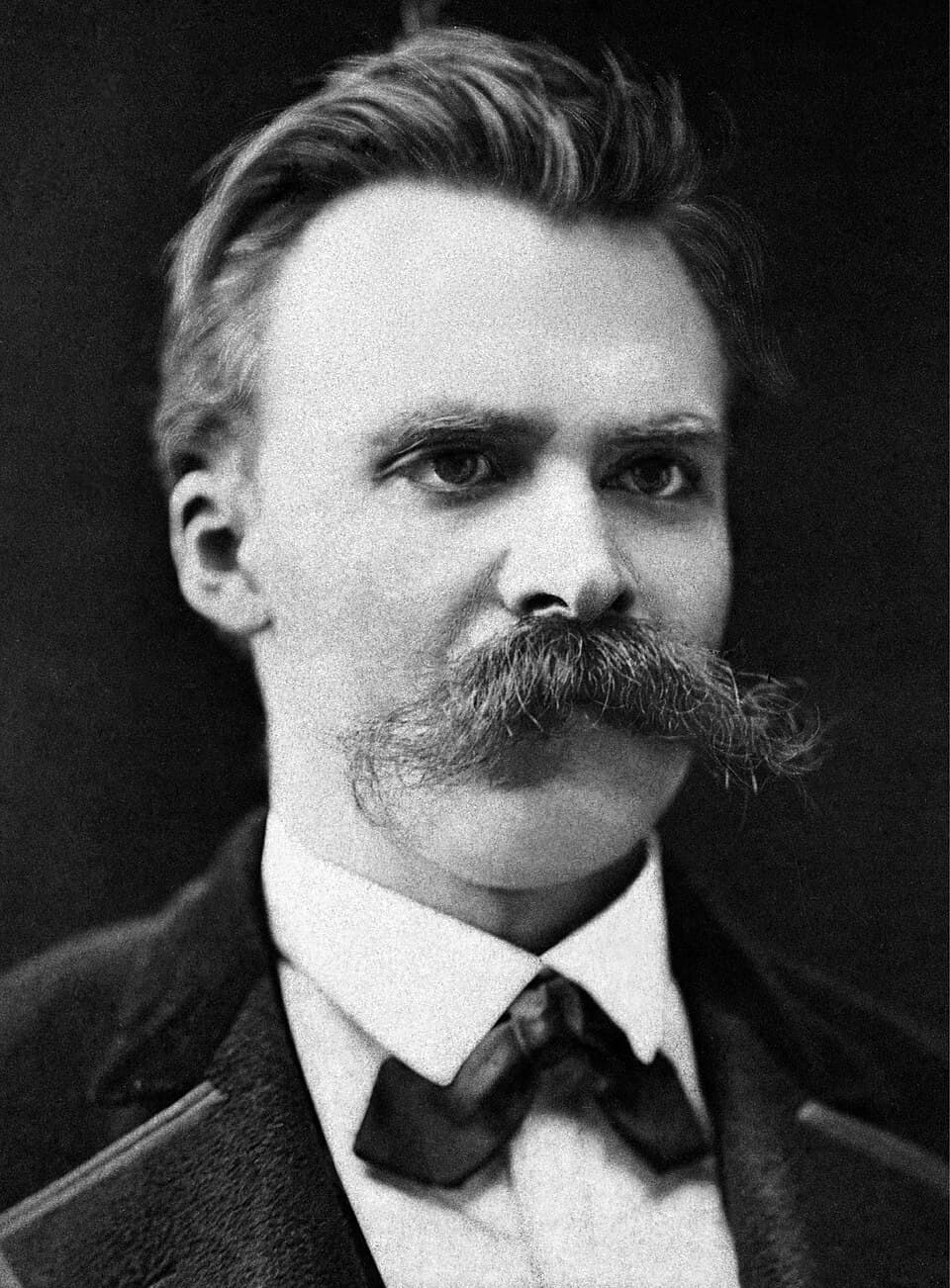
Friedrich Nietzsche
Thus Spake Zarathustra

The author observes that all living things are defined by a hierarchy of command and obedience, noting that those who cannot obey themselves must be commanded by others.

...pomp and proud names—ye and your ruling Will! Onward the river now carrieth your boat: it MUST carry it. A small matter if the rough wave foameth and angrily resisteth its keel! It is not the river that is your danger and the end of your good and evil, ye wisest ones: but that Will itself, the Will to Power—the unexhausted, procreating life-will. But that ye may understand my gospel of good and evil, for that purpose will I tell you my gospel of life, and of the nature of all living things.
The living thing did I follow; I walked in the broadest and narrowest paths to learn its nature. With a hundred-faced mirror did I catch its glance when its mouth was shut, so that its eye might speak unto me. And its eye spake unto me. But wherever I found living things, there heard I also the language of obedience. All living things are obeying things. And this heard I secondly: Whatever cannot obey itself, is commanded. Such is the nature of living things.
This, however, is the third thing which I heard—namely, that commanding is more difficult than obeying. And not only because the commander beareth the burden of all obeyers, and because this burden readily crusheth him:— An attempt and a risk seemed all commanding unto me; and whenever it commandeth, the living thing risketh itself thereby. Yea, even when it commandeth itself, then also must it atone for its commanding. Of its own law must it become the judge and avenger and victim. How dot...
2
Philosophers as Law-Givers
Friedrich Nietzsche
Beyond Good and Evil

Nietzsche asserts that while scholars organize the past, true philosophers are 'law-givers' who use the Will to Power to creatively determine the future and the ultimate purpose of mankind.

...nd besides, poet, and collector, and traveler, and riddle-reader, and moralist, and seer, and "free spirit," and almost everything, in order to traverse the whole range of human values and estimations, and that he may BE ABLE with a variety of eyes and consciences to look from a height to any distance, from a depth up to any height, from a nook into any expanse. But all these are only preliminary conditions for his task; this task itself demands something else--it requires him TO CREATE VALUES.
The philosophical workers, after the excellent pattern of Kant and Hegel, have to fix and formalize some great existing body of valuations--that is to say, former DETERMINATIONS OF VALUE, creations of value, which have become prevalent, and are for a time called "truths"--whether in the domain of the LOGICAL, the POLITICAL (moral), or the ARTISTIC. It is for these investigators to make whatever has happened and been esteemed hitherto, conspicuous, conceivable, intelligible, and manageable, to shorten everything long, even "time" itself, and to SUBJUGATE the entire past: an immense and wonderful task, in the carrying out of which all refined…
--Are there at present such philosophers? Have there ever been such philosophers? MUST there not be such philosophers some day? ... 212. It is always more obvious to me that the philosopher, as a man INDISPENSABLE for the morrow and the day after the morrow, has ever found himself, and HAS BEEN OBLIGED to find himself, in contradiction to the day in which he lives; his enemy has always been the ideal of his day. Hitherto all those extraordinary furtherers of humanity whom one calls philosophers...
Continue reading →
2
The Will to Power
Friedrich Nietzsche
Thus Spake Zarathustra

A thesis stating that the 'Will to Power' is the fundamental drive in all living things, manifesting even in the smallest acts of service and the greatest acts of sacrifice.

...; and whenever it commandeth, the living thing risketh itself thereby. Yea, even when it commandeth itself, then also must it atone for its commanding. Of its own law must it become the judge and avenger and victim. How doth this happen! so did I ask myself. What persuadeth the living thing to obey, and command, and even be obedient in commanding? Hearken now unto my word, ye wisest ones! Test it seriously, whether I have crept into the heart of life itself, and into the roots of its heart!
Wherever I found a living thing, there found I Will to Power; and even in the will of the servant found I the will to be master. That to the stronger the weaker shall serve—thereto persuadeth he his will who would be master over a still weaker one. That delight alone he is unwilling to forego. And as the lesser surrendereth himself to the greater that he may have delight and power over the least of all, so doth even the greatest surrender himself, and staketh—life, for the sake of power. It is the surrender of the greatest to run risk and danger, and play dice for death. And where there is sacrifice and service and love-glances, there also is…
By by-ways doth the weaker then slink into the fortress, and into the heart of the mightier one—and there stealeth power. And this secret spake Life herself unto me. “Behold,” said she, “I am that WHICH MUST EVER SURPASS ITSELF. To be sure, ye call it will to procreation, or impulse towards a goal, towards the higher, remoter, more manifold: but all that is one and the same secret. Rather would I succumb than disown this one thing; and verily, where there is succumbing and leaf-falling, lo,...
Continue reading →
2
Will's Sole Causality
Friedrich Nietzsche
Beyond Good and Evil

Nietzsche proposes a hypothetical framework where all mechanical and organic functions are understood as manifestations of a single fundamental force: the Will to Power.

...are still synthetically united with one another--as a PRIMARY FORM of life?--In the end, it is not only permitted to make this attempt, it is commanded by the conscience of LOGICAL METHOD. Not to assume several kinds of causality, so long as the attempt to get along with a single one has not been pushed to its furthest extent (to absurdity, if I may be allowed to say so): that is a morality of method which one may not repudiate nowadays--it follows "from its definition," as mathematicians say.
The question is ultimately whether we really recognize the will as OPERATING, whether we believe in the causality of the will; if we do so--and fundamentally our belief IN THIS is just our belief in causality itself--we MUST make the attempt to posit hypothetically the causality of the will as the only causality. "Will" can naturally only operate on "will"--and not on "matter" (not on "nerves," for instance): in short, the hypothesis must be hazarded, whether will does not operate on will wherever "effects" are recognized--and whether all mechanical action, inasmuch as a power operates therein, is not just the power of will, the effect of…
The world seen from within, the world defined and designated according to its "intelligible character"--it would simply be "Will to Power," and nothing else. 37. "What? Does not that mean in popular language: God is disproved, but not the devil?"--On the contrary! On the contrary, my friends! And who the devil also compels you to speak popularly! 38. As happened finally in all the enlightenment of modern times with the French Revolution (that terrible farce, quite superfluous when judged clos...
Continue reading →
4
Will to Thinkableness
Friedrich Nietzsche
Thus Spake Zarathustra

The 'Will to Truth' is reinterpreted as a 'Will to Power,' where thinkers attempt to make all of existence thinkable and subject to the human spirit's own values.

...d invulnerable. Invulnerable am I only in my heel. Ever livest thou there, and art like thyself, thou most patient one! Ever hast thou burst all shackles of the tomb! In thee still liveth also the unrealisedness of my youth; and as life and youth sittest thou here hopeful on the yellow ruins of graves. Yea, thou art still for me the demolisher of all graves: Hail to thee, my Will! And only where there are graves are there resurrections.— Thus sang Zarathustra. XXXIV. SELF-SURPASSING.
“Will to Truth” do ye call it, ye wisest ones, that which impelleth you and maketh you ardent? Will for the thinkableness of all being: thus do I call your will! All being would ye MAKE thinkable: for ye doubt with good reason whether it be already thinkable. But it shall accommodate and bend itself to you! So willeth your will. Smooth shall it become and subject to the spirit, as its mirror and reflection. That is your entire will, ye wisest ones, as a Will to Power; and even when ye speak of good and evil, and of estimates of value. Ye would still create a world before which ye can bow the knee: such is your ultimate hope and ecstasy.
The ignorant, to be sure, the people—they are like a river on which a boat floateth along: and in the boat sit the estimates of value, solemn and disguised. Your will and your valuations have ye put on the river of becoming; it betrayeth unto me an old Will to Power, what is believed by the people as good and evil. It was ye, ye wisest ones, who put such guests in this boat, and gave them pomp and proud names—ye and your ruling Will! Onward the river now carrieth your boat: it MUST carry it...
2