Degeneration as Horror
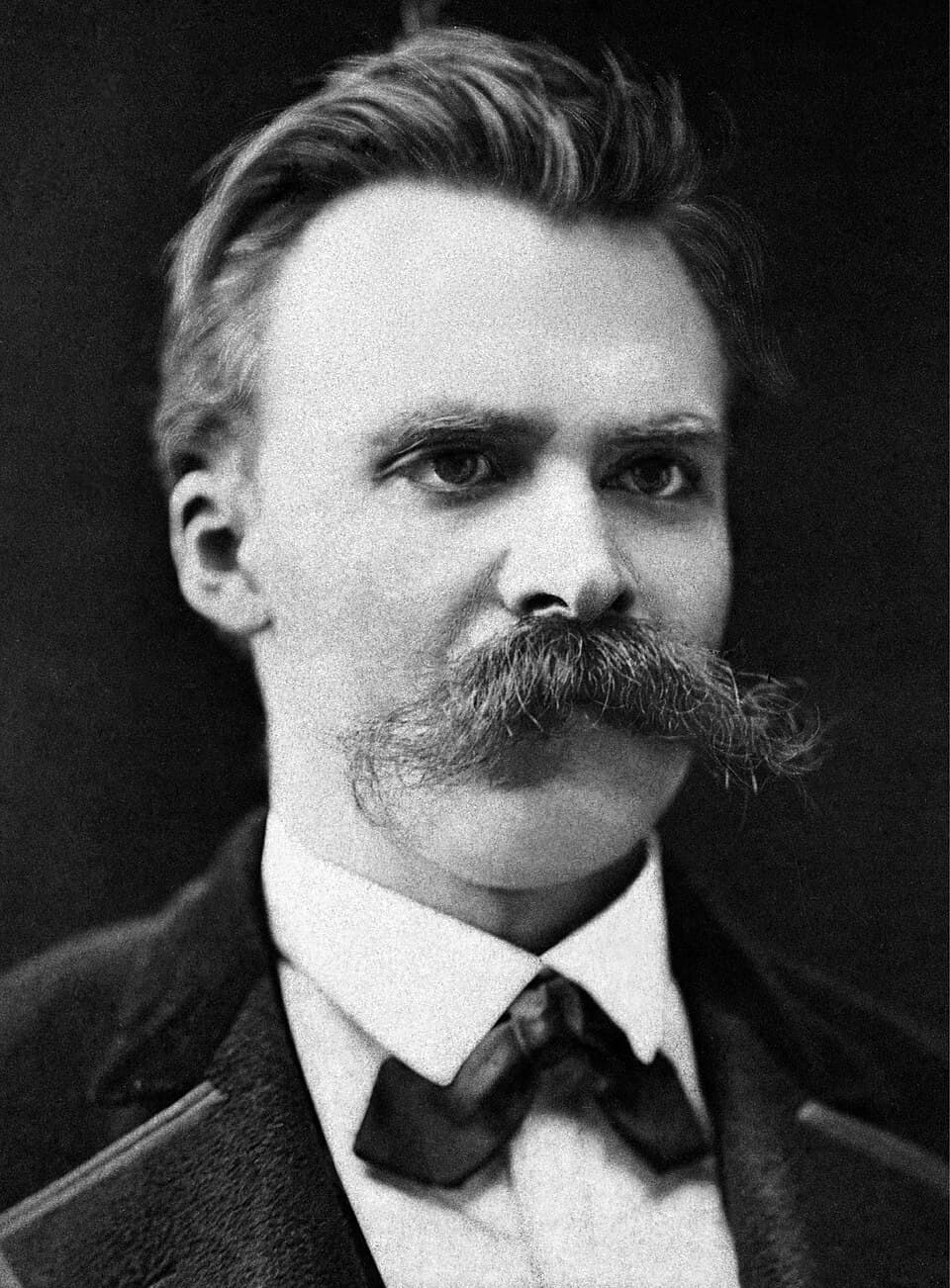
Friedrich Nietzsche
Thus Spake Zarathustra

The author defines degeneration as the loss of the 'bestowing soul,' arguing that true human progress moves toward generosity while selfishness signals a decline.

...thy and holy, call I this selfishness.— Another selfishness is there, an all-too-poor and hungry kind, which would always steal—the selfishness of the sick, the sickly selfishness. With the eye of the thief it looketh upon all that is lustrous; with the craving of hunger it measureth him who hath abundance; and ever doth it prowl round the tables of bestowers. Sickness speaketh in such craving, and invisible degeneration; of a sickly body, speaketh the larcenous craving of this selfishness.
Tell me, my brother, what do we think bad, and worst of all? Is it not DEGENERATION?—And we always suspect degeneration when the bestowing soul is lacking. Upward goeth our course from genera on to super-genera. But a horror to us is the degenerating sense, which saith: “All for myself.”
Upward soareth our sense: thus is it a simile of our body, a simile of an elevation. Such similes of elevations are the names of the virtues. Thus goeth the body through history, a becomer and fighter. And the spirit—what is it to the body? Its fights’ and victories’ herald, its companion and echo. Similes, are all names of good and evil; they do not speak out, they only hint. A fool who seeketh knowledge from them! Give heed, my brethren, to every hour when your spirit would speak in simi...
4
Honesty as Discipline
Friedrich Nietzsche
Beyond Good and Evil

Nietzsche exhorts 'free spirits' to cultivate honesty as their unique virtue, using their intellectual 'devils' and love of adventure to remain hard against the softening influence of an aging civilization.

...curiosity! We are woven into a strong net and garment of duties, and CANNOT disengage ourselves--precisely here, we are "men of duty," even we! Occasionally, it is true, we dance in our "chains" and betwixt our "swords"; it is none the less true that more often we gnash our teeth under the circumstances, and are impatient at the secret hardship of our lot. But do what we will, fools and appearances say of us: "These are men WITHOUT duty,"--we have always fools and appearances against us! 227.
Honesty, granting that it is the virtue of which we cannot rid ourselves, we free spirits--well, we will labour at it with all our perversity and love, and not tire of "perfecting" ourselves in OUR virtue, which alone remains: may its glance some day overspread like a gilded, blue, mocking twilight this aging civilization with its dull gloomy seriousness! And if, nevertheless, our honesty should one day grow weary, and sigh, and stretch its limbs, and find us too hard, and would fain have it pleasanter, easier, and gentler, like an agreeable vice, let us remain HARD, we latest Stoics, and let us send to its help whatever devilry we have in…
It is probable that people will misunderstand and mistake us on that account: what does it matter! They will say: "Their 'honesty'--that is their devilry, and nothing else!" What does it matter! And even if they were right--have not all Gods hitherto been such sanctified, re-baptized devils? And after all, what do we know of ourselves? And what the spirit that leads us wants TO BE CALLED? (It is a question of names.) And how many spirits we harbour? Our honesty, we free spirits--let us be caref...
Continue reading →
3
Virtues at War
Friedrich Nietzsche
Thus Spake Zarathustra

The author argues that virtues are inherently jealous and competitive, suggesting that while having many virtues is a heavy burden that can lead to self-destruction, man must ultimately be surpassed through them.

...pered, or of the voluptuous, or of the fanatical, or the vindictive; All thy passions in the end became virtues, and all thy devils angels. Once hadst thou wild dogs in thy cellar: but they changed at last into birds and charming songstresses. Out of thy poisons brewedst thou balsam for thyself; thy cow, affliction, milkedst thou—now drinketh thou the sweet milk of her udder. And nothing evil groweth in thee any longer, unless it be the evil that groweth out of the conflict of thy virtues.
My brother, if thou be fortunate, then wilt thou have one virtue and no more: thus goest thou easier over the bridge. Illustrious is it to have many virtues, but a hard lot; and many a one hath gone into the wilderness and killed himself, because he was weary of being the battle and battlefield of virtues. My brother, are war and battle evil? Necessary, however, is the evil; necessary are the envy and the distrust and the back-biting among the virtues. Lo! how each of thy virtues is covetous of the highest place; it wanteth thy whole spirit to be ITS herald, it wanteth thy whole power, in wrath, hatred, and love. Jealous is every virtue of…
VI. THE PALE CRIMINAL. Ye do not mean to slay, ye judges and sacrificers, until the animal hath bowed its head? Lo! the pale criminal hath bowed his head: out of his eye speaketh the great contempt. “Mine ego is something which is to be surpassed: mine ego is to me the great contempt of man”: so speaketh it out of that eye. When he judged himself—that was his supreme moment; let not the exalted one relapse again into his low estate! There is no salvation for him who thus suffereth from...
Continue reading →
3
Master of Emotions
Friedrich Nietzsche
Beyond Good and Evil

Nietzsche prescribes a life of proud solitude and emotional mastery, viewing social interaction as an unavoidable source of impurity and 'commonplace' thinking that must be managed with politeness and distance.

...tunity and provocation to constant MISUNDERSTANDING. To be able to allow oneself this veritable luxury of taste and morality, one must not live among intellectual imbeciles, but rather among men whose misunderstandings and mistakes amuse by their refinement--or one will have to pay dearly for it!--"He praises me, THEREFORE he acknowledges me to be right"--this asinine method of inference spoils half of the life of us recluses, for it brings the asses into our neighbourhood and friendship. 284.
To live in a vast and proud tranquility; always beyond... To have, or not to have, one's emotions, one's For and Against, according to choice; to lower oneself to them for hours; to SEAT oneself on them as upon horses, and often as upon asses:--for one must know how to make use of their stupidity as well as of their fire. To conserve one's three hundred foregrounds; also one's black spectacles: for there are circumstances when nobody must look into our eyes, still less into our "motives." And to choose for company that roguish and cheerful vice, politeness. And to remain master of one's four virtues, courage, insight, sympathy, and solitude.…
285. The greatest events and thoughts--the greatest thoughts, however, are the greatest events--are longest in being comprehended: the generations which are contemporary with them do not EXPERIENCE such events--they live past them. Something happens there as in the realm of stars. The light of the furthest stars is longest in reaching man; and before it has arrived man DENIES--that there are stars there. "How many centuries does a mind require to be understood?"--that is also a standard, one a...
Continue reading →
3
Virtue as Destiny
Friedrich Nietzsche
Thus Spake Zarathustra

A series of 'I love' statements praising the individual who is entirely consumed by their virtue and who gives of themselves lavishly without seeking recognition or preservation.

...ifice themselves to the earth, that the earth of the Superman may hereafter arrive. I love him who liveth in order to know, and seeketh to know in order that the Superman may hereafter live. Thus seeketh he his own down-going. I love him who laboureth and inventeth, that he may build the house for the Superman, and prepare for him earth, animal, and plant: for thus seeketh he his own down-going. I love him who loveth his virtue: for virtue is the will to down-going, and an arrow of longing.
I love him who reserveth no share of spirit for himself, but wanteth to be wholly the spirit of his virtue: thus walketh he as spirit over the bridge. I love him who maketh his virtue his inclination and destiny: thus, for the sake of his virtue, he is willing to live on, or live no more. I love him who desireth not too many virtues. One virtue is more of a virtue than two, because it is more of a knot for one’s destiny to cling to. I love him whose soul is lavish, who wanteth no thanks and doth not give back: for he always bestoweth, and desireth not to keep for himself.
I love him who is ashamed when the dice fall in his favour, and who then asketh: “Am I a dishonest player?”—for he is willing to succumb. I love him who scattereth golden words in advance of his deeds, and always doeth more than he promiseth: for he seeketh his own down-going. I love him who justifieth the future ones, and redeemeth the past ones: for he is willing to succumb through the present ones. I love him who chasteneth his God, because he loveth his God: for he must succumb through...
2