The Humanly Conceivable God
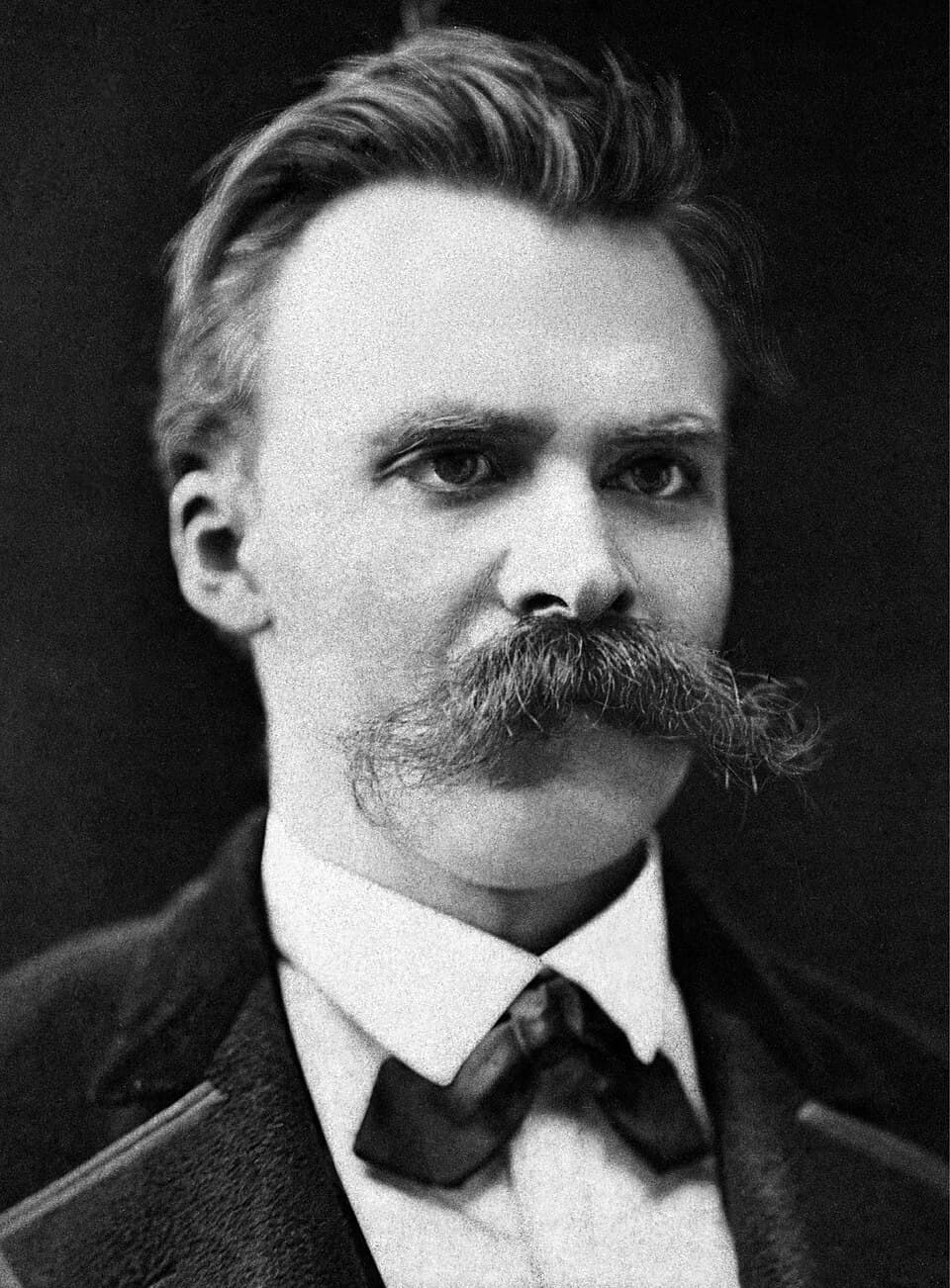
Friedrich Nietzsche
Thus Spake Zarathustra

Nietzsche prescribes a shift from metaphysical conjecture to human-centered creation, urging that the 'Will to Truth' be used to transform the world into something humanly conceivable and sensible.

...out upon distant seas. Once did people say God, when they looked out upon distant seas; now, however, have I taught you to say, Superman. God is a conjecture: but I do not wish your conjecturing to reach beyond your creating will. Could ye CREATE a God?—Then, I pray you, be silent about all Gods! But ye could well create the Superman. Not perhaps ye yourselves, my brethren! But into fathers and forefathers of the Superman could ye transform yourselves: and let that be your best creating!—
God is a conjecture: but I should like your conjecturing restricted to the conceivable. Could ye CONCEIVE a God?—But let this mean Will to Truth unto you, that everything be transformed into the humanly conceivable, the humanly visible, the humanly sensible! Your own discernment shall ye follow out to the end! And what ye have called the world shall but be created by you: your reason, your likeness, your will, your love, shall it itself become!
And verily, for your bliss, ye discerning ones! And how would ye endure life without that hope, ye discerning ones? Neither in the inconceivable could ye have been born, nor in the irrational. But that I may reveal my heart entirely unto you, my friends: IF there were gods, how could I endure it to be no God! THEREFORE there are no Gods. Yea, I have drawn the conclusion; now, however, doth it draw me.— God is a conjecture: but who could drink all the bitterness of this conjecture without dy...
4
Truth for the Rare
Friedrich Nietzsche
Beyond Good and Evil

Nietzsche envisions future philosophers as non-dogmatic individuals who reject the 'common good,' believing instead that truth is personal and that rare, profound experiences are reserved only for the rare and profound.

...CONSERVE ONESELF--the best test of independence. 42. A new order of philosophers is appearing; I shall venture to baptize them by a name not without danger. As far as I understand them, as far as they allow themselves to be understood--for it is their nature to WISH to remain something of a puzzle--these philosophers of the future might rightly, perhaps also wrongly, claim to be designated as "tempters." This name itself is after all only an attempt, or, if it be preferred, a temptation. 43.
Will they be new friends of "truth," these coming philosophers? Very probably, for all philosophers hitherto have loved their truths. But assuredly they will not be dogmatists. It must be contrary to their pride, and also contrary to their taste, that their truth should still be truth for every one--that which has hitherto been the secret wish and ultimate purpose of all dogmatic efforts. "My opinion is MY opinion: another person has not easily a right to it"--such a philosopher of the future will say, perhaps. One must renounce the bad taste of wishing to agree with many people. "Good" is no longer good when one's neighbour takes it into his…
44. Need I say expressly after all this that they will be free, VERY free spirits, these philosophers of the future--as certainly also they will not be merely free spirits, but something more, higher, greater, and fundamentally different, which does not wish to be misunderstood and mistaken? But while I say this, I feel under OBLIGATION almost as much to them as to ourselves (we free spirits who are their heralds and forerunners), to sweep away from ourselves altogether a stupid old prejudice...
Continue reading →
2
Will to Thinkableness
Friedrich Nietzsche
Thus Spake Zarathustra

The 'Will to Truth' is reinterpreted as a 'Will to Power,' where thinkers attempt to make all of existence thinkable and subject to the human spirit's own values.

...d invulnerable. Invulnerable am I only in my heel. Ever livest thou there, and art like thyself, thou most patient one! Ever hast thou burst all shackles of the tomb! In thee still liveth also the unrealisedness of my youth; and as life and youth sittest thou here hopeful on the yellow ruins of graves. Yea, thou art still for me the demolisher of all graves: Hail to thee, my Will! And only where there are graves are there resurrections.— Thus sang Zarathustra. XXXIV. SELF-SURPASSING.
“Will to Truth” do ye call it, ye wisest ones, that which impelleth you and maketh you ardent? Will for the thinkableness of all being: thus do I call your will! All being would ye MAKE thinkable: for ye doubt with good reason whether it be already thinkable. But it shall accommodate and bend itself to you! So willeth your will. Smooth shall it become and subject to the spirit, as its mirror and reflection. That is your entire will, ye wisest ones, as a Will to Power; and even when ye speak of good and evil, and of estimates of value. Ye would still create a world before which ye can bow the knee: such is your ultimate hope and ecstasy.
The ignorant, to be sure, the people—they are like a river on which a boat floateth along: and in the boat sit the estimates of value, solemn and disguised. Your will and your valuations have ye put on the river of becoming; it betrayeth unto me an old Will to Power, what is believed by the people as good and evil. It was ye, ye wisest ones, who put such guests in this boat, and gave them pomp and proud names—ye and your ruling Will! Onward the river now carrieth your boat: it MUST carry it...
2
Truth's Unquenchable Salt
Friedrich Nietzsche
Beyond Good and Evil

A metaphorical warning against making the truth so bitter or 'salty' through harshness that it loses its ability to provide spiritual or intellectual nourishment.

...same principles probably seek fundamentally different ends therewith. 78. He who despises himself, nevertheless esteems himself thereby, as a despiser. 79. A soul which knows that it is loved, but does not itself love, betrays its sediment: its dregs come up. 80. A thing that is explained ceases to concern us--What did the God mean who gave the advice, "Know thyself!" Did it perhaps imply "Cease to be concerned about thyself! become objective!"--And Socrates?--And the "scientific man"? 81.
It is terrible to die of thirst at sea. Is it necessary that you should so salt your truth that it will no longer--quench thirst?
82. "Sympathy for all"--would be harshness and tyranny for THEE, my good neighbour. 83. INSTINCT--When the house is on fire one forgets even the dinner--Yes, but one recovers it from among the ashes. 84. Woman learns how to hate in proportion as she--forgets how to charm. 85. The same emotions are in man and woman, but in different TEMPO, on that account man and woman never cease to misunderstand each other. 86. In the background of all their personal vanity, women themselves have still th...
4
Wisdom's Angry Mirror
Friedrich Nietzsche
Thus Spake Zarathustra

A confession of the author's complex relationship with Life and Wisdom, noting that he loves Life most when he hates her, and loves Wisdom because she resembles Life.

...fathomable. “Such is the language of all fish,” saidst thou; “what THEY do not fathom is unfathomable. But changeable am I only, and wild, and altogether a woman, and no virtuous one: Though I be called by you men the ‘profound one,’ or the ‘faithful one,’ ‘the eternal one,’ ‘the mysterious one.’ But ye men endow us always with your own virtues—alas, ye virtuous ones!” Thus did she laugh, the unbelievable one; but never do I believe her and her laughter, when she speaketh evil of herself.
And when I talked face to face with my wild Wisdom, she said to me angrily: “Thou willest, thou cravest, thou lovest; on that account alone dost thou PRAISE Life!” Then had I almost answered indignantly and told the truth to the angry one; and one cannot answer more indignantly than when one “telleth the truth” to one’s Wisdom. For thus do things stand with us three. In my heart do I love only Life—and verily, most when I hate her! But that I am fond of Wisdom, and often too fond, is because she remindeth me very strongly of Life! She hath her eye, her laugh, and even her golden angle-rod: am I responsible for it that both are so alike?
And when once Life asked me: “Who is she then, this Wisdom?”—then said I eagerly: “Ah, yes! Wisdom! One thirsteth for her and is not satisfied, one looketh through veils, one graspeth through nets. Is she beautiful? What do I know! But the oldest carps are still lured by her. Changeable is she, and wayward; often have I seen her bite her lip, and pass the comb against the grain of her hair. Perhaps she is wicked and false, and altogether a woman; but when she speaketh ill of herself, just...
2