This thesis posits that while the mature long for the end, the immature and suffering cling to life in order to grow toward a higher, brighter state of being.
Maturity's Death Wish
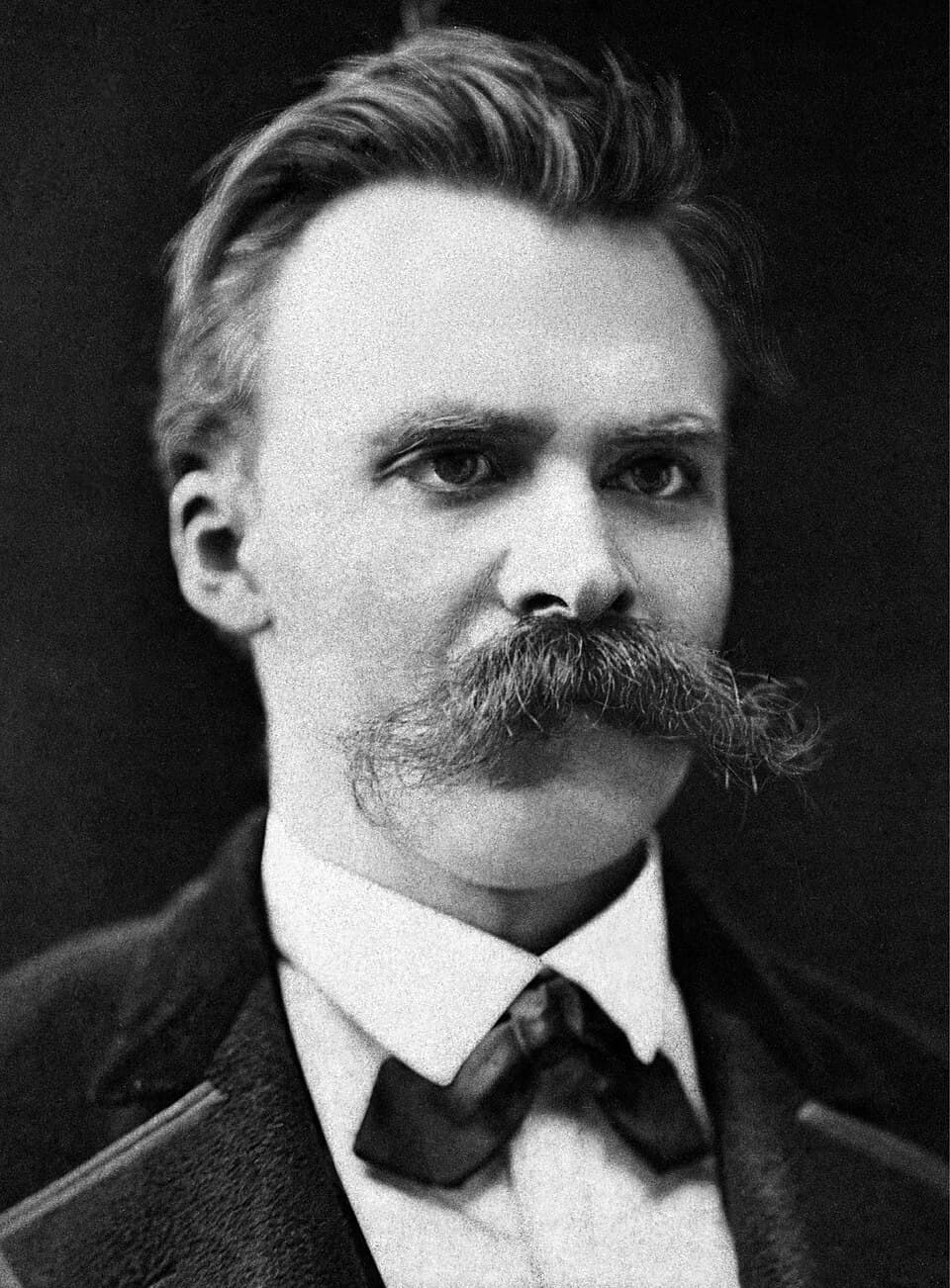
Friedrich Nietzsche
Thus Spake Zarathustra...how she wheezeth and panteth, the midnight! How she just now speaketh soberly, this drunken poetess! hath she perhaps overdrunk her drunkenness? hath she become overawake? doth she ruminate? —Her woe doth she ruminate over, in a dream, the old, deep midnight—and still more her joy. For joy, although woe be deep, JOY IS DEEPER STILL THAN GRIEF CAN BE. 9. Thou grape-vine! Why dost thou praise me? Have I not cut thee! I am cruel, thou bleedest—: what meaneth thy praise of my drunken cruelty?
“Whatever hath become perfect, everything mature—wanteth to die!” so sayest thou. Blessed, blessed be the vintner’s knife! But everything immature wanteth to live: alas! Woe saith: “Hence! Go! Away, thou woe!” But everything that suffereth wanteth to live, that it may become mature and lively and longing, —Longing for the further, the higher, the brighter.
“I want heirs,” so saith everything that suffereth, “I want children, I do not want MYSELF,”— Joy, however, doth not want heirs, it doth not want children,—joy wanteth itself, it wanteth eternity, it wanteth recurrence, it wanteth everything eternally-like-itself. Woe saith: “Break, bleed, thou heart! Wander, thou leg! Thou wing, fly! Onward! upward! thou pain!” Well! Cheer up! O mine old heart: WOE SAITH: “HENCE! GO!” 10. Ye higher men, what think ye? Am I a soothsayer? Or a dreamer? Or a...
4
⚖Saviour's False Chains

Friedrich Nietzsche
Thus Spake ZarathustraA critique of the priesthood as being imprisoned by false values and a 'Saviour' who fetters them with life-denying delusions.
...pass them quietly and with sleeping swords! Even among them there are heroes; many of them have suffered too much—: so they want to make others suffer. Bad enemies are they: nothing is more revengeful than their meekness. And readily doth he soil himself who toucheth them. But my blood is related to theirs; and I want withal to see my blood honoured in theirs.”— And when they had passed, a pain attacked Zarathustra; but not long had he struggled with the pain, when he began to speak thus:
It moveth my heart for those priests. They also go against my taste; but that is the smallest matter unto me, since I am among men. But I suffer and have suffered with them: prisoners are they unto me, and stigmatised ones. He whom they call Saviour put them in fetters:— In fetters of false values and fatuous words! Oh, that some one would save them from their Saviour! On an isle they once thought they had landed, when the sea tossed them about; but behold, it was a slumbering monster! False values and fatuous words: these are the worst monsters for mortals—long slumbereth and waiteth the fate that is in them. But at last it cometh and…
Oh, just look at those tabernacles which those priests have built themselves! Churches, they call their sweet-smelling caves! Oh, that falsified light, that mustified air! Where the soul—may not fly aloft to its height! But so enjoineth their belief: “On your knees, up the stair, ye sinners!” Verily, rather would I see a shameless one than the distorted eyes of their shame and devotion! Who created for themselves such caves and penitence-stairs? Was it not those who sought to conceal thems...
Continue reading →
2
⚖Pity's Heavy Cloud

Friedrich Nietzsche
Thus Spake ZarathustraThe author warns against the dangers of pity, suggesting it is a folly that causes more suffering than it alleviates. He famously asserts that 'God is dead' because of his pity for man, urging individuals to maintain an elevation above such sentiments.
...icult. And not to him who is offensive to us are we most unfair, but to him who doth not concern us at all. If, however, thou hast a suffering friend, then be a resting-place for his suffering; like a hard bed, however, a camp-bed: thus wilt thou serve him best. And if a friend doeth thee wrong, then say: “I forgive thee what thou hast done unto me; that thou hast done it unto THYSELF, however—how could I forgive that!” Thus speaketh all great love: it surpasseth even forgiveness and pity.
One should hold fast one’s heart; for when one letteth it go, how quickly doth one’s head run away! Ah, where in the world have there been greater follies than with the pitiful? And what in the world hath caused more suffering than the follies of the pitiful? Woe unto all loving ones who have not an elevation which is above their pity! Thus spake the devil unto me, once on a time: “Even God hath his hell: it is his love for man.” And lately, did I hear him say these words: “God is dead: of his pity for man hath God died.”— So be ye warned against pity: FROM THENCE there yet cometh unto men a heavy cloud!
Verily, I understand weather-signs! But attend also to this word: All great love is above all its pity: for it seeketh—to create what is loved! “Myself do I offer unto my love, AND MY NEIGHBOUR AS MYSELF”—such is the language of all creators. All creators, however, are hard.— Thus spake Zarathustra. XXVI. THE PRIESTS. And one day Zarathustra made a sign to his disciples, and spake these words unto them: “Here are priests: but although they are mine enemies, pass them quietly and with...
2
⚖Suffering's Creative Fire

Friedrich Nietzsche
Beyond Good and EvilA vision of the necessity of profound suffering, which the author claims is the sole discipline capable of forging the soul's greatness and uniting the 'creature' and 'creator' within man.
...describable anguish, when we resist it,--when we regard your seriousness as more dangerous than any kind of levity. You want, if possible--and there is not a more foolish "if possible"--TO DO AWAY WITH SUFFERING; and we?--it really seems that WE would rather have it increased and made worse than it has ever been! Well-being, as you understand it--is certainly not a goal; it seems to us an END; a condition which at once renders man ludicrous and contemptible--and makes his destruction DESIRABLE!
The discipline of suffering, of GREAT suffering--know ye not that it is only THIS discipline that has produced all the elevations of humanity hitherto? The tension of soul in misfortune which communicates to it its energy, its shuddering in view of rack and ruin, its inventiveness and bravery in undergoing, enduring, interpreting, and exploiting misfortune, and whatever depth, mystery, disguise, spirit, artifice, or greatness has been bestowed upon the soul--has it not been bestowed through suffering, through the discipline of great suffering? In man CREATURE and CREATOR are united: in man there is not only matter, shred, excess, clay, mire,…
And that YOUR sympathy for the "creature in man" applies to that which has to be fashioned, bruised, forged, stretched, roasted, annealed, refined--to that which must necessarily SUFFER, and IS MEANT to suffer? And our sympathy--do ye not understand what our REVERSE sympathy applies to, when it resists your sympathy as the worst of all pampering and enervation?--So it is sympathy AGAINST sympathy!--But to repeat it once more, there are higher problems than the problems of pleasure and pain and...
Continue reading →
2
⚖Creating Through Suffering

Friedrich Nietzsche
Thus Spake ZarathustraThe author argues that creation is the ultimate salvation from suffering, though it requires the creator to endure the 'pangs' of constant self-transformation and symbolic death.
...hink this is giddiness and vertigo to human limbs, and even vomiting to the stomach: verily, the reeling sickness do I call it, to conjecture such a thing. Evil do I call it and misanthropic: all that teaching about the one, and the plenum, and the unmoved, and the sufficient, and the imperishable! All the imperishable—that’s but a simile, and the poets lie too much.— But of time and of becoming shall the best similes speak: a praise shall they be, and a justification of all perishableness!
Creating—that is the great salvation from suffering, and life’s alleviation. But for the creator to appear, suffering itself is needed, and much transformation. Yea, much bitter dying must there be in your life, ye creators! Thus are ye advocates and justifiers of all perishableness. For the creator himself to be the new-born child, he must also be willing to be the child-bearer, and endure the pangs of the child-bearer.
Verily, through a hundred souls went I my way, and through a hundred cradles and birth-throes. Many a farewell have I taken; I know the heart-breaking last hours. But so willeth it my creating Will, my fate. Or, to tell you it more candidly: just such a fate—willeth my Will. All FEELING suffereth in me, and is in prison: but my WILLING ever cometh to me as mine emancipator and comforter. Willing emancipateth: that is the true doctrine of will and emancipation—so teacheth you Zarathustra. N...
3