Afternoon's Luminous Stillness
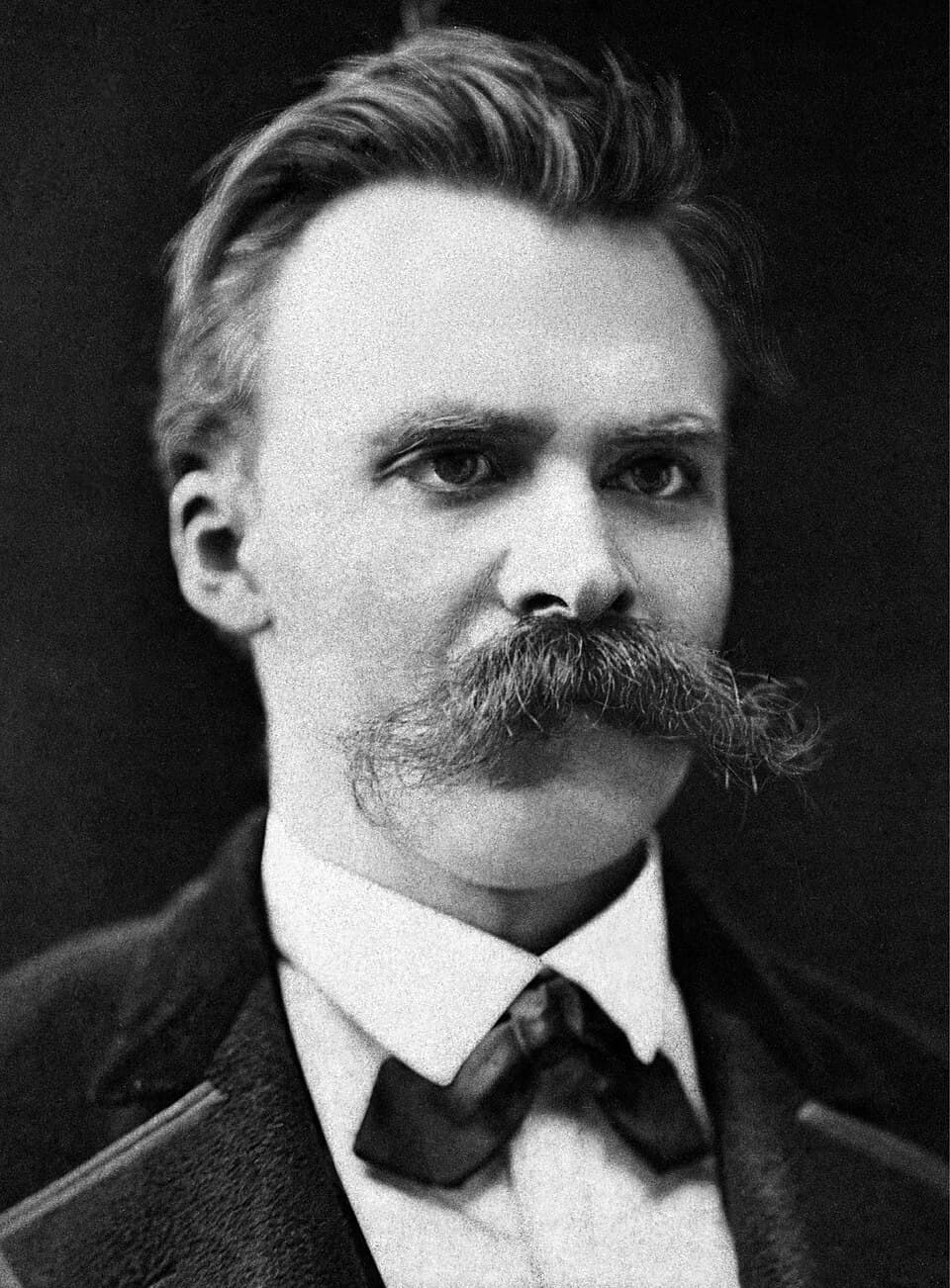
Friedrich Nietzsche
Thus Spake Zarathustra

A nostalgic reflection on the 'afternoon' of life, where the author finds contentment in solitude and the 'living plantation' of his thoughts. He expresses a sense of fulfillment in having surrendered everything to protect his highest hopes and intellectual legacy.

...that laughter gnaweth at me: oh, how can I still endure to live! And how could I endure to die at present!— Thus spake Zarathustra. XLVII. INVOLUNTARY BLISS. With such enigmas and bitterness in his heart did Zarathustra sail o’er the sea. When, however, he was four day-journeys from the Happy Isles and from his friends, then had he surmounted all his pain—: triumphantly and with firm foot did he again accept his fate. And then talked Zarathustra in this wise to his exulting conscience:
Alone am I again, and like to be so, alone with the pure heaven, and the open sea; and again is the afternoon around me. On an afternoon did I find my friends for the first time; on an afternoon, also, did I find them a second time:—at the hour when all light becometh stiller. For whatever happiness is still on its way ‘twixt heaven and earth, now seeketh for lodging a luminous soul: WITH HAPPINESS hath all light now become stiller. O afternoon of my life! Once did my happiness also descend to the valley that it might seek a lodging: then did it find those open hospitable souls. O afternoon of my life! What did I not surrender that I might…
Companions did the creating one once seek, and children of HIS hope: and lo, it turned out that he could not find them, except he himself should first create them. Thus am I in the midst of my work, to my children going, and from them returning: for the sake of his children must Zarathustra perfect himself. For in one’s heart one loveth only one’s child and one’s work; and where there is great love to oneself, then is it the sign of pregnancy: so have I found it. Still are my children verda...
Continue reading →
2
Spirits Become Wanton
Friedrich Nietzsche
Thus Spake Zarathustra

A celebration of the 'lofty, strong will' as the finest growth on earth, capable of commanding its environment and answering the challenges of the heights. It suggests that the presence of such a powerful individual refreshes the entire spiritual landscape.

...hustra, by the way in which thou hast given us thy hand and thy greeting, we recognise thee as Zarathustra. Thou hast humbled thyself before us; almost hast thou hurt our reverence—: —Who however could have humbled himself as thou hast done, with such pride? THAT uplifteth us ourselves; a refreshment is it, to our eyes and hearts. To behold this, merely, gladly would we ascend higher mountains than this. For as eager beholders have we come; we wanted to see what brighteneth dim eyes. And lo!
Now is it all over with our cries of distress. Now are our minds and hearts open and enraptured. Little is lacking for our spirits to become wanton. There is nothing, O Zarathustra, that groweth more pleasingly on earth than a lofty, strong will: it is the finest growth. An entire landscape refresheth itself at one such tree. To the pine do I compare him, O Zarathustra, which groweth up like thee—tall, silent, hardy, solitary, of the best, supplest wood, stately,— —In the end, however, grasping out for ITS dominion with strong, green branches, asking weighty questions of the wind, the storm, and whatever is at home on high places; —Answering…
At thy tree, O Zarathustra, the gloomy and ill-constituted also refresh themselves; at thy look even the wavering become steady and heal their hearts. And verily, towards thy mountain and thy tree do many eyes turn to-day; a great longing hath arisen, and many have learned to ask: ‘Who is Zarathustra?’ And those into whose ears thou hast at any time dripped thy song and thy honey: all the hidden ones, the lone-dwellers and the twain-dwellers, have simultaneously said to their hearts: ‘Doth...
Continue reading →
1
The Philosopher's Hidden Depths
Friedrich Nietzsche
Beyond Good and Evil

A reflection on the inherent secrecy of the recluse philosopher, suggesting that published works are merely masks and that every philosophical foundation conceals an even deeper, more mysterious abyss of thought.

...ous eyes--as though the hand were not a betrayer; it always comes out at last that they have something which they hide--namely, intellect. One of the subtlest means of deceiving, at least as long as possible, and of successfully representing oneself to be stupider than one really is--which in everyday life is often as desirable as an umbrella,--is called ENTHUSIASM, including what belongs to it, for instance, virtue. For as Galiani said, who was obliged to know it: VERTU EST ENTHOUSIASME. 289.
In the writings of a recluse one always hears something of the echo of the wilderness, something of the murmuring tones and timid vigilance of solitude; in his strongest words, even in his cry itself, there sounds a new and more dangerous kind of silence, of concealment. He who has sat day and night, from year's end to year's end, alone with his soul in familiar discord and discourse, he who has become a cave-bear, or a treasure-seeker, or a treasure-guardian and dragon in his cave--it may be a labyrinth, but can also be a gold-mine--his ideas themselves eventually acquire a twilight-colour of their own, and an odour, as much of the depth as…
Every philosophy is a foreground philosophy--this is a recluse's verdict: "There is something arbitrary in the fact that the PHILOSOPHER came to a stand here, took a retrospect, and looked around; that he HERE laid his spade aside and did not dig any deeper--there is also something suspicious in it." Every philosophy also CONCEALS a philosophy; every opinion is also a LURKING-PLACE, every word is also a MASK. 290. Every deep thinker is more afraid of being understood than of being misunderstoo...
Continue reading →
2
Lonesomeness' Open Doors
Friedrich Nietzsche
Thus Spake Zarathustra

A tender reflection on lonesomeness as a welcoming home where the soul finds clarity, openness, and a relief from the heavy weight of social time.

...ngst the thirsty: —Until at last thou alone sattest thirsty amongst the drunken ones, and wailedst nightly: ‘Is taking not more blessed than giving? And stealing yet more blessed than taking?’—THAT was forsakenness! And dost thou remember, O Zarathustra? When thy stillest hour came and drove thee forth from thyself, when with wicked whispering it said: ‘Speak and succumb!’— —When it disgusted thee with all thy waiting and silence, and discouraged thy humble courage: THAT was forsakenness!”—
O lonesomeness! My home, lonesomeness! How blessedly and tenderly speaketh thy voice unto me! We do not question each other, we do not complain to each other; we go together openly through open doors. For all is open with thee and clear; and even the hours run here on lighter feet. For in the dark, time weigheth heavier upon one than in the light.
Here fly open unto me all being’s words and word-cabinets: here all being wanteth to become words, here all becoming wanteth to learn of me how to talk. Down there, however—all talking is in vain! There, forgetting and passing-by are the best wisdom: THAT have I learned now! He who would understand everything in man must handle everything. But for that I have too clean hands. I do not like even to inhale their breath; alas! that I have lived so long among their noise and bad breaths! O ble...
2
Solitude's Strong Breeze
Friedrich Nietzsche
Thus Spake Zarathustra

The author advocates for solitude as a refuge from the 'poisonous flies' of the marketplace and public fame. He suggests that all great things and new values are devised away from the noise of the crowd.

...ace,—and the people glory in their great men! These are for them the masters of the hour. But the hour presseth them; so they press thee. And also from thee they want Yea or Nay. Alas! thou wouldst set thy chair betwixt For and Against? On account of those absolute and impatient ones, be not jealous, thou lover of truth! Never yet did truth cling to the arm of an absolute one. On account of those abrupt ones, return into thy security: only in the market-place is one assailed by Yea? or Nay?
Slow is the experience of all deep fountains: long have they to wait until they know WHAT hath fallen into their depths. Away from the market-place and from fame taketh place all that is great: away from the market-place and from fame have ever dwelt the devisers of new values. Flee, my friend, into thy solitude: I see thee stung all over by the poisonous flies. Flee thither, where a rough, strong breeze bloweth! Flee into thy solitude!
Thou hast lived too closely to the small and the pitiable. Flee from their invisible vengeance! Towards thee they have nothing but vengeance. Raise no longer an arm against them! Innumerable are they, and it is not thy lot to be a fly-flap. Innumerable are the small and pitiable ones; and of many a proud structure, rain-drops and weeds have been the ruin. Thou art not stone; but already hast thou become hollow by the numerous drops. Thou wilt yet break and burst by the numerous drops. Exhau...
2