Dogma's Noble Puerilism
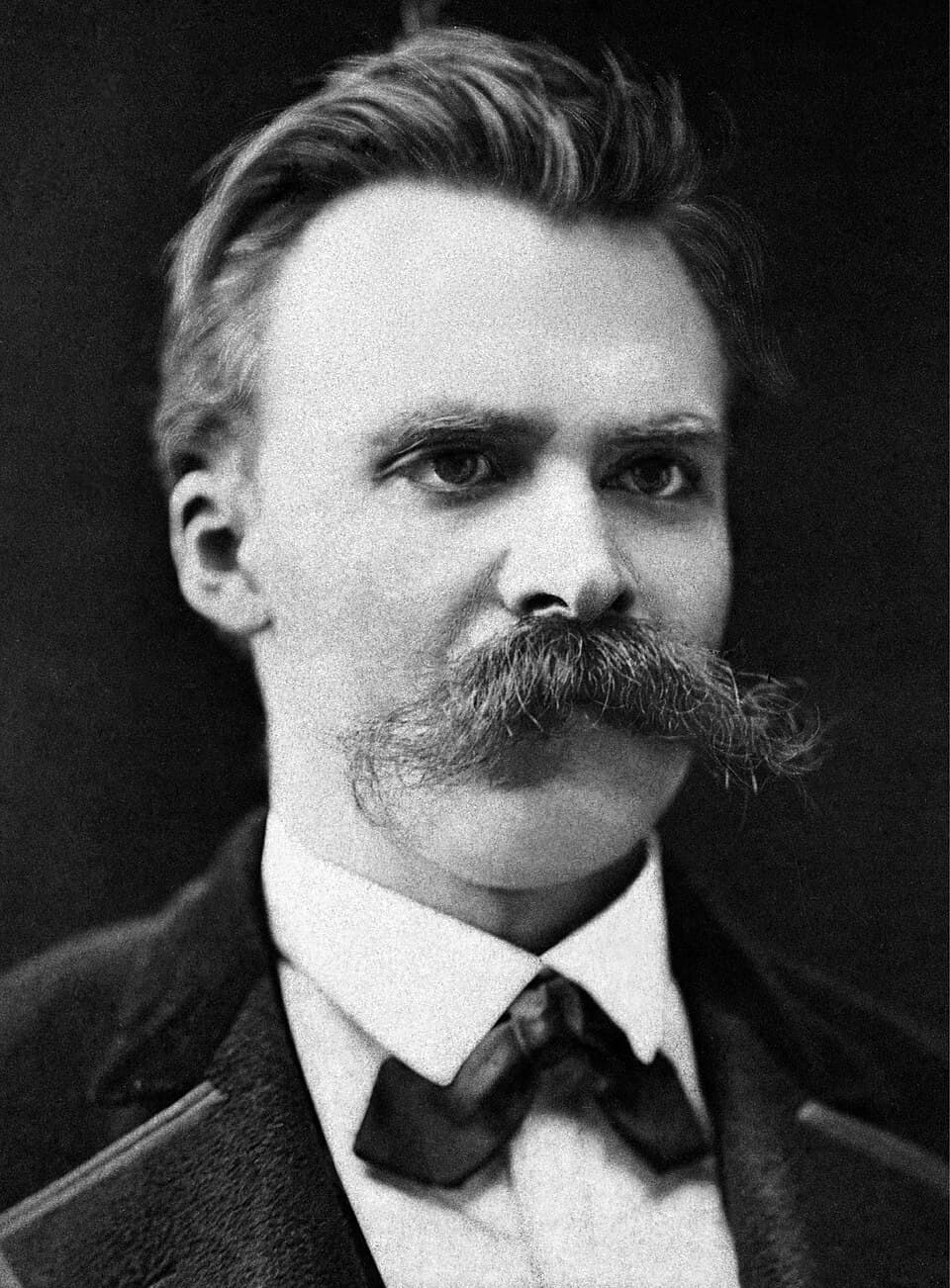
Friedrich Nietzsche
Beyond Good and Evil

The author expresses hope that the era of dogmatic philosophy is ending, suggesting that grand philosophical systems have historically been built upon mere wordplay, grammatical deceptions, or 'all-too-human' superstitions.

...OSING that Truth is a woman--what then? Is there not ground for suspecting that all philosophers, in so far as they have been dogmatists, have failed to understand women--that the terrible seriousness and clumsy importunity with which they have usually paid their addresses to Truth, have been unskilled and unseemly methods for winning a woman? Certainly she has never allowed herself to be won; and at present every kind of dogma stands with sad and discouraged mien--IF, indeed, it stands at all!
For there are scoffers who maintain that it has fallen, that all dogma lies on the ground--nay more, that it is at its last gasp. But to speak seriously, there are good grounds for hoping that all dogmatizing in philosophy, whatever solemn, whatever conclusive and decided airs it has assumed, may have been only a noble puerilism and tyronism; and probably the time is at hand when it will be once and again understood WHAT has actually sufficed for the basis of such imposing and absolute philosophical edifices as the dogmatists have hitherto reared: perhaps some popular superstition of immemorial time (such as the soul-superstition, which, in…
The philosophy of the dogmatists, it is to be hoped, was only a promise for thousands of years afterwards, as was astrology in still earlier times, in the service of which probably more labour, gold, acuteness, and patience have been spent than on any actual science hitherto: we owe to it, and to its "super-terrestrial" pretensions in Asia and Egypt, the grand style of architecture. It seems that in order to inscribe themselves upon the heart of humanity with everlasting claims, all great thing...
Continue reading →
2
Will Over History
Friedrich Nietzsche
Beyond Good and Evil

The author calls for a new type of philosopher-commander to seize control of human destiny and replace the 'folly of chance' with a deliberate, educated human will.

...form of political organization, but as equivalent to a degenerating, a waning type of man, as involving his mediocrising and depreciation: where have WE to fix our hopes? In NEW PHILOSOPHERS--there is no other alternative: in minds strong and original enough to initiate opposite estimates of value, to transvalue and invert "eternal valuations"; in forerunners, in men of the future, who in the present shall fix the constraints and fasten the knots which will compel millenniums to take NEW paths.
To teach man the future of humanity as his WILL, as depending on human will, and to make preparation for vast hazardous enterprises and collective attempts in rearing and educating, in order thereby to put an end to the frightful rule of folly and chance which has hitherto gone by the name of "history" (the folly of the "greatest number" is only its last form)--for that purpose a new type of philosopher and commander will some time or other be needed, at the very idea of which everything that has existed in the way of occult, terrible, and benevolent beings might look pale and dwarfed.
The image of such leaders hovers before OUR eyes:--is it lawful for me to say it aloud, ye free spirits? The conditions which one would partly have to create and partly utilize for their genesis; the presumptive methods and tests by virtue of which a soul should grow up to such an elevation and power as to feel a CONSTRAINT to these tasks; a transvaluation of values, under the new pressure and hammer of which a conscience should be steeled and a heart transformed into brass, so as to bear the w...
3
Wakefulness After Plato's Error
Friedrich Nietzsche
Beyond Good and Evil

A reflection on overcoming the 'nightmare' of Platonic dogmatism, suggesting that those who have moved beyond the error of 'the Good in itself' have inherited a new, wakeful strength.

...ess, and patience have been spent than on any actual science hitherto: we owe to it, and to its "super-terrestrial" pretensions in Asia and Egypt, the grand style of architecture. It seems that in order to inscribe themselves upon the heart of humanity with everlasting claims, all great things have first to wander about the earth as enormous and awe-inspiring caricatures: dogmatic philosophy has been a caricature of this kind--for instance, the Vedanta doctrine in Asia, and Platonism in Europe.
Let us not be ungrateful to it, although it must certainly be confessed that the worst, the most tiresome, and the most dangerous of errors hitherto has been a dogmatist error--namely, Plato's invention of Pure Spirit and the Good in Itself. But now when it has been surmounted, when Europe, rid of this nightmare, can again draw breath freely and at least enjoy a healthier--sleep, we, WHOSE DUTY IS WAKEFULNESS ITSELF, are the heirs of all the strength which the struggle against this error has fostered.
It amounted to the very inversion of truth, and the denial of the PERSPECTIVE--the fundamental condition--of life, to speak of Spirit and the Good as Plato spoke of them; indeed one might ask, as a physician: "How did such a malady attack that finest product of antiquity, Plato? Had the wicked Socrates really corrupted him? Was Socrates after all a corrupter of youths, and deserved his hemlock?" But the struggle against Plato, or--to speak plainer, and for the "people"--the struggle against the...
3
Beware Martyrdom's Corruption
Friedrich Nietzsche
Beyond Good and Evil

A warning to thinkers against the 'martyrdom' of truth, arguing that the defensive struggle for an absolute truth only serves to brutalize the philosopher and spoil their intellectual neutrality.

...nd blood," will turn the words round in the mouths of us discerning ones. Here and there we understand it, and laugh at the way in which precisely the best knowledge seeks most to retain us in this SIMPLIFIED, thoroughly artificial, suitably imagined, and suitably falsified world: at the way in which, whether it will or not, it loves error, because, as living itself, it loves life! 25. After such a cheerful commencement, a serious word would fain be heard; it appeals to the most serious minds.
Take care, ye philosophers and friends of knowledge, and beware of martyrdom! Of suffering "for the truth's sake"! even in your own defense! It spoils all the innocence and fine neutrality of your conscience; it makes you headstrong against objections and red rags; it stupefies, animalizes, and brutalizes, when in the struggle with danger, slander, suspicion, expulsion, and even worse consequences of enmity, ye have at last to play your last card as protectors of truth upon earth--as though "the Truth" were such an innocent and incompetent creature as to require protectors! and you of all people, ye knights of the sorrowful countenance, Messrs Loafers and Cobweb-spinners of the spirit!
Finally, ye know sufficiently well that it cannot be of any consequence if YE just carry your point; ye know that hitherto no philosopher has carried his point, and that there might be a more laudable truthfulness in every little interrogative mark which you place after your special words and favourite doctrines (and occasionally after yourselves) than in all the solemn pantomime and trumping games before accusers and law-courts! Rather go out of the way! Flee into concealment! And have your ma...
3
Philosophy's Anti-Christian Attentat
Friedrich Nietzsche
Beyond Good and Evil

A critique of modern philosophy as a covert attack on the Christian conception of the soul, framing epistemological skepticism as an inherently anti-Christian movement.

...ally so "the judge," "the rewarder." Also his "free will": he does not hear--and even if he did, he would not know how to help. The worst is that he seems incapable of communicating himself clearly; is he uncertain?--This is what I have made out (by questioning and listening at a variety of conversations) to be the cause of the decline of European theism; it appears to me that though the religious instinct is in vigorous growth,--it rejects the theistic satisfaction with profound distrust. 54.
What does all modern philosophy mainly do? Since Descartes--and indeed more in defiance of him than on the basis of his procedure--an ATTENTAT has been made on the part of all philosophers on the old conception of the soul, under the guise of a criticism of the subject and predicate conception--that is to say, an ATTENTAT on the fundamental presupposition of Christian doctrine. Modern philosophy, as epistemological skepticism, is secretly or openly ANTI-CHRISTIAN, although (for keener ears, be it said) by no means anti-religious.
Formerly, in effect, one believed in "the soul" as one believed in grammar and the grammatical subject: one said, "I" is the condition, "think" is the predicate and is conditioned--to think is an activity for which one MUST suppose a subject as cause. The attempt was then made, with marvelous tenacity and subtlety, to see if one could not get out of this net,--to see if the opposite was not perhaps true: "think" the condition, and "I" the conditioned; "I," therefore, only a synthesis which has...
6