The Inventive Senses
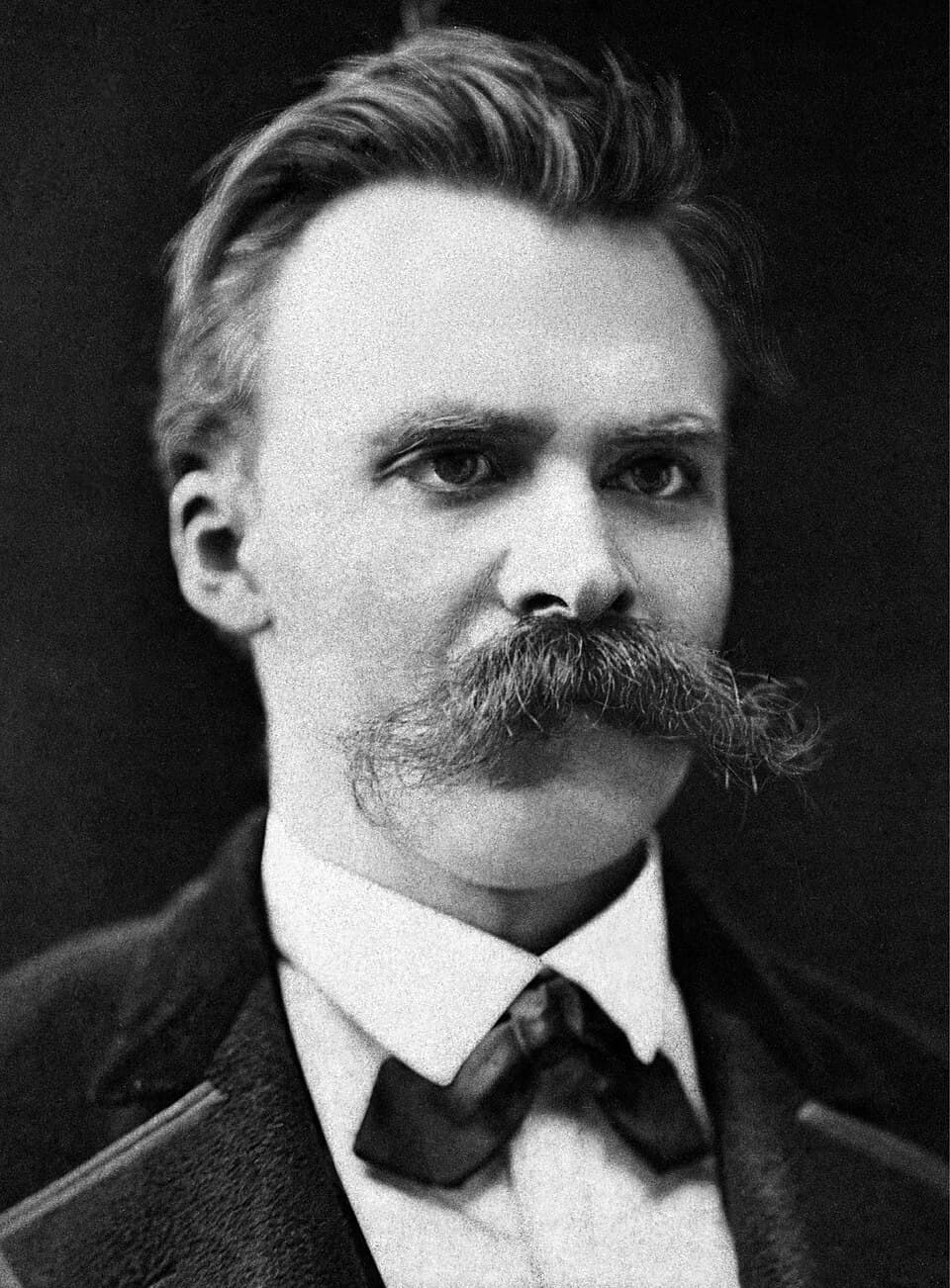
Friedrich Nietzsche
Beyond Good and Evil

The author argues that human perception is inherently creative and selective, asserting that we 'invent' and fabricate most of our experiences rather than observing reality accurately.

...produce a picture already often produced, than to seize upon the divergence and novelty of an impression: the latter requires more force, more "morality." It is difficult and painful for the ear to listen to anything new; we hear strange music badly. When we hear another language spoken, we involuntarily attempt to form the sounds into words with which we are more familiar and conversant--it was thus, for example, that the Germans modified the spoken word ARCUBALISTA into ARMBRUST (cross-bow).
Our senses are also hostile and averse to the new; and generally, even in the "simplest" processes of sensation, the emotions DOMINATE--such as fear, love, hatred, and the passive emotion of indolence.--As little as a reader nowadays reads all the single words (not to speak of syllables) of a page--he rather takes about five out of every twenty words at random, and "guesses" the probably appropriate sense to them--just as little do we see a tree correctly and completely in respect to its leaves, branches, colour, and shape; we find it so much easier to fancy the chance of a tree. Even in the midst of the most remarkable experiences, we still…
All this goes to prove that from our fundamental nature and from remote ages we have been--ACCUSTOMED TO LYING. Or, to express it more politely and hypocritically, in short, more pleasantly--one is much more of an artist than one is aware of.--In an animated conversation, I often see the face of the person with whom I am speaking so clearly and sharply defined before me, according to the thought he expresses, or which I believe to be evoked in his mind, that the degree of distinctness far excee...
Continue reading →
6
Winter's Wise Concealment
Friedrich Nietzsche
Thus Spake Zarathustra

Zarathustra describes how he conceals his happiness and strength behind a facade of suffering to protect himself from the envy and suffocating pity of others.

...gy, fire-warmed, used-up, green-tinted, ill-natured souls—how COULD their envy endure my happiness! Thus do I show them only the ice and winter of my peaks—and NOT that my mountain windeth all the solar girdles around it! They hear only the whistling of my winter-storms: and know NOT that I also travel over warm seas, like longing, heavy, hot south-winds. They commiserate also my accidents and chances:—but MY word saith: “Suffer the chance to come unto me: innocent is it as a little child!”
How COULD they endure my happiness, if I did not put around it accidents, and winter-privations, and bear-skin caps, and enmantling snowflakes! —If I did not myself commiserate their PITY, the pity of those enviers and injurers! —If I did not myself sigh before them, and chatter with cold, and patiently LET myself be swathed in their pity! This is the wise waggish-will and good-will of my soul, that it CONCEALETH NOT its winters and glacial storms; it concealeth not its chilblains either. To one man, lonesomeness is the flight of the sick one; to another, it is the flight FROM the sick ones. Let them HEAR me chattering and sighing with…
LI. ON PASSING-BY. Thus slowly wandering through many peoples and divers cities, did Zarathustra return by round-about roads to his mountains and his cave. And behold, thereby came he unawares also to the gate of the GREAT CITY. Here, however, a foaming fool, with extended hands, sprang forward to him and stood in his way. It was the same fool whom the people called “the ape of Zarathustra:” for he had learned from him something of the expression and modulation of language, and perhaps li...
Continue reading →
2
Dream-Flight's Redefinition
Friedrich Nietzsche
Beyond Good and Evil

The author reflects on how the sublime experience of effortless 'flight' in dreams can fundamentally alter an individual's waking perception and definition of happiness, making ordinary joys seem burdensome.

...quite a different expression, or none at all. 193. Quidquid luce fuit, tenebris agit: but also contrariwise. What we experience in dreams, provided we experience it often, pertains at last just as much to the general belongings of our soul as anything "actually" experienced; by virtue thereof we are richer or poorer, we have a requirement more or less, and finally, in broad daylight, and even in the brightest moments of our waking life, we are ruled to some extent by the nature of our dreams.
Supposing that someone has often flown in his dreams, and that at last, as soon as he dreams, he is conscious of the power and art of flying as his privilege and his peculiarly enviable happiness; such a person, who believes that on the slightest impulse, he can actualize all sorts of curves and angles, who knows the sensation of a certain divine levity, an "upwards" without effort or constraint, a "downwards" without descending or lowering--without TROUBLE!--how could the man with such dream-experiences and dream-habits fail to find "happiness" differently coloured and defined, even in his waking hours! How could he fail--to long DIFFERENTLY…
194. The difference among men does not manifest itself only in the difference of their lists of desirable things--in their regarding different good things as worth striving for, and being disagreed as to the greater or less value, the order of rank, of the commonly recognized desirable things:--it manifests itself much more in what they regard as actually HAVING and POSSESSING a desirable thing. As regards a woman, for instance, the control over her body and her sexual gratification serves as...
Continue reading →
2
Vain Actors
Friedrich Nietzsche
Thus Spake Zarathustra

The author explains his preference for vanity over pride, viewing the vain as 'good actors' who strive to make life aesthetically pleasing. He suggests that while wounded pride is dangerous, vanity at least attempts to play the game of life well.

...nst man, how could man be an anchor to my ball! Too easily would I be pulled upwards and away! This providence is over my fate, that I have to be without foresight. And he who would not languish amongst men, must learn to drink out of all glasses; and he who would keep clean amongst men, must know how to wash himself even with dirty water. And thus spake I often to myself for consolation: “Courage! Cheer up! old heart! An unhappiness hath failed to befall thee: enjoy that as thy—happiness!”
This, however, is mine other manly prudence: I am more forbearing to the VAIN than to the proud. Is not wounded vanity the mother of all tragedies? Where, however, pride is wounded, there groweth up something better than pride. That life may be fair to behold, its game must be well played; for that purpose, however, it needeth good actors. Good actors have I found all the vain ones: they play, and wish people to be fond of beholding them—all their spirit is in this wish.
They represent themselves, they invent themselves; in their neighbourhood I like to look upon life—it cureth of melancholy. Therefore am I forbearing to the vain, because they are the physicians of my melancholy, and keep me attached to man as to a drama. And further, who conceiveth the full depth of the modesty of the vain man! I am favourable to him, and sympathetic on account of his modesty. From you would he learn his belief in himself; he feedeth upon your glances, he eateth praise out...
6
Suffering's Noble Mask
Friedrich Nietzsche
Beyond Good and Evil

A reflection on how profound suffering creates a need for 'masks'—such as gaiety, science, or cynicism—to protect the noble soul from being misunderstood or violated by the curiosity of the superficial.

...virtue of his suffering he KNOWS MORE than the shrewdest and wisest can ever know, that he has been familiar with, and "at home" in, many distant, dreadful worlds of which "YOU know nothing"!--this silent intellectual haughtiness of the sufferer, this pride of the elect of knowledge, of the "initiated," of the almost sacrificed, finds all forms of disguise necessary to protect itself from contact with officious and sympathizing hands, and in general from all that is not its equal in suffering.
Profound suffering makes noble: it separates.--One of the most refined forms of disguise is Epicurism, along with a certain ostentatious boldness of taste, which takes suffering lightly, and puts itself on the defensive against all that is sorrowful and profound. They are "gay men" who make use of gaiety, because they are misunderstood on account of it--they WISH to be misunderstood. There are "scientific minds" who make use of science, because it gives a gay appearance, and because scientificness leads to the conclusion that a person is superficial--they WISH to mislead to a false conclusion. There are free insolent minds which would fain…
271. That which separates two men most profoundly is a different sense and grade of purity. What does it matter about all their honesty and reciprocal usefulness, what does it matter about all their mutual good-will: the fact still remains--they "cannot smell each other!" The highest instinct for purity places him who is affected with it in the most extraordinary and dangerous isolation, as a saint: for it is just holiness--the highest spiritualization of the instinct in question. Any kind of...
Continue reading →
2