The Intention Fallacy
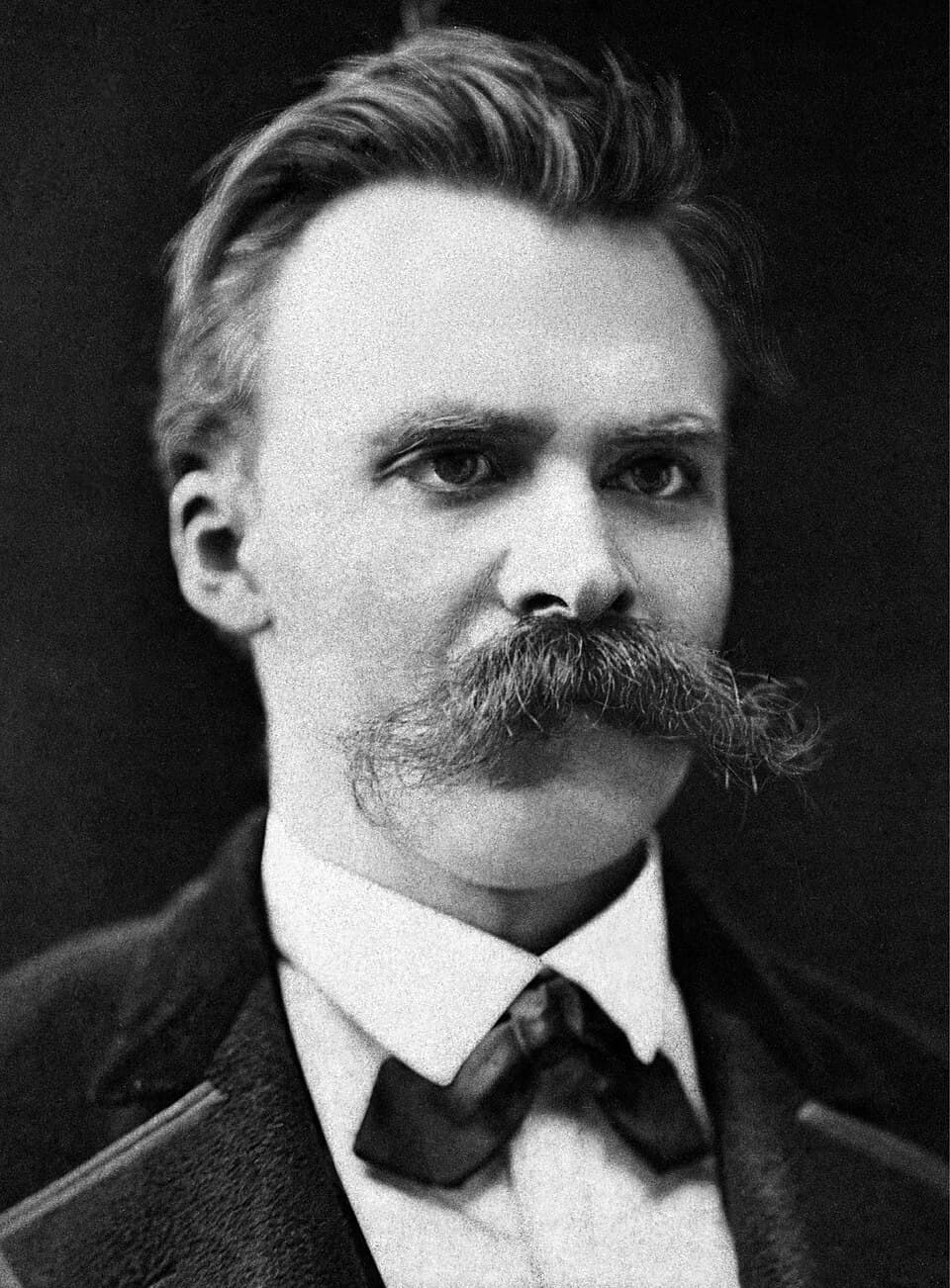
Friedrich Nietzsche
Beyond Good and Evil

The author critiques the historical shift toward judging the value of an action solely by the 'intention' of the actor. He views this focus on conscious intent as a narrow prejudice that has dominated moral philosophy and praise-and-blame systems up to the present.

...far, that one no longer lets the consequences of an action, but its origin, decide with regard to its worth: a great achievement as a whole, an important refinement of vision and of criterion, the unconscious effect of the supremacy of aristocratic values and of the belief in "origin," the mark of a period which may be designated in the narrower sense as the MORAL one: the first attempt at self-knowledge is thereby made. Instead of the consequences, the origin--what an inversion of perspective!
And assuredly an inversion effected only after long struggle and wavering! To be sure, an ominous new superstition, a peculiar narrowness of interpretation, attained supremacy precisely thereby: the origin of an action was interpreted in the most definite sense possible, as origin out of an INTENTION; people were agreed in the belief that the value of an action lay in the value of its intention. The intention as the sole origin and antecedent history of an action: under the influence of this prejudice moral praise and blame have been bestowed, and men have judged and even philosophized almost up to the present day.
--Is it not possible, however, that the necessity may now have arisen of again making up our minds with regard to the reversing and fundamental shifting of values, owing to a new self-consciousness and acuteness in man--is it not possible that we may be standing on the threshold of a period which to begin with, would be distinguished negatively as ULTRA-MORAL: nowadays when, at least among us immoralists, the suspicion arises that the decisive value of an action lies precisely in that which is N...
6
The Good's Inevitable Cruelty
Friedrich Nietzsche
Thus Spake Zarathustra

The author argues that the 'good and just' are inherently stagnant and must necessarily hate the creator or law-breaker who seeks to redefine virtue.

...s it also; woe to those who still seek thereafter!” And whatever harm the wicked may do, the harm of the good is the harmfulest harm! And whatever harm the world-maligners may do, the harm of the good is the harmfulest harm! O my brethren, into the hearts of the good and just looked some one once on a time, who said: “They are the Pharisees.” But people did not understand him. The good and just themselves were not free to understand him; their spirit was imprisoned in their good conscience.
The stupidity of the good is unfathomably wise. It is the truth, however, that the good MUST be Pharisees—they have no choice! The good MUST crucify him who deviseth his own virtue! That IS the truth! The second one, however, who discovered their country—the country, heart and soil of the good and just,—it was he who asked: “Whom do they hate most?” The CREATOR, hate they most, him who breaketh the tables and old values, the breaker,—him they call the law-breaker.
For the good—they CANNOT create; they are always the beginning of the end:— —They crucify him who writeth new values on new tables, they sacrifice UNTO THEMSELVES the future—they crucify the whole human future! The good—they have always been the beginning of the end.— 27. O my brethren, have ye also understood this word? And what I once said of the “last man”?— With whom lieth the greatest danger to the whole human future? Is it not with the good and just? BREAK UP, BREAK UP, I PRAY YOU,...
3
Despising in Love
Friedrich Nietzsche
Beyond Good and Evil

A reflection on the modern shift away from performative morality, where the author suggests that true 'goodness' now operates with a sense of shame and secrecy, rejecting the 'pompous' attitudes of traditional virtue.

...suns which determine the path of one planet, and in certain cases suns of different colours shine around a single planet, now with red light, now with green, and then simultaneously illumine and flood it with motley colours: so we modern men, owing to the complicated mechanism of our "firmament," are determined by DIFFERENT moralities; our actions shine alternately in different colours, and are seldom unequivocal--and there are often cases, also, in which our actions are MOTLEY-COLOURED. 216.
To love one's enemies? I think that has been well learnt: it takes place thousands of times at present on a large and small scale; indeed, at times the higher and sublimer thing takes place:--we learn to DESPISE when we love, and precisely when we love best; all of it, however, unconsciously, without noise, without ostentation, with the shame and secrecy of goodness, which forbids the utterance of the pompous word and the formula of virtue. Morality as attitude--is opposed to our taste nowadays. This is ALSO an advance, as it was an advance in our fathers that religion as an attitude finally became opposed to their taste, including the enmity…
217. Let us be careful in dealing with those who attach great importance to being credited with moral tact and subtlety in moral discernment! They never forgive us if they have once made a mistake BEFORE us (or even with REGARD to us)--they inevitably become our instinctive calumniators and detractors, even when they still remain our "friends."--Blessed are the forgetful: for they "get the better" even of their blunders. 218. The psychologists of France--and where else are there still psychol...
Continue reading →
2
Evil's Changing Face
Friedrich Nietzsche
Thus Spake Zarathustra

The author observes that definitions of good and evil shift across ages, expressing disgust for the stagnant 'good people' of the present who fear the will to self.

...head, then would his burden roll off; but who shaketh that head? What is this man? A mass of diseases that reach out into the world through the spirit; there they want to get their prey. What is this man? A coil of wild serpents that are seldom at peace among themselves—so they go forth apart and seek prey in the world. Look at that poor body! What it suffered and craved, the poor soul interpreted to itself—it interpreted it as murderous desire, and eagerness for the happiness of the knife.
Him who now turneth sick, the evil overtaketh which is now the evil: he seeketh to cause pain with that which causeth him pain. But there have been other ages, and another evil and good. Once was doubt evil, and the will to Self. Then the invalid became a heretic or sorcerer; as heretic or sorcerer he suffered, and sought to cause suffering. But this will not enter your ears; it hurteth your good people, ye tell me. But what doth it matter to me about your good people! Many things in your good people cause me disgust, and verily, not their evil.
I would that they had a madness by which they succumbed, like this pale criminal! Verily, I would that their madness were called truth, or fidelity, or justice: but they have their virtue in order to live long, and in wretched self-complacency. I am a railing alongside the torrent; whoever is able to grasp me may grasp me! Your crutch, however, I am not.— Thus spake Zarathustra. VII. READING AND WRITING. Of all that is written, I love only what a person hath written with his blood. Wri...
6
Poisoned Eros
Friedrich Nietzsche
Beyond Good and Evil

Nietzsche suggests that Christian morality attempted to suppress erotic desire, failing to kill it but instead corrupting it into something viewed as vice.

...to be deceptive as to his normal character. 164. Jesus said to his Jews: "The law was for servants;--love God as I love him, as his Son! What have we Sons of God to do with morals!" 165. IN SIGHT OF EVERY PARTY.--A shepherd has always need of a bell-wether--or he has himself to be a wether occasionally. 166. One may indeed lie with the mouth; but with the accompanying grimace one nevertheless tells the truth. 167. To vigorous men intimacy is a matter of shame--and something precious. 168.
Christianity gave Eros poison to drink; he did not die of it, certainly, but degenerated to Vice.
169. To talk much about oneself may also be a means of concealing oneself. 170. In praise there is more obtrusiveness than in blame. 171. Pity has an almost ludicrous effect on a man of knowledge, like tender hands on a Cyclops. 172. One occasionally embraces some one or other, out of love to mankind (because one cannot embrace all); but this is what one must never confess to the individual. 173. One does not hate as long as one disesteems, but only when one esteems equal or superior. 174...
2