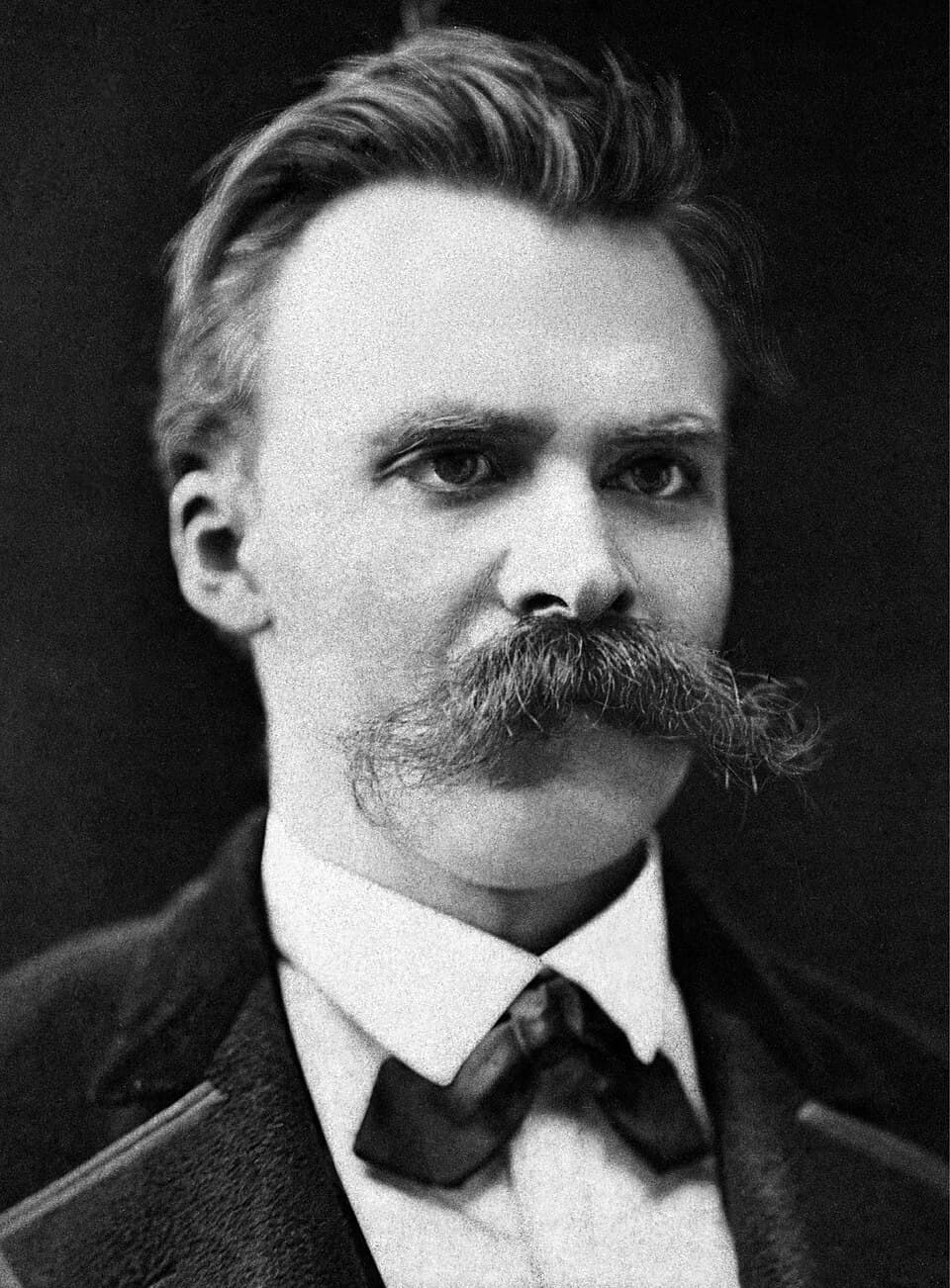
Nietzsche warns that pity is a weakness that can destroy even a god, advocating instead for a 'hard' creative love that seeks to transform and elevate the beloved.
Love Beyond Pity
Friedrich Nietzsche
Thus Spake Zarathustra...t. And if a friend doeth thee wrong, then say: “I forgive thee what thou hast done unto me; that thou hast done it unto THYSELF, however—how could I forgive that!” Thus speaketh all great love: it surpasseth even forgiveness and pity. One should hold fast one’s heart; for when one letteth it go, how quickly doth one’s head run away! Ah, where in the world have there been greater follies than with the pitiful? And what in the world hath caused more suffering than the follies of the pitiful?
Woe unto all loving ones who have not an elevation which is above their pity! Thus spake the devil unto me, once on a time: “Even God hath his hell: it is his love for man.” And lately, did I hear him say these words: “God is dead: of his pity for man hath God died.”— So be ye warned against pity: FROM THENCE there yet cometh unto men a heavy cloud! Verily, I understand weather-signs! But attend also to this word: All great love is above all its pity: for it seeketh—to create what is loved! “Myself do I offer unto my love, AND MY NEIGHBOUR AS MYSELF”—such is the language of all creators. All creators, however, are hard.— Thus spake…
XXVI. THE PRIESTS. And one day Zarathustra made a sign to his disciples, and spake these words unto them: “Here are priests: but although they are mine enemies, pass them quietly and with sleeping swords! Even among them there are heroes; many of them have suffered too much—: so they want to make others suffer. Bad enemies are they: nothing is more revengeful than their meekness. And readily doth he soil himself who toucheth them. But my blood is related to theirs; and I want withal t...
Continue reading →
2
⚖Desire's True Object

Friedrich Nietzsche
Beyond Good and EvilNietzsche argues that human affection is directed toward the internal state of longing and desire itself rather than the external object of that desire.
...an almost ludicrous effect on a man of knowledge, like tender hands on a Cyclops. 172. One occasionally embraces some one or other, out of love to mankind (because one cannot embrace all); but this is what one must never confess to the individual. 173. One does not hate as long as one disesteems, but only when one esteems equal or superior. 174. Ye Utilitarians--ye, too, love the UTILE only as a VEHICLE for your inclinations,--ye, too, really find the noise of its wheels insupportable! 175.
One loves ultimately one's desires, not the thing desired.
176. The vanity of others is only counter to our taste when it is counter to our vanity. 177. With regard to what "truthfulness" is, perhaps nobody has ever been sufficiently truthful. 178. One does not believe in the follies of clever men: what a forfeiture of the rights of man! 179. The consequences of our actions seize us by the forelock, very indifferent to the fact that we have meanwhile "reformed." 180. There is an innocence in lying which is the sign of good faith in a cause. 181....
6
⚖The Paradox of Light

Friedrich Nietzsche
Thus Spake ZarathustraThe author laments the isolation of being 'light,' expressing a paradoxical desire for the darkness of night to satisfy an unappeasable craving for love.
...famous wise ones!—no strong wind or will impelleth you. Have ye ne’er seen a sail crossing the sea, rounded and inflated, and trembling with the violence of the wind? Like the sail trembling with the violence of the spirit, doth my wisdom cross the sea—my wild wisdom! But ye servants of the people, ye famous wise ones—how COULD ye go with me!— Thus spake Zarathustra. XXXI. THE NIGHT-SONG. ‘Tis night: now do all gushing fountains speak louder. And my soul also is a gushing fountain.
‘Tis night: now only do all songs of the loving ones awake. And my soul also is the song of a loving one. Something unappeased, unappeasable, is within me; it longeth to find expression. A craving for love is within me, which speaketh itself the language of love. Light am I: ah, that I were night! But it is my lonesomeness to be begirt with light!
Ah, that I were dark and nightly! How would I suck at the breasts of light! And you yourselves would I bless, ye twinkling starlets and glow-worms aloft!—and would rejoice in the gifts of your light. But I live in mine own light, I drink again into myself the flames that break forth from me. I know not the happiness of the receiver; and oft have I dreamt that stealing must be more blessed than receiving. It is my poverty that my hand never ceaseth bestowing; it is mine envy that I see wait...
2
⚖Love's Destructive Superstition

Friedrich Nietzsche
Beyond Good and EvilThe author argues that the feminine impulse toward boundless sympathy is a deceptive superstition, suggesting that such 'pity' often destroys rather than saves the object of its affection.
...mud and almost in love with it, until they become like the Will-o'-the-Wisps around the swamps, and PRETEND TO BE stars--the people then call them idealists,--often struggling with protracted disgust, with an ever-reappearing phantom of disbelief, which makes them cold, and obliges them to languish for GLORIA and devour "faith as it is" out of the hands of intoxicated adulators:--what a TORMENT these great artists are and the so-called higher men in general, to him who has once found them out!
It is thus conceivable that it is just from woman--who is clairvoyant in the world of suffering, and also unfortunately eager to help and save to an extent far beyond her powers--that THEY have learnt so readily those outbreaks of boundless devoted SYMPATHY, which the multitude, above all the reverent multitude, do not understand, and overwhelm with prying and self-gratifying interpretations. This sympathizing invariably deceives itself as to its power; woman would like to believe that love can do EVERYTHING--it is the SUPERSTITION peculiar to her. Alas, he who knows the heart finds out how poor, helpless, pretentious, and blundering even the best and deepest love is--he finds that it rather DESTROYS than saves!
--It is possible that under the holy fable and travesty of the life of Jesus there is hidden one of the most painful cases of the martyrdom of KNOWLEDGE ABOUT LOVE: the martyrdom of the most innocent and most craving heart, that never had enough of any human love, that DEMANDED love, that demanded inexorably and frantically to be loved and nothing else, with terrible outbursts against those who refused him their love; the story of a poor soul insatiated and insatiable in love, that had to invent...
6
⚖Justice as Seeing Love

Friedrich Nietzsche
Thus Spake ZarathustraThe author calls for a noble form of justice rooted in love and the willingness to take on guilt, rather than the cold, punitive justice of the executioner.
...aseth me not that ye should then desire to bless. Rather curse a little also! And should a great injustice befall you, then do quickly five small ones besides. Hideous to behold is he on whom injustice presseth alone. Did ye ever know this? Shared injustice is half justice. And he who can bear it, shall take the injustice upon himself! A small revenge is humaner than no revenge at all. And if the punishment be not also a right and an honour to the transgressor, I do not like your punishing.
Nobler is it to own oneself in the wrong than to establish one’s right, especially if one be in the right. Only, one must be rich enough to do so. I do not like your cold justice; out of the eye of your judges there always glanceth the executioner and his cold steel. Tell me: where find we justice, which is love with seeing eyes? Devise me, then, the love which not only beareth all punishment, but also all guilt!
Devise me, then, the justice which acquitteth every one except the judge! And would ye hear this likewise? To him who seeketh to be just from the heart, even the lie becometh philanthropy. But how could I be just from the heart! How can I give every one his own! Let this be enough for me: I give unto every one mine own. Finally, my brethren, guard against doing wrong to any anchorite. How could an anchorite forget! How could he requite! Like a deep well is an anchorite. Easy is it to throw...
4