Marriage's Soul Poverty
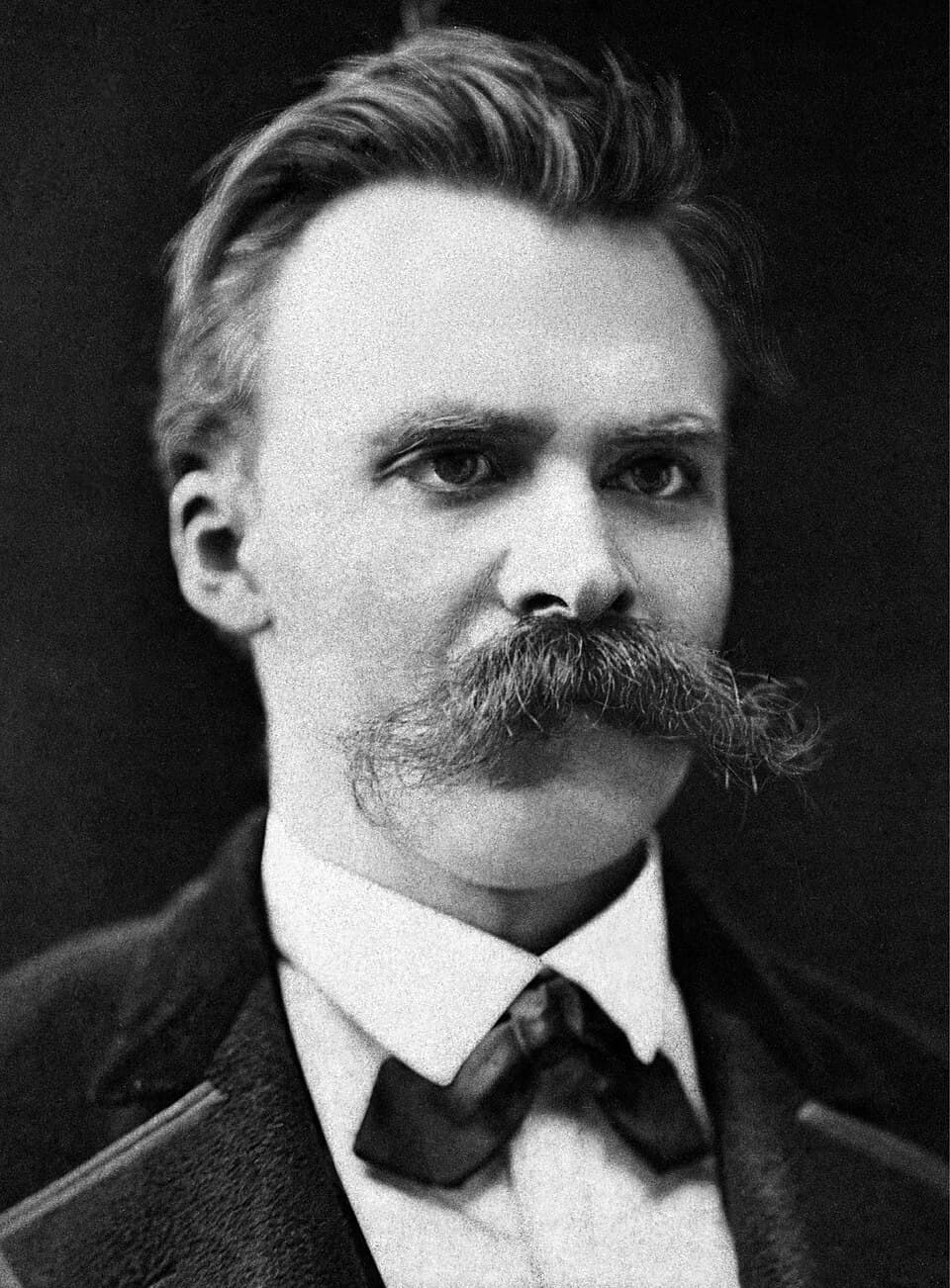
Friedrich Nietzsche
Thus Spake Zarathustra

A scathing critique of conventional marriage, which the author views as a mask for the 'poverty of soul' and self-complacency of the masses. He rejects these 'heavenly' unions as traps for the superfluous and spiritually stagnant.

...thou build. But first of all must thou be built thyself, rectangular in body and soul. Not only onward shalt thou propagate thyself, but upward! For that purpose may the garden of marriage help thee! A higher body shalt thou create, a first movement, a spontaneously rolling wheel—a creating one shalt thou create. Marriage: so call I the will of the twain to create the one that is more than those who created it. The reverence for one another, as those exercising such a will, call I marriage.
Let this be the significance and the truth of thy marriage. But that which the many-too-many call marriage, those superfluous ones—ah, what shall I call it? Ah, the poverty of soul in the twain! Ah, the filth of soul in the twain! Ah, the pitiable self-complacency in the twain! Marriage they call it all; and they say their marriages are made in heaven. Well, I do not like it, that heaven of the superfluous! No, I do not like them, those animals tangled in the heavenly toils!
Far from me also be the God who limpeth thither to bless what he hath not matched! Laugh not at such marriages! What child hath not had reason to weep over its parents? Worthy did this man seem, and ripe for the meaning of the earth: but when I saw his wife, the earth seemed to me a home for madcaps. Yea, I would that the earth shook with convulsions when a saint and a goose mate with one another. This one went forth in quest of truth as a hero, and at last got for himself a small decked-u...
2
Morality's Privileged Types
Friedrich Nietzsche
Beyond Good and Evil

The author asserts that morality is dependent on the individual's rank, arguing that self-denial is a vice for those destined to command.

...But this is a realm of questions and answers in which a more fastidious spirit does not like to stay: for here truth has to stifle her yawns so much when she is obliged to answer. And after all, truth is a woman; one must not use force with her. 221. "It sometimes happens," said a moralistic pedant and trifle-retailer, "that I honour and respect an unselfish man: not, however, because he is unselfish, but because I think he has a right to be useful to another man at his own expense. In short,
The question is always who HE is, and who THE OTHER is. For instance, in a person created and destined for command, self-denial and modest retirement, instead of being virtues, would be the waste of virtues: so it seems to me. Every system of unegoistic morality which takes itself unconditionally and appeals to every one, not only sins against good taste, but is also an incentive to sins of omission, an ADDITIONAL seduction under the mask of philanthropy--and precisely a seduction and injury to the higher, rarer, and more privileged types of men.
Moral systems must be compelled first of all to bow before the GRADATIONS OF RANK; their presumption must be driven home to their conscience--until they thoroughly understand at last that it is IMMORAL to say that 'what is right for one is proper for another.'"--So said my moralistic pedant and bonhomme. Did he perhaps deserve to be laughed at when he thus exhorted systems of morals to practise morality? But one should not be too much in the right if one wishes to have the laughers on ONE'S OWN...
6
Small Virtues' Necessity
Friedrich Nietzsche
Thus Spake Zarathustra

Nietzsche expresses his alienation from the 'small people' and their petty virtues, choosing to remain courteous and distant rather than being pricked by their insignificance.

...s eat with them.” And Zarathustra stood still and meditated. At last he said sorrowfully: “There hath EVERYTHING become smaller! Everywhere do I see lower doorways: he who is of MY type can still go therethrough, but—he must stoop! Oh, when shall I arrive again at my home, where I shall no longer have to stoop—shall no longer have to stoop BEFORE THE SMALL ONES!”—And Zarathustra sighed, and gazed into the distance.— The same day, however, he gave his discourse on the bedwarfing virtue. 2.
I pass through this people and keep mine eyes open: they do not forgive me for not envying their virtues. They bite at me, because I say unto them that for small people, small virtues are necessary—and because it is hard for me to understand that small people are NECESSARY! Here am I still like a cock in a strange farm-yard, at which even the hens peck: but on that account I am not unfriendly to the hens. I am courteous towards them, as towards all small annoyances; to be prickly towards what is small, seemeth to me wisdom for hedgehogs.
They all speak of me when they sit around their fire in the evening—they speak of me, but no one thinketh—of me! This is the new stillness which I have experienced: their noise around me spreadeth a mantle over my thoughts. They shout to one another: “What is this gloomy cloud about to do to us? Let us see that it doth not bring a plague upon us!” And recently did a woman seize upon her child that was coming unto me: “Take the children away,” cried she, “such eyes scorch children’s souls.”...
2
Life Beyond Morality
Friedrich Nietzsche
Beyond Good and Evil

Nietzsche describes a transitional period where individuals must create their own laws and values because the old morality no longer suffices. This state of 'corruption' is characterized by a dangerous but fertile mix of decay and the emergence of new, higher desires.

...TROPICAL TEMPO in the rivalry of growth, and an extraordinary decay and self-destruction, owing to the savagely opposing and seemingly exploding egoisms, which strive with one another "for sun and light," and can no longer assign any limit, restraint, or forbearance for themselves by means of the hitherto existing morality. It was this morality itself which piled up the strength so enormously, which bent the bow in so threatening a manner:--it is now "out of date," it is getting "out of date."
The dangerous and disquieting point has been reached when the greater, more manifold, more comprehensive life IS LIVED BEYOND the old morality; the "individual" stands out, and is obliged to have recourse to his own law-giving, his own arts and artifices for self-preservation, self-elevation, and self-deliverance. Nothing but new "Whys," nothing but new "Hows," no common formulas any longer, misunderstanding and disregard in league with each other, decay, deterioration, and the loftiest desires frightfully entangled, the genius of the race overflowing from all the cornucopias of good and bad, a portentous simultaneousness of Spring and Autumn, full of new charms and mysteries peculiar to the fresh, still inexhausted, still unwearied corruption.
Danger is again present, the mother of morality, great danger; this time shifted into the individual, into the neighbour and friend, into the street, into their own child, into their own heart, into all the most personal and secret recesses of their desires and volitions. What will the moral philosophers who appear at this time have to preach? They discover, these sharp onlookers and loafers, that the end is quickly approaching, that everything around them decays and produces decay, that nothin...
2
Virtue's Nameless Height
Friedrich Nietzsche
Thus Spake Zarathustra

The author argues that true virtue is a deeply personal, nameless experience that loses its essence when labeled or shared with the 'herd.'

...rvour. But it is now too late to do so:—so your Self wisheth to succumb, ye despisers of the body. To succumb—so wisheth your Self; and therefore have ye become despisers of the body. For ye can no longer create beyond yourselves. And therefore are ye now angry with life and with the earth. And unconscious envy is in the sidelong look of your contempt. I go not your way, ye despisers of the body! Ye are no bridges for me to the Superman!— Thus spake Zarathustra. V. JOYS AND PASSIONS.
My brother, when thou hast a virtue, and it is thine own virtue, thou hast it in common with no one. To be sure, thou wouldst call it by name and caress it; thou wouldst pull its ears and amuse thyself with it. And lo! Then hast thou its name in common with the people, and hast become one of the people and the herd with thy virtue! Better for thee to say: “Ineffable is it, and nameless, that which is pain and sweetness to my soul, and also the hunger of my bowels.” Let thy virtue be too high for the familiarity of names, and if thou must speak of it, be not ashamed to stammer about it.
Thus speak and stammer: “That is MY good, that do I love, thus doth it please me entirely, thus only do I desire the good. Not as the law of a God do I desire it, not as a human law or a human need do I desire it; it is not to be a guide-post for me to superearths and paradises. An earthly virtue is it which I love: little prudence is therein, and the least everyday wisdom. But that bird built its nest beside me: therefore, I love and cherish it—now sitteth it beside me on its golden eggs...
5