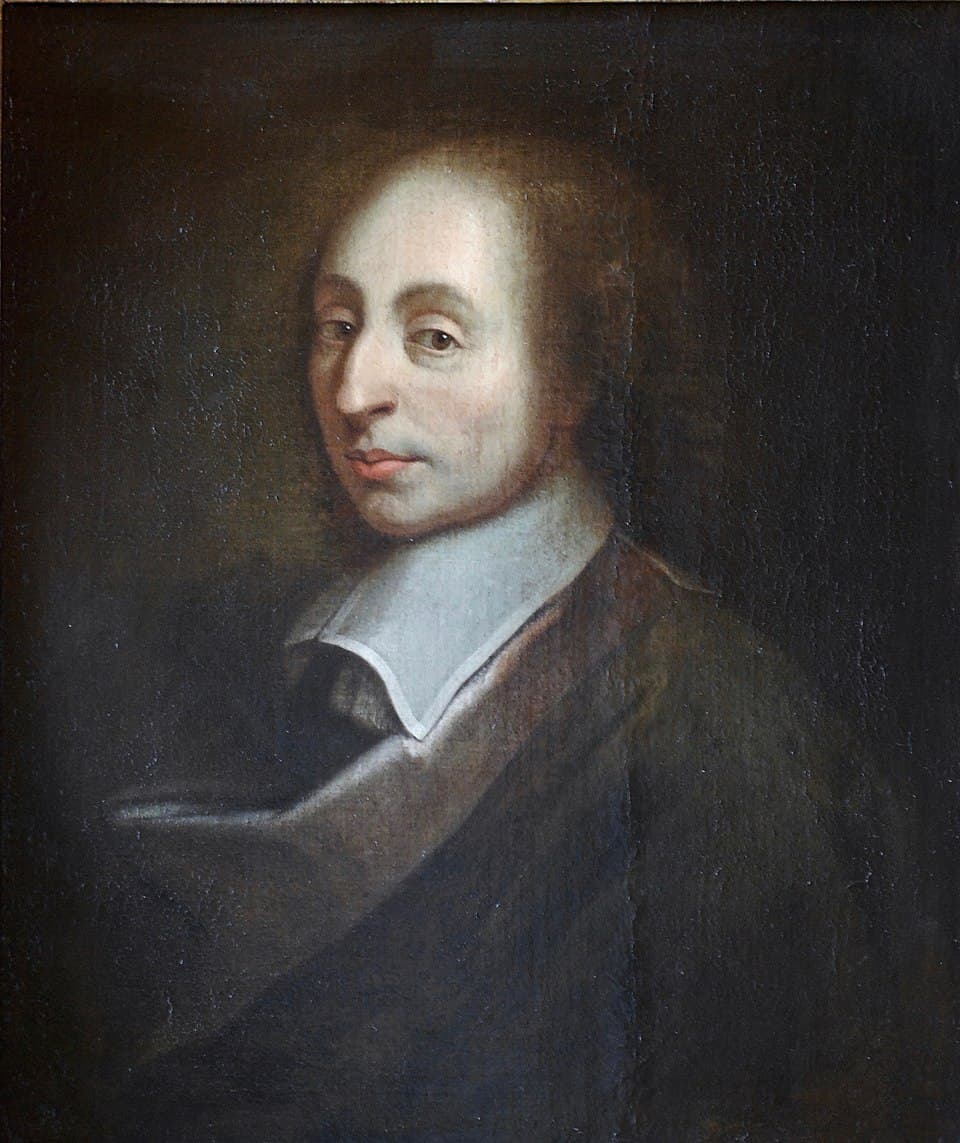
Pascal argues that because justice is a subjective quality and might is a physical reality, society has defined justice as that which the powerful are able to enforce.
Might Over Justice
Blaise Pascal
Pensees...acles in the ordinary conduct of His Church. It would be a strange miracle if infallibility existed in one man. But it appears so natural for it to reside in a multitude, since the conduct of God is hidden under nature, as in all His other works. 876 Kings dispose of their own power; but the Popes cannot dispose of theirs. 877 Summum jus, summa injuria. The majority is the best way, because it is visible, and has strength to make itself obeyed. Yet it is the opinion of the least able.
If men could have done it, they would have placed might in the hands of justice. But as might does not allow itself to be managed as men want, because it is a palpable quality, whereas justice is a spiritual quality of which men dispose as they please, they have placed justice in the hands of might. And thus that is called just which men are forced to obey. Hence comes the right of the sword, for the sword gives a true right.
Otherwise we should see violence on one side and justice on the other (end of the twelfth Provincial). Hence comes the injustice of the Fronde,[365] which raises its alleged justice against power. It is not the same in the Church, for there is a true justice and no violence. 878 Injustice.--Jurisdiction is not given for the sake of the judge, but for that of the litigant. It is dangerous to tell this to the people. But the people have too much faith in you; it will not harm them, and may...
6
⚖Opinion vs Might

Blaise Pascal
PenseesThe author distinguishes between government based on the 'queen' of opinion, which is pleasant but temporary, and government based on the 'tyrant' of might, which is permanent.
...rmine justice. 310 King and tyrant.--I, too, will keep my thoughts secret. I will take care on every journey. Greatness of establishment, respect for establishment. The pleasure of the great is the power to make people happy. The property of riches is to be given liberally. The property of each thing must be sought. The property of power is to protect. When force attacks humbug, when a private soldier takes the square cap off a first president, and throws it out of the window. 311
The government founded on opinion and imagination reigns for some time, and this government is pleasant and voluntary; that founded on might lasts for ever. Thus opinion is the queen of the world, but might is its tyrant.
312 Justice is what is established; and thus all our established laws will necessarily be regarded as just without examination, since they are established. 313 Sound opinions of the people.--Civil wars are the greatest of evils.[121] They are inevitable, if we wish to reward desert; for all will say they are deserving. The evil we have to fear from a fool who succeeds by right of birth, is neither so great nor so sure. 314 God has created all for Himself. He has bestowed upon Himself...
6
⚖Tyranny of Wrong Demands

Blaise Pascal
PenseesPascal defines tyranny as the attempt to obtain through one means what is only due through another, asserting that different human qualities—like strength or learning—demand distinct duties.
...There are different assemblies of the strong, the fair, the sensible, the pious, in which each man rules at home, not elsewhere. And sometimes they meet, and the strong and the fair foolishly fight as to who shall be master, for their mastery is of different kinds. They do not understand one another, and their fault is the desire to rule everywhere. Nothing can effect this, not even might, which is of no use in the kingdom of the wise, and is only mistress of external actions. Tyranny--...
So these expressions are false and tyrannical: "I am fair, therefore I must be feared. I am strong, therefore I must be loved. I am ..." Tyranny is the wish to have in one way what can only be had in another. We render different duties to different merits; the duty of love to the pleasant; the duty of fear to the strong; the duty of belief to the learned. We must render these duties; it is unjust to refuse them, and unjust to ask others.
And so it is false and tyrannical to say, "He is not strong, therefore I will not esteem him; he is not able, therefore I will not fear him." 333 Have you never seen people who, in order to complain of the little fuss you make about them, parade before you the example of great men who esteem them? In answer I reply to them, "Show me the merit whereby you have charmed these persons, and I also will esteem you." 334 The reason of effects.--Lust and force are the source of all our actions;...
6
⚖Might's Justification

Blaise Pascal
PenseesA pragmatic thesis on social order, suggesting that because humans could not make justice powerful, they instead made power appear just in order to maintain peace.
...hout might is gainsaid, because there are always offenders; might without justice is condemned. We must then combine justice and might, and for this end make what is just strong, or what is strong just. Justice is subject to dispute; might is easily recognised and is not disputed. So we cannot give might to justice, because might has gainsaid justice, and has declared that it is she herself who is just. And thus being unable to make what is just strong, we have made what is strong just. 299
The only universal rules are the laws of the country in ordinary affairs, and of the majority in others. Whence comes this? From the might which is in them. Hence it comes that kings, who have power of a different kind, do not follow the majority of their ministers. No doubt equality of goods is just; but, being unable to cause might to obey justice, men have made it just to obey might. Unable to strengthen justice, they have justified might; so that the just and the strong should unite, and there should be peace, which is the sovereign good.
300 "When a strong man armed keepeth his goods, his goods are in peace."[119] 301 Why do we follow the majority? It is because they have more reason? No, because they have more power. Why do we follow the ancient laws and opinions? Is it because they are more sound? No, but because they are unique, and remove from us the root of difference. 302 ... It is the effect of might, not of custom. For those who are capable of originality are few; the greater number will only follow, and refus...
6
⚖Might Over Opinion

Blaise Pascal
PenseesThis thesis posits that might, rather than reason or opinion, governs the world, though might often disguises itself by shaping and enforcing public opinion.
...us the root of difference. 302 ... It is the effect of might, not of custom. For those who are capable of originality are few; the greater number will only follow, and refuse glory to those inventors who seek it by their inventions. And if these are obstinate in their wish to obtain glory, and despise those who do not invent, the latter will call them ridiculous names, and would beat them with a stick. Let no one then boast of his subtlety, or let him keep his complacency to himself. 303
Might is the sovereign of the world, and not opinion.--But opinion makes use of might.--It is might that makes opinion. Gentleness is beautiful in our opinion. Why? Because he who will dance on a rope will be alone, and I will gather a stronger mob of people who will say that it is unbecoming.
304 The cords which bind the respect of men to each other are in general cords of necessity; for there must be different degrees, all men wishing to rule, and not all being able to do so, but some being able. Let us then imagine we see society in the process of formation. Men will doubtless fight till the stronger party overcomes the weaker, and a dominant party is established. But when this is once determined, the masters, who do not desire the continuation of strife, then decree that the...
6