Truth in Wrong Place
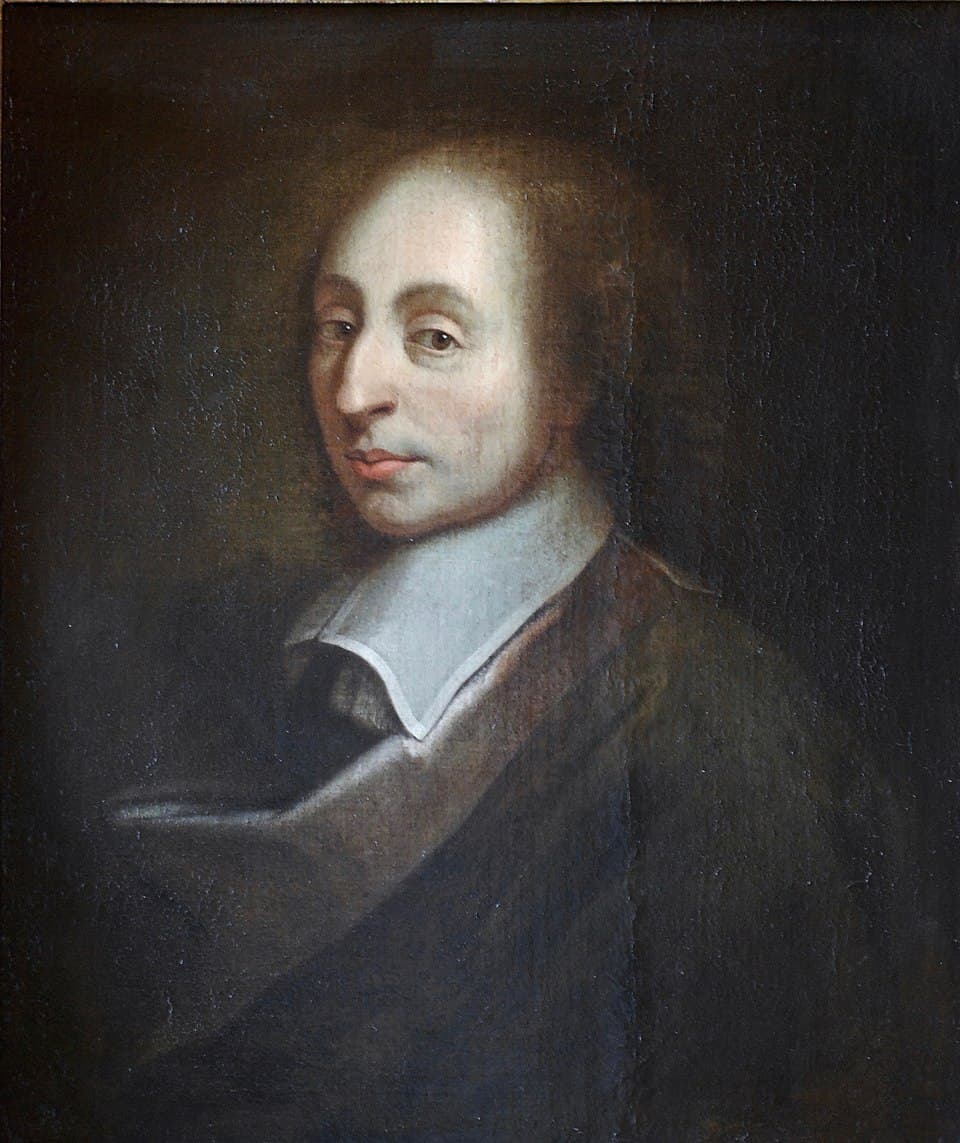
Blaise Pascal
Pensees

Pascal observes that while popular opinions may contain truth, the public is deluded because they misunderstand the actual reasons or points where that truth resides.

...him; he is not able, therefore I will not fear him." 333 Have you never seen people who, in order to complain of the little fuss you make about them, parade before you the example of great men who esteem them? In answer I reply to them, "Show me the merit whereby you have charmed these persons, and I also will esteem you." 334 The reason of effects.--Lust and force are the source of all our actions; lust causes voluntary actions, force involuntary ones. 335 The reason of effects.--
It is then true to say that all the world is under a delusion; for, although the opinions of the people are sound, they are not so as conceived by them, since they think the truth to be where it is not. Truth is indeed in their opinions, but not at the point where they imagine it. [Thus] it is true that we must honour noblemen, but not because noble birth is real superiority, etc.
336 The reason of effects.--We must keep our thought secret, and judge everything by it, while talking like the people. 337 The reason of effects.--Degrees. The people honour persons of high birth. The semi-learned despise them, saying that birth is not a personal, but a chance superiority. The learned honour them, not for popular reasons, but for secret reasons. Devout persons, who have more zeal than knowledge, despise them, in spite of that consideration which makes them honoured b...
6
The Infinite's New Abyss
Blaise Pascal
Pensees

A contemplative exploration of the human scale, positioning man between the terrifying vastness of the infinite and the equally bottomless abyss of the microscopic.

...phere, the centre of which is everywhere, the circumference nowhere.[30] In short it is the greatest sensible mark of the almighty power of God, that imagination loses itself in that thought. Returning to himself, let man consider what he is in comparison with all existence; let him regard himself as lost in this remote corner of nature; and from the little cell in which he finds himself lodged, I mean the universe, let him estimate at their true value the earth, kingdoms, cities, and himself.
What is a man in the Infinite? But to show him another prodigy equally astonishing, let him examine the most delicate things he knows. Let a mite be given him, with its minute body and parts incomparably more minute, limbs with their joints, veins in the limbs, blood in the veins, humours in the blood, drops in the humours, vapours in the drops. Dividing these last things again, let him exhaust his powers of conception, and let the last object at which he can arrive be now that of our discourse. Perhaps he will think that here is the smallest point in nature. I will let him see therein a new abyss.
I will paint for him not only the visible universe, but all that he can conceive of nature's immensity in the womb of this abridged atom. Let him see therein an infinity of universes, each of which has its firmament, its planets, its earth, in the same proportion as in the visible world; in each earth animals, and in the last mites, in which he will find again all that the first had, finding still in these others the same thing without end and without cessation. Let him lose himself in wonders...
2
Imagination's World Rule
Blaise Pascal
Pensees

The author describes imagination as a deceptive faculty that dictates human notions of beauty and justice, often leading to necessary error. He notes that humans are equally susceptible to the prejudices of old impressions and the charms of novelty, both of which fuel constant dispute.

...rdiers. Those armed and red-faced puppets who have hands and power for them alone, those trumpets and drums which go before them, and those legions round about them, make the stoutest tremble. They have not dress only, they have might. A very refined reason is required to regard as an ordinary man the Grand Turk, in his superb seraglio, surrounded by forty thousand janissaries. We cannot even see an advocate in his robe and with his cap on his head, without a favourable opinion of his ability.
The imagination disposes of everything; it makes beauty, justice, and happiness, which is everything in the world. I should much like to see an Italian work, of which I only know the title, which alone is worth many books, Della opinione regina del mondo. I approve of the book without knowing it, save the evil in it, if any. These are pretty much the effects of that deceptive faculty, which seems to have been expressly given us to lead us into necessary error. We have, however, many other sources of error. Not only are old impressions capable of misleading us; the charms of novelty have the same power. Hence arise all the disputes of men,…
Who keeps the due mean? Let him appear and prove it. There is no principle, however natural to us from infancy, which may not be made to pass for a false impression either of education or of sense. "Because," say some, "you have believed from childhood that a box was empty when you saw nothing in it, you have believed in the possibility of a vacuum. This is an illusion of your senses, strengthened by custom, which science must correct." "Because," say others, "you have been taught at school th...
Continue reading →
6
Correct by Admitting Truth
Blaise Pascal
Pensees

Pascal suggests that the most effective way to correct someone is to acknowledge the partial truth of their perspective before revealing the side they have failed to see.

...d society improves or corrupts them. It is, then, all-important to know how to choose in order to improve and not to corrupt them; and we cannot make this choice, if they be not already improved and not corrupted. Thus a circle is formed, and those are fortunate who escape it. 7 The greater intellect one has, the more originality one finds in men. Ordinary persons find no difference between men. 8 There are many people who listen to a sermon in the same way as they listen to vespers. 9
When we wish to correct with advantage, and to show another that he errs, we must notice from what side he views the matter, for on that side it is usually true, and admit that truth to him, but reveal to him the side on which it is false. He is satisfied with that, for he sees that he was not mistaken, and that he only failed to see all sides. Now, no one is offended at not seeing everything; but one does not like to be mistaken, and that perhaps arises from the fact that man naturally cannot see everything, and that naturally he cannot err in the side he looks at, since the perceptions of our senses are always true.
10 People are generally better persuaded by the reasons which they have themselves discovered than by those which have come into the mind of others. 11 All great amusements are dangerous to the Christian life; but among all those which the world has invented there is none more to be feared than the theatre. It is a representation of the passions so natural and so delicate that it excites them and gives birth to them in our hearts, and, above all, to that of love, principally when it is re...
4
The Mean Between Extremes
Blaise Pascal
Pensees

A thesis on human limitation, arguing that our senses and intellect are incapacitated by extremes, leaving us confined to a middle state where too much of any quality becomes imperceptible.

..., and one leads to the other. These extremes meet and reunite by force of distance, and find each other in God, and in God alone. Let us then take our compass; we are something, and we are not everything. The nature of our existence hides from us the knowledge of first beginnings which are born of the Nothing; and the littleness of our being conceals from us the sight of the Infinite. Our intellect holds the same position in the world of thought as our body occupies in the expanse of nature.
Limited as we are in every way, this state which holds the mean between two extremes is present in all our impotence. Our senses perceive no extreme. Too much sound deafens us; too much light dazzles us; too great distance or proximity hinders our view. Too great length and too great brevity of discourse tend to obscurity; too much truth is paralysing (I know some who cannot understand that to take four from nothing leaves nothing).
First principles are too self-evident for us; too much pleasure disagrees with us. Too many concords are annoying in music; too many benefits irritate us; we wish to have the wherewithal to over-pay our debts. Beneficia eo usque læta sunt dum videntur exsolvi posse; ubi multum antevenere, pro gratia odium redditur.[34] We feel neither extreme heat nor extreme cold. Excessive qualities are prejudicial to us and not perceptible by the senses; we do not feel but suffer them. Extreme youth and ex...
6