Rest Through Struggle
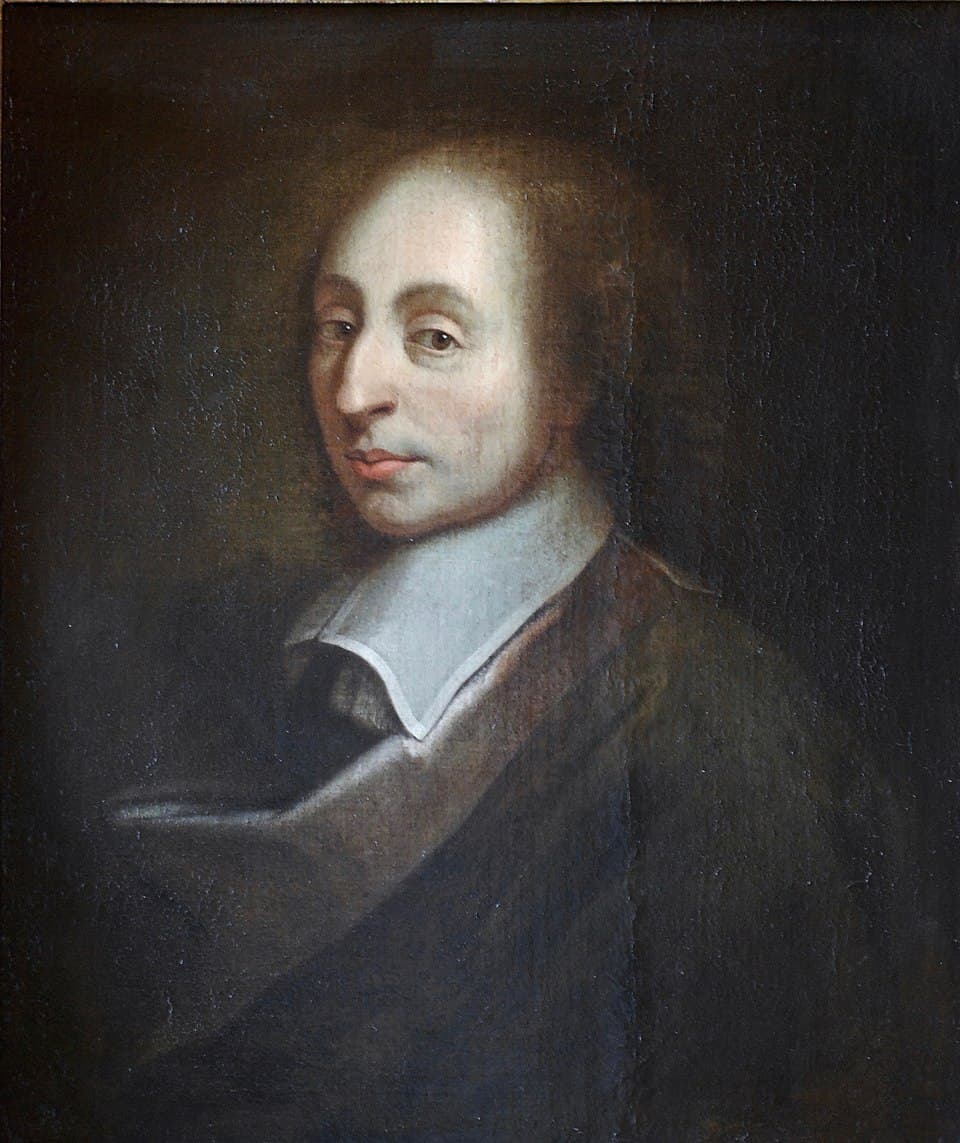
Blaise Pascal
Pensees

This text explores the human paradox of seeking rest through constant activity and excitement, driven by a dual instinct of original greatness and present unhappiness that makes true rest insufferable once achieved.

...y do not know themselves.[70] They do not know that it is the chase, and not the quarry, which they seek. Dancing: we must consider rightly where to place our feet.--A gentleman sincerely believes that hunting is great and royal sport; but a beater is not of this opinion. They imagine that if they obtained such a post, they would then rest with pleasure, and are insensible of the insatiable nature of their desire. They think they are truly seeking quiet, and they are only seeking excitement.
They have a secret instinct which impels them to seek amusement and occupation abroad, and which arises from the sense of their constant unhappiness. They have another secret instinct, a remnant of the greatness of our original nature, which teaches them that happiness in reality consists only in rest, and not in stir. And of these two contrary instincts they form within themselves a confused idea, which hides itself from their view in the depths of their soul, inciting them to aim at rest through excitement, and always to fancy that the satisfaction which they have not will come to them, if, by surmounting whatever difficulties confront…
For we think either of the misfortunes we have or of those which threaten us. And even if we should see ourselves sufficiently sheltered on all sides, weariness of its own accord would not fail to arise from the depths of the heart wherein it has its natural roots, and to fill the mind with its poison. Thus so wretched is man that he would weary even without any cause for weariness from the peculiar state of his disposition; and so frivolous is he, that, though full of a thousand reasons for w...
Continue reading →
6
Man's Paradoxical Nature
Blaise Pascal
Pensees

A reflection on the paradoxical nature of man as both a 'judge of all things' and an 'imbecile worm,' whose true condition can only be understood through faith rather than reason.

...he is being pinched, or whether he is being burned? Shall he doubt whether he doubts? Shall he doubt whether he exists? We cannot go so far as that; and I lay it down as a fact that there never has been a real complete sceptic. Nature sustains our feeble reason, and prevents it raving to this extent. Shall he then say, on the contrary, that he certainly possesses truth--he who, when pressed ever so little, can show no title to it, and is forced to let go his hold? What a chimera then is man!
What a novelty! What a monster, what a chaos, what a contradiction, what a prodigy! Judge of all things, imbecile worm of the earth; depositary of truth, a sink of uncertainty and error; the pride and refuse of the universe! Who will unravel this tangle? Nature confutes the sceptics, and reason confutes the dogmatists. What then will you become, O men! who try to find out by your natural reason what is your true condition? You cannot avoid one of these sects, nor adhere to one of them. Know then, proud man, what a paradox you are to yourself. Humble yourself, weak reason; be silent, foolish nature; learn that man infinitely transcends man,…
Hear God. For in fact, if man had never been corrupt, he would enjoy in his innocence both truth and happiness with assurance; and if man had always been corrupt, he would have no idea of truth or bliss. But, wretched as we are, and more so than if there were no greatness in our condition, we have an idea of happiness, and cannot reach it. We perceive an image of truth, and possess only a lie. Incapable of absolute ignorance and of certain knowledge, we have thus been manifestly in a degree of...
Continue reading →
2
Truth's Contradictory Harmony
Blaise Pascal
Pensees

The author explains that heresy arises from the exclusion of certain truths, whereas true faith maintains a system where seemingly contradictory truths are held together in harmony.

...esponde. Ne respondeas_,[361] etc. The source of this is the union of the two natures in Jesus Christ; and also the two worlds (the creation of a new heaven and a new earth; a new life and a new death; all things double, and the same names remaining); and finally the two natures that are in the righteous, (for they are the two worlds, and a member and image of Jesus Christ. And thus all the names suit them: righteous, yet sinners; dead, yet living; living, yet dead; elect, yet outcast, etc.).
There are then a great number of truths, both of faith and of morality, which seem contradictory, and which all hold good together in a wonderful system. The source of all heresies is the exclusion of some of these truths; and the source of all the objections which the heretics make against us is the ignorance of some of our truths. And it generally happens that, unable to conceive the connection of two opposite truths, and believing that the admission of one involves the exclusion of the other, they adhere to the one, exclude the other, and think of us as opposed to them.
Now exclusion is the cause of their heresy; and ignorance that we hold the other truth causes their objections. 1st example: Jesus Christ is God and man. The Arians, unable to reconcile these things, which they believe incompatible, say that He is man; in this they are Catholics. But they deny that He is God; in this they are heretics. They allege that we deny His humanity; in this they are ignorant. 2nd example: On the subject of the Holy Sacrament. We believe that, the substance of the brea...
6
The Great Reversal
Blaise Pascal
Pensees

A vision of the paradoxical mission of Jesus Christ, who came to invert social and spiritual hierarchies by elevating the needy and humbling the self-righteous.

...his is the time. That which the prophets have said was to come in the fullness of time, I tell you My apostles will do. The Jews shall be cast out. Jerusalem shall be soon destroyed. And the heathen shall enter into the knowledge of God. My apostles shall do this after you have slain the heir of the vineyard." Then the apostles said to the Jews: "You shall be accursed," (Celsus laughed at it); and to the heathen, "You shall enter into the knowledge of God." And this then came to pass. 770
Jesus Christ came to blind those who saw clearly, and to give sight to the blind; to heal the sick, and leave the healthy to die; to call to repentance, and to justify sinners, and to leave the righteous in their sins; to fill the needy, and leave the rich empty.
771 Holiness.--Effundam spiritum meum.[287] All nations were in unbelief and lust. The whole world now became fervent with love. Princes abandoned their pomp; maidens suffered martyrdom. Whence came this influence? The Messiah was come. These were the effect and sign of His coming. 772 Destruction of the Jews and heathen by Jesus Christ: Omnes gentes venient et adorabunt eum.[288] Parum est ut,[289] etc. _Postula a me.[290] Adorabunt eum omnes reges.[291] Testes iniqui.[292] Dabit m...
2
Greatness-Wretchedness Loop
Blaise Pascal
Pensees

A thesis on the circular relationship between man's greatness and wretchedness, where each quality serves as proof of the other in an endless cycle of discovery.

...he nature of the horse and the dog, popularly, by seeing its fleetness, et animum arcendi; and then man is abject and vile. These are the two ways which make us judge of him differently, and which occasion such disputes among philosophers. For one denies the assumption of the other. One says, "He is not born for this end, for all his actions are repugnant to it." The other says, "He forsakes his end, when he does these base actions." 416 For Port-Royal.[158] Greatness and wretchedness.--
Wretchedness being deduced from greatness, and greatness from wretchedness, some have inferred man's wretchedness all the more because they have taken his greatness as a proof of it, and others have inferred his greatness with all the more force, because they have inferred it from his very wretchedness. All that the one party has been able to say in proof of his greatness has only served as an argument of his wretchedness to the others, because the greater our fall, the more wretched we are, and vice versa. The one party is brought back to the other in an endless circle, it being certain that in proportion as men possess light they discover…
In a word, man knows that he is wretched. He is therefore wretched, because he is so; but he is really great because he knows it. 417 This twofold nature of man is so evident that some have thought that we had two souls. A single subject seemed to them incapable of such sudden variations from unmeasured presumption to a dreadful dejection of heart. 418 It is dangerous to make man see too clearly his equality with the brutes without showing him his greatness. It is also dangerous to make h...
Continue reading →
5