Heart's First Principles
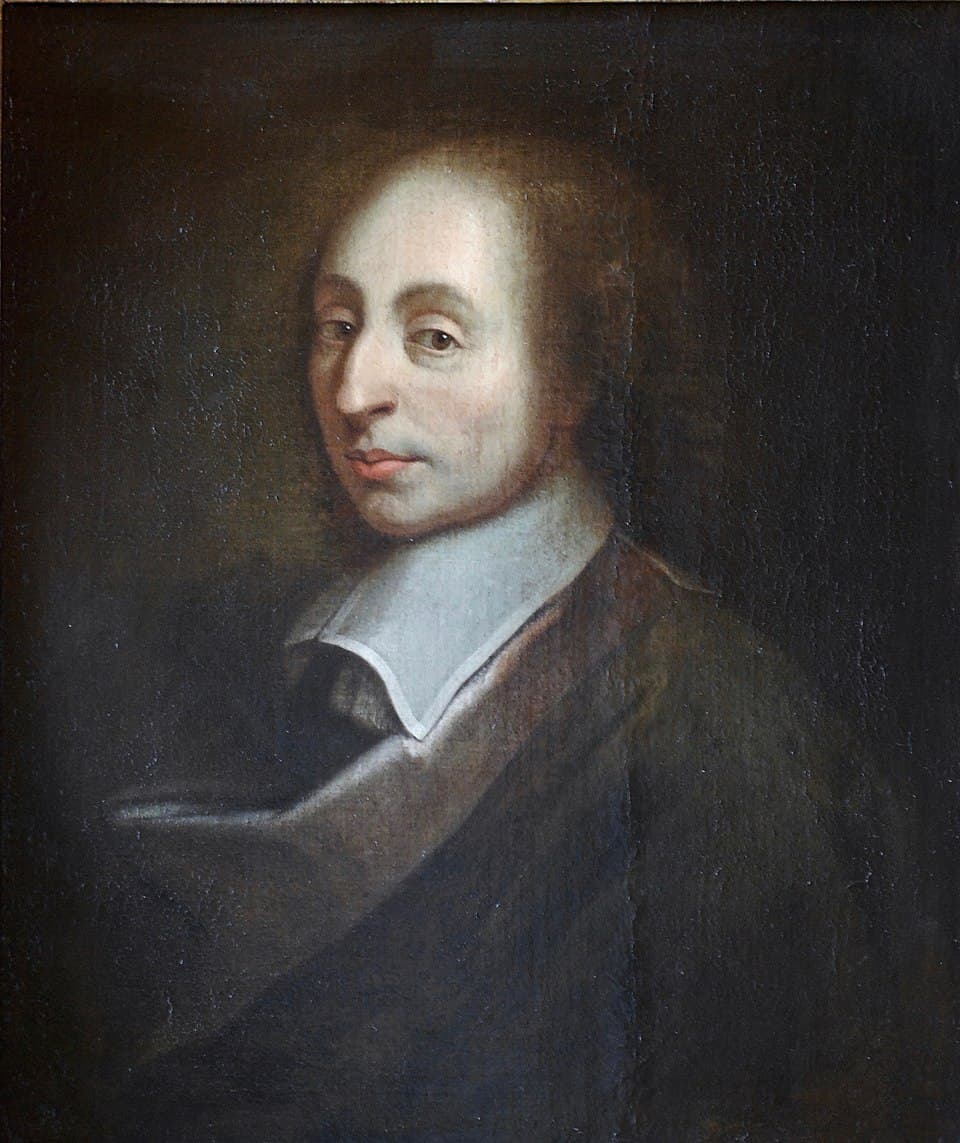
Blaise Pascal
Pensees

The author argues that fundamental truths and first principles are known through the 'heart' or intuition rather than reason, providing a certain foundation that skepticism cannot undermine.

...Is it by reason that you love yourself? 278 It is the heart which experiences God, and not the reason. This, then, is faith: God felt by the heart, not by the reason. 279 Faith is a gift of God; do not believe that we said it was a gift of reasoning. Other religions do not say this of their faith. They only gave reasoning in order to arrive at it, and yet it does not bring them to it. 280 The knowledge of God is very far from the love of Him. 281 Heart, instinct, principles. 282
We know truth, not only by the reason, but also by the heart, and it is in this last way that we know first principles; and reason, which has no part in it, tries in vain to impugn them. The sceptics, who have only this for their object, labour to no purpose. We know that we do not dream, and however impossible it is for us to prove it by reason, this inability demonstrates only the weakness of our reason, but not, as they affirm, the uncertainty of all our knowledge. For the knowledge of first principles, as space, time, motion, number, is as sure as any of those which we get from reasoning. And reason must trust these intuitions of the…
(We have intuitive knowledge of the tri-dimensional nature of space, and of the infinity of number, and reason then shows that there are no two square numbers one of which is double of the other. Principles are intuited, propositions are inferred, all with certainty, though in different ways.) And it is as useless and absurd for reason to demand from the heart proofs of her first principles, before admitting them, as it would be for the heart to demand from reason an intuition of all demonstrat...
Continue reading →
5
The Humble Know God
Blaise Pascal
Pensees

Pascal suggests that God is revealed to the humble and those who sincerely seek truth, while remaining hidden from the arrogant, and encourages gratitude for this selective revelation.

...ll say the same of himself. But those who know the proofs of religion will prove without difficulty that such a believer is truly inspired by God, though he cannot prove it himself. For God having said in His prophecies (which are undoubtedly prophecies), that in the reign of Jesus Christ He would spread His spirit abroad among nations, and that the youths and maidens and children of the Church would prophesy;[108] it is certain that the Spirit of God is in these, and not in the others. 288
Instead of complaining that God had hidden Himself, you will give Him thanks for having revealed so much of Himself; and you will also give Him thanks for not having revealed Himself to haughty sages, unworthy to know so holy a God. Two kinds of persons know Him: those who have a humble heart, and who love lowliness, whatever kind of intellect they may have, high or low; and those who have sufficient understanding to see the truth, whatever opposition they may have to it.
289 Proof.--1. The Christian religion, by its establishment, having established itself so strongly, so gently, whilst contrary to nature.--2. The sanctity, the dignity, and the humility of a Christian soul.--3. The miracles of Holy Scripture.--4. Jesus Christ in particular.--5. The apostles in particular.--6. Moses and the prophets in particular.--7. The Jewish people.--8. The prophecies.--9. Perpetuity; no religion has perpetuity.--10. The doctrine which gives a reason for everything.--11...
2
Reason's Humble Limits
Blaise Pascal
Pensees

The author argues that reason must be humbled by its inability to prove first principles, which are instead felt by the heart, and laments that humans must rely on slow reasoning for most knowledge.

...of first principles, as space, time, motion, number, is as sure as any of those which we get from reasoning. And reason must trust these intuitions of the heart, and must base them on every argument. (We have intuitive knowledge of the tri-dimensional nature of space, and of the infinity of number, and reason then shows that there are no two square numbers one of which is double of the other. Principles are intuited, propositions are inferred, all with certainty, though in different ways.) And
It is as useless and absurd for reason to demand from the heart proofs of her first principles, before admitting them, as it would be for the heart to demand from reason an intuition of all demonstrated propositions before accepting them. This inability ought, then, to serve only to humble reason, which would judge all, but not to impugn our certainty, as if only reason were capable of instructing us. Would to God, on the contrary, that we had never need of it, and that we knew everything by instinct and intuition! But nature has refused us this boon. On the contrary, she has given us but very little knowledge of this kind; and all the rest…
Therefore, those to whom God has imparted religion by intuition are very fortunate, and justly convinced. But to those who do not have it, we can give it only by reasoning, waiting for God to give them spiritual insight, without which faith is only human, and useless for salvation. 283 Order.--Against the objection that Scripture has no order. The heart has its own order; the intellect has its own, which is by principle and demonstration. The heart has another. We do not prove that we ou...
Continue reading →
6
Infinite Unknown Remains
Blaise Pascal
Pensees

The author encourages intellectual humility, suggesting that new discoveries should not be seen as the end of inquiry but as evidence of an infinite realm of knowledge yet to be explored.

...should not exist; that the soul should be joined to the body, and that we should have no soul; that the world should be created, and that it should not be created, etc.; that original sin should be, and that it should not be. 231 Do you believe it to be impossible that God is infinite, without parts?--Yes. I wish therefore to show you an infinite and indivisible thing. It is a point moving everywhere with an infinite velocity; for it is one in all places, and is all totality in every place.
Let this effect of nature, which previously seemed to you impossible, make you know that there may be others of which you are still ignorant. Do not draw this conclusion from your experiment, that there remains nothing for you to know; but rather that there remains an infinity for you to know.
232 Infinite movement, the point which fills everything, the moment of rest; infinite without quantity, indivisible and infinite. 233 Infinite--nothing.--Our soul is cast into a body, where it finds number, time, dimension. Thereupon it reasons, and calls this nature, necessity, and can believe nothing else. Unity joined to infinity adds nothing to it, no more than one foot to an infinite measure. The finite is annihilated in the presence of the infinite, and becomes a pure nothing....
3
Learned Ignorance
Blaise Pascal
Pensees

The text identifies three levels of intellect: the naturally ignorant, the 'learned ignorant' who realize they know nothing, and the dangerous middle-class of thinkers who possess a smattering of knowledge and judge the world poorly.

...ust obey them because they are laws, just as they must obey superiors, not because they are just, but because they are superiors. In this way all sedition is prevented, if this can be made intelligible, and it be understood what is the proper definition of justice. 327 The world is a good judge of things, for it is in natural ignorance, which is man's true state.[124] The sciences have two extremes which meet. The first is the pure natural ignorance in which all men find themselves at birth.
The other extreme is that reached by great intellects, who, having run through all that men can know, find they know nothing, and come back again to that same ignorance from which they set out; but this is a learned ignorance which is conscious of itself. Those between the two, who have departed from natural ignorance and not been able to reach the other, have some smattering of this vain knowledge, and pretend to be wise. These trouble the world, and are bad judges of everything. The people and the wise constitute the world; these despise it, and are despised. They judge badly of everything, and the world judges rightly of them.
328 The reason of effects.--Continual alternation of pro and con. We have then shown that man is foolish, by the estimation he makes of things which are not essential; and all these opinions are destroyed. We have next shown that all these opinions are very sound, and that thus, since all these vanities are well founded, the people are not so foolish as is said. And so we have destroyed the opinion which destroyed that of the people. But we must now destroy this last proposition, and sho...
6