Religion's Dual Diagnosis
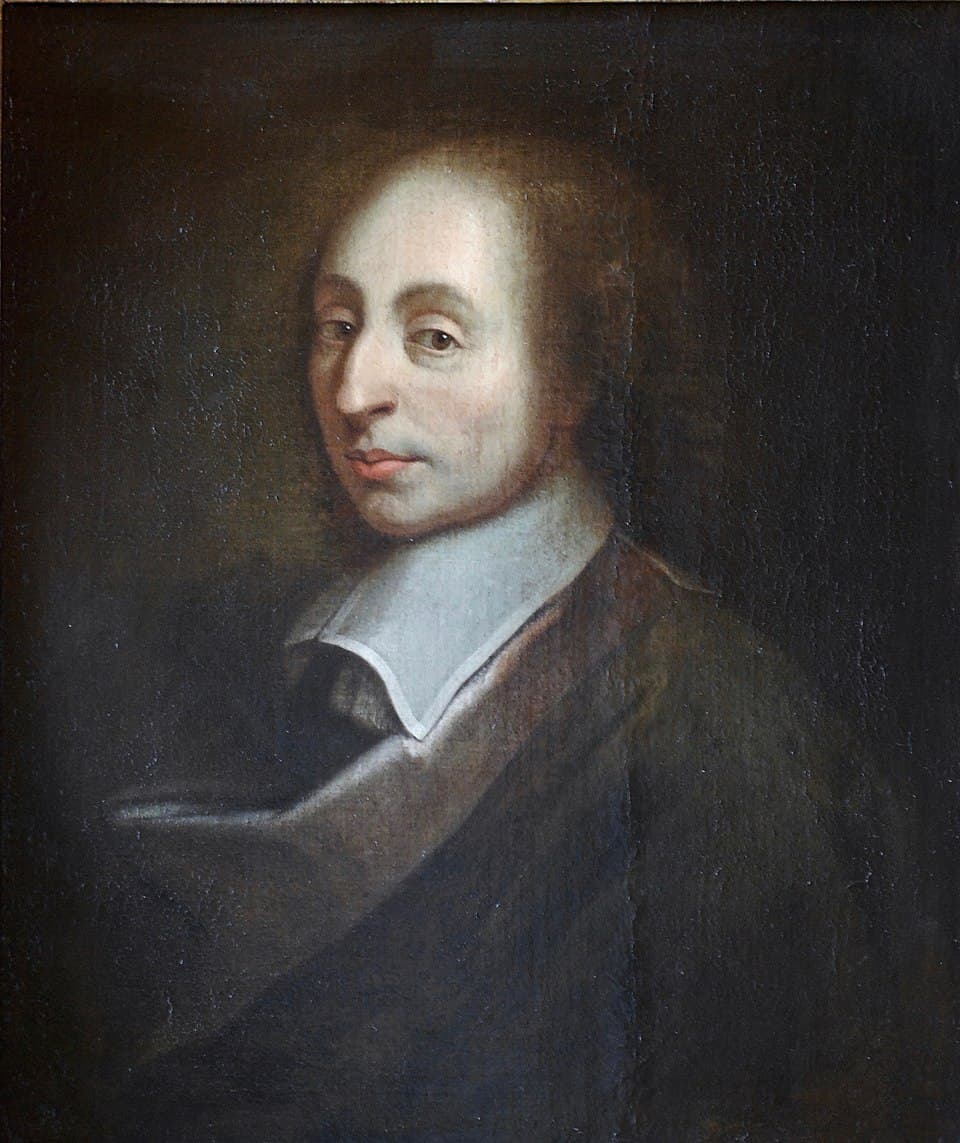
Blaise Pascal
Pensees

Pascal contends that a true religion must account for the 'astonishing contradictions' of man's greatness and wretchedness, providing both an explanation for his corruption and a remedy for his misery.

...ay, and fallen from his true place without being able to find it again. He seeks it anxiously and unsuccessfully everywhere in impenetrable darkness. 428 If it is a sign of weakness to prove God by nature, do not despise Scripture; if it is a sign of strength to have known these contradictions, esteem Scripture. 429 The vileness of man in submitting himself to the brutes, and in even worshipping them. 430 For Port Royal. The beginning, after having explained the incomprehensibility.--
The greatness and the wretchedness of man are so evident that the true religion must necessarily teach us both that there is in man some great source of greatness, and a great source of wretchedness. It must then give us a reason for these astonishing contradictions. In order to make man happy, it must prove to him that there is a God; that we ought to love Him; that our true happiness is to be in Him, and our sole evil to be separated from Him; it must recognise that we are full of darkness which hinders us from knowing and loving Him; and that thus, as our duties compel us to love God, and our lusts turn us away from Him, we are full of…
Shall it be that of the philosophers, who put forward as the chief good, the good which is in ourselves? Is this the true good? Have they found the remedy for our ills? Is man's pride cured by placing him on an equality with God? Have those who have made us equal to the brutes, or the Mahommedans who have offered us earthly pleasures as the chief good even in eternity, produced the remedy for our lusts? What religion, then, will teach us to cure pride and lust? What religion will in fact teach...
Continue reading →
3
Man's Dependent Alliance
Blaise Pascal
Pensees

A reflection on the interconnectedness of all things, suggesting that to truly understand man, one must understand the entire web of environmental and physical dependencies that sustain human life.

...g our imagination on one more than on another. The only comparison which we make of ourselves to the finite is painful to us. If man made himself the first object of study, he would see how incapable he is of going further. How can a part know the whole? But he may perhaps aspire to know at least the parts to which he bears some proportion. But the parts of the world are all so related and linked to one another, that I believe it impossible to know one without the other and without the whole.
Man, for instance, is related to all he knows. He needs a place wherein to abide, time through which to live, motion in order to live, elements to compose him, warmth and food to nourish him, air to breathe. He sees light; he feels bodies; in short, he is in a dependent alliance with everything. To know man, then, it is necessary to know how it happens that he needs air to live, and, to know the air, we must know how it is thus related to the life of man, etc. Flame cannot exist without air; therefore to understand the one, we must understand the other.
Since everything then is cause and effect, dependent and supporting, mediate and immediate, and all is held together by a natural though imperceptible chain, which binds together things most distant and most different, I hold it equally impossible to know the parts without knowing the whole, and to know the whole without knowing the parts in detail. [The eternity of things in itself or in God must also astonish our brief duration. The fixed and constant immobility of nature, in comparison wit...
6
Mind and Automaton
Blaise Pascal
Pensees

The author emphasizes that faith must engage both the mind through reason and the 'automaton' through custom, ultimately arguing that the heart's immediate feeling is a more reliable guide than slow, wandering reason.

...ived among Christians than among Turks.) Finally, we must have recourse to it when once the mind has seen where the truth is, in order to quench our thirst, and steep ourselves in that belief, which escapes us at every hour; for always to have proofs ready is too much trouble. We must get an easier belief, which is that of custom, which, without violence, without art, without argument, makes us believe things, and inclines all our powers to this belief, so that out soul falls naturally into it.
It is not enough to believe only by force of conviction, when the automaton is inclined to believe the contrary. Both our parts must be made to believe, the mind by reasons which it is sufficient to have seen once in a lifetime, and the automaton by custom, and by not allowing it to incline to the contrary. Inclina cor meum, Deus. The reason acts slowly, with so many examinations, and on so many principles, which must be always present, that at every hour it falls asleep, or wanders, through want of having all its principles present. Feeling does not act thus; it acts in a moment, and is always ready to act. We must then put our faith in…
otherwise it will be always vacillating. 253 Two extremes: to exclude reason, to admit reason only. 254 It is not a rare thing to have to reprove the world for too much docility. It is a natural vice like credulity, and as pernicious. Superstition. 255 Piety is different from superstition. To carry piety as far as superstition is to destroy it. The heretics reproach us for this superstitious submission. This is to do what they reproach us for ... Infidelity, not to believe in the Eu...
Continue reading →
3
The Heredity Compromise
Blaise Pascal
Pensees

The author argues that seemingly arbitrary social laws, such as hereditary rule, are actually reasonable because they prevent the greater evil of civil war and social dispute.

...318 He has four lackeys. 319 How rightly do we distinguish men by external appearances rather than by internal qualities! Which of us two shall have precedence? Who will give place to the other? The least clever. But I am as clever as he. We should have to fight over this. He has four lackeys, and I have only one. This can be seen; we have only to count. It falls to me to yield, and I am a fool if I contest the matter. By this means we are at peace, which is the greatest of boons. 320
The most unreasonable things in the world become most reasonable, because of the unruliness of men. What is less reasonable than to choose the eldest son of a queen to rule a State? We do not choose as captain of a ship the passenger who is of the best family. This law would be absurd and unjust; but because men are so themselves, and always will be so, it becomes reasonable and just. For whom will men choose, as the most virtuous and able? We at once come to blows, as each claims to be the most virtuous and able. Let us then attach this quality to something indisputable. This is the king's eldest son. That is clear, and there is no dispute.…
321 Children are astonished to see their comrades respected. 322 To be of noble birth is a great advantage. In eighteen years it places a man within the select circle, known and respected, as another would have merited in fifty years. It is a gain of thirty years without trouble. 323 What is the Ego? Suppose a man puts himself at a window to see those who pass by. If I pass by, can I say that he placed himself there to see me? No; for he does not think of me in particular. But does he...
Continue reading →
6
The Unlived Present
Blaise Pascal
Pensees

A reflection on the human tendency to live in the past or future, concluding that by constantly preparing for a future happiness, we fail to ever actually live in the present.

...which are not ours, and do not think of the only one which belongs to us; and so idle are we that we dream of those times which are no more, and thoughtlessly overlook that which alone exists. For the present is generally painful to us. We conceal it from our sight, because it troubles us; and if it be delightful to us, we regret to see it pass away. We try to sustain it by the future, and think of arranging matters which are not in our power, for a time which we have no certainty of reaching.
Let each one examine his thoughts, and he will find them all occupied with the past and the future. We scarcely ever think of the present; and if we think of it, it is only to take light from it to arrange the future. The present is never our end. The past and the present are our means; the future alone is our end. So we never live, but we hope to live; and, as we are always preparing to be happy, it is inevitable we should never be so.
173 They say that eclipses foretoken misfortune, because misfortunes are common, so that, as evil happens so often, they often foretell it; whereas if they said that they predict good fortune, they would often be wrong. They attribute good fortune only to rare conjunctions of the heavens; so they seldom fail in prediction. 174 Misery.--Solomon[79] and Job have best known and best spoken of the misery of man; the former the most fortunate, and the latter the most unfortunate of men; the...
2