The Balanced Exchange
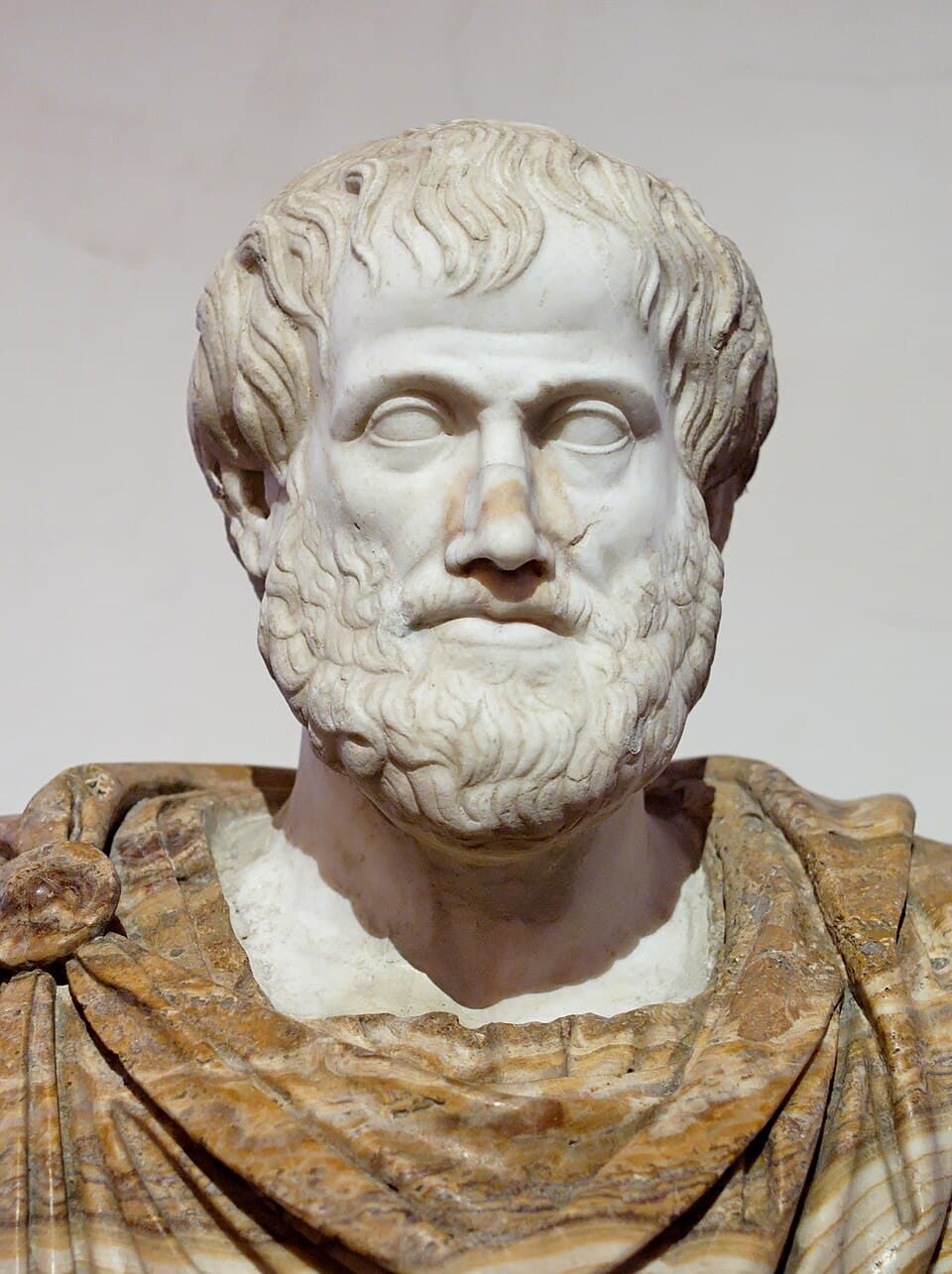
Aristotle
Nicomachean Ethics

The author describes the 'Liberal' man as one who gives and receives in the correct proportions and from the right sources with personal pleasure.

...pent upon such objects, would have nothing to spend on those on which he ought: for, as I have said before, he is Liberal who spends in proportion to his means, and on proper objects, while he who does so in excess is prodigal (this is the reason why we never call despots prodigal, because it does not seem to be easy for them by their gifts and expenditure to go beyond their immense possessions). To sum up then. Since Liberality is a mean state in respect of the giving and receiving of wealth,
The Liberal man will give and spend on proper objects, and in proper proportion, in great things and in small alike, and all this with pleasure to himself; also he will receive from right sources, and in right proportion: because, as the virtue is a mean state in respect of both, he will do both as he ought, and, in fact, upon proper giving follows the correspondent receiving, while that which is not such is contrary to it.
(Now those which follow one another come to co-exist in the same person, those which are contraries plainly do not.) Again, should it happen to him to spend money beyond what is needful, or otherwise than is well, he will be vexed, but only moderately and as he ought; for feeling pleasure and pain at right objects, and in right manner, is a property of Virtue. The Liberal man is also a good man to have for a partner in respect of wealth: for he can easily be wronged, since he values not wealt...
6
The Measured Anger
Aristotle
Nicomachean Ethics

The text describes the 'Meek' man as one who governs his anger according to reason, striking a balance between passion and forgiveness.

...e extreme characters appear to be opposed, because the mean has no name appropriated to it. Chapter VII. Meekness is a mean state, having for its object-matter Anger: and as the character in the mean has no name, and we may almost say the same of the extremes, we give the name of Meekness (leaning rather to the defect, which has no name either) to the character in the mean. The excess may be called an over-aptness to Anger: for the passion is Anger, and the producing causes many and various.
Now he who is angry at what and with whom he ought, and further, in right manner and time, and for proper length of time, is praised, so this Man will be Meek since Meekness is praised. For the notion represented by the term Meek man is the being imperturbable, and not being led away by passion, but being angry in that manner, and at those things, and for that length of time, which Reason may direct. This character however is thought to err rather on the side of defect, inasmuch as he is not apt to take revenge but rather to make allowances and forgive.
And the defect, call it Angerlessness or what you will, is blamed: I mean, they who are not angry at things at which they ought to be angry are thought to be foolish, and they who are angry not in right manner, nor in right time, nor with those with whom they ought; for a man who labours under this defect is thought to have no perception, nor to be pained, and to have no tendency to avenge himself, inasmuch as he feels no anger: now to bear with scurrility in one’s own person, and patiently see...
2
Pleasure's Insufficient Measure
Aristotle
Nicomachean Ethics

The author argues that certain excellences like knowledge and memory are intrinsically valuable and would be chosen even if they yielded no pleasure.

...ce the Pleasure of the just man without being just, or of the musical man without being musical; and so on of others. The distinction commonly drawn between the friend and the flatterer would seem to show clearly either that Pleasure is not a good, or that there are different kinds of Pleasure: for the former is thought to have good as the object of his intercourse, the latter Pleasure only; and this last is reproached, but the former men praise as having different objects in his intercourse.
Again, no one would choose to live with a child’s intellect all his life through, though receiving the highest possible Pleasure from such objects as children receive it from; or to take Pleasure in doing any of the most disgraceful things, though sure never to be pained. There are many things also about which we should be diligent even though they brought no Pleasure; as seeing, remembering, knowing, possessing the various Excellences; and the fact that Pleasures do follow on these naturally makes no difference, because we should certainly choose them even though no Pleasure resulted from them.
It seems then to be plain that Pleasure is not the Chief Good, nor is every kind of it choice-worthy: and that there are some choice-worthy in themselves, differing in kind, i.e. in the sources from which they are derived. Let this then suffice by way of an account of the current maxims respecting Pleasure and Pain. Chapter III. Now what it is, and how characterised, will be more plain if we take up the subject afresh. An act of Sight is thought to be complete at any moment; that is to sa...
5
Moderate Desires
Aristotle
Nicomachean Ethics

The author describes the ideal behavior of a self-mastered person, who regulates desires according to right reason and avoids improper pleasures.

...n the side of pleasure, who take less pleasure in things than they ought, they are almost imaginary characters, because such absence of sensual perception is not natural to man: for even the other animals distinguish between different kinds of food, and like some kinds and dislike others. In fact, could a man be found who takes no pleasure in anything and to whom all things are alike, he would be far from being human at all: there is no name for such a character because it is simply imaginary.
But the man of Perfected Self-Mastery is in the mean with respect to these objects: that is to say, he neither takes pleasure in the things which delight the vicious man, and in fact rather dislikes them, nor at all in improper objects; nor to any great degree in any object of the class; nor is he pained at their absence; nor does he desire them; or, if he does, only in moderation, and neither more than he ought, nor at improper times, and so forth; but such things as are conducive to health and good condition of body, being also pleasant, these he will grasp at in moderation and as he ought to do, and also such other pleasant things as do…
Chapter XIV. Now the vice of being destitute of all Self-Control seems to be more truly voluntary than Cowardice, because pleasure is the cause of the former and pain of the latter, and pleasure is an object of choice, pain of avoidance. And again, pain deranges and spoils the natural disposition of its victim, whereas pleasure has no such effect and is more voluntary and therefore more justly open to reproach. It is so also for the following reason; that it is easier to be inured by habit t...
Continue reading →
3
Vice's Blinding Effect
Aristotle
Nicomachean Ethics

The author argues that vice destroys the perception of moral principles, necessitating practical wisdom to maintain a focus on the 'final cause' of human good.

...the reason why we call the habit of perfected self-mastery by the name which in Greek it bears, etymologically signifying “that which preserves the Practical Wisdom:” for what it does preserve is the Notion I have mentioned, i.e. of one’s own true interest.[18] For it is not every kind of Notion which the pleasant and the painful corrupt and pervert, as, for instance, that “the three angles of every rectilineal triangle are equal to two right angles,” but only those bearing on moral action.
For the Principles of the matters of moral action are the final cause of them: now to the man who has been corrupted by reason of pleasure or pain the Principle immediately becomes obscured, nor does he see that it is his duty to choose and act in each instance with a view to this final cause and by reason of it: for viciousness has a tendency to destroy the moral Principle: and so Practical Wisdom must be “a state conjoined with reason, true, having human good for its object, and apt to do.”
Then again Art admits of degrees of excellence, but Practical Wisdom does not:[20] and in Art he who goes wrong purposely is preferable to him who does so unwittingly,[21] but not so in respect of Practical Wisdom or the other Virtues. It plainly is then an Excellence of a certain kind, and not an Art. Now as there are two parts of the Soul which have Reason, it must be the Excellence of the Opinionative [which we called before calculative or deliberative], because both Opinion and Practical...
3