Will's Intellectual Engine
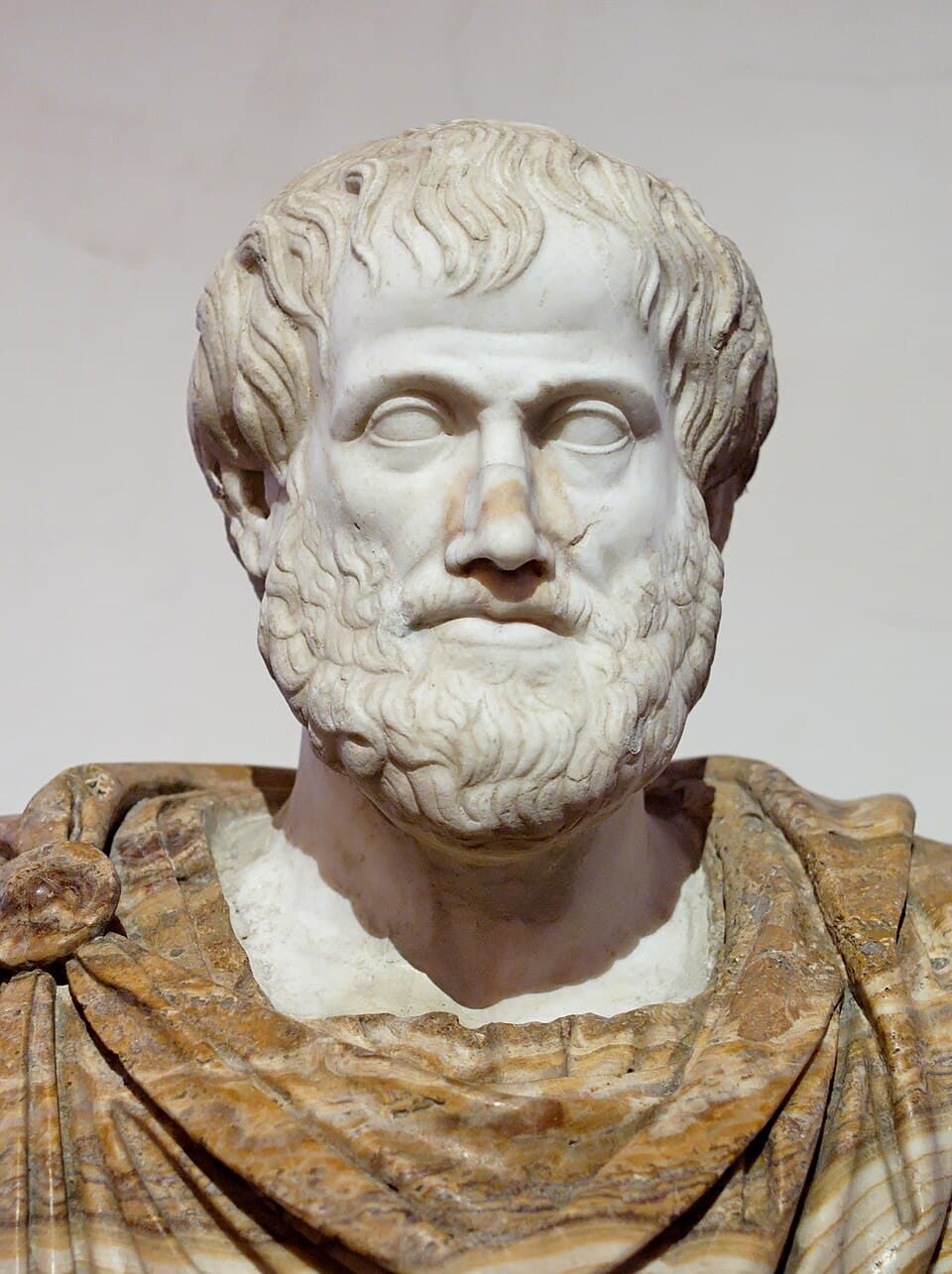
Aristotle
Nicomachean Ethics

The author defines moral choice as a synthesis of intellect and desire, arguing that right action requires both intellectual operation and moral character.

...] Now this Intellectual operation and this Truth is what bears upon Moral Action; of course truth and falsehood must be the good and the bad of that Intellectual Operation which is purely Speculative, and concerned neither with action nor production, because this is manifestly the work of every Intellectual faculty, while of the faculty which is of a mixed Practical and Intellectual nature, the work is that Truth which, as I have described above, corresponds to the right movement of the Will.
Now the starting-point of moral action is Moral Choice, (I mean, what actually sets it in motion, not the final cause,) and of Moral Choice, Appetition, and Reason directed to a certain result: and thus Moral Choice is neither independent of intellect, i. e. intellectual operation, nor of a certain moral state: for right or wrong action cannot be, independently of operation of the Intellect, and moral character. But operation of the Intellect by itself moves nothing, only when directed to a certain result, i. e. exercised in Moral Action: (I say nothing of its being exercised in production, because this function is originated by the former:…
But nothing which is done and past can be the object of Moral Choice; for instance, no man chooses to have sacked Troy; because, in fact, no one ever deliberates about what is past, but only about that which is future, and which may therefore be influenced, whereas what has been cannot not have been: and so Agathon is right in saying “Of this alone is Deity bereft, To make undone whatever hath been done.” Thus then Truth is the work of both the Intellectual Parts of the Soul; those states t...
Continue reading →
6
Deliberation on Means
Aristotle
Nicomachean Ethics

The author defines deliberation as a process concerning the means to an end rather than the ends themselves, occurring in matters that are generally governed by laws but remain uncertain in specific cases.

...aracters, because we have no doubt how they should be formed; but we do deliberate on all buch things as are usually done through our own instrumentality, but not invariably in the same way; as, for instance, about matters connected with the healing art, or with money-making; and, again, more about piloting ships than gymnastic exercises, because the former has been less exactly determined, and so forth; and more about arts than sciences, because we more frequently doubt respecting the former.
So then Deliberation takes place in such matters as are under general laws, but still uncertain how in any given case they will issue, i.e. in which there is some indefiniteness; and for great matters we associate coadjutors in counsel, distrusting our ability to settle them alone. Further, we deliberate not about Ends, but Means to Ends. No physician, for instance, deliberates whether he will cure, nor orator whether he will persuade, nor statesman whether he will produce a good constitution, nor in fact any man in any other function about his particular End; but having set before them a certain End they look how and through what means it…
or, if there is but one means of accomplishing the object, then how it may be through this, this again through what, till they come to the first cause; and this will be the last found; for a man engaged in a process of deliberation seems to seek and analyse, as a man, to solve a problem, analyses the figure given him. And plainly not every search is Deliberation, those in mathematics to wit, but every Deliberation is a search, and the last step in the analysis is the first in the constructive p...
Continue reading →
5
Wealth's Constraint
Aristotle
Nicomachean Ethics

The author argues that wealth is not the ultimate good because it is merely a tool for achieving other ends rather than an end in itself.

...r it is conceived possible, that a man possessed of virtue might sleep or be inactive all through his life, or, as a third case, suffer the greatest evils and misfortunes: and the man who should live thus no one would call happy, except for mere disputation’s sake.[7] And for these let thus much suffice, for they have been treated of at sufficient length in my Encyclia.[8] A third line of life is that of contemplation, concerning which we shall make our examination in the following pages.[9]
As for the life of money-making, it is one of constraint, and wealth manifestly is not the good we are seeking, because it is for use, that is, for the sake of something further: and hence one would rather conceive the forementioned ends to be the right ones, for men rest content with them for their own sakes. Yet, clearly, they are not the objects of our search either, though many words have been wasted on them. So much then for these.
Again, the notion of one Universal Good (the same, that is, in all things), it is better perhaps we should examine, and discuss the meaning of it, though such an enquiry is unpleasant, because they are friends of ours who have introduced these εἴδη.[11] Still perhaps it may appear better, nay to be our duty where the safety of the truth is concerned, to upset if need be even our own theories, specially as we are lovers of wisdom: for since both are dear to us, we are bound to prefer the truth....
6
Wish vs. Choice
Aristotle
Nicomachean Ethics

The author differentiates between wishing for an end and choosing the means, asserting that choice is limited to things within an individual's power.

...e, in the first place, Moral Choice has not for its objects impossibilities, and if a man were to say he chose them he would be thought to be a fool; but Wish may have impossible things for its objects, immortality for instance. Wish again may be exercised on things in the accomplishment of which one’s self could have nothing to do, as the success of any particular actor or athlete; but no man chooses things of this nature, only such as he believes he may himself be instrumental in procuring.
Further: Wish has for its object the End rather, but Moral Choice the means to the End; for instance, we wish to be healthy but we choose the means which will make us so; or happiness again we wish for, and commonly say so, but to say we choose is not an appropriate term, because, in short, the province of Moral Choice seems to be those things which are in our own power.
Neither can it be Opinion; for Opinion is thought to be unlimited in its range of objects, and to be exercised as well upon things eternal and impossible as on those which are in our own power: again, Opinion is logically divided into true and false, not into good and bad as Moral Choice is. However, nobody perhaps maintains its identity with Opinion simply; but it is not the same with opinion of any kind,[8] because by choosing good and bad things we are constituted of a certain character, b...
4
Excellence as Function
Aristotle
Nicomachean Ethics

The author establishes a functional definition of virtue as the state that enables a thing to be in a good condition and to perform its specific work well.

...they are not Capacities, for we are not called good or bad merely because we are able to feel, nor are we praised or blamed. And again, Capacities we have by nature, but we do not come to be good or bad by nature, as we have said before. Since then the virtues are neither Feelings nor Capacities, it remains that they must be States. Chapter V. Now what the genus of Virtue is has been said; but we must not merely speak of it thus, that it is a state but say also what kind of a state it is.
We must observe then that all excellence makes that whereof it is the excellence both to be itself in a good state and to perform its work well. The excellence of the eye, for instance, makes both the eye good and its work also: for by the excellence of the eye we see well. So too the excellence of the horse makes a horse good, and good in speed, and in carrying his rider, and standing up against the enemy. If then this is universally the case, the excellence of Man, i.e. Virtue, must be a state whereby Man comes to be good and whereby he will perform well his proper work.
Now how this shall be it is true we have said already, but still perhaps it may throw light on the subject to see what is its characteristic nature. In all quantity then, whether continuous or discrete,[11] one may take the greater part, the less, or the exactly equal, and these either with reference to the thing itself, or relatively to us: and the exactly equal is a mean between excess and defect. Now by the mean of the thing, i.e. absolute mean, I denote that which is equidistant from eit...
4