Appetite's Obedience
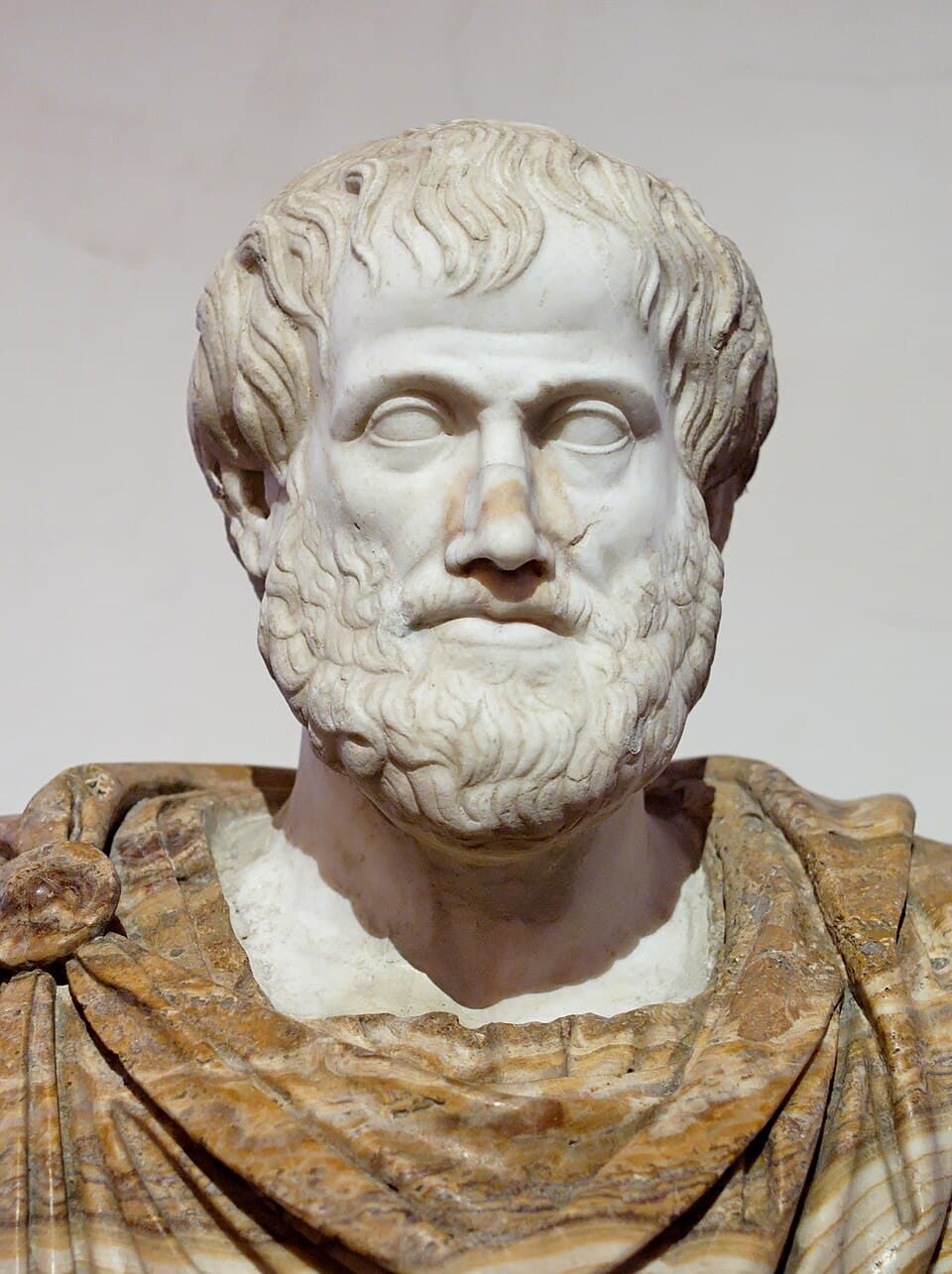
Aristotle
Nicomachean Ethics

The author commands that human appetites must be kept moderate and subject to reason, much like a child must obey an educator to avoid becoming insatiable.

...which secondarily or derivatively, is not relevant to the present subject, but it is evident that the later in point of time must get the name from the earlier. And the metaphor seems to be a very good one; for whatever grasps after base things, and is liable to great increase, ought to be chastened; and to this description desire and the child answer most truly, in that children also live under the direction of desire and the grasping after what is pleasant is most prominently seen in these.
Unless then the appetite be obedient and subjected to the governing principle it will become very great: for in the fool the grasping after what is pleasant is insatiable and undiscriminating; and every acting out of the desire increases the kindred habit, and if the desires are great and violent in degree they even expel Reason entirely; therefore they ought to be moderate and few, and in no respect to be opposed to Reason. Now when the appetite is in such a state we denominate it obedient and chastened. In short, as the child ought to live with constant regard to the orders of its educator, so should the appetitive principle with regard to those of Reason.
So then in the man of Perfected Self-Mastery, the appetitive principle must be accordant with Reason: for what is right is the mark at which both principles aim: that is to say, the man of perfected self-mastery desires what he ought in right manner and at right times, which is exactly what Reason directs. Let this be taken for our account of Perfected Self-Mastery. BOOK IV Chapter I. We will next speak of Liberality. Now this is thought to be the mean state, having for its object-matte...
3
Knowledge in Passion
Aristotle
Nicomachean Ethics

The author compares those lacking self-control to people who are asleep or drunk, noting that they may recite knowledge without truly possessing or exercising it.

...ing in question: take the following for instance; “dry food is good for every man,” this may have the two minor premisses, “this is a man,” and “so and so is dry food;” but whether a given substance is so and so a man either has not the Knowledge or does not exert it. According to these different senses there will be an immense difference, so that for a man to know in the one sense, and yet act wrongly, would be nothing strange, but in any of the other senses it would be a matter for wonder.
Again, men may have Knowledge in a way different from any of those which have been now stated: for we constantly see a man’s state so differing by having and not using Knowledge, that he has it in a sense and also has not; when a man is asleep, for instance, or mad, or drunk: well, men under the actual operation of passion are in exactly similar conditions; for anger, lust, and some other such-like things, manifestly make changes even in the body, and in some they even cause madness; it is plain then that we must say the men of Imperfect Self-Control are in a state similar to these. And their saying what embodies Knowledge is no proof of…
Furthermore, a man may look at the account of the phænomenon in the following way, from an examination of the actual working of the mind: All action may be analysed into a syllogism, in which the one premiss is an universal maxim and the other concerns particulars of which Sense [moral or physical, as the case may be] is cognisant: now when one results from these two, it follows necessarily that, as far as theory goes the mind must assert the conclusion, and in practical propositions the man m...
Continue reading →
3
Send Pleasure Away
Aristotle
Nicomachean Ethics

The author commands a cautious and guarded attitude toward pleasure to avoid error and successfully attain the virtuous mean.

...ust take the least of the evils as the safest plan;[21] and this a man will be doing, if he follows this method. We ought also to take into consideration our own natural bias; which varies in each man’s case, and will be ascertained from the pleasure and pain arising in us. Furthermore, we should force ourselves off in the contrary direction, because we shall find ourselves in the mean after we have removed ourselves far from the wrong side, exactly as men do in straightening bent timber.[22]
But in all cases we must guard most carefully against what is pleasant, and pleasure itself, because we are not impartial judges of it. We ought to feel in fact towards pleasure as did the old counsellors towards Helen, and in all cases pronounce a similar sentence; for so by sending it away from us, we shall err the less. Well, to speak very briefly, these are the precautions by adopting which we shall be best able to attain the mean.
Still, perhaps, after all it is a matter of difficulty, and specially in the particular instances: it is not easy, for instance, to determine exactly in what manner, with what persons, for what causes, and for what length of time, one ought to feel anger: for we ourselves sometimes praise those who are defective in this feeling, and we call them meek; at another, we term the hot-tempered manly and spirited. Then, again, he who makes a small deflection from what is right, be it on the side of...
3
Forms of Self-Control
Aristotle
Nicomachean Ethics

Aristotle categorizes imperfect self-control into precipitancy and weakness, explaining how different psychological states lead individuals to succumb to passion despite their resolutions.

...which the common herd are able to resist; always supposing his failure not to be owing to natural constitution or disease, I mean, as the Scythian kings are constitutionally Soft, or the natural difference between the sexes. Again, the man who is a slave to amusement is commonly thought to be destitute of Self-Control, but he really is Soft; because amusement is an act of relaxing, being an act of resting, and the character in question is one of those who exceed due bounds in respect of this.
Moreover of Imperfect Self-Control there are two forms, Precipitancy and Weakness: those who have it in the latter form though they have made resolutions do not abide by them by reason of passion; the others are led by passion because they have never formed any resolutions at all: while there are some who, like those who by tickling themselves beforehand get rid of ticklishness, having felt and seen beforehand the approach of temptation, and roused up themselves and their resolution, yield not to passion; whether the temptation be somewhat pleasant or somewhat painful.
The Precipitate form of Imperfect Self-Control they are most liable to who are constitutionally of a sharp or melancholy temperament: because the one by reason of the swiftness, the other by reason of the violence, of their passions, do not wait for Reason, because they are disposed to follow whatever notion is impressed upon their minds. Again, the man utterly destitute of Self-Control, as was observed before, is not given to remorse: for it is part of his character that he abides by his mora...
5
The Measured Anger
Aristotle
Nicomachean Ethics

The text describes the 'Meek' man as one who governs his anger according to reason, striking a balance between passion and forgiveness.

...e extreme characters appear to be opposed, because the mean has no name appropriated to it. Chapter VII. Meekness is a mean state, having for its object-matter Anger: and as the character in the mean has no name, and we may almost say the same of the extremes, we give the name of Meekness (leaning rather to the defect, which has no name either) to the character in the mean. The excess may be called an over-aptness to Anger: for the passion is Anger, and the producing causes many and various.
Now he who is angry at what and with whom he ought, and further, in right manner and time, and for proper length of time, is praised, so this Man will be Meek since Meekness is praised. For the notion represented by the term Meek man is the being imperturbable, and not being led away by passion, but being angry in that manner, and at those things, and for that length of time, which Reason may direct. This character however is thought to err rather on the side of defect, inasmuch as he is not apt to take revenge but rather to make allowances and forgive.
And the defect, call it Angerlessness or what you will, is blamed: I mean, they who are not angry at things at which they ought to be angry are thought to be foolish, and they who are angry not in right manner, nor in right time, nor with those with whom they ought; for a man who labours under this defect is thought to have no perception, nor to be pained, and to have no tendency to avenge himself, inasmuch as he feels no anger: now to bear with scurrility in one’s own person, and patiently see...
2