Avoiding Bodily Pleasures
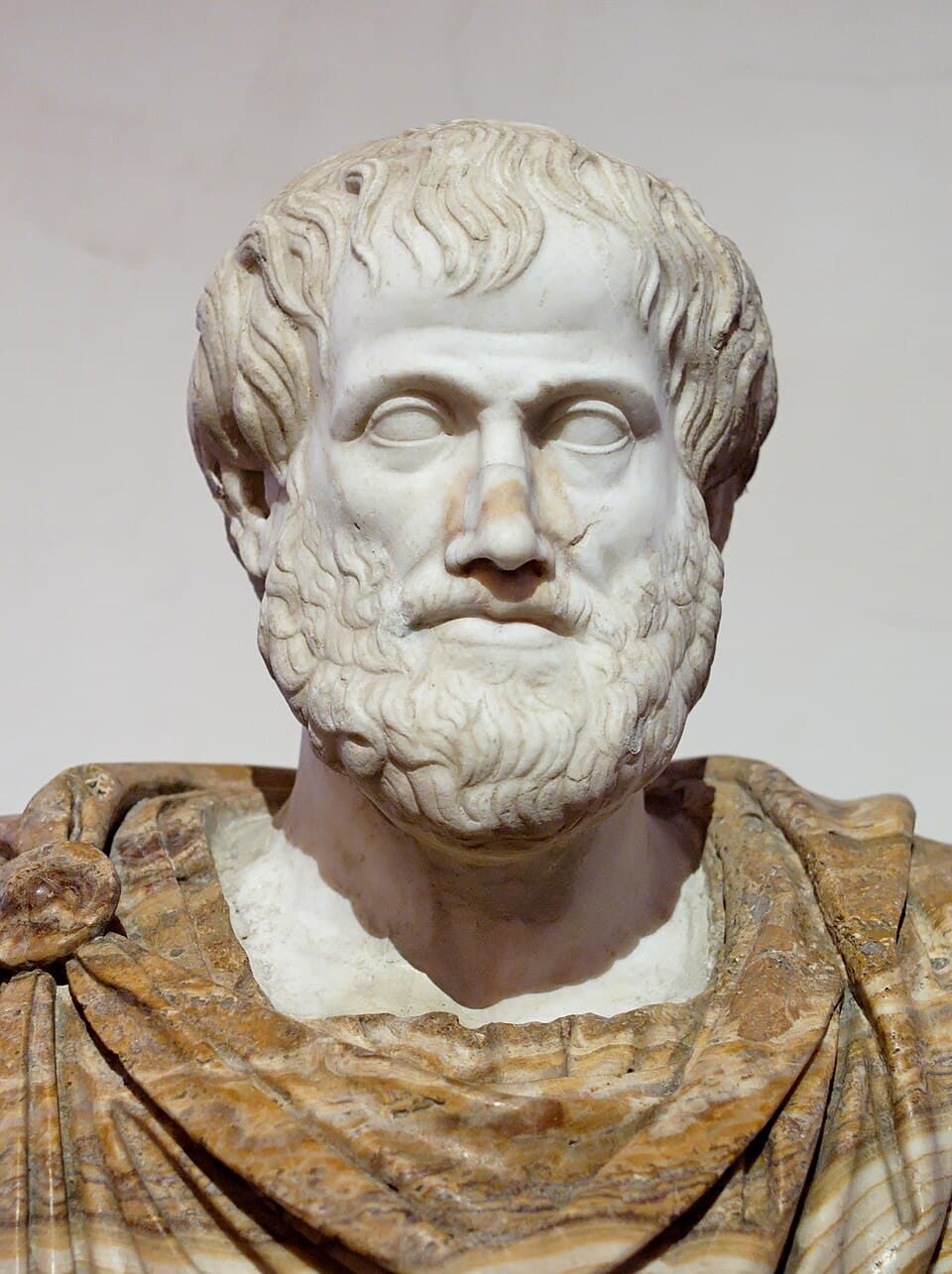
Aristotle
Nicomachean Ethics

Aristotle distinguishes between the bodily pleasures pursued by children and the self-indulgent, and the superior pleasures sought by the man of practical wisdom.

...e of the pure Intellect or from learning only promote each. Next. “No Pleasure is the work of any Art.” What else would you expect? No active working is the work of any Art, only the faculty of so working. Still the perfumer’s Art or the cook’s are thought to belong to Pleasure. Next. “The man of Perfected Self-Mastery avoids Pleasures.” “The man of Practical Wisdom aims at escaping Pain rather than at attaining Pleasure.” “Children and brutes pursue Pleasures.” One answer will do for all.
We have already said in what sense all Pleasures are good per se and in what sense not all are good: it is the latter class that brutes and children pursue, such as are accompanied by desire and pain, that is the bodily Pleasures (which answer to this description) and the excesses of them: in short, those in respect of which the man utterly destitute of Self-Control is thus utterly destitute. And it is the absence of the pain arising from these Pleasures that the man of Practical Wisdom aims at. It follows that these Pleasures are what the man of Perfected Self-Mastery avoids: for obviously he has Pleasures peculiarly his own.
Then again, it is allowed that Pain is an evil and a thing to be avoided partly as bad per se, partly as being a hindrance in some particular way. Now the contrary of that which is to be avoided, quâ it is to be avoided, i.e. evil, is good. Pleasure then must be a good. The attempted answer of Speusippus, “that Pleasure may be opposed and yet not contrary to Pain, just as the greater portion of any magnitude is contrary to the less but only opposed to the exact half,” will not hold: f...
2
The Need for Definition
Aristotle
Nicomachean Ethics

The author argues that vague appeals to 'moderation' or 'right reason' are insufficient for ethics and that a precise definition of these terms is required for practical wisdom.

...ther the excess or defect, and that the mean is according to the dictates of Right Reason; we will now proceed to explain this term. For in all the habits which we have expressly mentioned, as likewise in all the others, there is, so to speak, a mark with his eye fixed on which the man who has Reason tightens or slacks his rope;[1] and there is a certain limit of those mean states which we say are in accordance with Right Reason, and lie between excess on the one hand and defect on the other.
Now to speak thus is true enough but conveys no very definite meaning: as, in fact, in all other pursuits requiring attention and diligence on which skill and science are brought to bear; it is quite true of course to say that men are neither to labour nor relax too much or too little, but in moderation, and as Right Reason directs; yet if this were all a man had he would not be greatly the wiser; as, for instance, if in answer to the question, what are proper applications to the body, he were to be told, “Oh! of course, whatever the science of medicine, and in such manner as the physician, directs.” And so in respect of the mental states it…
Chapter II. Now in our division of the Excellences of the Soul, we said there were two classes, the Moral and the Intellectual: the former we have already gone through; and we will now proceed to speak of the others, premising a few words respecting the Soul itself. It was stated before, you will remember, that the Soul consists of two parts, the Rational, and Irrational: we must now make a similar division of the Rational. Let it be understood then that there are two parts of the Soul posse...
Continue reading →
6
The Difficulty of the Mean
Aristotle
Nicomachean Ethics

Aristotle explains that virtue is difficult because finding the 'mean' requires specific knowledge and timing, making true goodness a rare and praiseworthy achievement.

...ine. These things then to which the bias is, we call more contrary, and so total want of self-control (the excess) is more contrary than the defect is to perfected self-mastery. Chapter IX. Now that Moral Virtue is a mean state, and how it is so, and that it lies between two faulty states, one in the way of excess and another in the way of defect, and that it is so because it has an aptitude to aim at the mean both in feelings and actions, all this has been set forth fully and sufficiently.
And so it is hard to be good: for surely hard it is in each instance to find the mean, just as to find the mean point or centre of a circle is not what any man can do, but only he who knows how: just so to be angry, to give money, and be expensive, is what any man can do, and easy: but to do these to the right person, in due proportion, at the right time, with a right object, and in the right manner, this is not as before what any man can do, nor is it easy; and for this cause goodness is rare, and praiseworthy, and noble.
Therefore he who aims at the mean should make it his first care to keep away from that extreme which is more contrary than the other to the mean; just as Calypso in Homer advises Ulysses, “Clear of this smoke and surge thy barque direct;” because of the two extremes the one is always more, and the other less, erroneous; and, therefore, since to hit exactly on the mean is difficult, one must take the least of the evils as the safest plan;[21] and this a man will be doing, if he follows this m...
5
Anger's Blurry Line
Aristotle
Nicomachean Ethics

The author argues that defining the exact boundaries of appropriate anger is impossible through rules alone, as such judgments must rely on the individual's moral sense in specific situations.

...great nuisances to themselves and to their best friends. Again, we call those Cross-grained who are angry at wrong objects, and in excessive degree, and for too long a time, and who are not appeased without vengeance or at least punishing the offender. To Meekness we oppose the excess rather than the defect, because it is of more common occurrence: for human nature is more disposed to take than to forgo revenge. And the Cross-grained are worse to live with [than they who are too phlegmatic].
Now, from what has been here said, that is also plain which was said before. I mean, it is no easy matter to define how, and with what persons, and at what kind of things, and how long one ought to be angry, and up to what point a person is right or is wrong. For he that transgresses the strict rule only a little, whether on the side of too much or too little, is not blamed: sometimes we praise those who are deficient in the feeling and call them Meek, sometimes we call the irritable Spirited as being well qualified for government. So it is not easy to lay down, in so many words, for what degree or kind of transgression a man is blameable:…
Thus much, however, is plain, that the mean state is praiseworthy, in virtue of which we are angry with those with whom, and at those things with which, we ought to be angry, and in right manner, and so on; while the excesses and defects are blameable, slightly so if only slight, more so if greater, and when considerable very blameable. It is clear, therefore, that the mean state is what we are to hold to. This then is to be taken as our account of the various moral states which have Anger fo...
Continue reading →
6
Fitting Magnificence
Aristotle
Nicomachean Ethics

This passage describes the 'Magnificent man' as one who must spend largely and with good taste, ensuring that his expenditures are always proportionate to the honor of the work.

...as, for instance, “Oft to the wandering beggar did I give,” but for doing so in great matters: that is to say, the Magnificent man is liberal, but the liberal is not thereby Magnificent. The falling short of such a state is called Meanness, the exceeding it Vulgar Profusion, Want of Taste, and so on; which are faulty, not because they are on an excessive scale in respect of right objects but, because they show off in improper objects, and in improper manner: of these we will speak presently.
The Magnificent man is like a man of skill, because he can see what is fitting, and can spend largely in good taste; for, as we said at the commencement, the confirmed habit is determined by the separate acts of working, and by its object-matter. Well, the expenses of the Magnificent man are great and fitting: such also are his works (because this secures the expenditure being not great merely, but befitting the work). So then the work is to be proportionate to the expense, and this again to the work, or even above it: and the Magnificent man will incur such expenses from the motive of honour, this being common to all the virtues, and besides…
He will consider also how a thing may be done most beautifully and fittingly, rather, than for how much it may be done, and how at the least expense. So the Magnificent man must be also a liberal man, because the liberal man will also spend what he ought, and in right manner: but it is the Great, that is to say tke large scale, which is distinctive of the Magnificent man, the object-matter of liberality being the same, and without spending more money than another man he will make the work more...
Continue reading →
3