Virtue's Inherent Pleasure
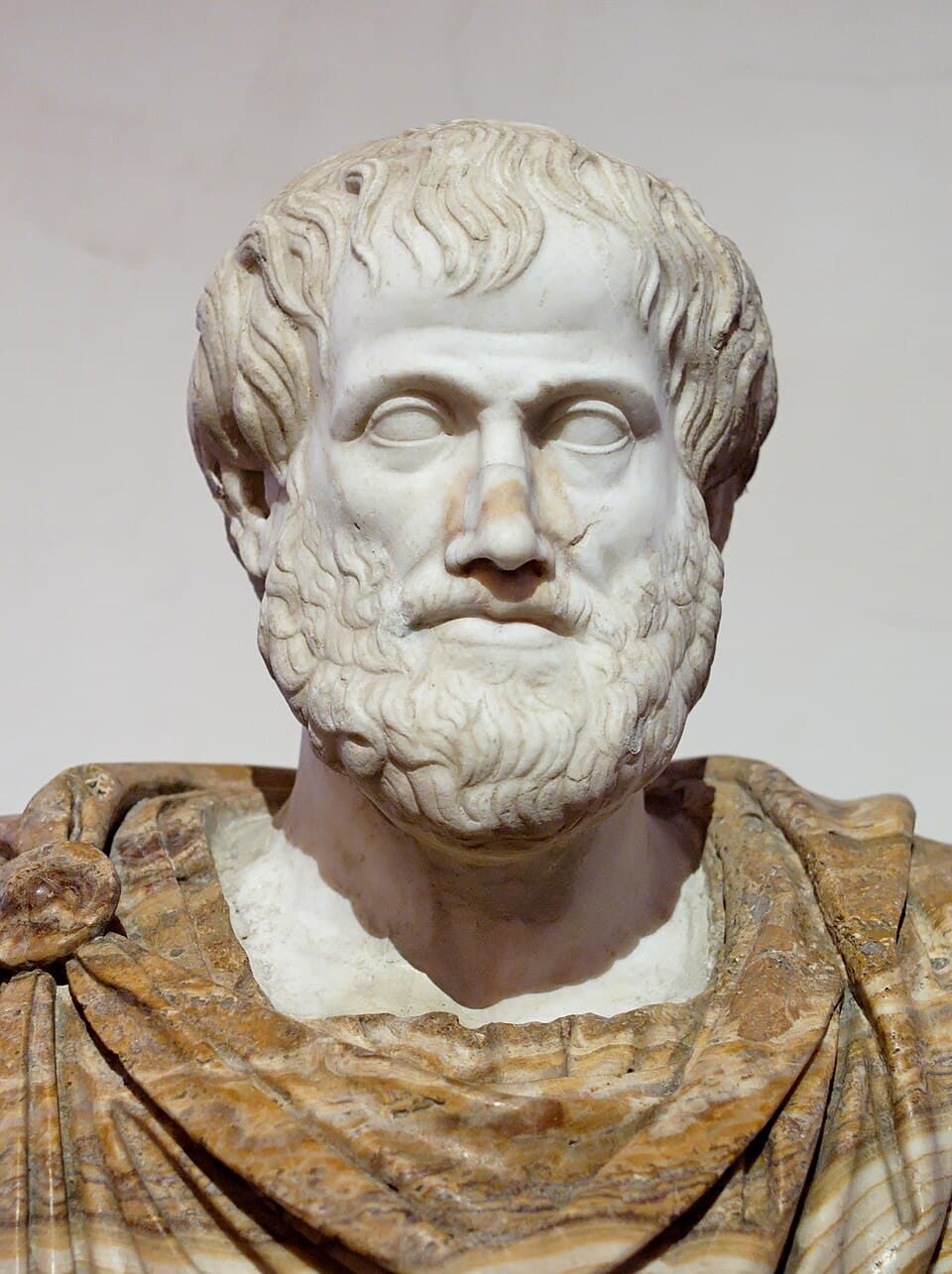
Aristotle
Nicomachean Ethics

The text asserts that virtuous actions are inherently pleasant to those who love nobility, meaning a truly good person finds joy in the virtuous act itself rather than seeking external pleasure.

...cted; so too in life, of the honourable and the good, it is they who act who rightly win the prizes.[24] Their life too is in itself pleasant: for the feeling of pleasure is a mental sensation, and that is to each pleasant of which he is said to be fond: a horse, for instance, to him who is fond of horses, and a sight to him who is fond of sights: and so in like manner just acts to him who is fond of justice, and more generally the things in accordance with virtue to him who is fond of virtue.
Now in the case of the multitude of men the things which they individually esteem pleasant clash, because they are not such by nature, whereas to the lovers of nobleness those things are pleasant which are such by nature: but the actions in accordance with virtue are of this kind, so that they are pleasant both to the individuals and also in themselves. So then their life has no need of pleasure as a kind of additional appendage, but involves pleasure in itself. For, besides what I have just mentioned, a man is not a good man at all who feels no pleasure in noble actions, just as no one would call that man just who does not feel pleasure in…
Then again they are certainly good and noble, and each of these in the highest degree; if we are to take as right the judgment of the good man, for he judges as we have said. Thus then Happiness is most excellent, most noble, and most pleasant, and these attributes are not separated as in the well-known Delian inscription— “Most noble is that which is most just, but best is health; And naturally most pleasant is the obtaining one’s desires.” For all these co-exist in the best acts of workin...
Continue reading →
4
Bending Toward Balance
Aristotle
Nicomachean Ethics

Aristotle provides a practical rule for finding the moral mean: identify one's natural bias and forcefully pull in the opposite direction to correct the imbalance.

...ore he who aims at the mean should make it his first care to keep away from that extreme which is more contrary than the other to the mean; just as Calypso in Homer advises Ulysses, “Clear of this smoke and surge thy barque direct;” because of the two extremes the one is always more, and the other less, erroneous; and, therefore, since to hit exactly on the mean is difficult, one must take the least of the evils as the safest plan;[21] and this a man will be doing, if he follows this method.
We ought also to take into consideration our own natural bias; which varies in each man’s case, and will be ascertained from the pleasure and pain arising in us. Furthermore, we should force ourselves off in the contrary direction, because we shall find ourselves in the mean after we have removed ourselves far from the wrong side, exactly as men do in straightening bent timber. But in all cases we must guard most carefully against what is pleasant, and pleasure itself, because we are not impartial judges of it.
We ought to feel in fact towards pleasure as did the old counsellors towards Helen, and in all cases pronounce a similar sentence; for so by sending it away from us, we shall err the less.[23] Well, to speak very briefly, these are the precautions by adopting which we shall be best able to attain the mean. Still, perhaps, after all it is a matter of difficulty, and specially in the particular instances: it is not easy, for instance, to determine exactly in what manner, with what persons, for...
4
Pleasure's True Source
Aristotle
Nicomachean Ethics

The author argues that disgraceful pleasures are not truly pleasant, as their appeal to the 'ill-disposed' is a distortion similar to how sickness affects taste.

...eople have felt a lack and so have had Pain first, they, of course, are pleased with the supply of their lack. But this is not the case with all Pleasures: those attendant on mathematical studies, for instance, are unconnected with any Pain; and of such as attend on the senses those which arise through the sense of Smell; and again, many sounds, and sights, and memories, and hopes: now of what can these be Generations? because there has been here no lack of anything to be afterwards supplied.
And to those who bring forward disgraceful Pleasures we may reply that these are not really pleasant things; for it does not follow because they are pleasant to the ill-disposed that we are to admit that they are pleasant except to them; just as we should not say that those things are really wholesome, or sweet, or bitter, which are so to the sick, or those objects really white which give that impression to people labouring under ophthalmia. Or we might say thus, that the Pleasures are choice-worthy but not as derived from these sources: just as wealth is, but not as the price of treason; or health, but not on the terms of eating anything however loathsome.
Or again, may we not say that Pleasures differ in kind? those derived from honourable objects, for instance are different from those arising from disgraceful ones; and it is not possible to experience the Pleasure of the just man without being just, or of the musical man without being musical; and so on of others. The distinction commonly drawn between the friend and the flatterer would seem to show clearly either that Pleasure is not a good, or that there are different kinds of Pleasure: for...
5
Pleasure's Universal Instinct
Aristotle
Nicomachean Ethics

The author suggests a universal, almost instinctual drive toward a singular Chief Good, implying that all creatures are guided by an internal power higher than their conscious thoughts.

...y not be fettered. As for those who say that he who is being tortured on the wheel, or falls into great misfortunes is happy provided only he be good, they talk nonsense, whether they mean to do so or not. On the other hand, because fortune is needed as an addition, some hold good fortune to be identical with Happiness: which it is not, for even this in excess is a hindrance, and perhaps then has no right to be called good fortune since it is good only in so far as it contributes to Happiness.
The fact that all animals, brute and human alike, pursue Pleasure, is some presumption of its being in a sense the Chief Good; (“There must be something in what most folks say,”) only as one and the same nature or state neither is nor is thought to be the best, so neither do all pursue the same Pleasure, Pleasure nevertheless all do. Nay further, what they pursue is, perhaps, not what they think nor what they would say they pursue, but really one and the same: for in all there is some instinct above themselves.
But the bodily Pleasures have received the name exclusively, because theirs is the most frequent form and that which is universally partaken of; and so, because to many these alone are known they believe them to be the only ones which exist. It is plain too that, unless Pleasure and its active working be good, it will not be true that the happy man’s life embodies Pleasure: for why will he want it on the supposition that it is not good and that he can live even with Pain? because, assuming tha...
2
Virtue's Intrinsic Pleasure
Aristotle
Nicomachean Ethics

The author argues that happiness is more easily sustained in the company of others because social interaction makes the continuous exercise of virtue more pleasant.

...at is our own reckons among things pleasurable, and if we can view our neighbours better than ourselves and their actions better than we can our own, then the actions of their Friends who are good men are pleasurable to the good; inasmuch as they have both the requisites which are naturally pleasant. So the man in the highest state of happiness will need Friends of this kind, since he desires to contemplate good actions, and actions of his own, which those of his friend, being a good man, are.
Again, common opinion requires that the Happy man live with pleasure to himself: now life is burthensome to a man in solitude, for it is not easy to work continuously by one’s self, but in company with, and in regard to others, it is easier, and therefore the working, being pleasurable in itself will be more continuous (a thing which should be in respect of the Happy man); for the good man, in that he is good takes pleasure in the actions which accord with Virtue and is annoyed at those which spring from Vice, just as a musical man is pleased with beautiful music and annoyed by bad.
And besides, as Theognis says, Virtue itself may be improved by practice, from living with the good. And, upon the following considerations more purely metaphysical, it will probably appear that the good friend is naturally choice-worthy to the good man. We have said before, that whatever is naturally good is also in itself good and pleasant to the good man; now the fact of living, so far as animals are concerned, is characterised generally by the power of sentience, in man it is characterised...
4