Friendship's Common Ground
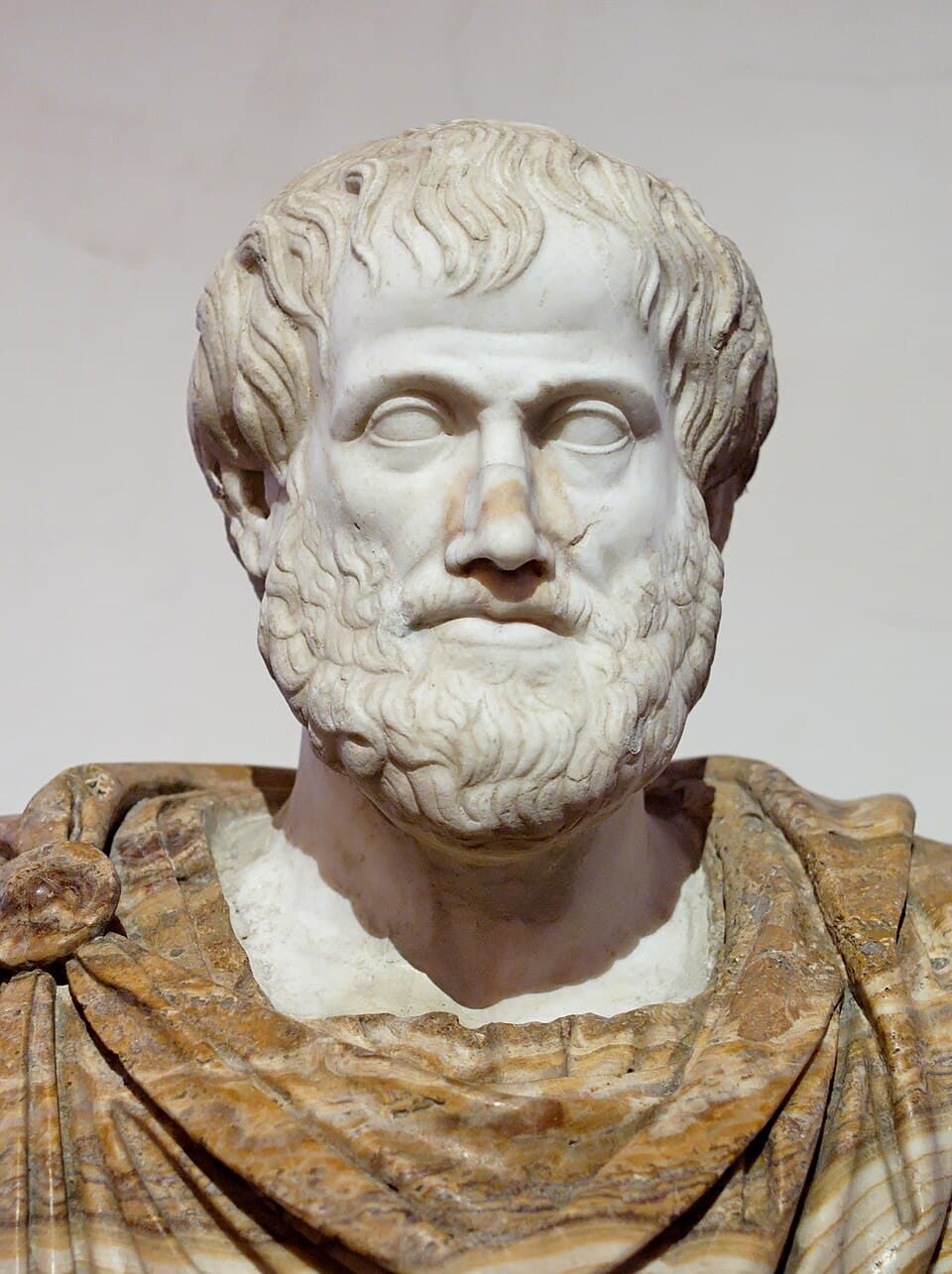
Aristotle
Nicomachean Ethics

Aristotle explores the relationship between justice and friendship, arguing that while they cannot exist toward inanimate objects or slaves as tools, they exist toward all humans capable of law and agreement.

...ns have generally like feelings and like dispositions. Like to this also is the Friendship of a Timocracy, because the citizens are intended to be equal and equitable: rule, therefore, passes from hand to hand, and is distributed on equal terms: so too is the Friendship accordingly. In the deflections from the constitutional forms, just as the principle of Justice is but small so is the Friendship also: and least of all in the most perverted form: in Despotism there is little or no Friendship.
For generally wherever the ruler and the ruled have nothing in common there is no Friendship because there is no Justice; but the case is as between an artisan and his tool, or between soul and body, and master and slave; all these are benefited by those who use them, but towards things inanimate there is neither Friendship nor Justice: nor even towards a horse or an ox, or a slave quâ slave, because there is nothing in common: a slave as such is an animate tool, a tool an inanimate slave. Quâ slave, then, there is no Friendship towards him, only quâ man: for it is thought that there is some principle of Justice between every man, and…
So in Despotisms the Friendships and the principle of Justice are inconsiderable in extent, but in Democracies they are most considerable because they who are equal have much in common. Chapter XII. Now of course all Friendship is based upon Communion, as has been already stated: but one would be inclined to separate off from the rest the Friendship of Kindred, and that of Companions: whereas those of men of the same city, or tribe, or crew, and all such, are more peculiarly, it would seem, b...
Continue reading →
3
Just Distribution's Difficulty
Aristotle
Nicomachean Ethics

Aristotle compares justice to medicine, noting that knowing the rules is easy, but knowing how to apply them to specific people and times is the true challenge.

...at acting Justly is therefore also easy. But this is not really so; to have connection with a neighbour’s wife, or strike one’s neighbour, or give the money with one’s hand, is of course easy and rests with one’s self: but the doing these acts with certain inward dispositions neither is easy nor rests entirely with one’s self. And in like way, the knowing what is Just and what Unjust men think no great instance of wisdom because it is not hard to comprehend those things of which the laws speak.
They forget that these are not Just actions, except accidentally: to be Just they must be done and distributed in a certain manner: and this is a more difficult task than knowing what things are wholesome; for in this branch of knowledge it is an easy matter to know honey, wine, hellebore, cautery, or the use of the knife, but the knowing how one should administer these with a view to health, and to whom and at what time, amounts in fact to being a physician.
From this very same mistake they suppose also, that acting Unjustly is equally in the power of the Just man, for the Just man no less, nay even more, than the Unjust, may be able to do the particular acts; he may be able to have intercourse with a woman or strike a man; or the brave man to throw away his shield and turn his back and run this way or that. True: but then it is not the mere doing these things which constitutes acts of cowardice or injustice (except accidentally), but the doing th...
3
Justice as Complete Virtue
Aristotle
Nicomachean Ethics

The author defines justice as virtue in relation to others, arguing that the best men practice virtue toward their neighbors rather than just themselves.

...e wholly unable to do it in transactions with their neighbour. And for this reason that saying of Bias is thought to be a good one, “Rule will show what a man is;” for he who bears Rule is necessarily in contact with others, i.e. in a community. And for this same reason Justice alone of all the Virtues is thought to be a good to others, because it has immediate relation to some other person, inasmuch as the Just man does what is advantageous to another, either to his ruler or fellow-subject.
Now he is the basest of men who practises vice not only in his own person, but towards his friends also; but he the best who practises virtue not merely in his own person but towards his neighbour, for this is a matter of some difficulty. However, Justice in this sense is not a part of Virtue but is co-extensive with Virtue; nor is the Injustice which answers to it a part of Vice but co-extensive with Vice. Now wherein Justice in this sense differs from Virtue appears from what has been said: it is the same really, but the point of view is not the same: in so far as it has respect to one’s neighbour it is Justice, in so far as it is such and…
Chapter III. But the object of our enquiry is Justice, in the sense in which it is a part of Virtue (for there is such a thing, as we commonly say), and likewise with respect to particular Injustice. And of the existence of this last the following consideration is a proof: there are many vices by practising which a man acts unjustly, of course, but does not grasp at more than his share of good; if, for instance, by reason of cowardice he throws away his shield, or by reason of ill-temper he u...
Continue reading →
4
Perfect Virtue Toward Others
Aristotle
Nicomachean Ethics

The author poetically describes justice as the most perfect virtue because it is the only one exercised toward others rather than merely for one's own benefit.

...he doing the deeds not only of the brave man (as not leaving the ranks, nor flying, nor throwing away one’s arms), but those also of the perfectly self-mastering man, as abstinence from adultery and wantonness; and those of the meek man, as refraining from striking others or using abusive language: and in like manner in respect of the other virtues and vices commanding some things and forbidding others, rightly if it is a good law, in a way somewhat inferior if it is one extemporised. Now this
Justice is in fact perfect Virtue, yet not simply so but as exercised towards one’s neighbour: and for this reason Justice is thought oftentimes to be the best of the Virtues, and “neither Hesper nor the Morning-star So worthy of our admiration:” and in a proverbial saying we express the same; “All virtue is in Justice comprehended.” And it is in a special sense perfect Virtue because it is the practice of perfect Virtue. And perfect it is because he that has it is able to practise his virtue towards his neighbour and not merely on himself; I mean, there are many who can practise virtue in the regulation of their own personal conduct who are…
And for this reason that saying of Bias is thought to be a good one, “Rule will show what a man is;” for he who bears Rule is necessarily in contact with others, i.e. in a community. And for this same reason Justice alone of all the Virtues is thought to be a good to others, because it has immediate relation to some other person, inasmuch as the Just man does what is advantageous to another, either to his ruler or fellow-subject. Now he is the basest of men who practises vice not only in his...
Continue reading →
2
Corruption of Rule
Aristotle
Nicomachean Ethics

A systemic claim regarding political decay, describing how kingships turn into despotisms and aristocracies into oligarchies through corruption.

...fact no King who is not thoroughly independent and superior to the rest in all good things, and he that is this has no further wants: he will not then have to look to his own advantage but to that of his subjects, for he that is not in such a position is a mere King elected by lot for the nonce. But Despotism is on a contrary footing to this Kingship, because the Despot pursues his own good: and in the case of this its inferiority is most evident, and what is worse is contrary to what is best.
The Transition to Despotism is made from Kingship, Despotism being a corrupt form of Monarchy, that is to say, the bad King comes to be a Despot. From Aristocracy to Oligarchy the transition is made by the fault of the Rulers in distributing the public property contrary to right proportion; and giving either all that is good, or the greatest share, to themselves; and the offices to the same persons always, making wealth their idol; thus a few bear rule and they bad men in the place of the best.
From Timocracy the transition is to Democracy, they being contiguous: for it is the nature of Timocracy to be in the hands of a multitude, and all in the same grade of property are equal. Democracy is the least vicious of all, since herein the form of the constitution undergoes least change. Well, these are generally the changes to which the various Constitutions are liable, being the least in degree and the easiest to make. Likenesses, and, as it were, models of them, one may find even in D...
6