Virtue's Human Workings
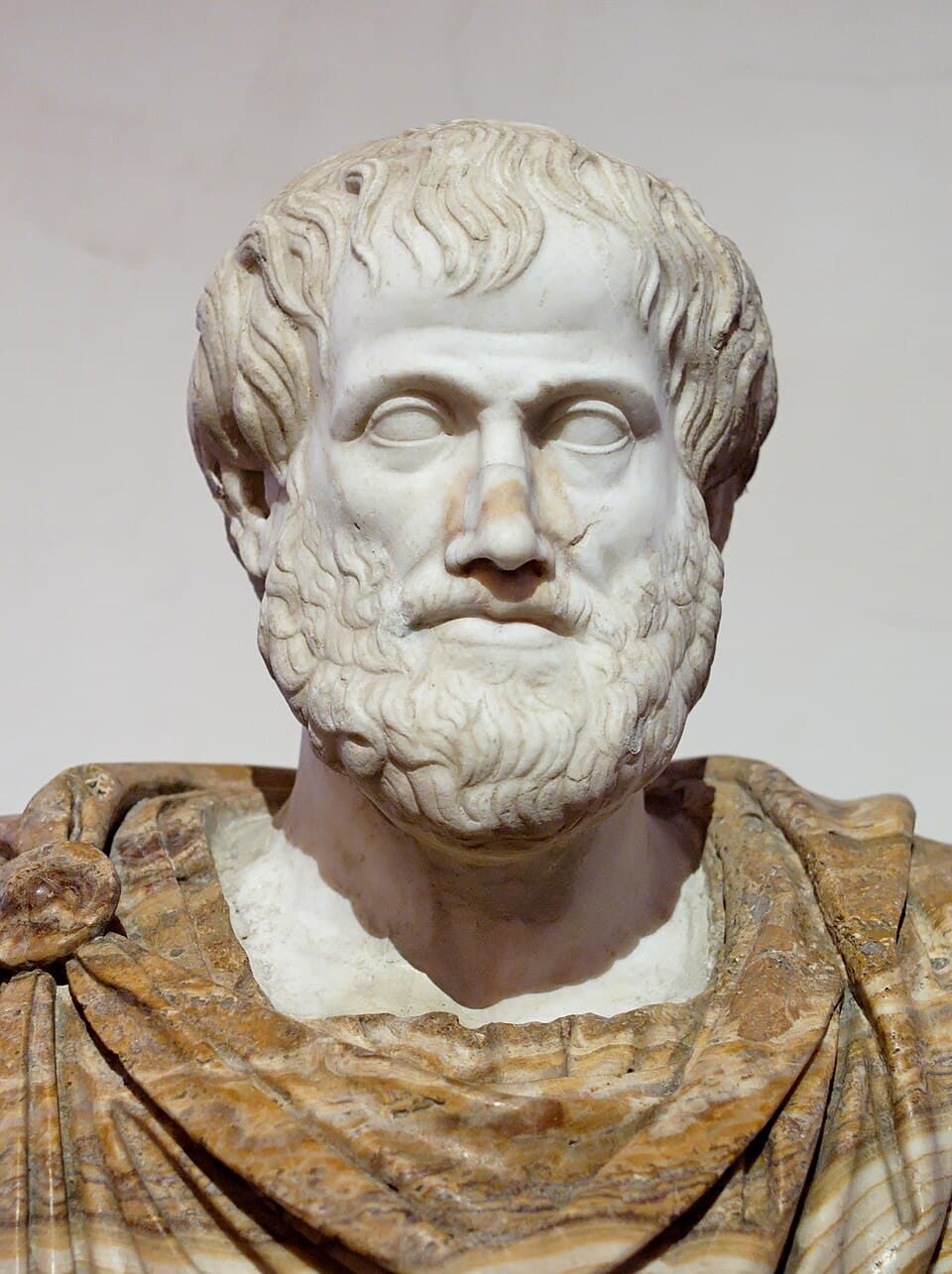
Aristotle
Nicomachean Ethics

The author defines the second tier of happiness as the life of moral virtue, which is uniquely human and inextricably linked to practical wisdom and the passions.

...xcels all the others. In fact this Principle would seem to constitute each man’s “Self,” since it is supreme and above all others in goodness it would be absurd then for a man not to choose his own life but that of some other. And here will apply an observation made before, that whatever is proper to each is naturally best and pleasantest to him: such then is to Man the life in accordance with pure Intellect (since this Principle is most truly Man), and if so, then it is also the happiest.
And second in degree of Happiness will be that Life which is in accordance with the other kind of Excellence, for the Workings in accordance with this are proper to Man: I mean, we do actions of justice, courage, and the other virtues, towards one another, in contracts, services of different kinds, and in all kinds of actions and feelings too, by observing what is befitting for each: and all these plainly are proper to man. Further, the Excellence of the Moral character is thought to result in some points from physical circumstances, and to be, in many, very closely connected with the passions. Again, Practical Wisdom and Excellence of the…
These moreover, as bound up with the passions, must belong to the composite nature, and the Excellences or Virtues of the composite nature are proper to man: therefore so too will be the life and Happiness which is in accordance with them. But that of the Pure Intellect is separate and distinct: and let this suffice upon the subject, since great exactness is beyond our purpose, It would seem, moreover, to require supply of external goods to a small degree, or certainly less than the Moral Hap...
Continue reading →
3
Friendship's Selfish Desire
Aristotle
Nicomachean Ethics

The author observes that most people prefer being loved over loving because they associate being the object of friendship with being honored.

...riends: for you may remove many points of agreement and the Friendship last nevertheless; but when one of the parties is very far separated (as a god from men), it cannot continue any longer. This has given room for a doubt, whether friends do really wish to their friends the very highest goods, as that they may be gods: because, in case the wish were accomplished, they would no longer have them for friends, nor in fact would they have the good things they had, because friends are good things.
If then it has been rightly said that a friend wishes to his friend good things for that friend’s sake, it must be understood that he is to remain such as he now is: that is to say, he will wish the greatest good to him of which as man he is capable: yet perhaps not all, because each man desires good for himself most of all. It is thought that desire for honour makes the mass of men wish rather to be the objects of the feeling of Friendship than to entertain it themselves (and for this reason they are fond of flatterers, a flatterer being a friend inferior or at least pretending to be such and rather to entertain towards another the feeling…
And yet men seem to choose honour, not for its own sake, but incidentally:[6] I mean, the common run of men delight to be honoured by those in power because of the hope it raises; that is they think they shall get from them anything they may happen to be in want of, so they delight in honour as an earnest of future benefit. They again who grasp at honour at the hands of the good and those who are really acquainted with their merits desire to confirm their own opinion about themselves: so they t...
Continue reading →
3
Brutishness vs Vice
Aristotle
Nicomachean Ethics

Aristotle compares brutishness to vice, arguing that while a brute lacks a moral principle entirely, a bad man with a corrupted intellect is far more dangerous and harmful.

...ers caused by maimings and diseases. Now the first of these only are the object-matter of Perfected Self-Mastery and utter absence of Self-Control; and therefore we never attribute either of these states to Brutes (except metaphorically, and whenever any one kind of animal differs entirely from another in insolence, mischievousness, or voracity), because they have not moral choice or process of deliberation, but are quite different from that kind of creature just as are madmen from other men.
Brutishness is not so low in the scale as Vice, yet it is to be regarded with more fear: because it is not that the highest principle has been corrupted, as in the human creature, but the subject has it not at all. It is much the same, therefore, as if one should compare an inanimate with an animate being, which were the worse: for the badness of that which has no principle of origination is always less harmful; now Intellect is a principle of origination. A similar case would be the comparing injustice and an unjust man together: for in different ways each is the worst: a bad man would produce ten thousand times as much harm as a bad brute.
Chapter VII. Now with respect to the pleasures and pains which come to a man through Touch and Taste, and the desiring or avoiding such (which we determined before to constitute the object-matter of the states of utter absence of Self-Control and Perfected Self-Mastery), one may be so disposed as to yield to temptations to which most men would be superior, or to be superior to those to which most men would yield: in respect of pleasures, these characters will be respectively the man of Imperf...
6
Friendship's Distance
Aristotle
Nicomachean Ethics

The text observes that physical distance and lack of intercourse can erode friendship, as human nature naturally avoids the painful and seeks the pleasurable.

...result and termed friends from their resemblance to these last. Chapter VI. Further; just as in respect of the different virtues some men are termed good in respect of a certain inward state, others in respect of acts of working, so is it in respect of Friendship: I mean, they who live together take pleasure in, and impart good to, one another: but they who are asleep or are locally separated do not perform acts, but only are in such a state as to act in a friendly way if they acted at all:
Distance has in itself no direct effect upon Friendship, but only prevents the acting it out: yet, if the absence be protracted, it is thought to cause a forgetfulness even of the Friendship: and hence it has been said, “many and many a Friendship doth want of intercourse destroy.” Accordingly, neither the old nor the morose appear to be calculated for Friendship, because the pleasurableness in them is small, and no one can spend his days in company with that which is positively painful or even not pleasurable; since to avoid the painful and aim at the pleasurable is one of the most obvious tendencies of human nature.
They who get on with one another very fairly, but are not in habits of intimacy, are rather like people having kindly feelings towards one another than friends; nothing being so characteristic of friends as the living with one another, because the necessitous desire assistance, and the happy companionship, they being the last persons in the world for solitary existence: but people cannot spend their time together unless they are mutually pleasurable and take pleasure in the same objects, a qual...
3
The Limits of Words
Aristotle
Nicomachean Ethics

The author argues that theoretical arguments are insufficient to make the masses virtuous, as most people are governed by fear of punishment and passion rather than a sense of shame or nobility.

...nough in our sketchy kind of way on these subjects; I mean, on the Virtues, and also on Friendship and Pleasure; are we to suppose that our original purpose is completed? Must we not rather acknowledge, what is commonly said, that in matters of moral action mere Speculation and Knowledge is not the real End but rather Practice: and if so, then neither in respect of Virtue is Knowledge enough; we must further strive to have and exert it, and take whatever other means there are of becoming good.
Now if talking and writing were of themselves sufficient to make men good, they would justly, as Theognis observes have reaped numerous and great rewards, and the thing to do would be to provide them: but in point of fact, while they plainly have the power to guide and stimulate the generous among the young and to base upon true virtuous principle any noble and truly high-minded disposition, they as plainly are powerless to guide the mass of men to Virtue and goodness; because it is not their nature to be amenable to a sense of shame but only to fear; nor to abstain from what is low and mean because it is disgraceful to do it but because of…
but as for what is noble and truly pleasurable they have not an idea of it, inasmuch as they have never tasted of it. Men such as these then what mere words can transform? No, indeed! it is either actually impossible, or a task of no mean difficulty, to alter by words what has been of old taken into men’s very dispositions: and, it may be, it is a ground for contentment if with all the means and appliances for goodness in our hands we can attain to Virtue. The formation of a virtuous characte...
Continue reading →
5