Appetite's Obedience
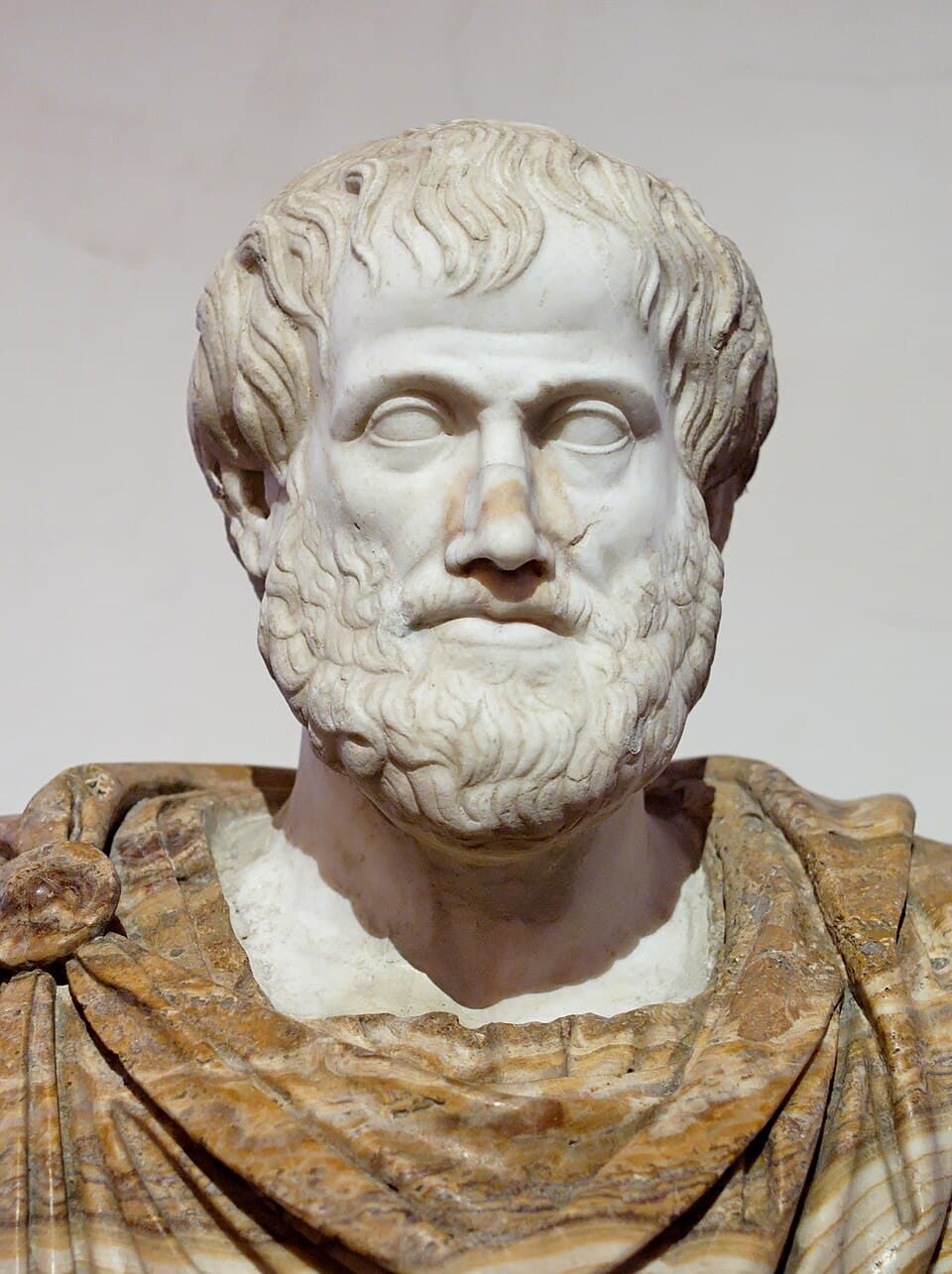
Aristotle
Nicomachean Ethics

The author commands that human appetites must be kept moderate and subject to reason, much like a child must obey an educator to avoid becoming insatiable.

...which secondarily or derivatively, is not relevant to the present subject, but it is evident that the later in point of time must get the name from the earlier. And the metaphor seems to be a very good one; for whatever grasps after base things, and is liable to great increase, ought to be chastened; and to this description desire and the child answer most truly, in that children also live under the direction of desire and the grasping after what is pleasant is most prominently seen in these.
Unless then the appetite be obedient and subjected to the governing principle it will become very great: for in the fool the grasping after what is pleasant is insatiable and undiscriminating; and every acting out of the desire increases the kindred habit, and if the desires are great and violent in degree they even expel Reason entirely; therefore they ought to be moderate and few, and in no respect to be opposed to Reason. Now when the appetite is in such a state we denominate it obedient and chastened. In short, as the child ought to live with constant regard to the orders of its educator, so should the appetitive principle with regard to those of Reason.
So then in the man of Perfected Self-Mastery, the appetitive principle must be accordant with Reason: for what is right is the mark at which both principles aim: that is to say, the man of perfected self-mastery desires what he ought in right manner and at right times, which is exactly what Reason directs. Let this be taken for our account of Perfected Self-Mastery. BOOK IV Chapter I. We will next speak of Liberality. Now this is thought to be the mean state, having for its object-matte...
3
Pleasure vs Pain
Aristotle
Nicomachean Ethics

The text argues that a lack of self-control is more voluntary and blameworthy than cowardice because it is driven by the pursuit of pleasure rather than the avoidance of pain.

...t such things as are conducive to health and good condition of body, being also pleasant, these he will grasp at in moderation and as he ought to do, and also such other pleasant things as do not hinder these objects, and are not unseemly or disproportionate to his means; because he that should grasp at such would be liking such pleasures more than is proper; but the man of Perfected Self-Mastery is not of this character, but regulates his desires by the dictates of right reason. Chapter XIV.
Now the vice of being destitute of all Self-Control seems to be more truly voluntary than Cowardice, because pleasure is the cause of the former and pain of the latter, and pleasure is an object of choice, pain of avoidance. And again, pain deranges and spoils the natural disposition of its victim, whereas pleasure has no such effect and is more voluntary and therefore more justly open to reproach. It is so also for the following reason; that it is easier to be inured by habit to resist the objects of pleasure, there being many things of this kind in life and the process of habituation being unaccompanied by danger; whereas the case is the…
Again, Cowardice as a confirmed habit would seem to be voluntary in a different way from the particular instances which form the habit; because it is painless, but these derange the man by reason of pain so that he throws away his arms and otherwise behaves himself unseemly, for which reason they are even thought by some to exercise a power of compulsion. But to the man destitute of Self-Control the particular instances are on the contrary quite voluntary, being done with desire and direct ex...
Continue reading →
3
Law's Habit-Forming Power
Aristotle
Nicomachean Ethics

The author asserts that because self-mastery is difficult for the masses, the state must use laws and habituation to regulate behavior from youth through adulthood.

...ly prepared for liking and disliking as he ought; just as the soil must, to nourish the seed sown. For he that lives in obedience to passion cannot hear any advice that would dissuade him, nor, if he heard, understand: now him that is thus how can one reform? in fact, generally, passion is not thought to yield to Reason but to brute force. So then there must be, to begin with, a kind of affinity to Virtue in the disposition; which must cleave to what is honourable and loath what is disgraceful.
But to get right guidance towards Virtue from the earliest youth is not easy unless one is brought up under laws of such kind; because living with self-mastery and endurance is not pleasant to the mass of men, and specially not to the young. For this reason the food, and manner of living generally, ought to be the subject of legal regulation, because things when become habitual will not be disagreeable. Yet perhaps it is not sufficient that men while young should get right food and tendance, but, inasmuch as they will have to practise and become accustomed to certain things even after they have attained to man’s estate, we shall want laws on…
And therefore some men hold that while lawgivers should employ the sense of honour to exhort and guide men to Virtue, under the notion that they will then obey who have been well trained in habits; they should impose chastisement and penalties on those who disobey and are of less promising nature; and the incurable expel entirely: because the good man and he who lives under a sense of honour will be obedient to reason; and the baser sort, who grasp at pleasure, will be kept in check, like beas...
Continue reading →
3
Virtue's Foundational Role
Aristotle
Nicomachean Ethics

The author claims that moral principles are not taught by reason but are grasped through excellence and habits of character.

...so they of Imperfect Self-Control are not unjust, but they do unjust acts. But to resume. Since the man of Imperfect Self-Control is of such a character as to follow bodily pleasures in excess and in defiance of Right Reason, without acting on any deliberate conviction, whereas the man utterly destitute of Self-Control does act upon a conviction which rests on his natural inclination to follow after these pleasures; the former may be easily persuaded to a different course, but the latter not:
For Virtue and Vice respectively preserve and corrupt the moral principle; now the motive is the principle or starting point in moral actions, just as axioms and postulates are in mathematics: and neither in morals nor mathematics is it Reason which is apt to teach the principle; but Excellence, either natural or acquired by custom, in holding right notions with respect to the principle.
He who does this in morals is the man of Perfected Self-Mastery, and the contrary character is the man utterly destitute of Self-Control. Again, there is a character liable to be taken off his feet in defiance of Right Reason because of passion; whom passion so far masters as to prevent his acting in accordance with Right Reason, but not so far as to make him be convinced that it is his proper line to follow after such pleasures without limit: this character is the man of Imperfect Self- Contr...
6
Virtue Through Practice
Aristotle
Nicomachean Ethics

The text explains that virtues are formed through habituation and the repetition of specific acts, much like how skills in the arts are developed through practice.

...ing just actions we come to be just; by doing the actions of self-mastery we come to be perfected in self-mastery; and by doing brave actions brave. And to the truth of this testimony is borne by what takes place in communities: because the law-givers make the individual members good men by habituation, and this is the intention certainly of every law-giver, and all who do not effect it well fail of their intent; and herein consists the difference between a good Constitution and a bad. Again,
Every Virtue is either produced or destroyed from and by the very same circumstances: art too in like manner; I mean it is by playing the harp that both the good and the bad harp-players are formed: and similarly builders and all the rest; by building well men will become good builders; by doing it badly bad ones: in fact, if this had not been so, there would have been no need of instructors, but all men would have been at once good or bad in their several arts without them. So too then is it with the Virtues: for by acting in the various relations in which we are thrown with our fellow men, we come to be, some just, some unjust: and by…
Similarly is it also with respect to the occasions of lust and anger: for some men come to be perfected in self-mastery and mild, others destitute of all self-control and passionate; the one class by behaving in one way under them, the other by behaving in another. Or, in one word, the habits are produced from the acts of working like to them: and so what we have to do is to give a certain character to these particular acts, because the habits formed correspond to the differences of these. So...
Continue reading →
6