Aristotle argues that certain excellences like sight and knowledge are inherently valuable regardless of the pleasure they produce, proving pleasure is not the sole Chief Good.
Pleasure's False Crown
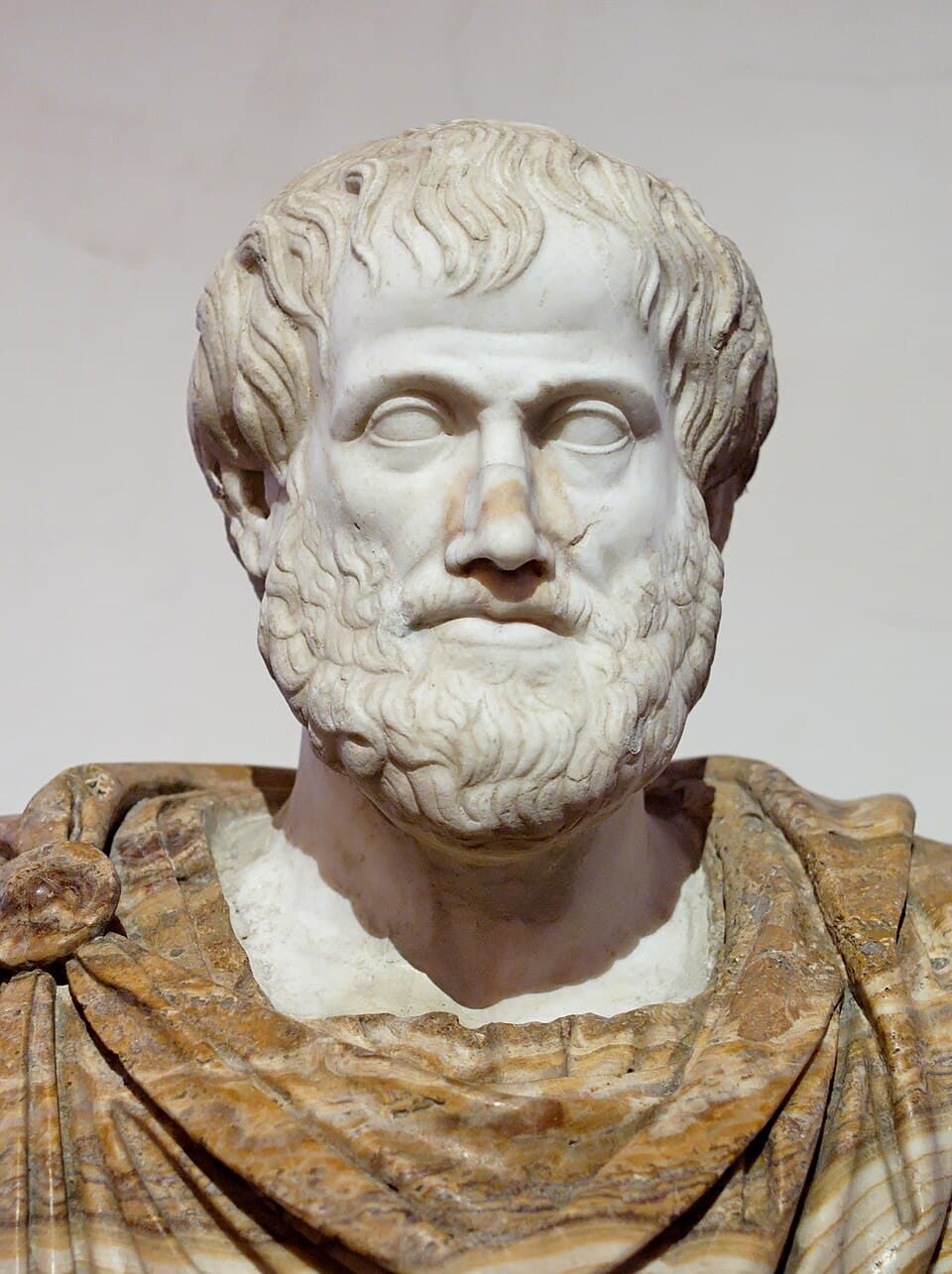
Aristotle
Nicomachean Ethics...ent kinds of Pleasure: for the former is thought to have good as the object of his intercourse, the latter Pleasure only; and this last is reproached, but the former men praise as having different objects in his intercourse. Again, no one would choose to live with a child’s intellect all his life through, though receiving the highest possible Pleasure from such objects as children receive it from; or to take Pleasure in doing any of the most disgraceful things, though sure never to be pained.
There are many things also about which we should be diligent even though they brought no Pleasure; as seeing, remembering, knowing, possessing the various Excellences; and the fact that Pleasures do follow on these naturally makes no difference, because we should certainly choose them even though no Pleasure resulted from them. It seems then to be plain that Pleasure is not the Chief Good, nor is every kind of it choice-worthy: and that there are some choice-worthy in themselves, differing in kind, i.e. in the sources from which they are derived.
Let this then suffice by way of an account of the current maxims respecting Pleasure and Pain. Chapter III. Now what it is, and how characterised, will be more plain if we take up the subject afresh. An act of Sight is thought to be complete at any moment; that is to say, it lacks nothing the accession of which subsequently will complete its whole nature. Well, Pleasure resembles this: because it is a whole, as one may say; and one could not at any moment of time take a Pleasure whose whole...
4
⚖The Limits of Precision

Aristotle
Nicomachean EthicsThe author advises that the level of precision sought in an inquiry should match the nature of the subject matter, rather than demanding mathematical certainty from all fields.
...ll discussions alike, any more than in all works of handicraft. Now the notions of nobleness and justice, with the examination of which πολιτικὴ is concerned, admit of variation and error to such a degree, that they are supposed by some to exist conventionally only, and not in the nature of things: but then, again, the things which are allowed to be goods admit of a similar error, because harm comes to many from them: for before now some have perished through wealth, and others through valour.
We must be content then, in speaking of such things and from such data, to set forth the truth roughly and in outline; in other words, since we are speaking of general matter and from general data, to draw also conclusions merely general. And in the same spirit should each person receive what we say: for the man of education will seek exactness so far in each subject as the nature of the thing admits, it being plainly much the same absurdity to put up with a mathematician who tries to persuade instead of proving, and to demand strict demonstrative reasoning of a Rhetorician.
Now each man judges well what he knows, and of these things he is a good judge: on each particular matter then he is a good judge who has been instructed in it, and in a general way the man of general mental cultivation.[2] Hence the young man is not a fit student of Moral Philosophy, for he has no experience in the actions of life, while all that is said presupposes and is concerned with these: and in the next place, since he is apt to follow the impulses of his passions, he will hear as t...
2
⚖Choice vs Opinion

Aristotle
Nicomachean EthicsThe text differentiates moral choice from opinion, noting that character is formed by our choices of good and evil rather than the mere holding of beliefs.
...; or happiness again we wish for, and commonly say so, but to say we choose is not an appropriate term, because, in short, the province of Moral Choice seems to be those things which are in our own power. Neither can it be Opinion; for Opinion is thought to be unlimited in its range of objects, and to be exercised as well upon things eternal and impossible as on those which are in our own power: again, Opinion is logically divided into true and false, not into good and bad as Moral Choice is.
However, nobody perhaps maintains its identity with Opinion simply; but it is not the same with opinion of any kind, because by choosing good and bad things we are constituted of a certain character, but by having opinions on them we are not. Again, we choose to take or avoid, and so on, but we opine what a thing is, or for what it is serviceable, or how; but we do not opine to take or avoid. Further, Moral Choice is commended rather for having a right object than for being judicious, but Opinion for being formed in accordance with truth.
Again, we choose such things as we pretty well know to be good, but we form opinions respecting such as we do not know at all. And it is not thought that choosing and opining best always go together, but that some opine the better course and yet by reason of viciousness choose not the things which they should. It may be urged, that Opinion always precedes or accompanies Moral Choice; be it so, this makes no difference, for this is not the point in question, but whether Moral Choice is the sa...
5
⚖The Universal Aim

Aristotle
Nicomachean EthicsThe author admits an inability to find weight in the arguments of critics who claim that universal human desire does not necessarily indicate what is good.
...th Practical Wisdom than apart from it; but, if the compound better then simple Pleasure cannot be the Chief Good; because the very Chief Good cannot by any addition become choice-worthy than it is already:” and it is obvious that nothing else can be the Chief Good, which by combination with any of the things in themselves good comes to be more choice-worthy. What is there then of such a nature? (meaning, of course, whereof we can partake; because that which we are in search of must be such).
As for those who object that “what all aim at is not necessarily good,” I confess I cannot see much in what they say, because what all think we say is. And he who would cut away this ground from under us will not bring forward things more dependable: because if the argument had rested on the desires of irrational creatures there might have been something in what he says, but, since the rational also desire Pleasure, how can his objection be allowed any weight? and it may be that, even in the lower animals, there is some natural good principle above themselves which aims at the good peculiar to them.
Nor does that seem to be sound which is urged respecting the argument from the contrary: I mean, some people say “it does not follow that Pleasure must be good because Pain is evil, since evil may be opposed to evil, and both evil and good to what is indifferent:” now what they say is right enough in itself but does not hold in the present instance. If both Pleasure and Pain were bad both would have been objects of avoidance; or if neither then neither would have been, at all events they must...
2
⚖Knowledge Builds on Knowledge

Aristotle
Nicomachean EthicsThe author argues that all intellectual learning is built upon pre-existing knowledge, utilizing methods like syllogism and induction.
...ce (i.e. of the superior part of the Soul), just as neither is the healing art Master of health; for it does not make use of it, but looks how it may come to be: so it commands for the sake of it but does not command it. The objection is, in fact, about as valid as if a man should say πολιτικὴ governs the gods because it gives orders about all things in the communty. APPENDIX On ἐπισπήμη, from I. Post. Analyt. chap. i. and ii. (Such parts only are translated as throw light on the Ethics.)
All teaching, and all intellectual learning, proceeds on the basis of previous knowledge, as will appear on an examination of all. The Mathematical Sciences, and every other system, draw their conclusions in this method. So too of reasonings, whether by syllogism, or induction: for both teach through what is previously known, the former assuming the premisses as from wise men, the latter proving universals from the evidentness of the particulars.
In like manner too rhetoricians persuade, either through examples (which amounts to induction), or through enthymemes (which amounts to syllogism). CHAP. II Well, we suppose that we know things (in the strict and proper sense of the word) when we suppose ourselves to know the cause by reason of which the thing is to be the cause of it; and that this cannot be otherwise. It is plain that the idea intended to be conveyed by the term knowing is something of this kind; because they who do n...
6