Virtue Through Practice
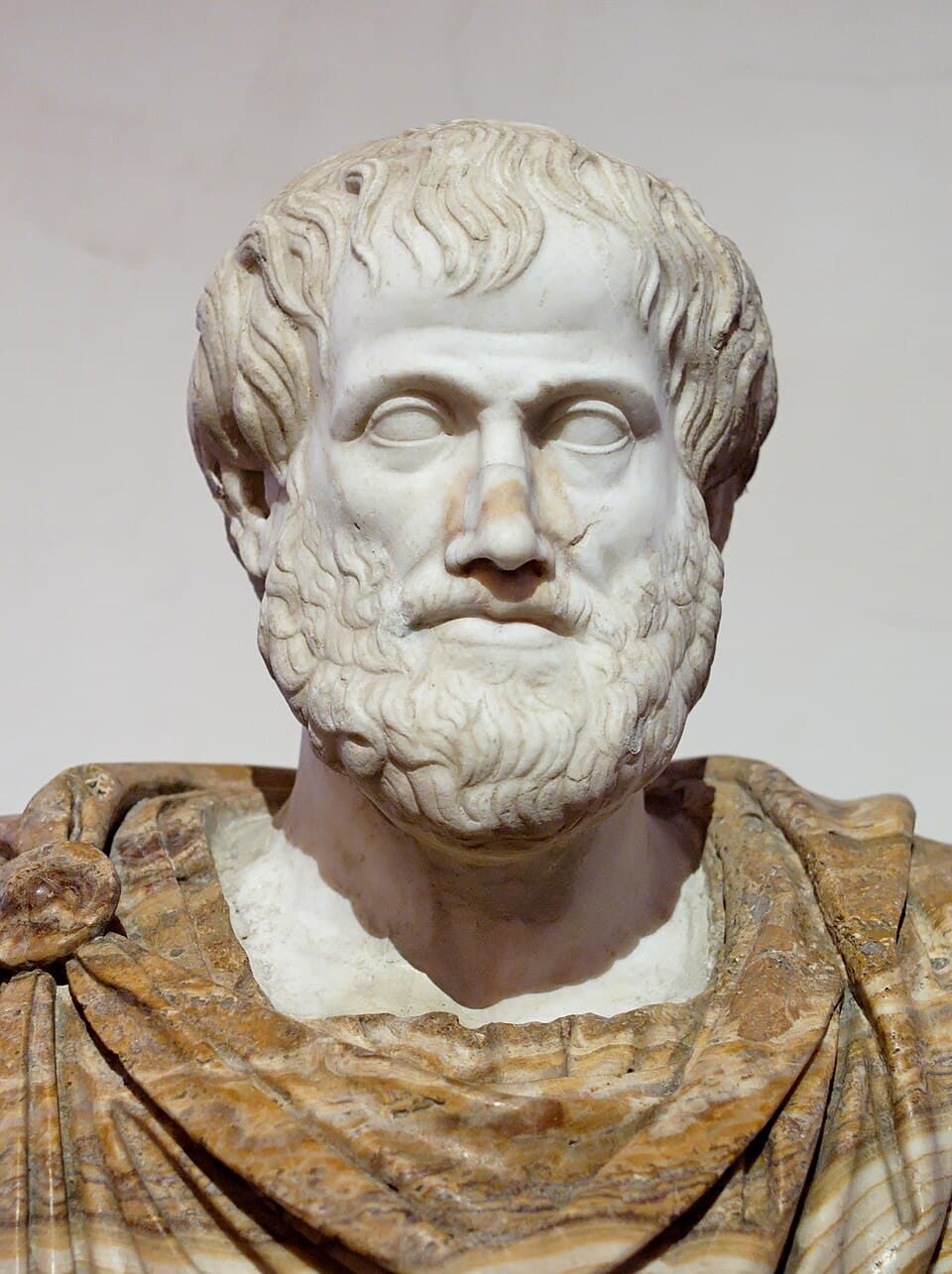
Aristotle
Nicomachean Ethics

The author argues that virtues are acquired through habit and practice rather than being innate, just as one becomes a builder by building.

...anguage. From this fact it is plain that not one of the Moral Virtues comes to be in us merely by nature: because of such things as exist by nature, none can be changed by custom: a stone, for instance, by nature gravitating downwards, could never by custom be brought to ascend, not even if one were to try and accustom it by throwing it up ten thousand times; nor could file again be brought to descend, nor in fact could anything whose nature is in one way be brought by custom to be in another.
The Virtues then come to be in us neither by nature, nor in despite of nature, but we are furnished by nature with a capacity for receiving themu and are perfected in them through custom. Again, in whatever cases we get things by nature, we get the faculties first and perform the acts of working afterwards; an illustration of which is afforded by the case of our bodily senses, for it was not from having often seen or heard that we got these senses, but just the reverse: we had them and so exercised them, but did not have them because we had exercised them. But the Virtues we get by first performing single acts of working, which, again, is the…
And to the truth of this testimony is borne by what takes place in communities: because the law-givers make the individual members good men by habituation, and this is the intention certainly of every law-giver, and all who do not effect it well fail of their intent; and herein consists the difference between a good Constitution and a bad. Again, every Virtue is either produced or destroyed from and by the very same circumstances: art too in like manner; I mean it is by playing the harp that...
Continue reading →
5
The Three Lives
Aristotle
Nicomachean Ethics

The author provides a critical overview of the different modes of life, metaphorically describing the pursuit of pure sensual pleasure as 'slavish' and fit for 'brute animals'.

...e no need in addition of the reason for the fact. And he that has been thus trained either has principles already, or can receive them easily: as for him who neither has nor can receive them, let him hear his sentence from Hesiod: He is best of all who of himself conceiveth all things; Good again is he too who can adopt a good suggestion; But whoso neither of himself conceiveth nor hearing from another Layeth it to heart;—he is a useless man. Chapter III. But to return from this digression.
Now of the Chief Good (i.e. of Happiness) men seem to form their notions from the different modes of life, as we might naturally expect: the many and most low conceive it to be pleasure, and hence they are content with the life of sensual enjoyment. For there are three lines of life which stand out prominently to view: that just mentioned, and the life in society, and, thirdly, the life of contemplation. Now the many are plainly quite slavish, choosing a life like that of brute animals: yet they obtain some consideration, because many of the great share the tastes of Sardanapalus.
The refined and active again conceive it to be honour: for this may be said to be the end of the life in society: yet it is plainly too superficial for the object of our search, because it is thought to rest with those who pay rather than with him who receives it, whereas the Chief Good we feel instinctively must be something which is our own, and not easily to be taken from us. And besides, men seem to pursue honour, that they may believe themselves to be good:[6] for instance, they seek to b...
2
Moral Choice's Narrower Scope
Aristotle
Nicomachean Ethics

Aristotle differentiates between voluntary action and moral choice, noting that while all choices are voluntary, not all voluntary acts constitute a moral choice.

...pain, those which are done to gratify lust are thought to be pleasant. Again: how does the involuntariness make any difference[7] between wrong actions done from deliberate calculation, and those done by reason of anger? for both ought to be avoided, and the irrational feelings are thought to be just as natural to man as reason, and so of course must be such actions of the individual as are done from Anger and Lust. It is absurd then to class these actions among the involuntary. Chapter IV.
Having thus drawn out the distinction between voluntary and involuntary action our next step is to examine into the nature of Moral Choice, because this seems most intimately connected with Virtue and to be a more decisive test of moral character than a man’s acts are. Now Moral Choice is plainly voluntary, but the two are not co-extensive, voluntary being the more comprehensive term; for first, children and all other animals share in voluntary action but not in Moral Choice; and next, sudden actions we call voluntary but do not ascribe them to Moral Choice.
Nor do they appear to be right who say it is lust or anger, or wish, or opinion of a certain kind; because, in the first place, Moral Choice is not shared by the irrational animals while Lust and Anger are. Next; the man who fails of self-control acts from Lust but not from Moral Choice; the man of self-control, on the contrary, from Moral Choice, not from Lust. Again: whereas Lust is frequently opposed to Moral Choice, Lust is not to Lust. Lastly: the object-matter of Lust is the pleasant an...
4
Deliberation vs Intuition
Aristotle
Nicomachean Ethics

The author distinguishes 'Good Counsel' from knowledge and conjecture, defining it as a slow and deliberate process of calculation.

...hat no rectilineal figure can be contained by less than three lines, i.e. that a triangle is the ultimate figure, because here also is a stopping point. This however is Sense rather than Practical Wisdom, which is of another kind.[34] Chapter IX. Now the acts of enquiring and deliberating differ, though deliberating is a kind of enquiring. We ought to ascertain about Good Counsel likewise what it is, whether a kind of Knowledge, or Opinion, or Happy Conjecture, or some other kind of faculty.
Knowledge it obviously is not, because men do not enquire about what they know, and Good Counsel is a kind of deliberation, and the man who is deliberating is enquiring and calculating. Neither is it Happy Conjecture; because this is independent of reasoning, and a rapid operation; but men deliberate a long time, and it is a common saying that one should execute speedily what has been resolved upon in deliberation, but deliberate slowly.
Quick perception of causes[35] again is a different faculty from good counsel, for it is a species of Happy Conjecture. Nor is Good Counsel Opinion of any kind. Well then, since he who deliberates ill goes wrong, and he who deliberates well does so rightly, it is clear that Good Counsel is rightness of some kind, but not of Knowledge nor of Opinion: for Knowledge cannot be called right because it cannot be wrong, and Rightness of Opinion is Truth: and again, all which is the object of opinion...
5
Virtue's Foundational Role
Aristotle
Nicomachean Ethics

The author claims that moral principles are not taught by reason but are grasped through excellence and habits of character.

...so they of Imperfect Self-Control are not unjust, but they do unjust acts. But to resume. Since the man of Imperfect Self-Control is of such a character as to follow bodily pleasures in excess and in defiance of Right Reason, without acting on any deliberate conviction, whereas the man utterly destitute of Self-Control does act upon a conviction which rests on his natural inclination to follow after these pleasures; the former may be easily persuaded to a different course, but the latter not:
For Virtue and Vice respectively preserve and corrupt the moral principle; now the motive is the principle or starting point in moral actions, just as axioms and postulates are in mathematics: and neither in morals nor mathematics is it Reason which is apt to teach the principle; but Excellence, either natural or acquired by custom, in holding right notions with respect to the principle.
He who does this in morals is the man of Perfected Self-Mastery, and the contrary character is the man utterly destitute of Self-Control. Again, there is a character liable to be taken off his feet in defiance of Right Reason because of passion; whom passion so far masters as to prevent his acting in accordance with Right Reason, but not so far as to make him be convinced that it is his proper line to follow after such pleasures without limit: this character is the man of Imperfect Self- Contr...
6