3 of 78 in Chapter IV. POSITION, OR A MAN'S PLACE IN...75 of 150 in work
Others' Superficial Consciousness
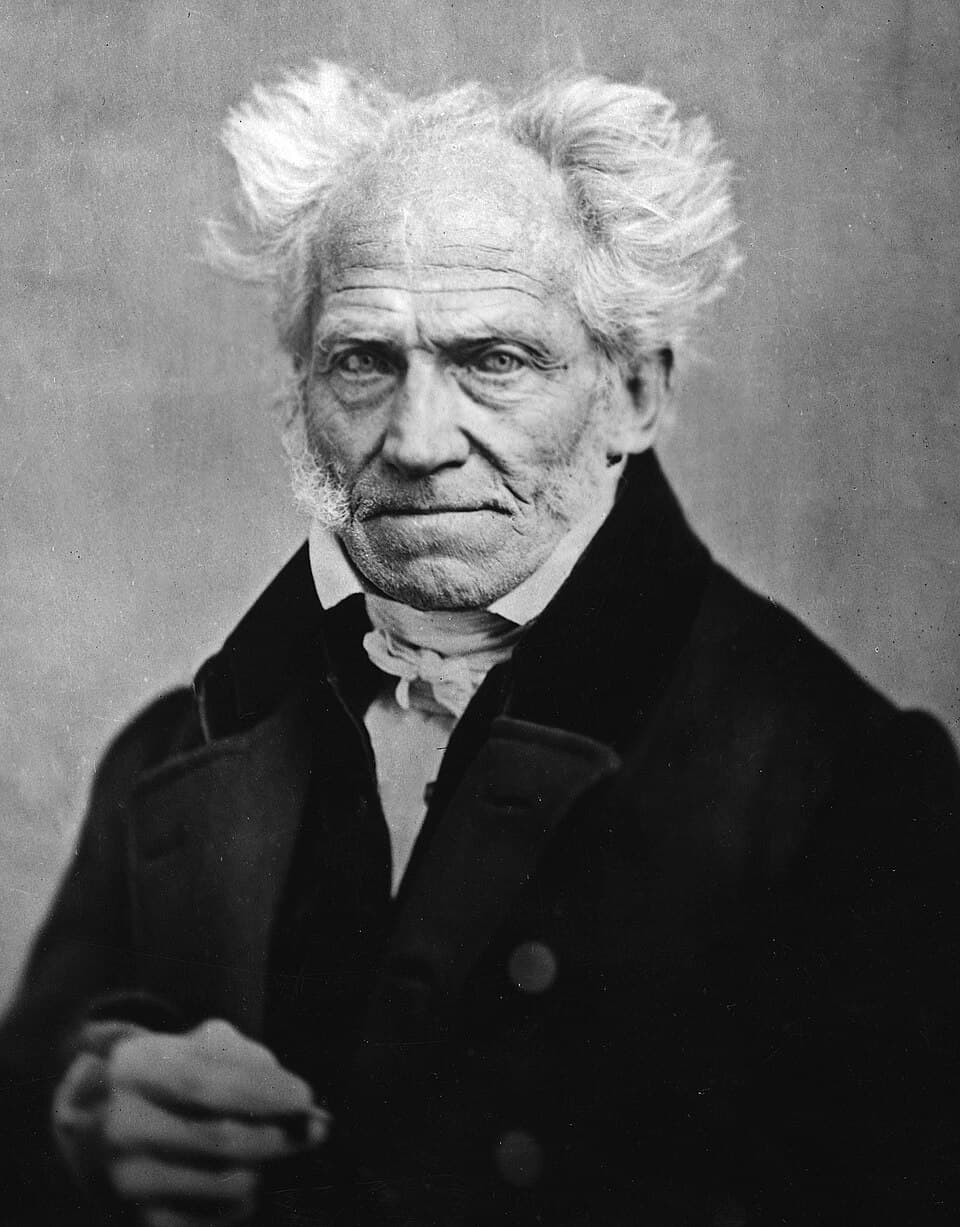
Arthur Schopenhauer
The Wisdom of Life

The author contends that we should remain indifferent to the opinions of others, as their thoughts are often superficial and have no direct impact on our true inner selves.

...otnote 1: Horace, Epist: II., 1, 180.] Therefore it will very much conduce to our happiness if we duly compare the value of what a man is in and for himself with what he is in the eyes of others. Under the former conies everything that fills up the span of our existence and makes it what it is, in short, all the advantages already considered and summed up under the heads of personality and property; and the sphere in which all this takes place is the man's own consciousness. On the other hand,
The sphere of what we are for other people is their consciousness, not ours; it is the kind of figure we make in their eyes, together with the thoughts which this arouses. But this is something which has no direct and immediate existence for us, but can affect us only mediately and indirectly, so far, that is, as other people's behavior towards us is directed by it; and even then it ought to affect us only in so far as it can move us to modify what we are in and for ourselves. Apart from this, what goes on in other people's consciousness is, as such, a matter of indifference to us; and in time we get really indifferent to it, when we come…
when we learn by experience with what depreciation a man will speak of his fellow, when he is not obliged to fear him, or thinks that what he says will not come to his ears. And if ever we have had an opportunity of seeing how the greatest of men will meet with nothing but slight from half-a-dozen blockheads, we shall understand that to lay great value upon what other people say is to pay them too much honor. [Footnote 1: Let me remark that people in the highest positions in life, with all the...
Continue reading →
6
4 of 78 in Chapter IV. POSITION, OR A MAN'S PLACE IN...76 of 150 in work
Indifference to Others' Minds
Arthur Schopenhauer
The Wisdom of Life

A confession of indifference toward the opinions of others, justified by the observation that most people's thoughts are superficial, mean-spirited, or erroneous.

...other hand, the sphere of what we are for other people is their consciousness, not ours; it is the kind of figure we make in their eyes, together with the thoughts which this arouses.[1] But this is something which has no direct and immediate existence for us, but can affect us only mediately and indirectly, so far, that is, as other people's behavior towards us is directed by it; and even then it ought to affect us only in so far as it can move us to modify what we are in and for ourselves.
Apart from this, what goes on in other people's consciousness is, as such, a matter of indifference to us; and in time we get really indifferent to it, when we come to see how superficial and futile are most people's thoughts, how narrow their ideas, how mean their sentiments, how perverse their opinions, and how much of error there is in most of them; when we learn by experience with what depreciation a man will speak of his fellow, when he is not obliged to fear him, or thinks that what he says will not come to his ears.
And if ever we have had an opportunity of seeing how the greatest of men will meet with nothing but slight from half-a-dozen blockheads, we shall understand that to lay great value upon what other people say is to pay them too much honor. [Footnote 1: Let me remark that people in the highest positions in life, with all their brilliance, pomp, display, magnificence and general show, may well say:--Our happiness lies entirely outside us; for it exists only in the heads of others.] At all events...
2
5 of 78 in Chapter IV. POSITION, OR A MAN'S PLACE IN...77 of 150 in work
Focus on Personal Reality
Arthur Schopenhauer
The Wisdom of Life

The author argues that true happiness is found in one's own physical and mental well-being rather than in the fickle opinions of others.

...nature, and, therefore, of our happiness, is our physique, and the most essential factor in happiness is health, and, next in importance after health, the ability to maintain ourselves in independence and freedom from care. There can be no competition or compensation between these essential factors on the one side, and honor, pomp, rank and reputation on the other, however much value we may set upon the latter. No one would hesitate to sacrifice the latter for the former, if it were necessary.
We should add very much to our happiness by a timely recognition of the simple truth that every man's chief and real existence is in his own skin, and not in other people's opinions; and, consequently, that the actual conditions of our personal life,--health, temperament, capacity, income, wife, children, friends, home, are a hundred times more important for our happiness than what other people are pleased to think of us: otherwise we shall be miserable.
And if people insist that honor is dearer than life itself, what they really mean is that existence and well-being are as nothing compared with other people's opinions. Of course, this may be only an exaggerated way of stating the prosaic truth that reputation, that is, the opinion others have of us, is indispensable if we are to make any progress in the world; but I shall come back to that presently. When we see that almost everything men devote their lives to attain, sparing no effort and enc...
2
6 of 78 in Chapter IV. POSITION, OR A MAN'S PLACE IN...78 of 150 in work
Opinion's Tyranny
Arthur Schopenhauer
The Wisdom of Life

The author identifies the excessive valuation of public opinion as a universal human error that causes people to sacrifice their health, peace, and even lives for mere reputation.

...everything men devote their lives to attain, sparing no effort and encountering a thousand toils and dangers in the process, has, in the end, no further object than to raise themselves in the estimation of others; when we see that not only offices, titles, decorations, but also wealth, nay, even knowledge[1] and art, are striven for only to obtain, as the ultimate goal of all effort, greater respect from one's fellowmen,--is not this a lamentable proof of the extent to which human folly can go?
To set much too high a value on other people's opinion is a common error everywhere; an error, it may be, rooted in human nature itself, or the result of civilization, and social arrangements generally; but, whatever its source, it exercises a very immoderate influence on all we do, and is very prejudicial to our happiness. We can trace it from a timorous and slavish regard for what other people will say, up to the feeling which made Virginius plunge the dagger into his daughter's heart, or induces many a man to sacrifice quiet, riches, health and even life itself, for posthumous glory.
Undoubtedly this feeling is a very convenient instrument in the hands of those who have the control or direction of their fellowmen; and accordingly we find that in every scheme for training up humanity in the way it should go, the maintenance and strengthening of the feeling of honor occupies an important place. But it is quite a different matter in its effect on human happiness, of which it is here our object to treat; and we should rather be careful to dissuade people from setting too much s...
6
7 of 78 in Chapter IV. POSITION, OR A MAN'S PLACE IN...79 of 150 in work
The Opinion Trap
Arthur Schopenhauer
The Wisdom of Life

The author critiques the common tendency to prioritize the opinions of others over one's own consciousness, effectively mistaking a secondary reflection for reality.

...convenient instrument in the hands of those who have the control or direction of their fellowmen; and accordingly we find that in every scheme for training up humanity in the way it should go, the maintenance and strengthening of the feeling of honor occupies an important place. But it is quite a different matter in its effect on human happiness, of which it is here our object to treat; and we should rather be careful to dissuade people from setting too much store by what others think of them.
Daily experience shows us, however, that this is just the mistake people persist in making; most men set the utmost value precisely on what other people think, and are more concerned about it than about what goes on in their own consciousness, which is the thing most immediately and directly present to them. They reverse the natural order,--regarding the opinions of others as real existence and their own consciousness as something shadowy; making the derivative and secondary into the principal, and considering the picture they present to the world of more importance than their own selves.
By thus trying to get a direct and immediate result out of what has no really direct or immediate existence, they fall into the kind of folly which is called vanity--the appropriate term for that which has no solid or instrinsic value. Like a miser, such people forget the end in their eagerness to obtain the means. [Footnote 1: Scire tuum nihil est nisi te scire hoc sciat alter, (Persins i, 27)--knowledge is no use unless others know that you have it.] The truth is that the value we set u...
5