2 of 12 in Chapter I. DIVISION OF THE SUBJECT.4 of 150 in work
The Inner Constitution
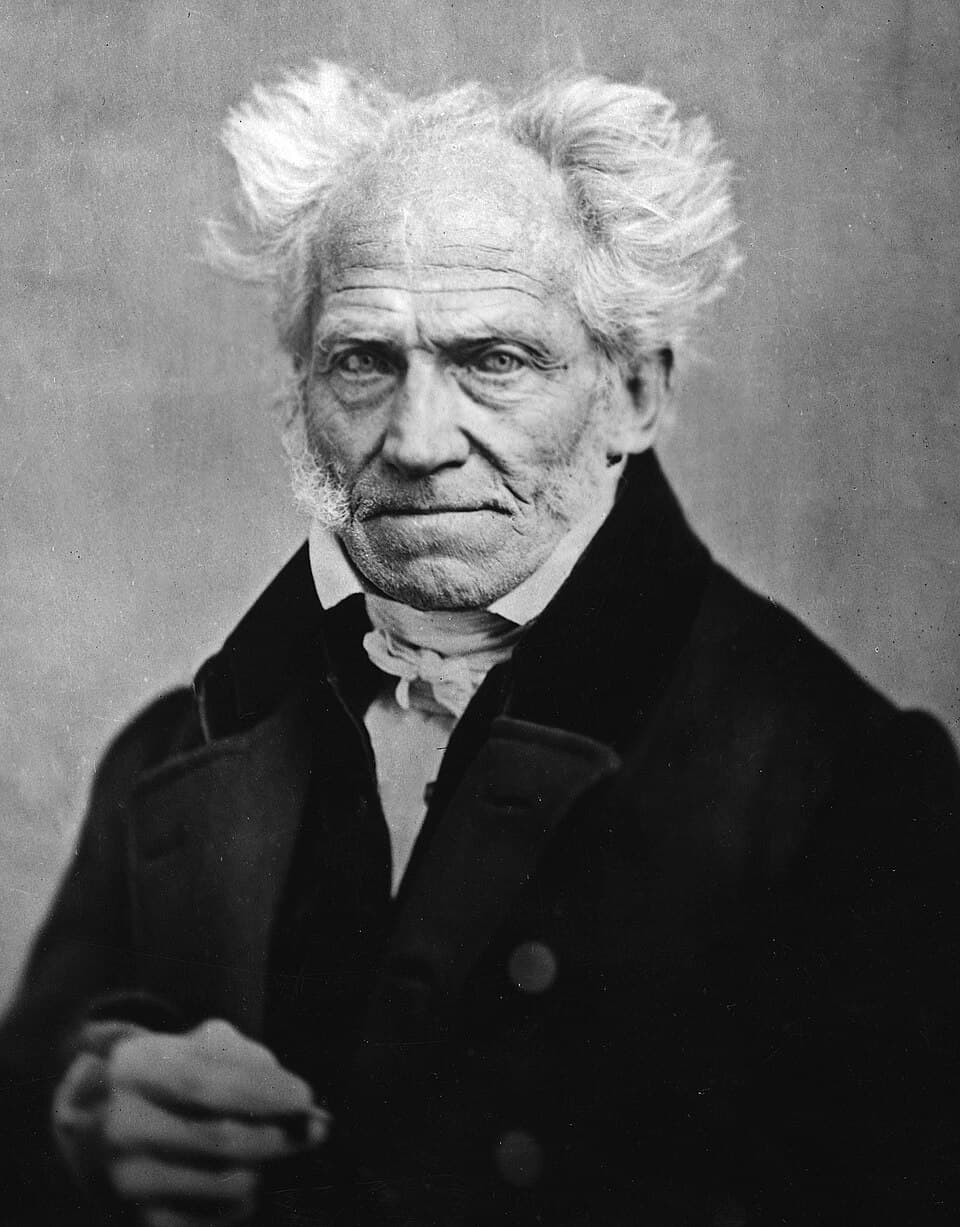
Arthur Schopenhauer
The Wisdom of Life

The author asserts that a person's inner constitution is the primary determinant of their well-being, as it dictates how they perceive and experience the external world.

...llowing heads, which are merely the effect of human arrangements. Compared with genuine personal advantages, such as a great mind or a great heart, all the privileges of rank or birth, even of royal birth, are but as kings on the stage, to kings in real life. The same thing was said long ago by Metrodorus, the earliest disciple of Epicurus, who wrote as the title of one of his chapters, The happiness we receive from ourselves is greater than that which we obtain from our surroundings[1] And
It is an obvious fact, which cannot be called in question, that the principal element in a man's well-being,--indeed, in the whole tenor of his existence,--is what he is made of, his inner constitution. For this is the immediate source of that inward satisfaction or dissatisfaction resulting from the sum total of his sensations, desires and thoughts; whilst his surroundings, on the other hand, exert only a mediate or indirect influence upon him. This is why the same external events or circumstances affect no two people alike; even with perfectly similar surroundings every one lives in a world of his own.
For a man has immediate apprehension only of his own ideas, feelings and volitions; the outer world can influence him only in so far as it brings these to life. The world in which a man lives shapes itself chiefly by the way in which he looks at it, and so it proves different to different men; to one it is barren, dull, and superficial; to another rich, interesting, and full of meaning. On hearing of the interesting events which have happened in the course of a man's experience, many people wil...
4
3 of 12 in Chapter I. DIVISION OF THE SUBJECT.5 of 150 in work
World Through Perception's Lens
Arthur Schopenhauer
The Wisdom of Life

A reflection on how a person's mental aptitude determines the richness of their experience, turning what would be a dull event for some into a meaningful adventure for others.

...isfaction resulting from the sum total of his sensations, desires and thoughts; whilst his surroundings, on the other hand, exert only a mediate or indirect influence upon him. This is why the same external events or circumstances affect no two people alike; even with perfectly similar surroundings every one lives in a world of his own. For a man has immediate apprehension only of his own ideas, feelings and volitions; the outer world can influence him only in so far as it brings these to life.
The world in which a man lives shapes itself chiefly by the way in which he looks at it, and so it proves different to different men; to one it is barren, dull, and superficial; to another rich, interesting, and full of meaning. On hearing of the interesting events which have happened in the course of a man's experience, many people will wish that similar things had happened in their lives too, completely forgetting that they should be envious rather of the mental aptitude which lent those events the significance they possess when he describes them; to a man of genius they were interesting adventures; but to the dull perceptions of an…
This is in the highest degree the case with many of Goethe's and Byron's poems, which are obviously founded upon actual facts; where it is open to a foolish reader to envy the poet because so many delightful things happened to him, instead of envying that mighty power of phantasy which was capable of turning a fairly common experience into something so great and beautiful. [Footnote 1: Cf. Clemens Alex. Strom. II., 21.] In the same way, a person of melancholy temperament will make a scene in...
Continue reading →
2
4 of 12 in Chapter I. DIVISION OF THE SUBJECT.6 of 150 in work
The Same Poor Player
Arthur Schopenhauer
The Wisdom of Life

The author suggests that despite external differences in rank or wealth, all humans share the same inner reality of suffering and are limited by their own individual consciousness.

...r. When therefore the objective or external factor in an experience is actually the same, but the subjective or personal appreciation of it varies, the event is just as much a different one in the eyes of different persons as if the objective factors had not been alike; for to a blunt intelligence the fairest and best object in the world presents only a poor reality, and is therefore only poorly appreciated,--like a fine landscape in dull weather, or in the reflection of a bad camera obscura.
In plain language, every man is pent up within the limits of his own consciousness, and cannot directly get beyond those limits any more than he can get beyond his own skin; so external aid is not of much use to him. On the stage, one man is a prince, another a minister, a third a servant or a soldier or a general, and so on,--mere external differences: the inner reality, the kernel of all these appearances is the same--a poor player, with all the anxieties of his lot. In life it is just the same. Differences of rank and wealth give every man his part to play, but this by no means implies a difference of inward happiness and pleasure; here,…
Though these may, indeed, in every case proceed from dissimilar causes, they are in their essential nature much the same in all their forms, with degrees of intensity which vary, no doubt, but in no wise correspond to the part a man has to play, to the presence or absence of position and wealth. Since everything which exists or happens for a man exists only in his consciousness and happens for it alone, the most essential thing for a man is the constitution of this consciousness, which is in mo...
Continue reading →
2
5 of 12 in Chapter I. DIVISION OF THE SUBJECT.7 of 150 in work
The Unchangeable Self
Arthur Schopenhauer
The Wisdom of Life

This text posits that while external circumstances are subject to fate, a person's inner character remains constant, meaning one's experience of life is ultimately limited by the boundaries of their own individuality.

...position and wealth. Since everything which exists or happens for a man exists only in his consciousness and happens for it alone, the most essential thing for a man is the constitution of this consciousness, which is in most cases far more important than the circumstances which go to form its contents. All the pride and pleasure of the world, mirrored in the dull consciousness of a fool, are poor indeed compared with the imagination of Cervantes writing his Don Quixote in a miserable prison.
The objective half of life and reality is in the hand of fate, and accordingly takes various forms in different cases: the subjective half is ourself, and in essentials is always remains the same. Hence the life of every man is stamped with the same character throughout, however much his external circumstances may alter; it is like a series of variations on a single theme. No one can get beyond his own individuality.
An animal, under whatever circumstances it is placed, remains within the narrow limits to which nature has irrevocably consigned it; so that our endeavors to make a pet happy must always keep within the compass of its nature, and be restricted to what it can feel. So it is with man; the measure of the happiness he can attain is determined beforehand by his individuality. More especially is this the case with the mental powers, which fix once for all his capacity for the higher kinds of pleasure...
6
6 of 12 in Chapter I. DIVISION OF THE SUBJECT.8 of 150 in work
Inner Wealth vs Outer Lot
Arthur Schopenhauer
The Wisdom of Life

The author asserts that true happiness is derived from one's inner qualities rather than external possessions or status, noting that a fool remains miserable regardless of his wealth or surroundings.

...ve the ordinary degree of human happiness and pleasure, half animal though it be; his only resources are his sensual appetite,--a cozy and cheerful family life at the most,--low company and vulgar pastime; even education, on the whole, can avail little, if anything, for the enlargement of his horizon. For the highest, most varied and lasting pleasures are those of the mind, however much our youth may deceive us on this point; and the pleasures of the mind turn chiefly on the powers of the mind.
It is clear, then, that our happiness depends in a great degree upon what we are, upon our individuality, whilst lot or destiny is generally taken to mean only what we have, or our reputation. Our lot, in this sense, may improve; but we do not ask much of it if we are inwardly rich: on the other hand, a fool remains a fool, a dull blockhead, to his last hour, even though he were surrounded by houris in paradise.
This is why Goethe, in the West-östliclien Divan, says that every man, whether he occupies a low position in life, or emerges as its victor, testifies to personality as the greatest factor in happiness:-- Volk und Knecht und Uberwinder Sie gestehen, zu jeder Zeit, Höchtes Glück der Erdenkinder Sei nur die Persönlichkeit. Everything confirms the fact that the subjective element in life is incomparably more important for our happiness and pleasure than the objective, from such s...
6