The author describes the 'philistine' as one who lacks intellectual needs and consequently feels a hidden envy or hatred toward those with superior mental capacities.
47 of 48 in Chapter II. PERSONALITY, OR WHAT A MAN IS.61 of 150 in work
The Philistine's Antipathy
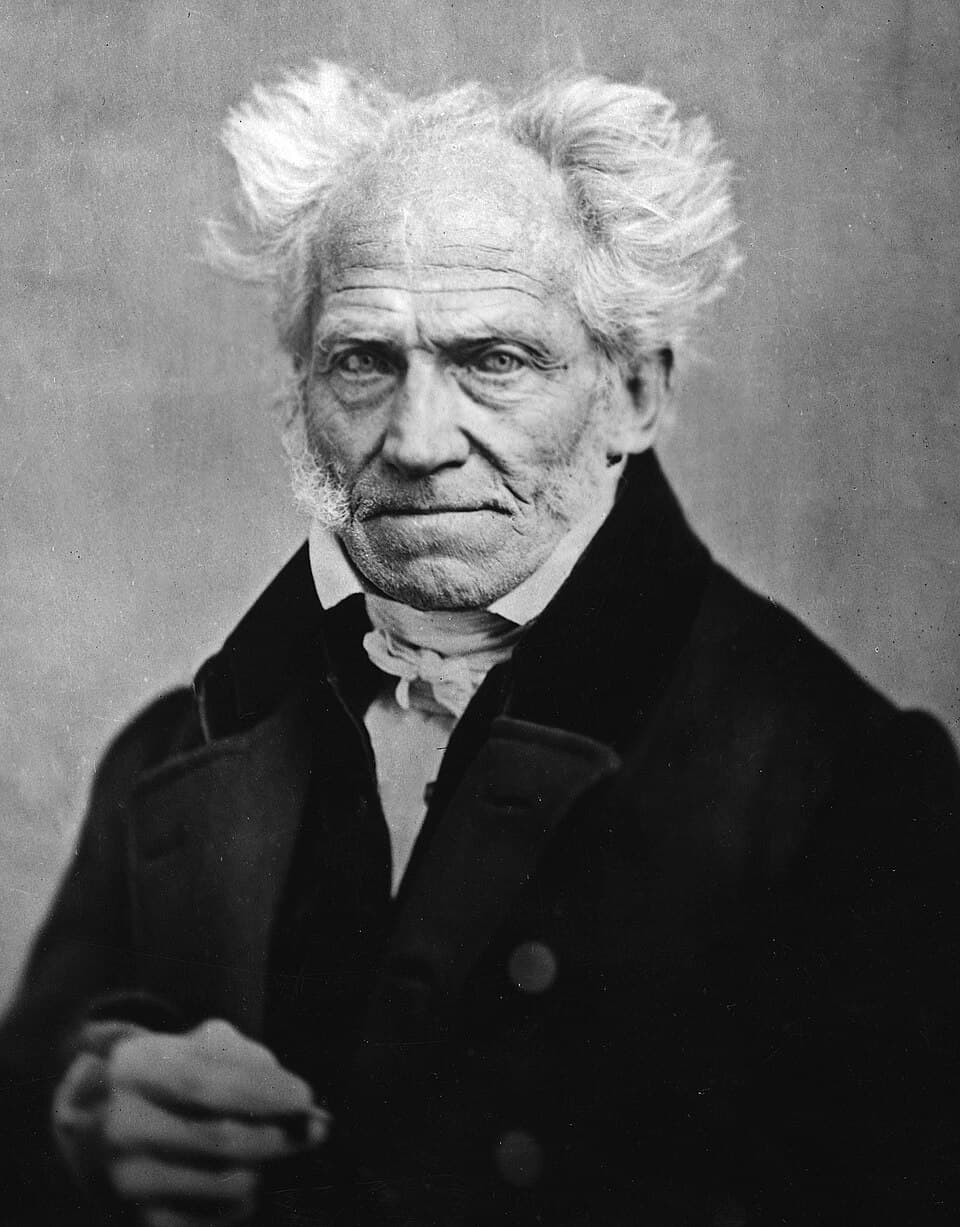
Arthur Schopenhauer
The Wisdom of Life...exhausted, and the society of philistines soon becomes burdensome, and one may even get tired of playing cards. True, the pleasures of vanity are left, pleasures which he enjoys in his own way, either by feeling himself superior in point of wealth, or rank, or influence and power to other people, who thereupon pay him honor; or, at any rate, by going about with those who have a superfluity of these blessings, sunning himself in the reflection of their splendor--what the English call a snob.
From the essential nature of the philistine it follows, secondly, in regard to others, that, as he possesses no intellectual, but only physical need, he will seek the society of those who can satisfy the latter, but not the former. The last thing he will expect from his friends is the possession of any sort of intellectual capacity; nay, if he chances to meet with it, it will rouse his antipathy and even hatred; simply because in addition to an unpleasant sense of inferiority, he experiences, in his heart, a dull kind of envy, which has to be carefully concealed even from himself.
Nevertheless, it sometimes grows into a secret feeling of rancor. But for all that, it will never occur to him to make his own ideas of worth or value conform to the standard of such qualities; he will continue to give the preference to rank and riches, power and influence, which in his eyes seem to be the only genuine advantages in the world; and his wish will be to excel in them himself. All this is the consequence of his being a man without intellectual needs. The great affliction of all p...
5
48 of 48 in Chapter II. PERSONALITY, OR WHAT A MAN IS.62 of 150 in work
⚖The Philistine's Affliction

Arthur Schopenhauer
The Wisdom of LifeThe author contrasts the 'philistine' need for volatile real-world stimulation with the calm, limitless satisfaction found in the world of ideas.
...concealed even from himself. Nevertheless, it sometimes grows into a secret feeling of rancor. But for all that, it will never occur to him to make his own ideas of worth or value conform to the standard of such qualities; he will continue to give the preference to rank and riches, power and influence, which in his eyes seem to be the only genuine advantages in the world; and his wish will be to excel in them himself. All this is the consequence of his being a man without intellectual needs.
The great affliction of all philistines is that they have no interest in ideas, and that, to escape being bored, they are in constant need of realities. But realities are either unsatisfactory or dangerous; when they lose their interest, they become fatiguing. But the ideal world is illimitable and calm, something afar From the sphere of our sorrow.
NOTE.--In these remarks on the personal qualities which go to make happiness, I have been mainly concerned with the physical and intellectual nature of man. For an account of the direct and immediate influence of morality upon happiness, let me refer to my prize essay on The Foundation of Morals (Sec. 22.) CHAPTER III. PROPERTY, OR WHAT A MAN HAS. Epicurus divides the needs of mankind into three classes, and the division made by this great professor of happiness is a true and a fin...
6
1 of 10 in Chapter III. PROPERTY, OR WHAT A MAN HAS.63 of 150 in work
Now entering Chapter III. PROPERTY, OR WHAT A MAN HAS.
⚖Wealth's Relative Measure

Arthur Schopenhauer
The Wisdom of LifeThe author argues that the desire for wealth is relative, functioning as a ratio between a person's expectations and their actual possessions rather than an absolute sum.
...es not mention which of the senses he means; so that on this point my account of his doctrine is somewhat more definite and exact than the original. These are needs rather more difficult to satisfy. The third class consists of needs which are neither natural nor necessary, the need of luxury and prodigality, show and splendor, which never come to an end, and are very hard to satisfy.[1] [Footnote 1: Cf. Diogenes Laertius, Bk. x., ch. xxvii., pp. 127 and 149; also Cicero de finibus, i., 13.]
It is difficult, if not impossible, to define the limits which reason should impose on the desire for wealth; for there is no absolute or definite amount of wealth which will satisfy a man. The amount is always relative, that is to say, just so much as will maintain the proportion between what he wants and what he gets; for to measure a man's happiness only by what he gets, and not also by what he expects to get, is as futile as to try and express a fraction which shall have a numerator but no denominator.
A man never feels the loss of things which it never occurs to him to ask for; he is just as happy without them; whilst another, who may have a hundred times as much, feels miserable because he has not got the one thing he wants. In fact, here too, every man has an horizon of his own, and he will expect as much as he thinks it is possible for him to get. If an object within his horizon looks as though he could confidently reckon on getting it, he is happy; but if difficulties come in the way, he...
6
2 of 10 in Chapter III. PROPERTY, OR WHAT A MAN HAS.64 of 150 in work
⚖The Horizon of Desire

Arthur Schopenhauer
The Wisdom of LifeThe author posits that happiness is relative to one's personal horizon of expectations; we do not suffer for the lack of things we never expected to possess.
...ult, if not impossible, to define the limits which reason should impose on the desire for wealth; for there is no absolute or definite amount of wealth which will satisfy a man. The amount is always relative, that is to say, just so much as will maintain the proportion between what he wants and what he gets; for to measure a man's happiness only by what he gets, and not also by what he expects to get, is as futile as to try and express a fraction which shall have a numerator but no denominator.
A man never feels the loss of things which it never occurs to him to ask for; he is just as happy without them; whilst another, who may have a hundred times as much, feels miserable because he has not got the one thing he wants. In fact, here too, every man has an horizon of his own, and he will expect as much as he thinks it is possible for him to get. If an object within his horizon looks as though he could confidently reckon on getting it, he is happy; but if difficulties come in the way, he is miserable. What lies beyond his horizon has no effect at all upon him.
So it is that the vast possessions of the rich do not agitate the poor, and conversely, that a wealthy man is not consoled by all his wealth for the failure of his hopes. Riches, one may say, are like sea-water; the more you drink the thirstier you become; and the same is true of fame. The loss of wealth and prosperity leaves a man, as soon as the first pangs of grief are over, in very much the same habitual temper as before; and the reason of this is, that as soon as fate diminishes the amount...
5
3 of 10 in Chapter III. PROPERTY, OR WHAT A MAN HAS.65 of 150 in work
⚖Thirst for More

Arthur Schopenhauer
The Wisdom of LifeThe author observes that the pursuit of wealth and fame is an endless cycle of increasing desire, whereas the pain of loss eventually fades as one adjusts their expectations.
...o, every man has an horizon of his own, and he will expect as much as he thinks it is possible for him to get. If an object within his horizon looks as though he could confidently reckon on getting it, he is happy; but if difficulties come in the way, he is miserable. What lies beyond his horizon has no effect at all upon him. So it is that the vast possessions of the rich do not agitate the poor, and conversely, that a wealthy man is not consoled by all his wealth for the failure of his hopes.
Riches, one may say, are like sea-water; the more you drink the thirstier you become; and the same is true of fame. The loss of wealth and prosperity leaves a man, as soon as the first pangs of grief are over, in very much the same habitual temper as before; and the reason of this is, that as soon as fate diminishes the amount of his possessions, he himself immediately reduces the amount of his claims. But when misfortune comes upon us, to reduce the amount of our claims is just what is most painful; once that we have done so, the pain becomes less and less, and is felt no more; like an old wound which has healed.
Conversely, when a piece of good fortune befalls us, our claims mount higher and higher, as there is nothing to regulate them; it is in this feeling of expansion that the delight of it lies. But it lasts no longer than the process itself, and when the expansion is complete, the delight ceases; we have become accustomed to the increase in our claims, and consequently indifferent to the amount of wealth which satisfies them. There is a passage in the Odyssey[1] illustrating this truth, of which...
2