1 of 2 in Introduction1 of 150 in work
Now entering Introduction
The Art of Happiness
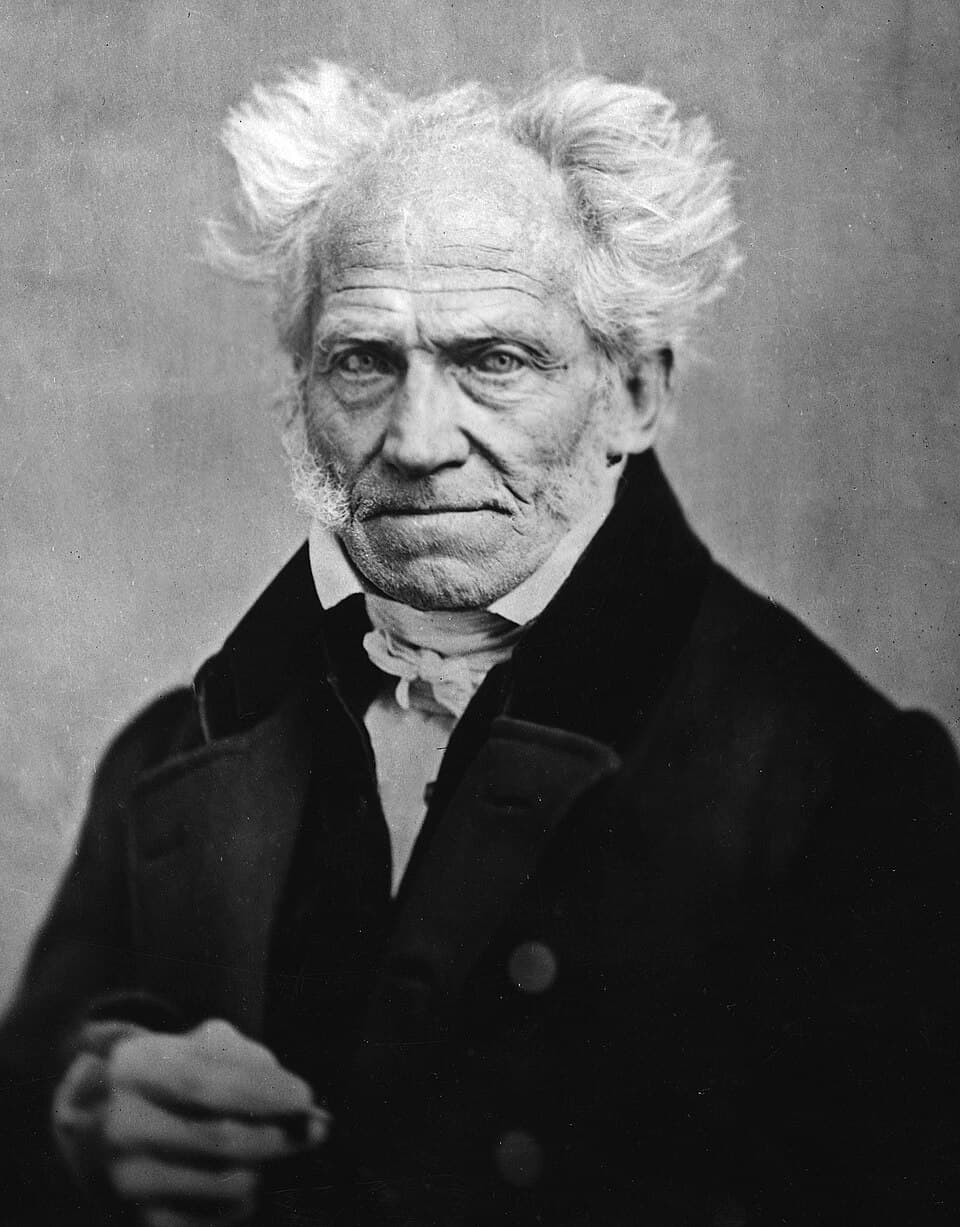
Arthur Schopenhauer
The Wisdom of Life

The author defines 'Eudaemonology' as the practical art of ordering one's life to achieve the highest possible degree of pleasure and success.

...ECT GUTENBERG EBOOK THE ESSAYS OF ARTHUR SCHOPENHAUER: THE WISDOM OF LIFE *** THE ESSAYS OF ARTHUR SCHOPENHAUER TRANSLATED BY T. BAILEY SAUNDERS, M.A. THE WISDOM OF LIFE. CONTENTS. CHAPTER INTRODUCTION I. DIVISION OF THE SUBJECT II. PERSONALITY, OR WHAT A MAN IS III. PROPERTY, OR WHAT A MAN HAS IV. POSITION, OR A MAN'S PLACE IN THE ESTIMATION OF OTHERS-- Sect. 1. Reputation " 2. Pride " 3. Rank " 4. Honor " 5. Fame INTRODUCTION.
In these pages I shall speak of The Wisdom of Life in the common meaning of the term, as the art, namely, of ordering our lives so as to obtain the greatest possible amount of pleasure and success; an art the theory of which may be called Eudaemonology, for it teaches us how to lead a happy existence.
Such an existence might perhaps be defined as one which, looked at from a purely objective point of view, or, rather, after cool and mature reflection--for the question necessarily involves subjective considerations,--would be decidedly preferable to non-existence; implying that we should cling to it for its own sake, and not merely from the fear of death; and further, that we should never like it to come to an end. Now whether human life corresponds, or could possibly correspond, to this conc...
6
2 of 2 in Introduction2 of 150 in work
Wisdom's Unheeded Echo
Arthur Schopenhauer
The Wisdom of Life

A cynical reflection on the static nature of human folly, suggesting that the wise have always known the truth while the majority remains foolish.

...'s De utilitate ex adversis capienda, which is well worth reading, and may be used to supplement the present work. Aristotle, it is true, has a few words on eudaemonology in the fifth chapter of the first book of his Rhetoric; but what he says does not come to very much. As compilation is not my business, I have made no use of these predecessors; more especially because in the process of compiling, individuality of view is lost, and individuality of view is the kernel of works of this kind.
In general, indeed, the wise in all ages have always said the same thing, and the fools, who at all times form the immense majority, have in their way too acted alike, and done just the opposite; and so it will continue. For, as Voltaire says, we shall leave this world as foolish and as wicked as we found it on our arrival.
THE WISDOM OF LIFE. CHAPTER I. DIVISION OF THE SUBJECT. Aristotle[1] divides the blessings of life into three classes--those which come to us from without, those of the soul, and those of the body. Keeping nothing of this division but the number, I observe that the fundamental differences in human lot may be reduced to three distinct classes: [Footnote 1: Eth. Nichom., I. 8.] (1) What a man is: that is to say, personality, in the widest sense of the word; under which are included...
2
1 of 12 in Chapter I. DIVISION OF THE SUBJECT.3 of 150 in work
Now entering Chapter I. DIVISION OF THE SUBJECT.
Innate Merit vs Privilege
Arthur Schopenhauer
The Wisdom of Life

The author asserts that inherent personal qualities, such as intellectual and moral greatness, are fundamentally superior to the artificial distinctions of social rank and birth.

...is shown by their opinion of him; and their opinion is in its turn manifested by the honor in which he is held, and by his rank and reputation. The differences which come under the first head are those which Nature herself has set between man and man; and from this fact alone we may at once infer that they influence the happiness or unhappiness of mankind in a much more vital and radical way than those contained under the two following heads, which are merely the effect of human arrangements.
Compared with genuine personal advantages, such as a great mind or a great heart, all the privileges of rank or birth, even of royal birth, are but as kings on the stage, to kings in real life.
The same thing was said long ago by Metrodorus, the earliest disciple of Epicurus, who wrote as the title of one of his chapters, The happiness we receive from ourselves is greater than that which we obtain from our surroundings[1] And it is an obvious fact, which cannot be called in question, that the principal element in a man's well-being,--indeed, in the whole tenor of his existence,--is what he is made of, his inner constitution. For this is the immediate source of that inward satisfacti...
6
2 of 12 in Chapter I. DIVISION OF THE SUBJECT.4 of 150 in work
The Inner Constitution
Arthur Schopenhauer
The Wisdom of Life

The author asserts that a person's inner constitution is the primary determinant of their well-being, as it dictates how they perceive and experience the external world.

...llowing heads, which are merely the effect of human arrangements. Compared with genuine personal advantages, such as a great mind or a great heart, all the privileges of rank or birth, even of royal birth, are but as kings on the stage, to kings in real life. The same thing was said long ago by Metrodorus, the earliest disciple of Epicurus, who wrote as the title of one of his chapters, The happiness we receive from ourselves is greater than that which we obtain from our surroundings[1] And
It is an obvious fact, which cannot be called in question, that the principal element in a man's well-being,--indeed, in the whole tenor of his existence,--is what he is made of, his inner constitution. For this is the immediate source of that inward satisfaction or dissatisfaction resulting from the sum total of his sensations, desires and thoughts; whilst his surroundings, on the other hand, exert only a mediate or indirect influence upon him. This is why the same external events or circumstances affect no two people alike; even with perfectly similar surroundings every one lives in a world of his own.
For a man has immediate apprehension only of his own ideas, feelings and volitions; the outer world can influence him only in so far as it brings these to life. The world in which a man lives shapes itself chiefly by the way in which he looks at it, and so it proves different to different men; to one it is barren, dull, and superficial; to another rich, interesting, and full of meaning. On hearing of the interesting events which have happened in the course of a man's experience, many people wil...
4