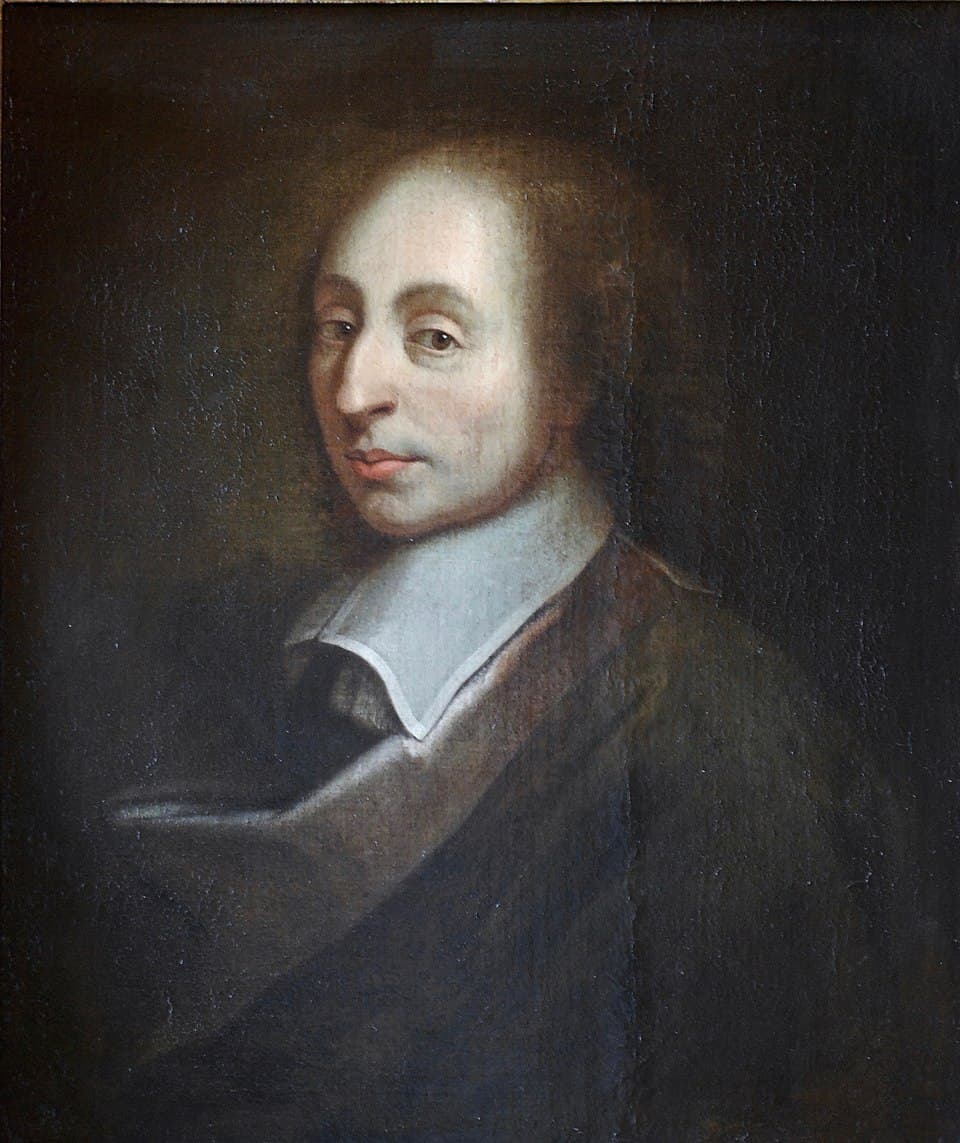
The author contends that without divine knowledge, man is trapped between pride in his past greatness and despair over his present corruption, unable to achieve perfect virtue.
15 of 69 in Section VII MORALITY AND DOCTRINE253 of 448 in work
Pride vs Despair
Blaise Pascal
Pensees...clares this to us, when it says in some places: Deliciæ meæ esse cum filiis hominum.[162] Effundam spiritum meum super omnem carnem.[163] Dii estis[164], etc.; and in other places, Omnis caro fænum.[165] Homo assimilatus est jumentis insipientibus, et similis factus est illis.[166] Dixi in corde meo de filiis hominum. Eccles. iii. Whence it clearly seems that man by grace is made like unto God, and a partaker in His divinity, and that without grace he is like unto the brute beasts.] 435
Without this divine knowledge what could men do but either become elated by the inner feeling of their past greatness which still remains to them, or become despondent at the sight of their present weakness? For, not seeing the whole truth, they could not attain to perfect virtue. Some considering nature as incorrupt, others as incurable, they could not escape either pride or sloth, the two sources of all vice; since they cannot but either abandon themselves to it through cowardice, or escape it by pride. For if they knew the excellence of man, they were ignorant of his corruption; so that they easily avoided sloth, but fell into pride. And…
Thence arise the different schools of the Stoics and Epicureans, the Dogmatists, Academicians, etc. The Christian religion alone has been able to cure these two vices, not by expelling the one through means of the other according to the wisdom of the world, but by expelling both according to the simplicity of the Gospel. For it teaches the righteous that it raises them even to a participation in divinity itself; that in this lofty state they still carry the source of all corruption, which rend...
Continue reading →
6
16 of 69 in Section VII MORALITY AND DOCTRINE254 of 448 in work
⚖Grace and Sin's Balance

Blaise Pascal
PenseesThe author asserts that Christianity alone balances man's dual nature by humbling him through the reality of sin while exalting him through the hope of grace, avoiding both pride and despair.
...of all vice; since they cannot but either abandon themselves to it through cowardice, or escape it by pride. For if they knew the excellence of man, they were ignorant of his corruption; so that they easily avoided sloth, but fell into pride. And if they recognised the infirmity of nature, they were ignorant of its dignity; so that they could easily avoid vanity, but it was to fall into despair. Thence arise the different schools of the Stoics and Epicureans, the Dogmatists, Academicians, etc.
The Christian religion alone has been able to cure these two vices, not by expelling the one through means of the other according to the wisdom of the world, but by expelling both according to the simplicity of the Gospel. For it teaches the righteous that it raises them even to a participation in divinity itself; that in this lofty state they still carry the source of all corruption, which renders them during all their life subject to error, misery, death, and sin; and it proclaims to the most ungodly that they are capable of the grace of their Redeemer. So making those tremble whom it justifies, and consoling those whom it condemns,…
Who then can refuse to believe and adore this heavenly light? For is it not clearer than day that we perceive within ourselves ineffaceable marks of excellence? And is it not equally true that we experience every hour the results of our deplorable condition? What does this chaos and monstrous confusion proclaim to us but the truth of these two states, with a voice so powerful that it is impossible to resist it? 436 Weakness.--Every pursuit of men is to get wealth; and they cannot have a t...
Continue reading →
6
17 of 69 in Section VII MORALITY AND DOCTRINE255 of 448 in work
⚖Desire's Punishing Paradox

Blaise Pascal
PenseesThe author reflects on the tragic human condition, where an innate desire for truth and happiness is met only with uncertainty and misery, suggesting this tension is a sign of man's fallen state.
...deplorable condition? What does this chaos and monstrous confusion proclaim to us but the truth of these two states, with a voice so powerful that it is impossible to resist it? 436 Weakness.--Every pursuit of men is to get wealth; and they cannot have a title to show that they possess it justly, for they have only that of human caprice; nor have they strength to hold it securely. It is the same with knowledge, for disease takes it away. We are incapable both of truth and goodness. 437
We desire truth, and find within ourselves only uncertainty. We seek happiness, and find only misery and death. We cannot but desire truth and happiness, and are incapable of certainty or happiness. This desire is left to us, partly to punish us, partly to make us perceive wherefrom we are fallen.
438 If man is not made for God, why is he only happy in God? If man is made for God, why is he so opposed to God? 439 Nature corrupted.--Man does not act by reason, which constitutes his being. 440 The corruption of reason is shown by the existence of so many different and extravagant customs. It was necessary that truth should come, in order that man should no longer dwell within himself. 441 For myself, I confess that so soon as the Christian religion reveals the principle that...
2
18 of 69 in Section VII MORALITY AND DOCTRINE256 of 448 in work
⚖Humanity's Divine Paradox

Blaise Pascal
PenseesA contemplative inquiry into the fundamental human contradiction: the simultaneous longing for God and the inherent resistance toward Him.
...they have only that of human caprice; nor have they strength to hold it securely. It is the same with knowledge, for disease takes it away. We are incapable both of truth and goodness. 437 We desire truth, and find within ourselves only uncertainty. We seek happiness, and find only misery and death. We cannot but desire truth and happiness, and are incapable of certainty or happiness. This desire is left to us, partly to punish us, partly to make us perceive wherefrom we are fallen. 438
If man is not made for God, why is he only happy in God? If man is made for God, why is he so opposed to God?
439 Nature corrupted.--Man does not act by reason, which constitutes his being. 440 The corruption of reason is shown by the existence of so many different and extravagant customs. It was necessary that truth should come, in order that man should no longer dwell within himself. 441 For myself, I confess that so soon as the Christian religion reveals the principle that human nature is corrupt and fallen from God, that opens my eyes to see everywhere the mark of this truth: for nature...
2
19 of 69 in Section VII MORALITY AND DOCTRINE257 of 448 in work
⚖Light's Revealing Paradox

Blaise Pascal
PenseesPascal observes that increased intellectual and spiritual enlightenment reveals a greater depth of both human nobility and depravity, suggesting that religion clarifies the inherent contradictions of the human condition.
...dwell within himself. 441 For myself, I confess that so soon as the Christian religion reveals the principle that human nature is corrupt and fallen from God, that opens my eyes to see everywhere the mark of this truth: for nature is such that she testifies everywhere, both within man and without him, to a lost God and a corrupt nature. 442 Man's true nature, his true good, true virtue, and true religion, are things of which the knowledge is inseparable. 443 Greatness, wretchedness.--
The more light we have, the more greatness and the more baseness we discover in man. Ordinary men--those who are more educated: philosophers, they astonish ordinary men--Christians, they astonish philosophers. Who will then be surprised to see that religion only makes us know profoundly what we already know in proportion to our light?
444 This religion taught to her children what men have only been able to discover by their greatest knowledge. 445 Original sin is foolishness to men, but it is admitted to be such. You must not then reproach me for the want of reason in this doctrine, since I admit it to be without reason. But this foolishness is wiser than all the wisdom of men, sapientius est hominibus.[167] For without this, what can we say that man is? His whole state depends on this imperceptible point. And how sh...
2