1 of 39 in Section VI THE PHILOSOPHERS200 of 448 in work
Now entering Section VI THE PHILOSOPHERS
Thought's Essential Nature
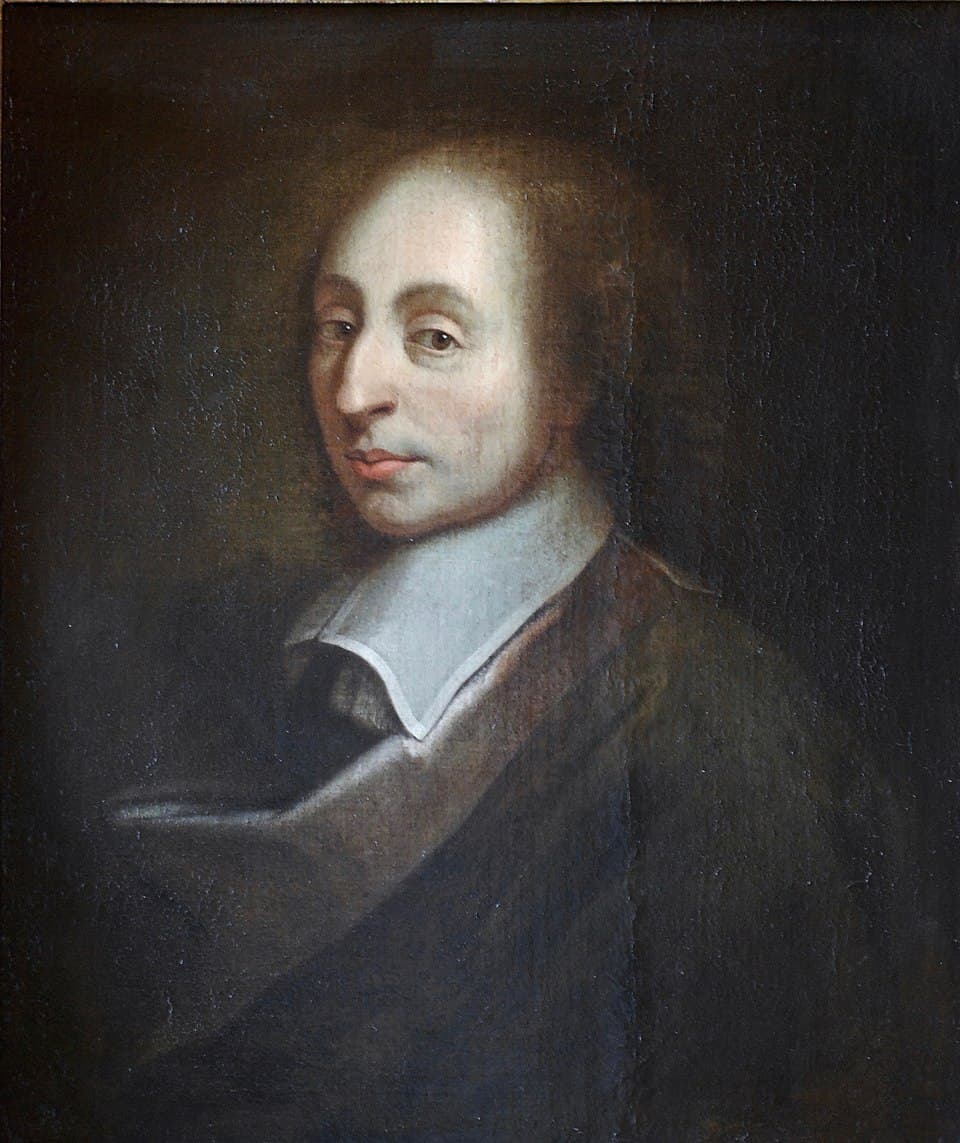
Blaise Pascal
Pensees

The author posits that thought is the defining essence of humanity, arguing that while a man can exist without limbs, a being without thought is merely a stone or a brute.

...against, according to the light one has. 338 True Christians nevertheless comply with folly, not because they respect folly, but the command of God, who for the punishment of men has made them subject to these follies. Omnis creatura subjecta est vanitati.[125] Liberabitur.[126] Thus Saint Thomas[127] explains the passage in Saint James on giving place to the rich, that if they do it not in the sight of God, they depart from the command of religion. SECTION VI THE PHILOSOPHERS 339
I can well conceive a man without hands, feet, head (for it is only experience which teaches us that the head is more necessary than feet). But I cannot conceive man without thought; he would be a stone or a brute.
340 The arithmetical machine produces effects which approach nearer to thought than all the actions of animals. But it does nothing which would enable us to attribute will to it, as to the animals. 341 The account of the pike and frog of Liancourt.[128] They do it always, and never otherwise, nor any other thing showing mind. 342 If an animal did by mind what it does by instinct, and if it spoke by mind what it speaks by instinct, in hunting, and in warning its mates that the prey is f...
6
2 of 39 in Section VI THE PHILOSOPHERS201 of 448 in work
Reason's Absolute Command
Blaise Pascal
Pensees

The author asserts that the authority of reason is more absolute than that of a human master, as disobeying reason is an act of folly rather than mere misfortune.

...se, nor any other thing showing mind. 342 If an animal did by mind what it does by instinct, and if it spoke by mind what it speaks by instinct, in hunting, and in warning its mates that the prey is found or lost; it would indeed also speak in regard to those things which affect it closer, as example, "Gnaw me this cord which is wounding me, and which I cannot reach." 343 The beak of the parrot, which it wipes, although it is clean. 344 Instinct and reason, marks of two natures. 345
Reason commands us far more imperiously than a master; for in disobeying the one we are unfortunate, and in disobeying the other we are fools.
346 Thought constitutes the greatness of man. 347 Man is but a reed, the most feeble thing in nature; but he is a thinking reed. The entire universe need not arm itself to crush him. A vapour, a drop of water suffices to kill him. But, if the universe were to crush him, man would still be more noble than that which killed him, because he knows that he dies and the advantage which the universe has over him; the universe knows nothing of this. All our dignity consists, then, in thought. By...
4
3 of 39 in Section VI THE PHILOSOPHERS202 of 448 in work
The Thinking Reed
Blaise Pascal
Pensees

The author famously characterizes man as a 'thinking reed,' whose unique dignity lies in the conscious awareness of his own frailty and mortality compared to the unthinking universe.

...is found or lost; it would indeed also speak in regard to those things which affect it closer, as example, "Gnaw me this cord which is wounding me, and which I cannot reach." 343 The beak of the parrot, which it wipes, although it is clean. 344 Instinct and reason, marks of two natures. 345 Reason commands us far more imperiously than a master; for in disobeying the one we are unfortunate, and in disobeying the other we are fools. 346 Thought constitutes the greatness of man. 347
Man is but a reed, the most feeble thing in nature; but he is a thinking reed. The entire universe need not arm itself to crush him. A vapour, a drop of water suffices to kill him. But, if the universe were to crush him, man would still be more noble than that which killed him, because he knows that he dies and the advantage which the universe has over him; the universe knows nothing of this. All our dignity consists, then, in thought. By it we must elevate ourselves, and not by space and time which we cannot fill. Let us endeavour, then, to think well; this is the principle of morality.
348 A thinking reed.--It is not from space that I must seek my dignity, but from the government of my thought. I shall have no more if I possess worlds. By space the universe encompasses and swallows me up like an atom; by thought I comprehend the world. 349 Immateriality of the soul.--Philosophers[129] who have mastered their passions. What matter could do that? 350 The Stoics.--They conclude that what has been done once can be done always, and that since the desire of glory imp...
2
4 of 39 in Section VI THE PHILOSOPHERS203 of 448 in work
Thought's Cosmic Dignity
Blaise Pascal
Pensees

Pascal defines human dignity through the power of thought, noting that while the physical universe dwarfs man in size, man's mind is capable of comprehending the universe.

...not arm itself to crush him. A vapour, a drop of water suffices to kill him. But, if the universe were to crush him, man would still be more noble than that which killed him, because he knows that he dies and the advantage which the universe has over him; the universe knows nothing of this. All our dignity consists, then, in thought. By it we must elevate ourselves, and not by space and time which we cannot fill. Let us endeavour, then, to think well; this is the principle of morality. 348
A thinking reed.--It is not from space that I must seek my dignity, but from the government of my thought. I shall have no more if I possess worlds. By space the universe encompasses and swallows me up like an atom; by thought I comprehend the world.
349 Immateriality of the soul.--Philosophers[129] who have mastered their passions. What matter could do that? 350 The Stoics.--They conclude that what has been done once can be done always, and that since the desire of glory imparts some power to those whom it possesses, others can do likewise. There are feverish movements which health cannot imitate. Epictetus[130] concludes that since there are consistent Christians, every man can easily be so. 351 Those great spiritual efforts...
2
5 of 39 in Section VI THE PHILOSOPHERS204 of 448 in work
Virtue in Ordinary Life
Blaise Pascal
Pensees

Pascal posits that true virtue is found in a person's consistent, everyday conduct rather than in isolated, extraordinary displays of effort.

...done once can be done always, and that since the desire of glory imparts some power to those whom it possesses, others can do likewise. There are feverish movements which health cannot imitate. Epictetus[130] concludes that since there are consistent Christians, every man can easily be so. 351 Those great spiritual efforts, which the soul sometimes assays, are things on which it does not lay hold.[131] It only leaps to them, not as upon a throne, for ever, but merely for an instant. 352
The strength of a man's virtue must not be measured by his efforts, but by his ordinary life.
353 I do not admire the excess of a virtue as of valour, except I see at the same time the excess of the opposite virtue, as in Epaminondas,[132] who had the greatest valour and the greatest kindness. For otherwise it is not to rise, it is to fall. We do not display greatness by going to one extreme, but in touching both at once, and filling all the intervening space. But perhaps this is only a sudden movement of the soul from one to the other extreme, and in fact it is ever at one point onl...
6