1 of 5 in Introduction1 of 448 in work
Now entering Introduction
Inspiration's Limits
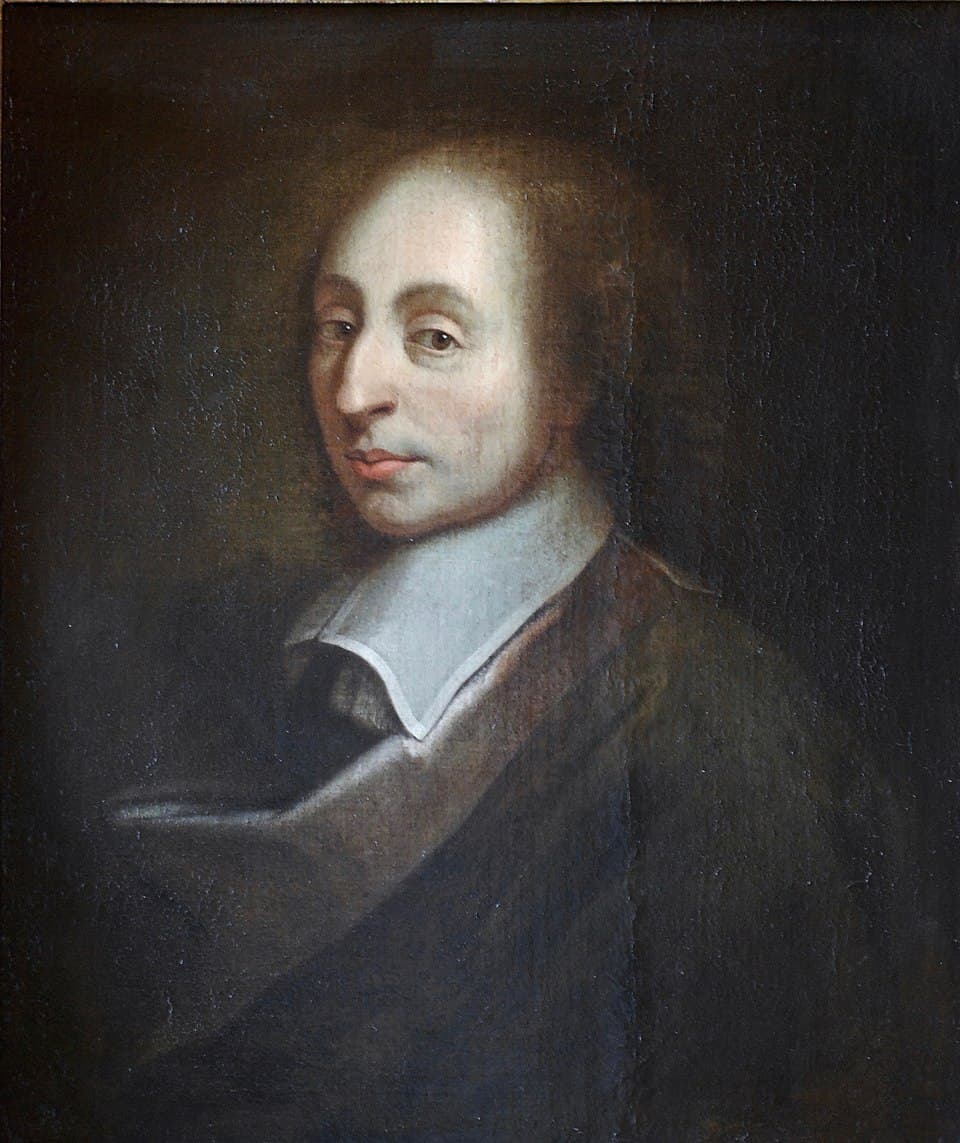
Blaise Pascal
Pensees

A reflection on the creative process, where the author describes the sensation of being a 'vehicle' for ideas that suddenly take shape after long meditation. He concludes that while such inspiration is vital, the writer—like the mystic—must ultimately return to reason to apply these experiences to life.

...called mystical experience happens to many men who do not become mystics. The work which he undertook soon after, the Lettres écrites à un provincial, is a masterpiece of religious controversy at the opposite pole from mysticism. We know quite well that he was at the time when he received his illumination from God in extremely poor health; but it is a commonplace that some forms of illness are extremely favourable, not only to religious illumination, but to artistic and literary composition.
A piece of writing meditated, apparently without progress, for months or years, may suddenly take shape and word; and in this state long passages may be produced which require little or no retouch. I have no good word to say for the cultivation of automatic writing as the model of literary composition; I doubt whether these moments can be cultivated by the writer; but he to whom this happens assuredly has the sensation of being a vehicle rather than a maker. No masterpiece can be produced whole by such means; but neither does even the higher form of religious inspiration suffice for the religious life; even the most exalted mystic must…
You may call it communion with the Divine, or you may call it a temporary crystallisation of the mind. Until science can teach us to reproduce such phenomena at will, science cannot claim to have explained them; and they can be judged only by their fruits. From that time until his death, Pascal was closely associated with the society of Port-Royal which his sister Jacqueline, who predeceased him, had joined as a religieuse; the society was then fighting for its life against the Jesuits. Five...
Continue reading →
2
2 of 5 in Introduction2 of 448 in work
The Return to Reason
Blaise Pascal
Pensees

The author prescribes that even the highest religious experiences must be integrated into daily life through reason and judged by their practical fruits.

...artistic and literary composition. A piece of writing meditated, apparently without progress, for months or years, may suddenly take shape and word; and in this state long passages may be produced which require little or no retouch. I have no good word to say for the cultivation of automatic writing as the model of literary composition; I doubt whether these moments can be cultivated by the writer; but he to whom this happens assuredly has the sensation of being a vehicle rather than a maker.
No masterpiece can be produced whole by such means; but neither does even the higher form of religious inspiration suffice for the religious life; even the most exalted mystic must return to the world, and use his reason to employ the results of his experience in daily life. You may call it communion with the Divine, or you may call it a temporary crystallisation of the mind. Until science can teach us to reproduce such phenomena at will, science cannot claim to have explained them; and they can be judged only by their fruits.
From that time until his death, Pascal was closely associated with the society of Port-Royal which his sister Jacqueline, who predeceased him, had joined as a religieuse; the society was then fighting for its life against the Jesuits. Five propositions, judged by a committee of cardinals and theologians at Rome to be heretical, were found to be put forward in the work of Jansenius; and the society of Port-Royal, the representative of Jansenism among devotional communities, suffered a blow fr...
4
3 of 5 in Introduction3 of 448 in work
Believer's Burden
Blaise Pascal
Pensees

The author contends that a satisfactory explanation of the world must account for the reality of 'saintliness' and moral values, which the indifferent unbeliever often overlooks.

...equence which culminated in faith, rather than the public apologist--proceeds by rejection and elimination. He finds the world to be so and so; he finds its character inexplicable by any non-religious theory; among religions he finds Christianity, and Catholic Christianity, to account most satisfactorily for the world and especially for the moral world within; and thus, by what Newman calls "powerful and concurrent" reasons, he finds himself inexorably committed to the dogma of the Incarnation.
To the unbeliever, this method seems disingenuous and perverse; for the unbeliever is, as a rule, not so greatly troubled to explain the world to himself, nor so greatly distressed by its disorder; nor is he generally concerned (in modern terms) to "preserve values." He does not consider that if certain emotional states, certain developments of character, and what in the highest sense can be called "saintliness" are inherently and by inspection known to be good, then the satisfactory explanation of the world must be an explanation which will admit the "reality" of these values.
Nor does he consider such reasoning admissible; he would, so to speak, trim his values according to his cloth, because to him such values are of no great value. The unbeliever starts from the other end, and as likely as not with the question: Is a case of human parthenogenesis credible? and this he would call going straight to the heart of the matter. Now Pascal's method is, on the whole, the method natural and right for the Christian; and the opposite method is that taken by Voltaire. It is wo...
5
4 of 5 in Introduction4 of 448 in work
Universal Skepticism's Voice
Blaise Pascal
Pensees

The author analyzes Montaigne as a monumental figure who transcended personal skepticism to give voice to the universal doubt inherent in every human being.

...owever, be grossly unfair to Pascal, to Montaigne, and indeed to French literature, to leave the matter at that. It is no diminution of Pascal, but only an aggrandisement of Montaigne. Had Montaigne been an ordinary life-sized sceptic, a small man like Anatole France, or even a greater man like Renan, or even like the greatest sceptic of all, Voltaire, this "influence" would be to the discredit of Pascal; but if Montaigne had been no more than Voltaire, he could not have affected Pascal at all.
The picture of Montaigne which offers itself first to our eyes, that of the original and independent solitary "personality," absorbed in amused analysis of himself, is deceptive. Montaigne's is no limited Pyrrhonism, like that of Voltaire, Renan, or France. He exists, so to speak, on a plan of numerous concentric circles, the most apparent of which is the small inmost circle, a personal puckish scepticism which can be easily aped if not imitated. But what makes Montaigne a very great figure is that he succeeded, God knows how--for Montaigne very likely did not know that he had done it--it is not the sort of thing that men can observe…
For every man who thinks and lives by thought must have his own scepticism, that which stops at the question, that which ends in denial, or that which leads to faith and which is somehow integrated into the faith which transcends it. And Pascal, as the type of one kind of religious believer, which is highly passionate and ardent, but passionate only through a powerful and regulated intellect, is in the first sections of his unfinished Apology for Christianity facing unflinchingly the demon of d...
Continue reading →
6