1 of 14 in Section IX PERPETUITY328 of 448 in work
Now entering Section IX PERPETUITY
Blindness and Enlightenment
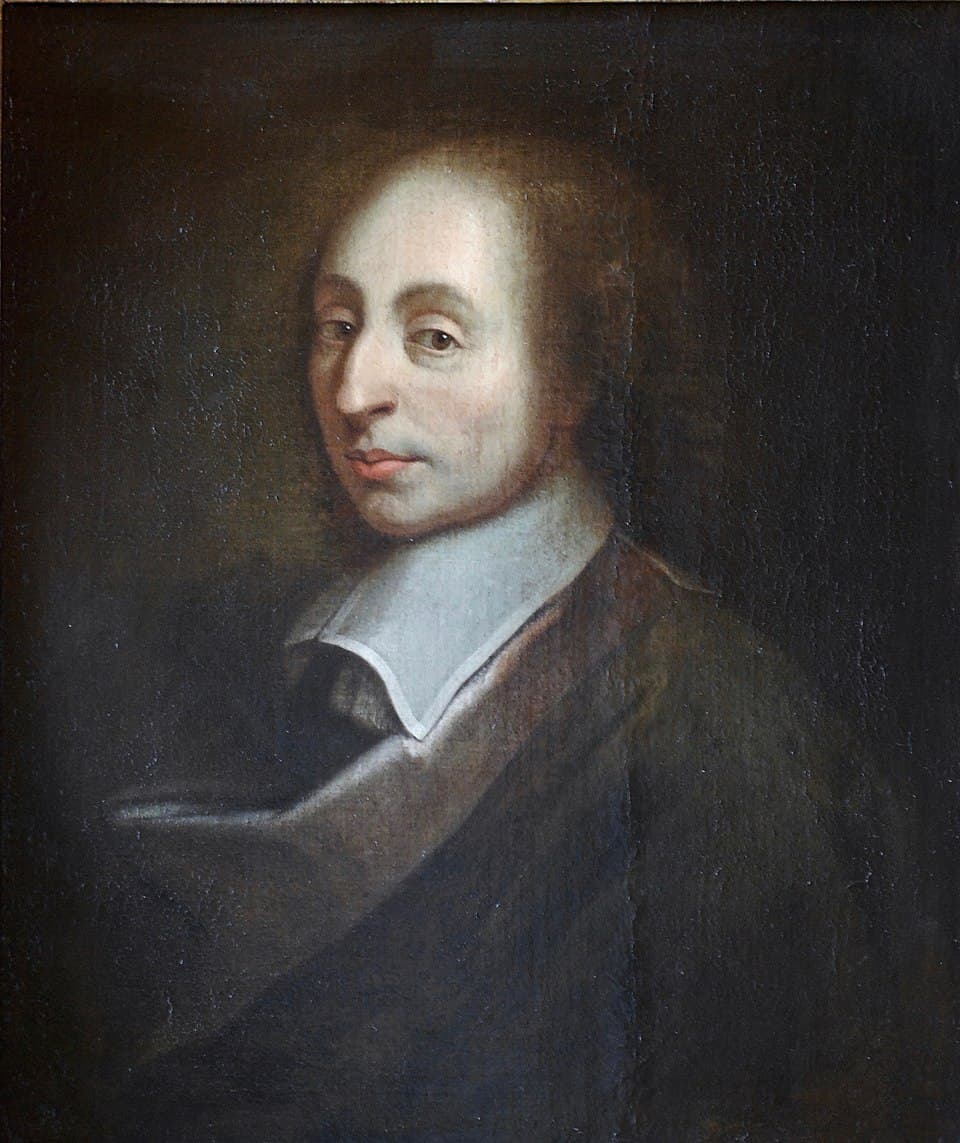
Blaise Pascal
Pensees

Pascal expresses a preference for historical accounts backed by the sacrifice of witnesses, suggesting that apparent obscurities in history should be met with a diligent search for clarity.

...o far is this from being a reason for believing that it is not the true one, that, on the contrary, it makes us see that it is so. 589 Men must be sincere in all religions; true heathens, true Jews, true Christians. 590 J. C. Heathens __|__ Mahomet \ / Ignorance of God. 591 The falseness of other religions.--They have no witnesses. Jews have. God defies other religions to produce such signs: Isaiah xliii, 9; xliv, 8. 592 History of China.[213]-
I believe only the histories, whose witnesses got themselves killed. [Which is the more credible of the two, Moses or China?] It is not a question of seeing this summarily. I tell you there is in it something to blind, and something to enlighten. By this one word I destroy all your reasoning. "But China obscures," say you; and I answer, "China obscures, but there is clearness to be found; seek it." Thus all that you say makes for one of the views, and not at all against the other.
So this serves, and does no harm. We must then see this in detail; we must put the papers on the table. 593 Against the history of China. The historians of Mexico, the five suns,[214] of which the last is only eight hundred years old. The difference between a book accepted by a nation, and one which makes a nation. 594 Mahomet was without authority. His reasons then should have been very strong, having only their own force. What does he say then, that we must believe him? 595 The P...
2
2 of 14 in Section IX PERPETUITY329 of 448 in work
Clarity's Decisive Test
Blaise Pascal
Pensees

The author contrasts the 'ridiculous' clarity of other religions with the 'admirable' clarity of Scripture, arguing that the latter's fulfilled prophecies justify its remaining obscurities.

...witnesses necessitates their existence always and everywhere; and he, miserable creature, is alone. 596 Against Mahomet.--The Koran is not more of Mahomet than the Gospel is of Saint Matthew, for it is cited by many authors from age to age. Even its very enemies, Celsus and Porphyry, never denied it. The Koran says Saint Matthew was an honest man.[216] Therefore Mahomet was a false prophet for calling honest men wicked, or for not agreeing with what they have said of Jesus Christ. 597
It is not by that which is obscure in Mahomet, and which may be interpreted in a mysterious sense, that I would have him judged, but by what is clear, as his paradise and the rest. In that he is ridiculous. And since what is clear is ridiculous, it is not right to take his obscurities for mysteries. It is not the same with the Scripture. I agree that there are in it obscurities as strange as those of Mahomet; but there are admirably clear passages, and the prophecies are manifestly fulfilled. The cases are therefore not on a par. We must not confound, and put on one level things which only resemble each other in their obscurity, and not in…
598 The difference between Jesus Christ and Mahomet.--Mahomet was not foretold; Jesus Christ was foretold. Mahomet slew; Jesus Christ caused His own to be slain. Mahomet forbade reading; the Apostles ordered reading. In fact the two are so opposed, that if Mahomet took the way to succeed from a worldly point of view, Jesus Christ, from the same point of view, took the way to perish. And instead of concluding that, since Mahomet succeeded, Jesus Christ might well have succeeded, we ought...
Continue reading →
6
3 of 14 in Section IX PERPETUITY330 of 448 in work
Spiritual vs Carnal Religion
Blaise Pascal
Pensees

The author distinguishes between the 'carnal' and 'true' interpretations of religion, asserting that both true Judaism and true Christianity seek a spiritual Messiah who inspires the love of God.

...ts doctrine, and its effects. 603 The only science contrary to common sense and human nature is that alone which has always existed among men. 604 The only religion contrary to nature, to common sense, and to our pleasure, is that alone which has always existed. 605 No religion but our own has taught that man is born in sin. No sect of philosophers has said this. Therefore none have declared the truth. No sect or religion has always existed on earth, but the Christian religion. 606
Whoever judges of the Jewish religion by its coarser forms will misunderstand it. It is to be seen in the Holy Bible, and in the tradition of the prophets, who have made it plain enough that they did not interpret the law according to the letter. So our religion is divine in the Gospel, in the Apostles, and in tradition; but it is absurd in those who tamper with it. The Messiah, according to the carnal Jews, was to be a great temporal prince. Jesus Christ, according to carnal Christians, has come to dispense us from the love of God, and to give us sacraments which shall do everything without our help. Such is not the Christian religion, nor…
607 The carnal Jews hold a midway place between Christians and heathens. The heathens know not God, and love the world only. The Jews know the true God, and love the world only. The Christians know the true God, and love not the world. Jews and heathens love the same good. Jews and Christians know the same God. The Jews were of two kinds; the first had only heathen affections, the other had Christian affections. 608 There are two kinds of men in each religion: among the heathen, worshipp...
Continue reading →
5
4 of 14 in Section IX PERPETUITY331 of 448 in work
Love vs Knowledge
Blaise Pascal
Pensees

Pascal distinguishes between heathens, Jews, and Christians based on their knowledge of God and their love for the world, noting that while Jews and Christians share the same God, their spiritual affections differ.

...tradition; but it is absurd in those who tamper with it. The Messiah, according to the carnal Jews, was to be a great temporal prince. Jesus Christ, according to carnal Christians,[218] has come to dispense us from the love of God, and to give us sacraments which shall do everything without our help. Such is not the Christian religion, nor the Jewish. True Jews and true Christians have always expected a Messiah who should make them love God, and by that love triumph over their enemies. 607
The carnal Jews hold a midway place between Christians and heathens. The heathens know not God, and love the world only. The Jews know the true God, and love the world only. The Christians know the true God, and love not the world. Jews and heathens love the same good. Jews and Christians know the same God. The Jews were of two kinds; the first had only heathen affections, the other had Christian affections.
608 There are two kinds of men in each religion: among the heathen, worshippers of beasts, and the worshippers of the one only God of natural religion; among the Jews, the carnal, and the spiritual, who were the Christians of the old law; among Christians, the coarser-minded, who are the Jews of the new law. The carnal Jews looked for a carnal Messiah; the coarser Christians believe that the Messiah has dispensed them from the love of God; true Jews and true Christians worship a Messiah who...
4
5 of 14 in Section IX PERPETUITY332 of 448 in work
Spiritual vs Carnal
Blaise Pascal
Pensees

The author distinguishes between the carnal and spiritual adherents of religion, arguing that true faith is defined by the love of God rather than external forms.

...should make them love God, and by that love triumph over their enemies. 607 The carnal Jews hold a midway place between Christians and heathens. The heathens know not God, and love the world only. The Jews know the true God, and love the world only. The Christians know the true God, and love not the world. Jews and heathens love the same good. Jews and Christians know the same God. The Jews were of two kinds; the first had only heathen affections, the other had Christian affections. 608
There are two kinds of men in each religion: among the heathen, worshippers of beasts, and the worshippers of the one only God of natural religion; among the Jews, the carnal, and the spiritual, who were the Christians of the old law; among Christians, the coarser-minded, who are the Jews of the new law. The carnal Jews looked for a carnal Messiah; the coarser Christians believe that the Messiah has dispensed them from the love of God; true Jews and true Christians worship a Messiah who makes them love God.
609 To show that the true Jews and the true Christians have but the same religion.--The religion of the Jews seemed to consist essentially in the fatherhood of Abraham, in circumcision, in sacrifices, in ceremonies, in the Ark, in the temple, in Jerusalem, and, finally, in the law, and in the covenant with Moses. I say that it consisted in none of those things, but only in the love of God, and that God disregarded all the other things. That God did not accept the posterity of Abraham. T...
4