2 of 4 in Chapter LXVI. OUT OF SERVICE462 of 593 in work
Hidden God's Secrets
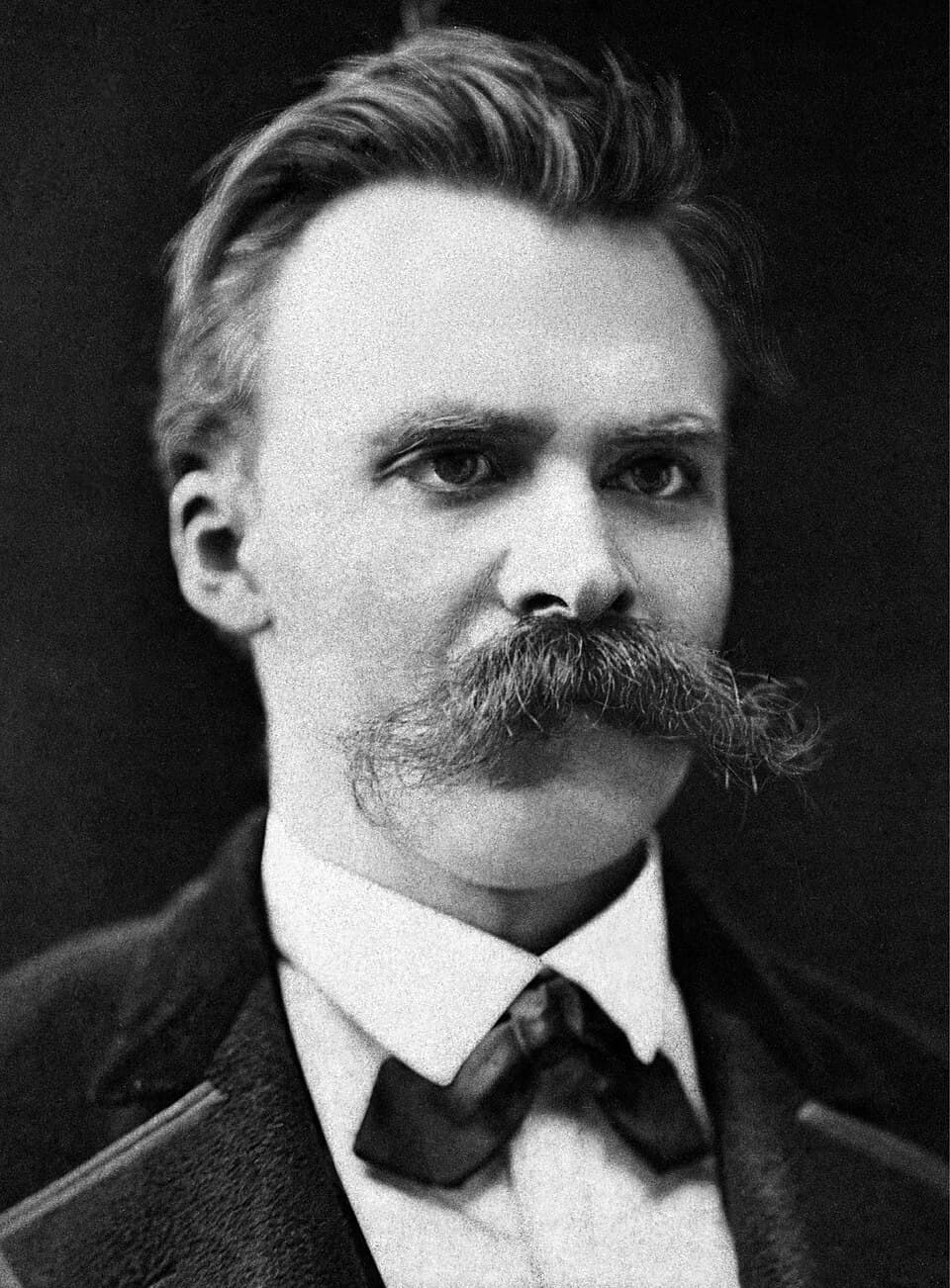
Friedrich Nietzsche
Thus Spake Zarathustra

The last pope reflects on the nature of the 'hidden God,' suggesting that the deity eventually perished from an excess of pity for humanity.

...hung on the cross, and could not endure it;—that his love to man became his hell, and at last his death?”— The old pope however did not answer, but looked aside timidly, with a painful and gloomy expression. “Let him go,” said Zarathustra, after prolonged meditation, still looking the old man straight in the eye. “Let him go, he is gone. And though it honoureth thee that thou speakest only in praise of this dead one, yet thou knowest as well as I WHO he was, and that he went curious ways.”
“To speak before three eyes,” said the old pope cheerfully (he was blind of one eye), “in divine matters I am more enlightened than Zarathustra himself—and may well be so. My love served him long years, my will followed all his will. A good servant, however, knoweth everything, and many a thing even which a master hideth from himself. He was a hidden God, full of secrecy. Verily, he did not come by his son otherwise than by secret ways. At the door of his faith standeth adultery. Whoever extolleth him as a God of love, doth not think highly enough of love itself. Did not that God want also to be judge? But the loving one loveth irrespective…
— “Thou old pope,” said here Zarathustra interposing, “hast thou seen THAT with thine eyes? It could well have happened in that way: in that way, AND also otherwise. When Gods die they always die many kinds of death. Well! At all events, one way or other—he is gone! He was counter to the taste of mine ears and eyes; worse than that I should not like to say against him. I love everything that looketh bright and speaketh honestly. But he—thou knowest it, forsooth, thou old priest, there was so...
Continue reading →
2
3 of 4 in Chapter LXVI. OUT OF SERVICE463 of 593 in work
God's Bad Taste
Friedrich Nietzsche
Thus Spake Zarathustra

A critique of the traditional concept of God as an 'equivocal' and 'indistinct' creator who unjustly punished his own creations for the flaws he himself bestowed upon them.

...his favourites. At last, however, he became old and soft and mellow and pitiful, more like a grandfather than a father, but most like a tottering old grandmother. There did he sit shrivelled in his chimney-corner, fretting on account of his weak legs, world-weary, will-weary, and one day he suffocated of his all-too-great pity.”— “Thou old pope,” said here Zarathustra interposing, “hast thou seen THAT with thine eyes? It could well have happened in that way: in that way, AND also otherwise.
When Gods die they always die many kinds of death. Well! At all events, one way or other—he is gone! He was counter to the taste of mine ears and eyes; worse than that I should not like to say against him. I love everything that looketh bright and speaketh honestly. But he—thou knowest it, forsooth, thou old priest, there was something of thy type in him, the priest-type—he was equivocal. He was also indistinct. How he raged at us, this wrath-snorter, because we understood him badly! But why did he not speak more clearly? And if the fault lay in our ears, why did he give us ears that heard him badly? If there was dirt in our ears, well! who…
There is also good taste in piety: THIS at last said: ‘Away with SUCH a God! Better to have no God, better to set up destiny on one’s own account, better to be a fool, better to be God oneself!’” —“What do I hear!” said then the old pope, with intent ears; “O Zarathustra, thou art more pious than thou believest, with such an unbelief! Some God in thee hath converted thee to thine ungodliness. Is it not thy piety itself which no longer letteth thee believe in a God? And thine over-great hones...
Continue reading →
2
4 of 4 in Chapter LXVI. OUT OF SERVICE464 of 593 in work
Piety's Honest Unbelief
Friedrich Nietzsche
Thus Spake Zarathustra

The author suggests that a profound honesty and a higher form of piety lead one to reject traditional concepts of God in favor of self-destiny. This 'ungodliness' is framed as a spiritual evolution that moves the individual beyond conventional notions of good and evil.

...est-type—he was equivocal. He was also indistinct. How he raged at us, this wrath-snorter, because we understood him badly! But why did he not speak more clearly? And if the fault lay in our ears, why did he give us ears that heard him badly? If there was dirt in our ears, well! who put it in them? Too much miscarried with him, this potter who had not learned thoroughly! That he took revenge on his pots and creations, however, because they turned out badly—that was a sin against GOOD TASTE.
There is also good taste in piety: THIS at last said: ‘Away with SUCH a God! Better to have no God, better to set up destiny on one’s own account, better to be a fool, better to be God oneself!’” —“What do I hear!” said then the old pope, with intent ears; “O Zarathustra, thou art more pious than thou believest, with such an unbelief! Some God in thee hath converted thee to thine ungodliness. Is it not thy piety itself which no longer letteth thee believe in a God? And thine over-great honesty will yet lead thee even beyond good and evil!
Behold, what hath been reserved for thee? Thou hast eyes and hands and mouth, which have been predestined for blessing from eternity. One doth not bless with the hand alone. Nigh unto thee, though thou professest to be the ungodliest one, I feel a hale and holy odour of long benedictions: I feel glad and grieved thereby. Let me be thy guest, O Zarathustra, for a single night! Nowhere on earth shall I now feel better than with thee!”— “Amen! So shall it be!” said Zarathustra, with great asto...
2
1 of 9 in Chapter LXVII. THE UGLIEST MAN465 of 593 in work
Now entering Chapter LXVII. THE UGLIEST MAN
Chewing on Wisdom
Friedrich Nietzsche
Thus Spake Zarathustra

The author reflects on the intellectual nourishment gained from unexpected encounters, viewing new ideas as sustenance to be slowly processed and integrated into the soul.

...houlders? For that I am too weak. Long, verily, should we have to wait until some one re-awoke thy God for thee. For that old God liveth no more: he is indeed dead.”— Thus spake Zarathustra. LXVII. THE UGLIEST MAN. —And again did Zarathustra’s feet run through mountains and forests, and his eyes sought and sought, but nowhere was he to be seen whom they wanted to see—the sorely distressed sufferer and crier. On the whole way, however, he rejoiced in his heart and was full of gratitude.
“What good things,” said he, “hath this day given me, as amends for its bad beginning! What strange interlocutors have I found! At their words will I now chew a long while as at good corn; small shall my teeth grind and crush them, until they flow like milk into my soul!”
— When, however, the path again curved round a rock, all at once the landscape changed, and Zarathustra entered into a realm of death. Here bristled aloft black and red cliffs, without any grass, tree, or bird’s voice. For it was a valley which all animals avoided, even the beasts of prey, except that a species of ugly, thick, green serpent came here to die when they became old. Therefore the shepherds called this valley: “Serpent-death.” Zarathustra, however, became absorbed in dark recollec...
2
2 of 9 in Chapter LXVII. THE UGLIEST MAN466 of 593 in work
The Riddle's Icy Trap
Friedrich Nietzsche
Thus Spake Zarathustra

A mysterious and challenging vision where a voice from the wilderness confronts Zarathustra with a riddle regarding pride and the nature of revenge.

...y. And much heaviness settled on his mind, so that he walked slowly and always more slowly, and at last stood still. Then, however, when he opened his eyes, he saw something sitting by the wayside shaped like a man, and hardly like a man, something nondescript. And all at once there came over Zarathustra a great shame, because he had gazed on such a thing. Blushing up to the very roots of his white hair, he turned aside his glance, and raised his foot that he might leave this ill-starred place.
Then, however, became the dead wilderness vocal: for from the ground a noise welled up, gurgling and rattling, as water gurgleth and rattleth at night through stopped-up water-pipes; and at last it turned into human voice and human speech:—it sounded thus: “Zarathustra! Zarathustra! Read my riddle! Say, say! WHAT IS THE REVENGE ON THE WITNESS? I entice thee back; here is smooth ice! See to it, see to it, that thy pride doth not here break its legs! Thou thinkest thyself wise, thou proud Zarathustra! Read then the riddle, thou hard nut-cracker,—the riddle that I am! Say then: who am I!”
—When however Zarathustra had heard these words,—what think ye then took place in his soul? PITY OVERCAME HIM; and he sank down all at once, like an oak that hath long withstood many tree-fellers,—heavily, suddenly, to the terror even of those who meant to fell it. But immediately he got up again from the ground, and his countenance became stern. “I know thee well,” said he, with a brazen voice, “THOU ART THE MURDERER OF GOD! Let me go. Thou couldst not ENDURE him who beheld THEE,—who ever...
1