8 of 9 in Chapter LXVII. THE UGLIEST MAN472 of 593 in work
Petty People's Power
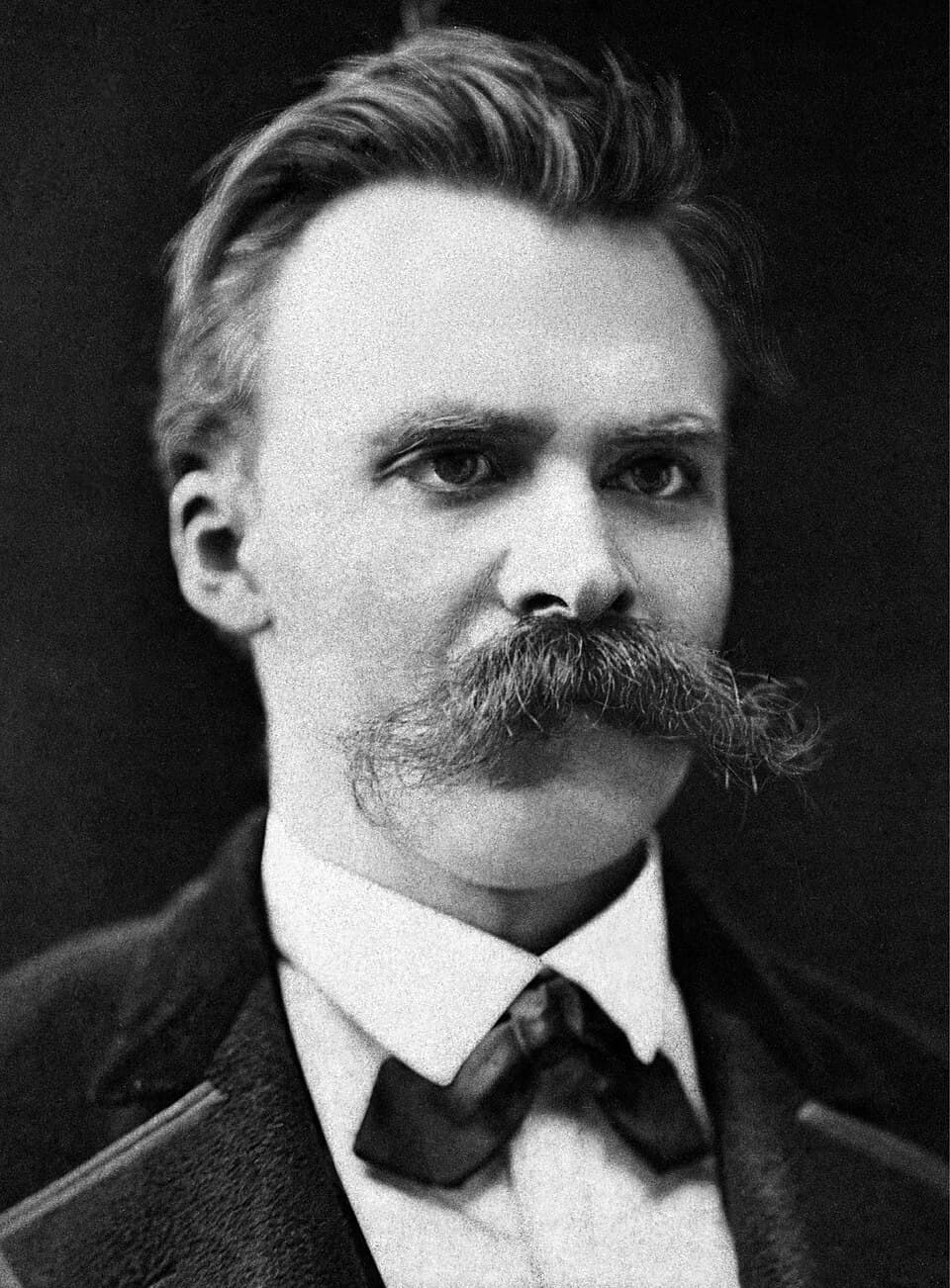
Friedrich Nietzsche
Thus Spake Zarathustra

A critique of the 'petty people' who have redefined 'good' to match their own smallness, viewed through the contemptuous lens of a higher perspective.

...hyself, O Zarathustra! —Whether it be the pity of a God, or whether it be human pity, it is offensive to modesty. And unwillingness to help may be nobler than the virtue that rusheth to do so. THAT however—namely, pity—is called virtue itself at present by all petty people:—they have no reverence for great misfortune, great ugliness, great failure. Beyond all these do I look, as a dog looketh over the backs of thronging flocks of sheep. They are petty, good-wooled, good-willed, grey people.
As the heron looketh contemptuously at shallow pools, with backward-bent head, so do I look at the throng of grey little waves and wills and souls. Too long have we acknowledged them to be right, those petty people: SO we have at last given them power as well;—and now do they teach that ‘good is only what petty people call good.’
And ‘truth’ is at present what the preacher spake who himself sprang from them, that singular saint and advocate of the petty people, who testified of himself: ‘I—am the truth.’ That immodest one hath long made the petty people greatly puffed up,—he who taught no small error when he taught: ‘I—am the truth.’ Hath an immodest one ever been answered more courteously?—Thou, however, O Zarathustra, passedst him by, and saidst: ‘Nay! Nay! Three times Nay!’ Thou warnedst against his error; thou...
3
9 of 9 in Chapter LXVII. THE UGLIEST MAN473 of 593 in work
Self-Love's Contempt
Friedrich Nietzsche
Thus Spake Zarathustra

Nietzsche argues that self-contempt is a necessary stage of elevation, suggesting that man is something to be surpassed and that the 'great despiser' is the one closest to the higher man.

....” Thus spake the ugliest man. Zarathustra however got up, and prepared to go on: for he felt frozen to the very bowels. “Thou nondescript,” said he, “thou warnedst me against thy path. As thanks for it I praise mine to thee. Behold, up thither is the cave of Zarathustra. My cave is large and deep and hath many corners; there findeth he that is most hidden his hiding-place. And close beside it, there are a hundred lurking-places and by-places for creeping, fluttering, and hopping creatures.
Thou outcast, who hast cast thyself out, thou wilt not live amongst men and men’s pity? Well then, do like me! Thus wilt thou learn also from me; only the doer learneth. And talk first and foremost to mine animals! The proudest animal and the wisest animal—they might well be the right counsellors for us both!”— Thus spake Zarathustra and went his way, more thoughtfully and slowly even than before: for he asked himself many things, and hardly knew what to answer. “How poor indeed is man,” thought he in his heart, “how ugly, how wheezy, how full of hidden shame! They tell me that man loveth himself. Ah, how great must that self-love be! How…
— LXVIII. THE VOLUNTARY BEGGAR. When Zarathustra had left the ugliest man, he was chilled and felt lonesome: for much coldness and lonesomeness came over his spirit, so that even his limbs became colder thereby. When, however, he wandered on and on, uphill and down, at times past green meadows, though also sometimes over wild stony couches where formerly perhaps an impatient brook had made its bed, then he turned all at once warmer and heartier again. “What hath happened unto me?” he ask...
Continue reading →
2
1 of 5 in Chapter LXVIII. THE VOLUNTARY BEGGAR474 of 593 in work
Now entering Chapter LXVIII. THE VOLUNTARY BEGGAR
Learning from Cattle
Friedrich Nietzsche
Thus Spake Zarathustra

A confession of profound disgust with modern humanity, suggesting that one must learn the 'ruminating' nature of cattle to find peace and escape the affliction of the age.

...pake in the midst of the kine, and apparently all of them had turned their heads towards the speaker. Then ran Zarathustra up speedily and drove the animals aside; for he feared that some one had here met with harm, which the pity of the kine would hardly be able to relieve. But in this he was deceived; for behold, there sat a man on the ground who seemed to be persuading the animals to have no fear of him, a peaceable man and Preacher-on-the-Mount, out of whose eyes kindness itself preached.
“What dost thou seek here?” called out Zarathustra in astonishment. “What do I here seek?” answered he: “the same that thou seekest, thou mischief-maker; that is to say, happiness upon earth. To that end, however, I would fain learn of these kine. For I tell thee that I have already talked half a morning unto them, and just now were they about to give me their answer. Why dost thou disturb them? Except we be converted and become as kine, we shall in no wise enter into the kingdom of heaven. For we ought to learn from them one thing: ruminating. And verily, although a man should gain the whole world, and yet not learn one thing, ruminating,…
— Thus spake the Preacher-on-the-Mount, and turned then his own look towards Zarathustra—for hitherto it had rested lovingly on the kine—: then, however, he put on a different expression. “Who is this with whom I talk?” he exclaimed frightened, and sprang up from the ground. “This is the man without disgust, this is Zarathustra himself, the surmounter of the great disgust, this is the eye, this is the mouth, this is the heart of Zarathustra himself.” And whilst he thus spake he kissed with o...
Continue reading →
2
2 of 5 in Chapter LXVIII. THE VOLUNTARY BEGGAR475 of 593 in work
The Art of Giving
Friedrich Nietzsche
Thus Spake Zarathustra

A reflection on the difficulty of true generosity in an age of 'slave-insurrection,' where the lower classes have become resentful and suspicious of traditional benevolence.

...ered. “Speak not of me, thou strange one; thou amiable one!” said Zarathustra, and restrained his affection, “speak to me firstly of thyself! Art thou not the voluntary beggar who once cast away great riches,— —Who was ashamed of his riches and of the rich, and fled to the poorest to bestow upon them his abundance and his heart? But they received him not.” “But they received me not,” said the voluntary beggar, “thou knowest it, forsooth. So I went at last to the animals and to those kine.”
“Then learnedst thou,” interrupted Zarathustra, “how much harder it is to give properly than to take properly, and that bestowing well is an ART—the last, subtlest master-art of kindness.” “Especially nowadays,” answered the voluntary beggar: “at present, that is to say, when everything low hath become rebellious and exclusive and haughty in its manner—in the manner of the populace. For the hour hath come, thou knowest it forsooth, for the great, evil, long, slow mob-and-slave-insurrection: it extendeth and extendeth! Now doth it provoke the lower classes, all benevolence and petty giving; and the over-rich may be on their guard!
Whoever at present drip, like bulgy bottles out of all-too-small necks:—of such bottles at present one willingly breaketh the necks. Wanton avidity, bilious envy, careworn revenge, populace-pride: all these struck mine eye. It is no longer true that the poor are blessed. The kingdom of heaven, however, is with the kine.” “And why is it not with the rich?” asked Zarathustra temptingly, while he kept back the kine which sniffed familiarly at the peaceful one. “Why dost thou tempt me?” answere...
3
3 of 5 in Chapter LXVIII. THE VOLUNTARY BEGGAR476 of 593 in work
The Poor's Lost Blessing
Friedrich Nietzsche
Thus Spake Zarathustra

The author laments the loss of spiritual nobility among the populace, observing that envy and revenge have replaced the supposed blessedness of the poor.

...n everything low hath become rebellious and exclusive and haughty in its manner—in the manner of the populace. For the hour hath come, thou knowest it forsooth, for the great, evil, long, slow mob-and-slave-insurrection: it extendeth and extendeth! Now doth it provoke the lower classes, all benevolence and petty giving; and the over-rich may be on their guard! Whoever at present drip, like bulgy bottles out of all-too-small necks:—of such bottles at present one willingly breaketh the necks.
Wanton avidity, bilious envy, careworn revenge, populace-pride: all these struck mine eye. It is no longer true that the poor are blessed. The kingdom of heaven, however, is with the kine.”
“And why is it not with the rich?” asked Zarathustra temptingly, while he kept back the kine which sniffed familiarly at the peaceful one. “Why dost thou tempt me?” answered the other. “Thou knowest it thyself better even than I. What was it drove me to the poorest, O Zarathustra? Was it not my disgust at the richest? —At the culprits of riches, with cold eyes and rank thoughts, who pick up profit out of all kinds of rubbish—at this rabble that stinketh to heaven, —At this gilded, falsifie...
2